Learn to code.
not just to build trading algorithms,
but because coding and the math behind it fundamentally rewires your thinking.
it activates a problem-solving engine in your brain you never knew existed.
you develop the ability to spot market anomalies where others see chaos.
every great quant, trader, and risk manager whether they admit it or not stands on mathematical and computational intuition.
coding sharpens your strategic reasoning.
it builds advanced pattern recognition from candle formations to complex price dynamics.
it gives you the language to model reality, quantify uncertainty, and predict outcomes.
if you can think in systems;
if you can break down any strategy idea into systematic rules, you can literally build, backtest, and automate robust strategies for any market.
you won't ever need to learn to trade from anyone. You become your own mentor, a researcher, a builder.
you're no longer dependent on someone else's black box strategy or their vague "market intuition."
you control the entire process... from idea generation to execution.
you test. You validate. You iterate.
coding turns you into a systematic thinker who questions everything and trusts only what the data proves.
it removes emotion from the equation.
you stop chasing setups and start engineering edge.
the market becomes less mystical and more mathematical... a puzzle you're equipped to solve.
the best traders aren't just good at reading charts.
they're exceptional at building systems that read charts better than they ever could manually.
they automate the edge so they can focus on finding the next one.
learning to code isn't just a skill, it's the foundation of independent, scalable, and sustainable trading.
Stop pretending a lucky streak makes you a professional ❌
The industry is full of unverified screenshots and "educators" who can't trade their way out of a paper bag.
We don't care about your lifestyle marketing, we care about risk control, consistency, and survival over time.
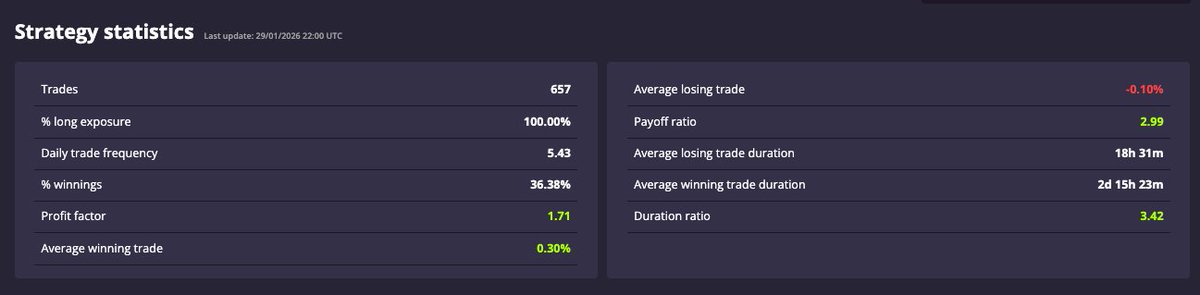
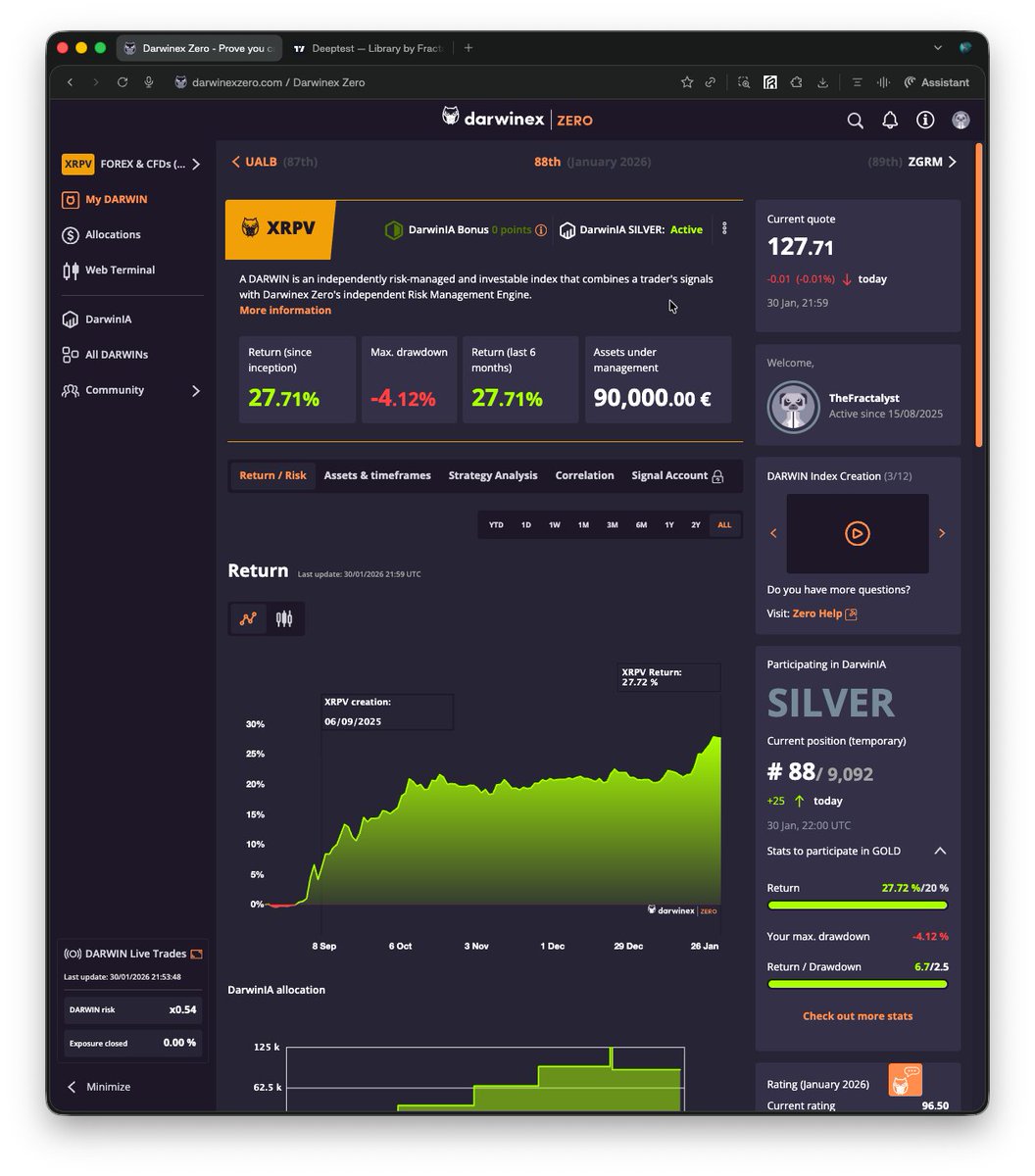
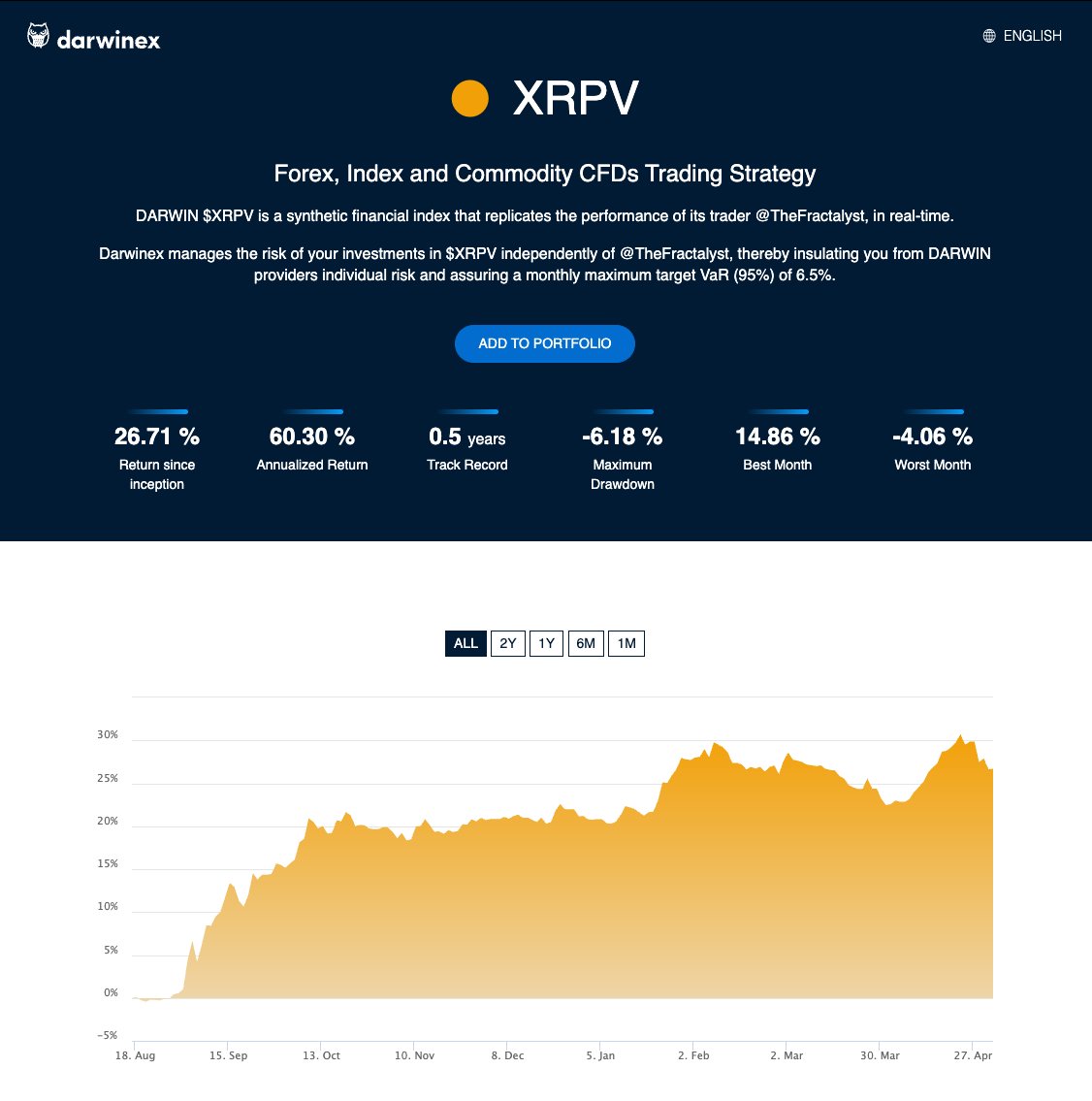
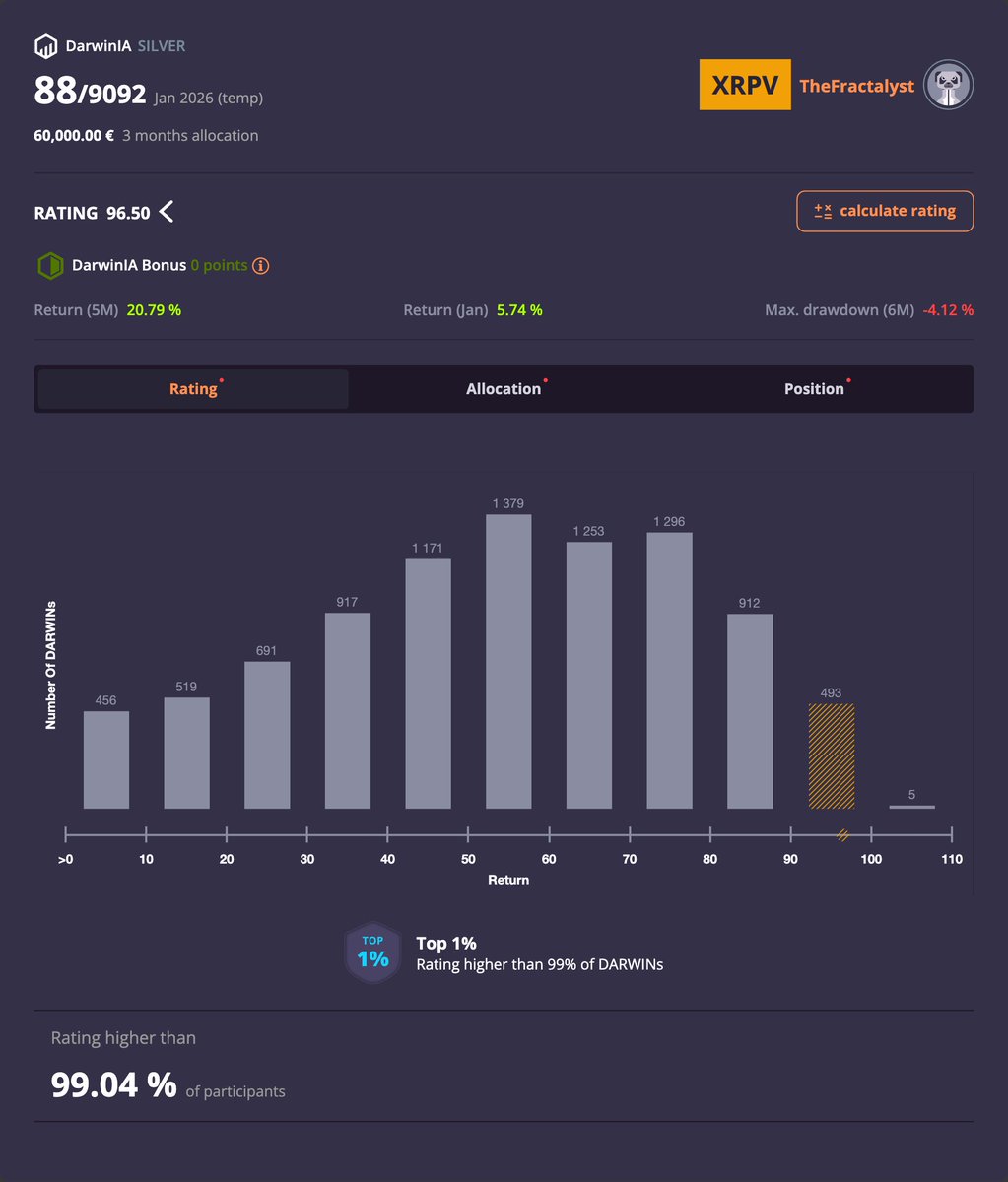
If you can't prove it with a verified track record, you are just gambling. And we don't invest in gamblers.
The greatest skill you can acquire as a trader is:
Learning to code.
- You no longer look for any trading mentors (you become your own mentor)
- No more emotional trading and blowing accounts (instead, you focus on researching and building strategies)
- You help others to become algo traders (people who would love to work with you)
- You get paid both from clients and the market
@hitoricapital@DarwinexZero That’s true. Past performance is never going to be indicative of future results.
Our best bet to maximize our chances of long-term profitability is to trade multiple “strategies” and work on discovering new alphas.
The first year I got into algorithmic trading was a complete failure.
Back then, I mixed every indicator and filter I could think of just to get profitable backtests.
My brain was craving on the dopamine rush of seeing that smooth green curve in my backtests...
It took me a while to realize that "overfitting" was real, and it’s the very reason why even most algorithmic trader fail.
I believe algo-trading can absolutely be a shortcut to profitability, especially when compared to the emotional chaos and uncertainty of discretionary trading.
But it comes with its own nuances. You have to retrain your mind, build discipline, and stick with a structured backtesting process.
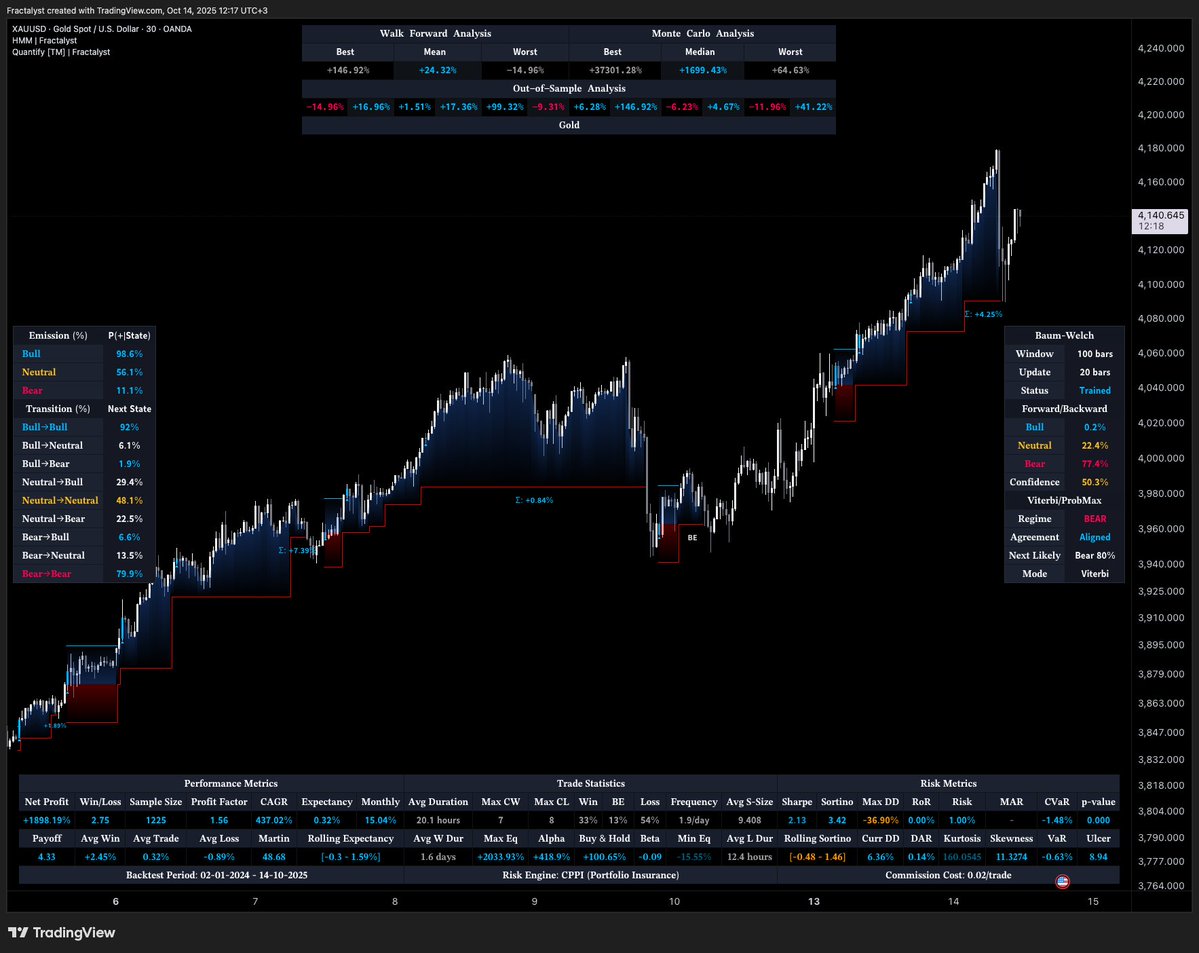
1. Are you backtesting with realistic commissions and slippage?
2. Is your backtesting framework accurately calculating results?
3. How consistent are your rolling performance metrics?
4. Are you optimizing for robustness across market segments or just trying to minimize your max drawdown?
5. How fast does your automation bridge execute orders to minimize price discrepancies?
Most ignore these factors. They end up with profitable backtests but lose money in live trading.
Remember a positive backtest does not guarantee positive live performance.
But with proper backtesting and realistic evaluation of your models you "maximize your chances of winning".
Don't try to build models, try to break it.
And if it survives...
Congrats! You now have an edge that has high probability of winning.
I was literally waiting for someone to confirm this!
What truly matters is the consistency of performance metrics (Sharpe, expectancy, etc.) across OOS segments.
This means our edge isn't skewed by just a few outliers and shows robustness across different market regimes.
Making it more likely to continue performing similarly going forward.
@__ighodalo@DarwinexZero The researching and building phase never ends, and that’s what makes the game exciting.
At the end of the day all systems are affected by “alpha decay” and we constantly have to discover new edges and adapt to market behaviour.
@TradingKern@DarwinexZero Love to hear that! Keep learning at the same space you enjoy and get obsessed with it.
You’ll eventually build new models from scratch on your own.
@TheWolf534@DarwinexZero Yeah, I believe the reason is that we’re all so hyped in the beginning when we get into backtesting and stuff that we simply don’t want to accept the realities… until “WE HAVE TO.” Hahah
@MagellanAtlas Allocating capital across different assets and timeframes definitely increases the chances of capturing positive outliers.
The next big runner can be silver or SPX. Who knows…
As long as we’re trading a portfolio we’ll most likely capture that opportunity.
The exact risk management model and strategies I use to grow my accounts are available on Whop for free:
https://t.co/QQRtBeErxL
(Make sure to click on "Claim Indicators" and restart TradingView and they'll appear in your Invited-only script list.)
Learn to code.
not just to build trading algorithms,
but because coding and the math behind it fundamentally rewires your thinking.
it activates a problem-solving engine in your brain you never knew existed.
you develop the ability to spot market anomalies where others see chaos.
every great quant, trader, and risk manager whether they admit it or not stands on mathematical and computational intuition.
coding sharpens your strategic reasoning.
it builds advanced pattern recognition from candle formations to complex price dynamics.
it gives you the language to model reality, quantify uncertainty, and predict outcomes.
if you can think in systems;
if you can break down any strategy idea into systematic rules, you can literally build, backtest, and automate robust strategies for any market.
you won't ever need to learn to trade from anyone. You become your own mentor, a researcher, a builder.
you're no longer dependent on someone else's black box strategy or their vague "market intuition."
you control the entire process... from idea generation to execution.
you test. You validate. You iterate.
coding turns you into a systematic thinker who questions everything and trusts only what the data proves.
it removes emotion from the equation.
you stop chasing setups and start engineering edge.
the market becomes less mystical and more mathematical... a puzzle you're equipped to solve.
the best traders aren't just good at reading charts.
they're exceptional at building systems that read charts better than they ever could manually.
they automate the edge so they can focus on finding the next one.
learning to code isn't just a skill, it's the foundation of independent, scalable, and sustainable trading.