It gets crazier!
This is how marine insurance >> general insurance >> today's insurance was born.
@siddharthkara 🫡 for bringing such stories to the world.
“𝘐’𝘷𝘦 𝘨𝘰𝘵 𝘰𝘯𝘦 𝘵𝘩𝘪𝘯𝘨 𝘵𝘰 𝘴𝘢𝘺… 𝘯𝘰 𝘵𝘦𝘢𝘮’𝘴 𝘦𝘷𝘦𝘳 𝘸𝘰𝘯 3 𝘪𝘯 𝘢 𝘳𝘰𝘸.” 🧿🤩
Wake up babe, Mo Bobat has dropped the line of the season. 😉 🫳🎤
The reactions from the players tell us how much they want it. Here’s more from Mo’s dressing room chat after RCB won back to back trophies two nights ago. 🏆❤️✌️
●#India's First Elevated Rail Terminal, proposed at Yelahanka, North #Bengaluru is in advance stage of DPR.
●Railway MoS @VSOMANNA_BJP has confirmed on implementation in 2 Phases.
●Once Completed North Bengaluru, with @BLRAirport , Mega Rail Terminal, Metro & Suburban, Existing STRR & Upcoming PRR , Airport Road etc, will be the best connected & most developed part of Bengaluru.
🚨 PRR gets a move on: BDA invites EPC tenders for construction of the Bangalore Business Corridor (Peripheral Ring Road -1) Package-1: Tumkur Road to Bellary Road, Km 0.00–19.80).
Tender schedule:
Published on 06.04.2026
Queries till 15.04.2026 (4 PM)
Bid submission deadline: 04.05.2026 (4 PM)
Technical bid opening: 06.05.2026 (4:30 PM)
Financial bid opening: 11.05.2026 (4:30 PM).
In the movie Saving Private Ryan, Tom Hanks shouts “Bangalores!” during the D-Day assault. The Bangalore Torpedo, invented in 1912 in Bangalore (now Bengaluru) by Captain R.L. McClintock of the Madras Sappers, consisted of 5-foot sections packed with 9 pounds (4.1 kg) of TNT or amatol explosive. It was used to blast 10–15 foot paths through barbed wire in Normandy. Modern M1A2 and M1A3 variants remain in active service with the US Army and other militaries worldwide. Watch the attached video for the complete history.
#BangaloreTorpedo #SavingPrivateRyan #DDay #WW2History #Bengaluru #MilitaryHistory #USArmy #IndianInvention
Once upon a time circular rail project was proposed for Bengaluru City in 1960..Just imagine if it was made back then..what effect it would have been on today's traffic?
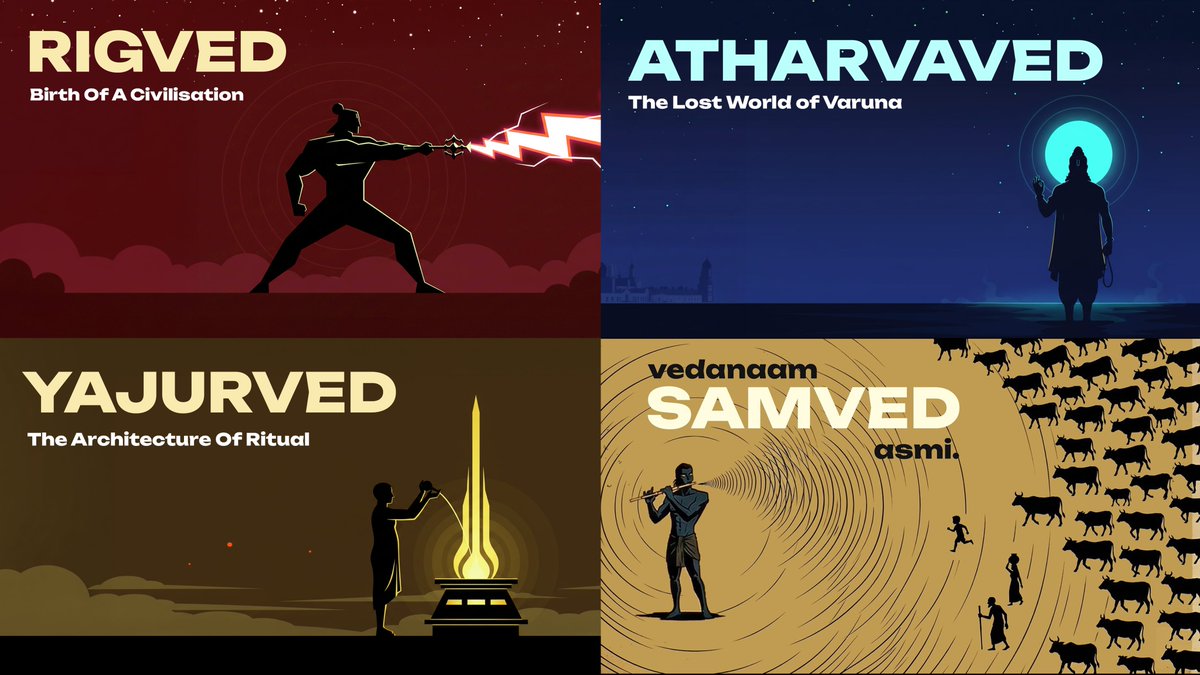
I spent the last phase of my work exploring the 4 Vedas visually: Rigved, Samved, Yajurved, Atharvaved. I discovered that these are the source code to everything that grows into the Indian culture.
I didn’t expect covering the 4 Vedas to become its own visual universe, but it did. I welcome you to dive into that universe.
He graduated in 2008, possibly one of the toughest years to graduate because of the global recession. He studied at Global Institute of Technology, which wasn’t one of the big-name colleges in Bengaluru, and jobs were scarce back then. But that situation actually nudged him toward entrepreneurship. He had a fascination for developing websites and would go around Basavanagudi and Malleshwara visiting small shops, asking if he could build a website for them.
He was relentless and genuine. Some shop owners saw that sincerity and gave him a chance. He ended up building around over 250 websites, often charging as little as two thousand rupees. Out of that experience came a small prototype that caught the attention of Madhura Garments, who eventually acquired his product.
Madhura Garments was a client of Ernst and Young, and through that connection, someone from E&Y got to know about his work and offered him a job. Vittal says he couldn’t even pronounce Ernst and Young back then and had no idea what the firm did, so he declined. The person who offered him the job became a friend though, and when that person later moved to KPMG, he invited Vittal to join him there.
That’s how Vittal entered the world of consulting. At KPMG, he worked on project financing and investment management, picked up new skills, and gained confidence. He then joined Robert Bosch, where he got exposure to their venture funding arm. Bosch offered him opportunities in both the US and Germany, and he eventually relocated to Germany. There, he worked on costing, investment structuring, and large project implementations.
In 2014, while traveling in the US, he met an American at a café who noticed the Robert Bosch badge on his shirt. They started chatting, and when the man asked what he did, Vittal explained that he worked on costing and investment structuring at Bosch. The American said he was trying to build a crowdfunding platform for ideas and asked if Vittal could offer some strategic advice and guidance.
That short conversation became the turning point that introduced him to the world of crowdfunding. He helped the American set up the platform, advised him on strategy, and even made some money along the way. Through that journey, he realized that while crowdfunding was becoming popular in the US, people in Germany didn’t have easy access to such opportunities.
He thought, why not build something for Germany, by Germans, for Germans?
That idea became the foundation for his venture, which went on to become one of the fastest-growing startups in Germany. Eventually, it was acquired by a large German media and publishing group.
Because of his ability to execute and build meaningful things, he later became an ambassador for German startups, representing the Indo-German entrepreneurial bridge.
In 2020, he came back to India. While traveling through Karkala and Udupi, he noticed handmade dolls being sold on the roadside for just fifty rupees, while the same products sold for six hundred rupees in Bengaluru. That gap really struck him, and he decided to do something about it.
That’s how Kreate was born. It’s a platform that helps artisans without GST registration sell their handmade products directly to customers. Today, Kreate has over twenty-eight thousand sellers and has generated over thirty-five million dollars in lifetime sales! Vittal also raised two million dollars in venture funding for the company, and Kreate now stands as a sustainable, profitable venture.
In 2025, he launched Nucleo, a platform that helps investors verify startup data using company identification numbers and helps founders set up clean data rooms and cap tables. It makes the due diligence process faster, easier, and more transparent for both sides.
Vittal’s story is a great example of what persistence and curiosity can create. From building websites for small shops in Basavanagudi to building one of Germany’s fastest-growing startups, and then coming back to empower Indian artisans, his journey is all about grit, reinvention, and purpose.
I really enjoyed our conversation, Vittal. Looking forward to featuring your story soon on @mundhebanni
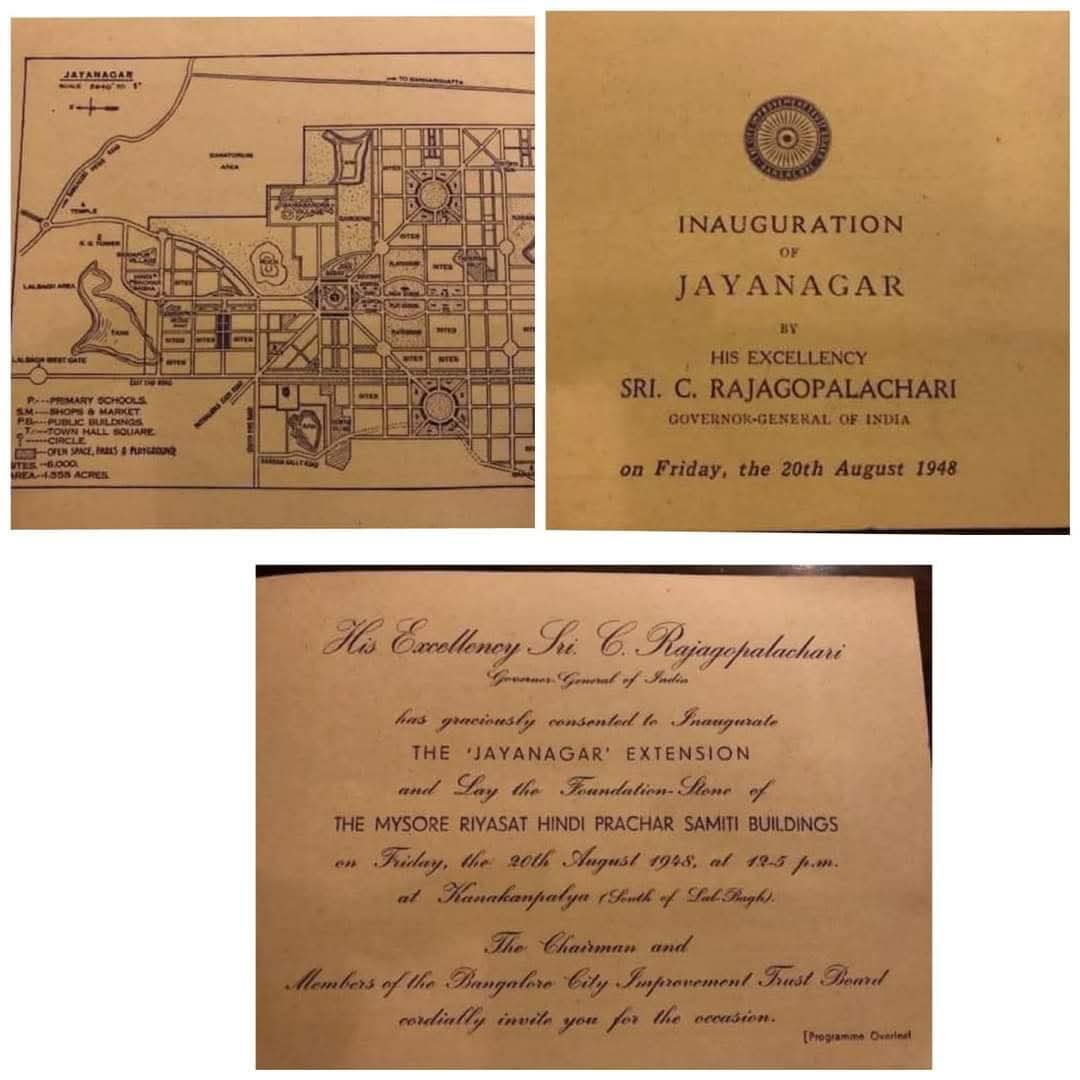
Invitation for the inauguration of the famous Jayanagar in Bengaluru in 1948 which was the largest layout at that time!
Since then only minimal changes have been made to that plan till today. Jayanagar layout has its own association, BDA (Bangalore Development Authority) can't take decisions alone. All the parks are still there from that layout plan and the same plan we can see near the South end circle.
Bira 91 was one of the successful start-up stories of last decade. It is a popular craft beer brand. They were growing so well. Reality is strange than what you can imagine. A procedural goof up has lead to whole company being collapsing and the founder now being forced even to exit by company employees.
As Bira was very successful, it wanted to come up with IPO. So it did a small change. It changed the name from B9 beverages private limited to B9 beverages limited. Just removed the word private.
All the hell then broke loose. All the states immediately banned the sale of Bira 91 treating the new name as different entity. They demanded fresh legal approvals, label approvals, product registrations and fresh licenses for every single variant.
Google and find out. This lead to one problem after another. Once a thriving company looks like may not even survive.
I remember once someone asked Hina Nagarajan, former CEO of Diageo India as to why she is retaining the name United Spirits instead of changing it to Diageo India limited. She said that the company checked with best legal brains in the country and name change would lead to huge disruptions for business.
Though what happened to Bira is extremely unfair, you've to accept the reality of India. Procedures, compliance and proper documentation are extremely important. The rules are so complex you should never desist from taking expert advice. What you assume need not work in reality and may even go against you.
In 1910, the 6 most powerful men in America vanished.
They boarded a private train using fake names & disappeared to a remote island.
What they created in total secrecy now controls $30.5 trillion in U.S. money.
Here's what happened in that secret meeting held on Jekyll Island:
Rebecca Heiss gives a great explanation on how you can connect your conscious and subconscious.
From the scientific point of view we have enough scientific data to consider subconscious reprogramming techniques work.
It’s a learning .
Not to criticize by the drop of a hat. Think 1000 times before criticising. First introspect whether you can do better. Make your line longer rather than trying to shorten someone else line. Jai Hind .