صدّقت إيران أكاذيبها وانتصاراتها الزائفة، إلى أن كشفت الحرب إخفاقاتها.
وقال علي عبدي، المعلق في قناة "خيلان جمهوري"، إن جزءا كبيرًا من النظام العسكري الأمني الإيراني وقع في "فخ صممه العدو"، إذ يقبل انتصارات ملفقة وتقييماتٍ خاطئة ...
The Islamic Republic’s state TV is putting faces to its campaign against UAE oil exports, publicly identifying ADNOC executives and branding their work “smuggling.”
A segment on IRINN’s Be Vaght-e Iran names executives and displays their photographs while presenting them as the people organizing oil movements through the Strait of Hormuz.
Those singled out include ADNOC CEO Sultan Ahmed Al Jaber and managers involved in production, trading, offshore operations, shipping and LNG.
The regime is branding legitimate UAE oil exports as “smuggling” to justify coercion—and singling out the executives keeping them moving.
This is intimidation directed at identifiable people, not merely criticism of another country’s policy. Displaying their faces alongside accusations personalizes a confrontation already marked by attacks on commercial shipping.
The UAE has borne a particularly heavy share of the attacks on Persian Gulf countries. On November 9, its government reported intercepting 3,617 aerial threats—705 ballistic missiles, 37 cruise missiles and 2,875 drones. These are intercepted weapons, not separate attack waves.
ADNOC’s shipping operations have also been repeatedly targeted. The company said in August that 15 of its vessels had been attacked, leaving one person dead and 20 injured.
Further attacks followed, including a reported November 17 strike on an ADNOC-linked vessel that left 11 crew members injured and one missing, alongside a separate reported attack in UAE territorial waters on November 10.
That is why naming the executives is menacing—the people are being publicly singled out after the ships connected to their work have already come under fire.
The danger is the progression from attacking the transport network to identifying the people running it, portraying civilian executives and employees as participants in hostile activity.
The segment does not contain an explicit assassination threat, but naming individuals against this backdrop sends a clear message—the regime knows who is keeping the oil moving and wants them publicly identified.
There is also a financial-pressure dimension. Reuters reported in June that the UAE had agreed to unlock $10–20 billion for Iran in exchange for an end to attacks, with roughly $3 billion allegedly delivered initially. The UAE categorically denied releasing or transferring frozen Iranian funds.
Whatever the status of those disputed financial claims, subsequent attacks on shipping show why threats of conditional “security” cannot be treated as durable protection.
The Islamic Republic is trying to turn its own export crisis into control over its neighbors’ exports, using attacks on ships, threats against infrastructure and now public intimidation of the people behind those operations.
Its inability to sell oil does not entitle it to terrorize everyone who still can.
The Islamic Republic’s strategy for closing the Strait of Hormuz has been defeated and rendered useless - and a regime insider is now admitting it.
Ehsan Hosseini says the UAE has defeated the strategy by turning tanker attacks into an affordable cost of a highly profitable oil trade.
Hosseini is a former journalist for the regime-controlled Fars News Agency and now heads the energy outlet Khate Energy.
The regime’s old plan was simple: attack tankers, make insurance unaffordable, stop shipping and force the world to negotiate.
But the market adapted.
According to Hosseini, the UAE buys Persian Gulf oil at discounts of around $30 per barrel and transports it through the southern route near Oman in organized convoys. He claims the UAE has made roughly $70 billion from this system.
The margins are now so large that sinking one or two tankers does not stop the operation. The loss is absorbed as a cost of doing business while the remaining ships keep moving.
The UAE also has protected shipping networks, enormous financial reserves and a pipeline to Fujairah that allows substantial volumes to bypass Hormuz entirely.
The Islamic Republic has none of these advantages. Its own oil exports remain strangled, its alternative pipeline capacity is limited and its economy cannot absorb comparable losses.
To actually close Hormuz now, the regime would need sustained attacks on protected convoys, extensive mining and direct confrontation with the United States and Persian Gulf states.
That would invite devastating retaliation against its remaining launchers, ports and military infrastructure.
The Islamic Republic tried to hold global energy supplies hostage. Instead, it forced its neighbours to adapt, allowed the UAE to profit from the danger and left Iran trapped behind the chokepoint it tried to weaponize.
A regime analyst says the Islamic Republic’s leadership believed its own lies and fake victories—until war exposed its failures.
Ali Abdi, an international-affairs commentator speaking on the Kheilan-e Jomhuri channel, said a significant part of the military-security system had fallen into a “puzzle designed by the enemy,” accepting fabricated victories and false assessments of Israel while leaving those responsible unaccountable.
His account goes beyond propaganda aimed at the public. He says manipulated information reached senior officials and shaped their understanding of the threat.
According to Abdi, an “infiltrative current” within media and assessment circles repeatedly presented Israel as collapsing from within, citing emigration, economic weakness and political divisions, particularly around Netanyahu’s judicial reforms.
The picture he describes exaggerated Israel’s decline while understating its military and intelligence capabilities, turning internal political disputes into supposed evidence that the country was approaching collapse. The leadership was encouraged to expect Israel’s downfall rather than recognize an adversary that retained formidable capabilities and was not about to disappear.
That narrative supported “strategic patience”—the belief that Israel was heading toward destruction without the regime needing to confront the reality of its strength.
Abdi also challenged supposed retaliatory successes circulated after Soleimani’s assassination and subsequent missile strikes, describing fabricated reports about senior Israeli or Mossad figures being killed and a villa portrayed as the “brain of Mossad” being destroyed.
These stories reinforced the same illusion—the Islamic Republic was landing decisive blows while Israel was steadily unraveling.
He recalled attending meetings where senior officials received false assessments, while forceful objections risked attracting accusations against those raising them.
In his telling, the system only grasped the reality on the first day of the 12-day war. He further characterized the attack on the Supreme Leader’s compound as the culmination of internal penetration.
Abdi’s account does not independently establish how a particular strike was enabled, but the institutional failure he describes is stark—a leadership accepting reassuring falsehoods while discouraging scrutiny.
His final charge is that accountability remains absent and the failures are still not being seriously confronted.
The Islamic Republic demanded that the public believe its declarations of strength. Abdi’s account suggests its own decision-makers were consuming the same fake victories—and making security judgments on that basis.
A leadership that mistakes its opponent’s political divisions for impending collapse is not demonstrating strategic insight; it is building policy around a fantasy.
The Islamic Republic insists it is still selling oil—but its acting oil minister refuses to explain how, calling the sales secret “wartime tactics.”
Hamid Bovard made the remarks on November 23 in response to American statements that Iranian oil exports had fallen to zero, insisting activities continue while withholding details.
Bovard took over after Mohsen Paknejad’s resignation and previously headed the National Iranian Oil Company and National Iranian South Oil Company. He is sanctioned by the United States and Ukraine.
The crucial distinction is between new crude exports, smaller petroleum-product shipments and payments for oil delivered months earlier. Presenting all three as “continuing sales” obscures whether the regime has restored its main revenue stream or is surviving on residual income.
Independent tracking cited in recent reporting indicates that new crude shipments have been severely constrained since the naval blockade was reimposed in July. Previously exported oil stored outside the blockade zone continued reaching buyers, but those stocks have reportedly been largely depleted.
Limited movements of LPG, diesel, methanol or other products do not demonstrate a recovery in large-scale crude exports.
China remains the principal outlet. Chinese independent refiners have historically bought most Iranian crude at discounted prices. A confidential letter attributed to Bovard, obtained by Iran International, described terminal and storage arrangements involving Ningbo-Zhoushan, Qingdao and Shandong, alongside seven storage tanks across locations including Dalian, Huizhou, Dongying and Weifang.
Those arrangements support the trade, but access to storage in China cannot solve the immediate problem of getting newly loaded cargo past the blockade.
Malaysia has served as a major transfer hub. The Eastern Outer Port Limits anchorage off Johor has supported ship-to-ship transfers and onward shipments, often accompanied by concealed vessel movements and misleading cargo documentation. Depleting inventories outside the blockade means that previously exported oil cannot sustain revenue indefinitely.
UAE- and Turkey-linked networks have supported shipping and payments. Shipping agents, front companies, exchange houses and intermediaries have provided commercial cover and financial facilitation, with Treasury targeting entities associated with these channels.
The broader shadow-fleet model relies on aging tankers, flag changes, manipulated tracking signals, false cargo documents and intermediary-controlled sales. These methods facilitate evasion, but they do not remove the physical constraints on moving bulk crude.
That makes money held by “oil trustees” increasingly important. Treasury has targeted regime-linked facilitators and Sepehr Energy-associated networks amid allegations that intermediaries retained substantial proceeds from earlier sales.
Recovering that money could provide cash, but collecting an old debt is not a new oil export.
Bovard and Economy Minister Ali Madanizadeh have also announced plans to offer oil-deposit certificates through the Iranian stock exchange, allowing investors to purchase oil-linked claims with potential delivery, refining or export options.
These instruments could raise domestic financing or allocate stored oil, but selling a paper claim inside Iran does not mean a foreign buyer has received cargo or paid the regime in usable foreign currency.
Meanwhile, Bovard claims oil production is stable, gas output is rising, gasoline production has increased roughly 10%, production and consumption are approaching balance, and diesel exports continue.
He also describes efforts to restore war-damaged South Pars facilities, where reporting has cited approximately 230 million cubic meters a day of lost processing capacity, while calling for a 20% reduction in public gas consumption to bring demand toward roughly 600 million cubic meters a day.
Those production claims do not establish that either the export bottleneck or winter energy shortages have been resolved.
The sharpest financial pressure point may arrive in mid-December. Kpler projections cited in reporting suggest crude-and-condensate export receipts could approach zero if the blockade holds, as payments for previously delivered cargoes run out. The government is reportedly preparing budget scenarios assuming no oil revenue.
Reports of tanker-convoy preparations are not proof that loading has resumed or that a breakout has succeeded, particularly after fabricated tracking signals and disputed loading claims circulated in recent days.
Bovard’s answer leaves the decisive questions unanswered—how much new crude is reaching buyers, how much usable money is returning, and whether either replaces what the blockade has cut off.
The regime can invoke secrecy and point to residual shipments, recovered debts and domestic securities, but none establishes that its main oil-export revenue stream has been restored.
Separate deadly attacks on security personnel and regime-linked figures are putting the Islamic Republic’s local power networks under pressure, while further security-force deaths have been reported in recent days.
The incidents span several regions and different circumstances, challenging the regime’s projection of complete control without establishing a single coordinated campaign.
In Sistan-Baluchestan, reported attacks throughout 2026 have targeted IRGC and Basij personnel alongside pro-regime Sunni clerics. Those reportedly killed include Molavi Mohammad Anvar Rigi in July, Molavi Yousef Gorgij in September and Mohammad Yousef Qazi in November. Qazi reportedly also commanded a local IRGC unit.
In the northwest, Basij-linked Kurdish Sunni cleric Mamosta Mohammad Nezhati was reportedly killed in September.
More recently, unknown attackers wounded Mohammad Miri, director of the Karun Petrochemical Complex, in Mahshahr, Khuzestan. The local prosecutor’s account carried by Tasnim said he suffered pellet wounds to the head and arm and was in stable condition. The motive remains unknown, and his position alone does not establish a security affiliation.
Two additional deaths have now been acknowledged by regime outlets, although their circumstances remain unresolved publicly.
Ali Azad, a member of the Basij’s 905th Imam Ali Security Battalion, was reported killed in eastern Tehran around November 19–20. State media attributed his death to a “training-tactical mission” without providing a detailed public explanation.
Police Major Sadegh Ghodrati, of Patrol Station 12 in Jiroft, reportedly died during a nighttime operation on November 23. Official outlets attributed his death to an accident during a pursuit.
Those are the regime’s explanations—not independently established accounts. They could be incomplete or misleading, but claims that Azad was shot outside his home or that protesters killed Ghodrati also remain unverified.
The distinction matters because confirmed deaths, confirmed attacks and unexplained casualties should not be collapsed into a claim of nationwide armed resistance.
The contrast with January is nevertheless stark. Eyewitness accounts from Mashhad described police, Basij, IRGC and plainclothes forces opening sustained fire on unarmed protesters under an internet blackout, with reports of thousands killed in the city.
Institutions implicated in that repression are now among those facing attacks themselves, although no evidence establishes that these incidents are retaliation for the crackdown.
The Islamic Republic has repeatedly demonstrated its willingness to kill civilians, but overwhelming force against unarmed crowds is not the same as secure territory, protected personnel or durable control.
Its victory speeches cannot erase the attacks on its local networks—or make its explanations for security-force deaths automatically credible.
🧐During an era when Iran's economy grew by over 10% annually, the state paid workers 4.5 times more to develop underserved provinces.
👉Today, Iran’s president is looking back at that exact Pahlavi-era policy to explain what his own government is getting wrong.
@ByHisGrace They are all the same - no difference between a “hardliner” and reformist.
He brings up the past because it’s blatantly and historically true.
The Islamic Republic’s president is once again praising Mohammad Reza Pahlavi’s regional development policies—part of the rapid modernization that made Iran one of the world’s fastest-growing economies.
Masoud Pezeshkian’s comparison sharply contradicts the Islamic Republic’s decades-long vilification of the Pahlavi monarchy, exposing its failure to deliver the regional justice, economic opportunity and balanced development it promised.
Pezeshkian described how his father earned roughly 400 tomans in West Azerbaijan before the revolution, while he received 1,800 tomans working in Sistan-Baluchestan with only a high-school diploma.
That was 4.5 times his father’s salary, reflecting a deliberate policy of offering higher pay to attract workers to underserved regions and support their development.
He contrasted those incentives with the current system, where resources and better-paid positions concentrate in the capital while peripheral regions lose talent and remain disadvantaged. By his own account, justice is neglected in both salaries and development spending.
The policy he recalled belonged to a broader national transformation under Mohammad Reza Shah.
Iran’s real GDP grew by roughly 10.5% annually from 1963 to 1977, placing it among the world’s fastest-growing economies as steel, petrochemicals, automobile manufacturing, construction and other industries expanded.
Income per person rose from roughly $170–200 in the early 1960s to approximately $2,000–2,300 by the mid-to-late 1970s. Those are current-dollar figures, but the period also brought substantial real growth and rising living standards.
The White Revolution combined land reform with literacy, health and rural-development programs, while investment expanded roads, dams, irrigation, ports and universities.
The Literacy Corps sent educated young people into villages to teach children and adults, while women gained voting rights and expanding educational and professional opportunities.
After 47 years of the Islamic Republic’s economic failures, Iranians face repeated currency collapses, chronic inflation, capital flight and the erosion of their purchasing power. One U.S. dollar now reportedly trades at roughly 2,685,000 Iranian rials—268,500 tomans—on the open market.
Pezeshkian remains a loyal Islamic Republic official, making his comparison especially revealing. He is invoking a policy of the government the revolution overthrew to explain what his own government is getting blatantly wrong through widespread corruption and incompetence.
The regime promised to replace the Shah’s development model with Islamic justice; 47 years later, its president is reaching back to that model for an example of how to deliver it.
��� Islamic Republic president is a big fan of the Shah and misses the glory days under the monarchy!
In an interview, Masoud Pezeshkian said that before the revolution, even Turkish visitors envied Iran’s roads under the Pahlavi era, while today on a 100 km stretch they build 70 to 80 tunnels and Iran celebrates building just four.
He also said that before 1979, as a soldier in Zahedan, his monthly salary could buy a Honda motorcycle, but now, as a highly specialized heart surgeon and professor, three months of income isn’t enough to afford one.
Even the regime’s own president is openly acknowledging the scale of decline under the Islamic Republic.
Trump has said economic pressure would squeeze the Islamic Republic harder than continued military strikes—and regime officials are now admitting the damage in their own words.
In just the past few days, regime officials have described economic pressure as a threat to the system’s survival.
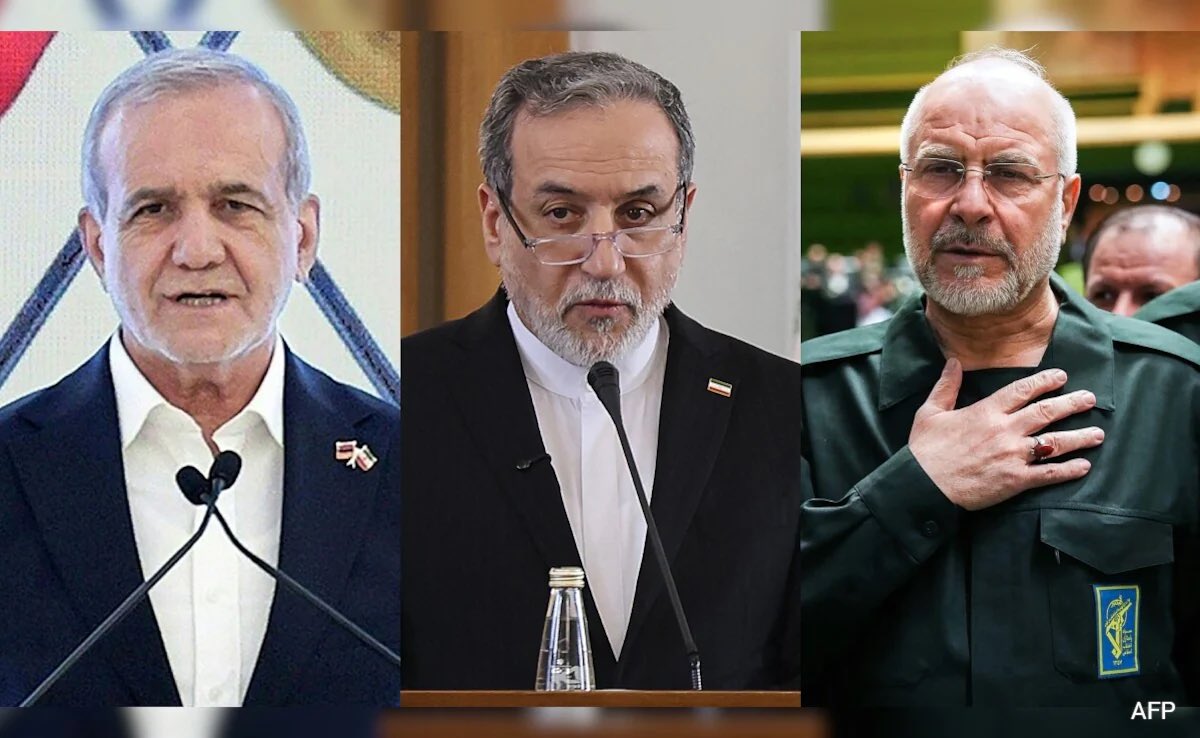
Masoud Pezeshkian, President
“We are engaged in a silent war that is far more difficult than one in which missiles are launched and destruction is caused. It is an economic war… and it is no easy battle.”
Mohammad Bagher Ghalibaf, Parliament Speaker
“No matter how much military power we have, if people are hungry and we don’t have financial circulation, economic growth and domestic production, we will not endure.”
Seyyed Ali Madani-Zadeh, Economy Minister
“Inflation has exceeded 80%, and the pressure on people’s livelihood is high.”
Abdolnaser Hemmati, Central Bank Governor
“The economic blockade is a silent war that has raised the exchange rate and inflation, made access to financial resources difficult, and caused problems for people’s livelihood.”
Abbas Araghchi, Foreign Minister
“The blockade must be broken. We will make every possible effort to export oil and break the choking blockade.”
Kazem Gharibabadi, Deputy Foreign Minister
“We consider the economic blockade imposed by the US an act of war, and we will take whatever measures necessary to break it.”
Alaeddin Boroujerdi, National Security and Foreign Policy Commission member
“We cannot bear the economic blockade imposed on our people.”
Vahid Ahmadi, National Security and Foreign Policy Commission member
“If we cannot sell oil, others should not be able to sell it either.”
These translated remarks include both recent warnings and earlier statements, but their message converges—military power cannot replace oil revenue, restore purchasing power or keep the economy functioning under sustained financial pressure.
The regime projects strength while its own officials explain the conditions that could undermine its survival.
And rather than accept responsibility for the policies that helped create this crisis, figures within the system threaten neighboring countries if the Islamic Republic cannot sell its oil.
Ordinary Iranians bear the hardship while the regime threatens to make the wider region pay for its predicament.
The Islamic Republic is now publicly diagnosing itself as vulnerable to collapse from within.
Parliament Speaker Mohammad Bagher Ghalibaf told parliamentary commission chairs that the “neither war nor peace” situation cannot continue. He argued that the usual political arguments—branding negotiation as surrender or talk of war as warmongering—are useless.
More importantly, he stated that the enemy has concluded another “40-day war” cannot achieve its goals. As a result, its first priority has shifted to disrupting internal security, applying economic pressure, and engineering collapse from inside Iran.
This is not routine rhetoric. Senior regime figures rarely state so clearly that the decisive threat is no longer a large-scale external war but the internal conditions that could unravel the system.
Ghalibaf framed the shift as the enemy’s calculation after recent conflicts, then prescribed the remedy: “lasting deterrence” achieved through unity, cohesion, and urgent economic measures, including energy reforms that he said must begin with gas rather than gasoline.
The push to end the limbo is not his alone; both he and President Pezeshkian have cited an explicit order from the Leader to resolve it.
The admission matters because it reveals how the regime now assesses its own position. After months of declaring military achievements and deterrence, the highest levels are acknowledging that economic strain and internal instability are the primary risks to survival.
Military readiness is still asserted—they insist any new conflict’s scope would be set by Iranian forces—but the operational priority has moved inward. That pivot is the core of the statement.
For Iranians, the implication is direct. When the regime defines economic pressure and internal disruption as the enemy’s main method of bringing the system down, everyday grievances become security problems.
Protests, strikes, shortages, inflation, and public anger can be recast as foreign-orchestrated operations rather than the results of policy failure, mismanagement, and repression. Once domestic discontent is classified as enemy activity, demands for accountability are treated as threats.
The call for “unity and cohesion” then functions less as an appeal for shared purpose and more as a warning that dissent will be handled as a security matter. This is the same framing the system has long used to justify surveillance, arrests, and force against its own population.
The contradiction is sharp and self-generated. The regime presents itself as having reached a point of military deterrence that deters another major war, yet it simultaneously identifies the economy and internal security as the fronts on which its survival is now contested.
Victory speeches about the armed forces do not restore purchasing power, end shortages, or repair public trust.
Ghalibaf is not predicting collapse, but by naming internal collapse as the adversary’s priority and elevating economic and security measures as the response, he is acknowledging that the system can be undermined from within on those grounds.
The practical test is therefore internal. The regime can treat the economic and social pressures it has identified as problems to be managed through reform and relief, or it can treat the people experiencing them as the instrument of the enemy’s strategy and move against them accordingly.
The language of lasting deterrence and cohesion supplies the justification either way. What it does not supply is evidence that military claims address the conditions the regime itself has now ranked as the greater threat.
Iranian truckers are striking across multiple cities, threatening the transport network the Islamic Republic has been forced to rely on as the U.S. naval blockade chokes maritime trade and oil exports.
Drivers in Shiraz, Chabahar, Dezful, Masjed Soleyman and other locations have reportedly halted work over soaring fuel, insurance, repair, tire and spare-parts costs while freight rates remain stagnant. The Union of Truck Drivers and Trucking Associations Across Iran has backed the action and called for wider participation, with drivers openly blaming “incompetent officials.”
The strike hits the regime’s fallback strategy precisely where it is weakest. With crude exports heavily constrained, CENTCOM estimating more than $25 billion in blocked oil revenue, and roughly 43 million barrels reportedly stranded, the Islamic Republic has redirected more trade toward land borders and the Caspian.
But redirecting cargo does not remove the cost of moving it. Reports describe thousands of trucks queued at the Turkish border, prolonged delays at Pakistani crossings and freight costs rising as much as fivefold on some routes. Officials advertise adaptation while drivers shoulder the losses—and are now refusing to keep paying for it.
That refusal threatens more than cross-border commerce, because trucks carry food, fuel, industrial inputs and consumer goods between terminals, warehouses, factories and cities. A sustained stoppage could leave supplies stranded even after they clear customs, deepening shortages and price pressures for households already facing severe inflation and collapsing purchasing power.
Reported participation in Khuzestan, including roughly 50 trucks in Masjed Soleyman, brings the action into Iran’s oil-producing heartland. Its precise effect on energy logistics is still emerging, but the location adds another potential pressure point to an already strained distribution system.
The strike also coincides with rolling blackouts, fuel shortages, petrol-station queues and electricity-worker protests, creating disruptions that can reinforce one another. President Pezeshkian’s appearance before reporters in a darkened office, urging the public to endure winter, captures the distance between official assurances and daily conditions.
The regime faces an increasingly expensive choice between concessions under severe financial pressure and coercion that could turn a livelihood dispute into a wider political confrontation.
How far the strike spreads and how long it lasts will determine its impact, but the weakness it exposes is already clear—the regime’s alternative trade routes depend on workers whose livelihoods its policies and failures have helped destroy.
Officials can demand endurance and announce new corridors, but they cannot keep goods moving indefinitely by forcing truckers to work at a loss.
Iran’s trade squeeze is spreading inland as congested border crossings expose the limits of the regime’s alternatives to blockaded ports.
Heavy truck congestion at the Yallama–B. Konysbayev crossing between Kazakhstan and Uzbekistan illustrates the bottlenecks facing cargo moving through Central Asia.
Local reports described roughly 990 trucks, queues stretching around 40 kilometers and drivers waiting several days.
Uzbek customs subsequently said the queue had fallen to approximately 100 trucks by the morning of November 20. Officials attributed the surge primarily to growing transit from China, Russia and Belarus.
The crossing is not exclusively an Iranian supply route. But China-origin cargo can pass through Kazakhstan and Uzbekistan toward Turkmenistan and Iran—meaning Iranian imports must compete for capacity with wider regional trade.
Diverting cargo inland does not create new roads, border capacity or customs staff. It moves the pressure somewhere else.
Every additional crossing introduces another potential inspection, delay, handling charge and payment complication.
For manufacturers, that can mean missing raw materials and spare parts. For importers, higher transport and financing costs. For consumers, those costs can feed into higher prices and shortages.
This is also where the United States is seeking to increase pressure through Task Force Iron Gate.
Announced by CENTCOM on November 7, the task force coordinates efforts to disrupt advanced weapons, dual-use technology, sanctioned materials and illicit revenue moving through Iran’s land borders and the Caspian Sea.
It is not an American force physically sealing Central Asian crossings. Its effectiveness depends on intelligence, interagency coordination and cooperation from regional governments.
The Yallama congestion does not establish that Iron Gate caused the delays. It demonstrates something more basic: the alternative corridors already have constraints that additional enforcement could make more costly.
Iran can adapt through neighboring countries, intermediaries and alternative routes. But those options cannot fully replace the volume and efficiency of maritime trade.
Meanwhile, restricted oil exports threaten the foreign-currency income needed to finance imports. Finding a truck route does not solve the problem of paying for the cargo.
The regime therefore faces two pressures at once—reduced access to revenue and more expensive ways to move goods.
The blockade’s consequences do not stop at the coastline. They push trade onto slower, costlier corridors where congestion and targeted enforcement can compound the damage.
The Islamic Republic can reroute cargo. It cannot make border capacity unlimited—or replace lost oil income with longer truck queues.
The Islamic Republic is now publicly diagnosing itself as vulnerable to collapse from within.
Parliament Speaker Mohammad Bagher Ghalibaf told parliamentary commission chairs that the “neither war nor peace” situation cannot continue. He argued that the usual political arguments—branding negotiation as surrender or talk of war as warmongering—are useless.
More importantly, he stated that the enemy has concluded another “40-day war” cannot achieve its goals. As a result, its first priority has shifted to disrupting internal security, applying economic pressure, and engineering collapse from inside Iran.
This is not routine rhetoric. Senior regime figures rarely state so clearly that the decisive threat is no longer a large-scale external war but the internal conditions that could unravel the system.
Ghalibaf framed the shift as the enemy’s calculation after recent conflicts, then prescribed the remedy: “lasting deterrence” achieved through unity, cohesion, and urgent economic measures, including energy reforms that he said must begin with gas rather than gasoline.
The push to end the limbo is not his alone; both he and President Pezeshkian have cited an explicit order from the Leader to resolve it.
The admission matters because it reveals how the regime now assesses its own position. After months of declaring military achievements and deterrence, the highest levels are acknowledging that economic strain and internal instability are the primary risks to survival.
Military readiness is still asserted—they insist any new conflict’s scope would be set by Iranian forces—but the operational priority has moved inward. That pivot is the core of the statement.
For Iranians, the implication is direct. When the regime defines economic pressure and internal disruption as the enemy’s main method of bringing the system down, everyday grievances become security problems.
Protests, strikes, shortages, inflation, and public anger can be recast as foreign-orchestrated operations rather than the results of policy failure, mismanagement, and repression. Once domestic discontent is classified as enemy activity, demands for accountability are treated as threats.
The call for “unity and cohesion” then functions less as an appeal for shared purpose and more as a warning that dissent will be handled as a security matter. This is the same framing the system has long used to justify surveillance, arrests, and force against its own population.
The contradiction is sharp and self-generated. The regime presents itself as having reached a point of military deterrence that deters another major war, yet it simultaneously identifies the economy and internal security as the fronts on which its survival is now contested.
Victory speeches about the armed forces do not restore purchasing power, end shortages, or repair public trust.
Ghalibaf is not predicting collapse, but by naming internal collapse as the adversary’s priority and elevating economic and security measures as the response, he is acknowledging that the system can be undermined from within on those grounds.
The practical test is therefore internal. The regime can treat the economic and social pressures it has identified as problems to be managed through reform and relief, or it can treat the people experiencing them as the instrument of the enemy’s strategy and move against them accordingly.
The language of lasting deterrence and cohesion supplies the justification either way. What it does not supply is evidence that military claims address the conditions the regime itself has now ranked as the greater threat.
@AmarjeetMarwaha Both sides claim victory—that’s standard wartime messaging.
Fabricating specific events is different, and it’s a recurring Islamic Republic tactic.
The Islamic Republic churns out BIG LIES and invents victories daily.
Yesterday it was tankers loading at Kharg to break the blockade. The day before, a claim they damaged a U.S. F-16.
Neither happened.
Satellite monitoring cited by OSINT accounts showed no tankers at Kharg Island’s loading berths on November 21 and no observed loading there over the preceding week, contradicting reports that terminal loading had resumed.
Tankers sitting offshore, possible ship-to-ship transfers and proposals for a convoy are not evidence of new loading at the terminal or a successful passage through the blockade.
The supposed “Khat Shekan”—“blockade-breaker”—tanker circulating on tracking platforms was another fabrication. TankerTrackers identified its AIS signal as a spoof, with inconsistent identification data and no matching vessel in satellite imagery.
That also corrects my earlier post, which treated the signal as a possible real tanker movement. It was not verified evidence of a breakout, and who created the spoof has not been publicly established.
Separately, the Iranian Army and state media claimed an Iranian missile damaged an American F-16 over the Persian Gulf and forced an emergency landing.
CENTCOM categorically denied that any Iranian attack occurred and said all American fighter aircraft in the region were safe and accounted for. An emergency transponder signal does not establish a missile hit.
The pattern is to announce success, circulate the claim and rely on repetition to outrun scrutiny.
But a proposal is not an operation, a tracking signal is not a verified ship, and a military statement is not proof of a successful attack.
The regime can manufacture victories for its broadcasts, but it cannot turn them into oil revenue or battlefield results.
Britain is taking the cyber fight directly to the Islamic Republic, confirming offensive operations against the regime.
Gen. Sir Rob Magowan, head of the UK’s Cyber and Specialist Operations Command, said the National Cyber Force is conducting offensive missions against Iran, alongside Russia, China and North Korea.
“I wouldn’t say we’re at war, but we’re not at peace either,” he said, warning that hostile cyber operations would be met with consequences.
The significance is that Britain is not merely defending its networks or issuing diplomatic protests—it is publicly acknowledging operations intended to disrupt adversaries and impose costs, although specific targets and results remain classified.
The announcement comes amid mounting concern over Iranian-linked sabotage and physical plots across Europe.
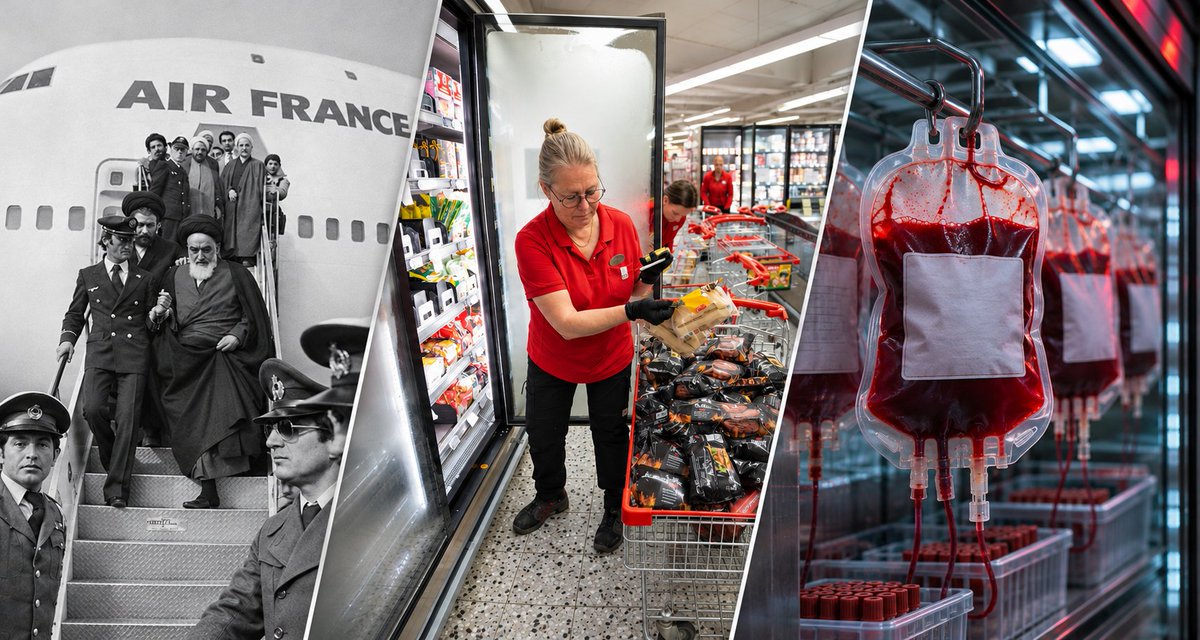
French authorities attributed an October refrigeration-sabotage campaign to Shahid Kaveh, an IRGC-linked cyber unit, saying attackers manipulated systems at roughly 700 food-retail and processing sites, spoiled food and caused at least 15 fires.
That illustrates how cyber sabotage can move beyond screens and stolen information to damage the civilian systems people depend on.
British authorities have also linked the alleged plot against RAF Fairford to the IRGC, while pursuing sanctions and prosecutions connected to the wider threat.
The Islamic Republic denies involvement, but its denials do not resolve the technical findings or allegations being pursued by investigators.
Britain’s message is that operations against its security will not be treated as a cost-free activity conducted safely below the threshold of war.
The regime’s reliance on deniability does not guarantee immunity from a response.
The Islamic Republic has expanded its war in Europe, using cyber-terror to sabotage France’s food and medical supply chains.
France has formally attributed the sabotage to Shahid Kaveh, a cyber-offensive unit operating under the IRGC’s Electronic and Cyber Center, after the Islamic Republic explicitly threatened Europe with missile strikes and attacks on its “material and non-material assets” in recent weeks.
This was not data theft, propaganda or ordinary cybercrime. The objective was to manipulate physical machinery and inflict real-world damage on civilian infrastructure.
Overnight on October 11–12, IRGC-linked hackers compromised refrigeration controllers across approximately 700 commercial sites in France, including supermarkets, butcher shops, a slaughterhouse and food-processing facilities.
The attackers remotely forced refrigeration units into prolonged, high-temperature defrost cycles while interfering with safety systems.
Food spoiled across major supermarket chains. Equipment overheated. At least 15 fires broke out. French authorities estimate the losses at tens of millions of euros.
The campaign then moved closer to medical infrastructure.
Refrigeration equipment at three French blood-plasma storage sites was targeted in an attempt to raise temperatures and defrost thresholds. Staff detected the attack and moved the products before they were destroyed, preventing damage to the blood supply.
But the intent was clear.
Blood, plasma, vaccines, insulin and other temperature-sensitive medical products can become unusable when refrigeration fails. Attacking the cold chain can destroy essential supplies without placing a single conventional weapon on European soil.
France described the supermarket operation as the first cyber-offensive campaign conducted purely for large-scale physical sabotage on French territory.
Its investigators linked the operation to the IRGC through attack infrastructure, operational tools, Persian-language traces and propaganda channels connected to Shahid Kaveh.
France has summoned the Islamic Republic’s ambassador, opened a judicial investigation, requested international arrest warrants and announced plans to seek further European sanctions.
The attack also gives new weight to the Islamic Republic’s escalating threats against Europe.
On October 31, Supreme Leader Mojtaba Khamenei ordered an “immediate and effective response without geographical limitation” to any threat and called for the regime’s target bank to be expanded.
The IRGC then pledged to confront the United States, Israel and their “regional and trans-regional accomplices” anywhere in the world.
The threats quickly became explicit:
▪️ National Security Committee member Ahmad Bakhshayesh Ardestani warned that if the United States used bases in Germany or Italy, “Iran’s missiles will be fired towards Europe.”
▪️ Former foreign minister Manouchehr Mottaki declared that the next conflict “will reach Europe,” naming Britain, Germany, Italy and Portugal.
▪️ Parliamentary speaker Mohammad Bagher Ghalibaf promised to destroy the “material and non-material assets” of Iran’s enemies without geographical limits.
▪️ Army officials warned that American installations, personnel and interests would become targets wherever they could be reached.
State propaganda reinforced the message.
Hamshahri published a map identifying approximately 15 American and NATO facilities across Europe as potential targets, including bases in Britain, Germany, Italy, France, Romania, Greece and Portugal.
Kayhan warned that NATO facilities “in the heart of Europe” could be attacked. An IRGC-linked propaganda video depicted simulated strikes against European bases and threatened anyone helping the United States.
These were not scattered comments from irrelevant extremists. The Supreme Leader, IRGC, parliament, military officials and state media all repeated the same doctrine: Europe had entered the regime’s expanded battlefield.
The refrigeration sabotage shows what “material and non-material assets” can mean in practice.
The Islamic Republic may lack the conventional capacity to wage war across Europe, but cyber units allow it to strike civilian systems cheaply, remotely and with physical consequences.
Poorly secured refrigeration controllers, water systems, energy networks and other connected industrial equipment become instruments of asymmetric warfare.
The targets are not abstract.
They are the food people eat, the blood hospitals store and the systems ordinary civilians depend on.
The historical irony is difficult to ignore.
France allowed Ruhollah Khomeini to settle outside Paris in 1978. From Neauphle-le-Château, he used interviews, telephone calls and recorded messages to direct the revolutionary movement that established the Islamic Republic.
French territory gave Khomeini the freedom and global media access that transformed him from an exiled cleric into the leader of a revolution.
Nearly five decades later, the IRGC created by his regime is being formally blamed for sabotaging French civilian infrastructure, destroying food and attempting to compromise blood-storage systems.
France once gave Khomeini the platform from which he built the Islamic Republic. The Islamic Republic has answered by bringing its campaign of sabotage onto French soil.
🚨 BREAKING: The Islamic regime just moved Milad Armoun and Navid Najaran to solitary confinement.
Two young men could be hanged simply for protesting. Share their names before it's too late.
An Islamic Republic state-TV commentator is urging another bombing campaign against the UAE, treating a neighboring country as a target for the regime’s economic desperation.
Majid Shakeri, a frequent state-TV analyst described as an economic adviser to Parliament Speaker Mohammad Bagher Ghalibaf, is quoted as arguing that now is the best moment to attack the Emirates and strike “American infrastructure” there.
The UAE has already endured repeated Iranian missile and drone attacks during the war.
On November 9, the UAE government reported intercepting 3,617 aerial threats:
🚀 705 ballistic missiles
🎯 37 cruise missiles
🛩️ 2,875 drones
These are intercepted weapons, not separate attacks; the announcement did not specify the period covered.
Shakeri’s argument treats a neighboring country’s territory as leverage: threaten its energy infrastructure and military facilities to raise the cost of American pressure on the Islamic Republic.
Calling those targets “American infrastructure” does not erase Emirati sovereignty or the danger to civilians and foreign workers. Nor does it explain how renewed attacks would protect Iranians from retaliation against their own country’s military and energy facilities.
While ordinary Iranians struggle to afford basic necessities, regime-aligned voices continue selling wider conflict as the solution to crises the regime’s policies have deepened.
Shakeri can advocate escalation from a television studio, but civilians across the region would bear its consequences.
The Islamic Republic’s strategy for closing the Strait of Hormuz has been defeated and rendered useless - and a regime insider is now admitting it.
Ehsan Hosseini says the UAE has defeated the strategy by turning tanker attacks into an affordable cost of a highly profitable oil trade.
Hosseini is a former journalist for the regime-controlled Fars News Agency and now heads the energy outlet Khate Energy.
The regime’s old plan was simple: attack tankers, make insurance unaffordable, stop shipping and force the world to negotiate.
But the market adapted.
According to Hosseini, the UAE buys Persian Gulf oil at discounts of around $30 per barrel and transports it through the southern route near Oman in organized convoys. He claims the UAE has made roughly $70 billion from this system.
The margins are now so large that sinking one or two tankers does not stop the operation. The loss is absorbed as a cost of doing business while the remaining ships keep moving.
The UAE also has protected shipping networks, enormous financial reserves and a pipeline to Fujairah that allows substantial volumes to bypass Hormuz entirely.
The Islamic Republic has none of these advantages. Its own oil exports remain strangled, its alternative pipeline capacity is limited and its economy cannot absorb comparable losses.
To actually close Hormuz now, the regime would need sustained attacks on protected convoys, extensive mining and direct confrontation with the United States and Persian Gulf states.
That would invite devastating retaliation against its remaining launchers, ports and military infrastructure.
The Islamic Republic tried to hold global energy supplies hostage. Instead, it forced its neighbours to adapt, allowed the UAE to profit from the danger and left Iran trapped behind the chokepoint it tried to weaponize.
Iranians are lining up for bread at 4 a.m., clutching cash and bank cards as fears of shortages and tighter access to subsidized bread deepen.
A circulating video shows a crowd pressing around a bakery before dawn, with captions saying people arrived early to buy bread before supplies ran out.
The scenes come amid reports of a quietly introduced “bread purchase management” system in Markazi, Khuzestan and Zanjan, with reports of expansion elsewhere and contradictory explanations from officials.
Under the reported rules, each person receives a monthly allowance equivalent to roughly 8 kilograms of subsidized flour, with purchases above that level charged at more than five times the subsidized rate.
That allowance works out to approximately 266 grams of flour per person a day, below the Health Ministry’s cited average consumption of roughly 333 grams.
Officials have disputed the “rationing” label, with some saying the changes target commercial purchases rather than ordinary households, but the opaque rollout has fueled confusion, queues and disputes at bakeries.
Even the hardline newspaper Kayhan criticized what it called the government’s “secret and suspicious implementation of bread rationing,” exposing concern within the system itself.
For households already struggling with soaring food prices and collapsing purchasing power, losing affordable access to bread means pressure on the most basic part of their diet.
The Islamic Republic can call it “purchase management,” but families waiting outside bakeries before dawn are confronting something far more immediate—the fear that even bread is becoming harder to afford and obtain.
Meet Ahmad Fatemi.
A member of Iran's parliament from Babol and chair of the Mazandaran parliamentary assembly, and one of the loudest hardliners in Tehran right now.
Now he is threatening war beyond the Middle East unless the U.S. naval blockade is broken, declaring the next 48 hours "vital."
Look at his résumé:
- Deputy commander of a Basij base in Babol, the same Basij that beats and shoots Iranian protesters in the streets
- Overseer of the regime's Islamic student associations at Islamic Azad University
- Legal advisor for confiscated properties at Setad, the Supreme Leader's empire built on property seized from the Iranian people
And he pushes the same old line:
- No talks with America or Israel, calling us both "untrustworthy," while scheming to use our midterm elections to squeeze Washington into Iran's terms
- Bragging that Iran has tested new weapons and is ready for a war lasting six months or more
- Running around Geneva pushing lawfare against Israel at the International Court of Justice
Untrustworthy?
This from a regime that lies, kills and steals from its own people.
War beyond the Middle East? Mr. Fatemi, you are threatening the whole world because the United States won't let your regime smuggle oil and arm terrorists. The blockade stays.
Your 48 hours mean nothing.
This is what the ideology of the Islamic Republic produces.
A Basij enforcer in a suit.
The Iranian people deserve far better than men like Ahmad Fatemi, and one day they will have it.
The wicked plotteth against the just, and gnasheth upon him with his teeth. The Lord shall laugh at him: for he seeth that his day is coming.
Psalm 37:12-13