WoW: Forever launches November 4 with:
⛓️ New dungeons
👨👨👦��👦 10 & 20-player raids
🪽 Skyborne playable race
🗺️ New & expanded zones
✅ Account-wide perks
💡 Updated world visuals & lighting
🧟 New race & class combos
❗ 1000+ new quests
Join the Beta September 17!
Destiny 3 is in the works.
Also something along the lines of a Classic D2 game was greenlit. It's the reason the roadmap was pushed back so much.
via: @starsiza / rocksiza#9919
If you’ve ever bought a skin and watched it crash after — this post is for you.
If you missed a 3x because you were late — it’s also for you.
You voted almost 50/50, so here’s the compromise:
This is the first post — full breakdown of how I find good skins early.
From now on, I’ll go over each part in separate posts, as detailed as I can. Not promising daily, but I’ll try.
If you’re not confident in every one of these yet, save this post.
Re-read it every time you’re searching for a skin. It’ll all pay off, trust me.
Let’s begin:
1. Demand
How many sales in the last month?
If it’s cheap but under 300 sales — probably no demand.
If it’s expensive and still selling well — it indicates strong demand and makes it worth diving deeper.
But if it’s still cheap and starting to sell well, that’s when I’m getting really interested.
Growing liquidity usually means growing interest in the item, and price tends to follow until that demand slows down.
2. Supply
Always compare to demand.
500 sales with 5k supply = steady price growth (like Surgeon Scrubs, for example).
500 sales with 50k+ supply = price will barely move (like Volcano Furnace).
It’s all relative. Basically a demand/supply game.
3. Price History
What happened the last time it was at this price?
Was there a crash? Did it recover from it last time?
I’m looking for stability and recovery patterns, not just one-time spikes and dumps.
4. Set Relevance
Part of a popular or active set = big bonus.
If big clans use it (like No Mercy collection), that’s a good sign as well.
Basically, more eyes = more trust = more demand over time.
5. Seasonal Timing
Rust skins move in cycles.
I buy dips in Feb-Mar or/and Oct-Nov.
And I sell around July or post-Christmas.
This happens every single year. This is the strongest part of Rust market, imo.
6. P2W Value
If it blends well into terrain — it sells.
If it has red/glow iron sight — it sells.
If it’s a door with visibility holes — it sells.
If it’s a unique item with no workbench needed to craft — it sells.
Function always (almost) beats fashion in PvP games.
7. Steam Market Structure
How many listings?
If there are like 50 sales, but it has strong demand, it can spike or be manipulated (which can still be good for us).
Buy order walls = support.
They show there’s a floor buyers are willing to defend, so it won’t go lower than the BO wall price + 13%.
8. The Chart
I don’t usually rely on charts alone, but I ALWAYS use them because technical analysis still applies here.
Is it sitting on a historical low? Testing resistance? Recovering from a previous pump?
Clean patterns, higher lows, and consistent support zones = strong entry signs for me.
9. Overall Confidence
Even if everything checks out but I still don’t feel confident, I skip.
Might add it to the watchlist, but I’m not buying just because a few boxes are ticked.
Basically a gut check, and I rely on it heavily.
If there’s anything here you’re not sure about, feel free to ask.
I’ll use your questions to know what to focus on when I break these down one by one
#rust #rustskins
we watched 600 of your clips and picked out our favorites for a community montage :>
its insane how good u all are, it was honestly so inspiring to put this together <3
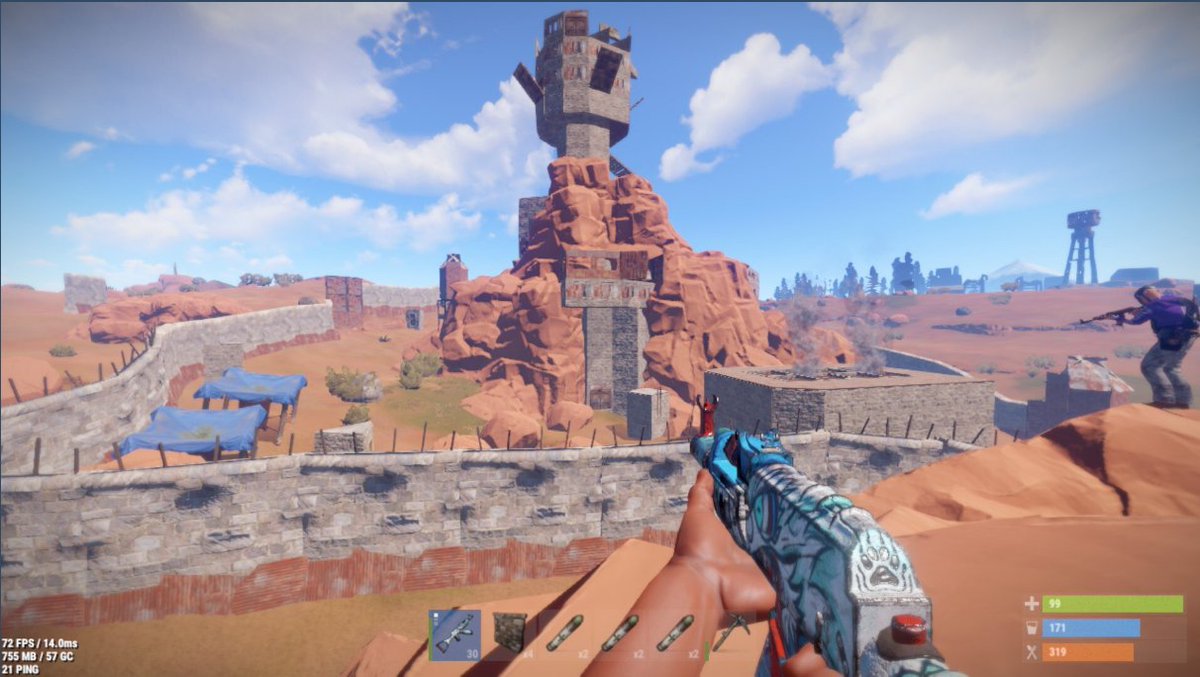
Literally EVERYTHING about this video from the front page of Rust reddit is just chefs kiss.
From the aesthetic, to the procgen, to the color, to the guns.
God I miss these days.