I need to know this. I really need clarity here: what is the dollar-amount cur off for a BIG CHECK?
If you're making a donation and presenting a big check to a recipient what amount moves you from a quiet, regular-sized paper check to a BIG CHECK?
I gotta know.
o3 can write something which would be decently high-effort fanfiction (prompt gestured in direction of “Jurassic Park but with competent people involved; scathing postmortem of five sigma near miss”)
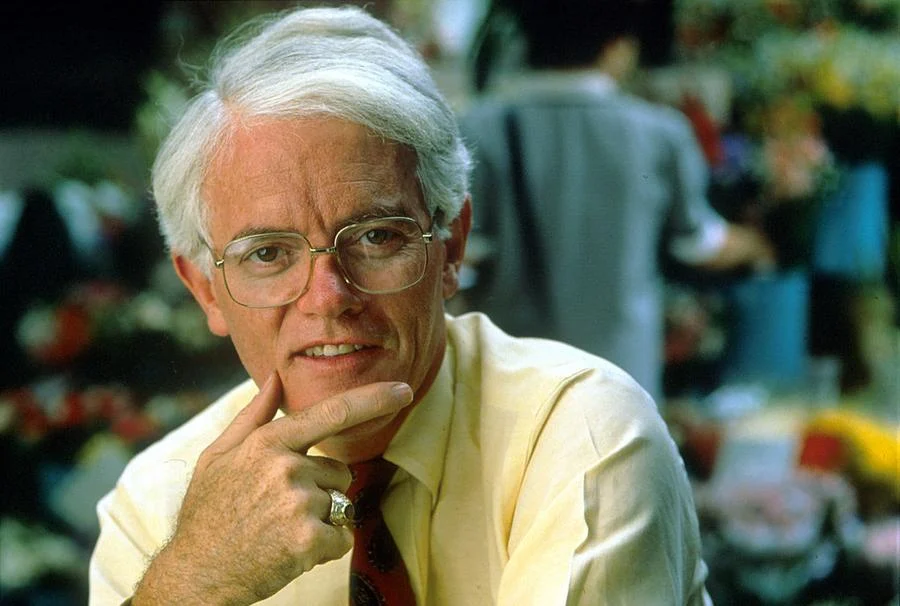
Peter Lynch is well known for his investment record at the Magellan Fund and his best selling books
Did you know that he wrote articles on investing in Worth Magazine during the 1990s?
I uncovered those articles a few years ago and shared with here:
https://t.co/Qjqxq33NBr
Watch me rewrite an ad twenty times :)
There’s no flash of inspiration. It’s more like building a cabinet. Lots of axe work, piece by piece, 'til it's there.
Occasionally a 17 year old will write, asking for entrepreneurial or business advice.
Oftentimes they’re early bloomers and already have something going on. Others are chomping at the bit once they get out of high school. It’s great to hear from them.
But my advice is generally that they don’t need advice. You don’t need advice at 17. You need experiences. You don’t need to be told what to do, you need to be told to do.
Now, that in itself could be construed as advice, but it’s really not meant as that. It’s anti-advice, if anything. Don’t listen. You’ll learn out there, not in this email.
At 17 you have more time than you’ll ever have to just fuck around and find out. Anything else is just getting in the way.
There’s no unlock, no sage advice from some oldster that’s going to make a lick of difference at 17. The doing, and the self-discovery, will give you all the advice you need until you really hit a point where the stakes matter and the right suggestion could mean everything.
Until then, wander. Be 17.
A company is essentially two things: a group of people and a collection of decisions. How those people make these decisions is the art of running a business.
Here are some of the things we think about at 37signals when faced with a decision. Some of these we say out loud, some we think quietly. Consider this a collection of tools in a tool chest — you only grab for the ones you need when you need them. Most stay in the box most of the time.
--
1. Why are we deciding anything at all? Does a decision actually need to be made here?
2. Is the right person making this decision? Not the right role, but the right person with the right information, context, and insight? Who’s merely chiming in?
3. If we remove the immediate impact, how do we think we’ll feel about this decision a year from now?
4. Why hasn’t this decision been made already? Why didn’t we decide before?
5. What’s taking so long to make this decision? Why are we hesitating? What does that reveal?
6. Why would someone else make a different decision? What’s the other side — or two or three — look like?
7. Can we make this decision smaller? Can we take one big decision and turn it into three smaller ones?
8. How easily can we reverse the decision?
9. What was our first instinct on this decision? Are we now just walking around in circles trying to justify that gut reaction with data?
10. What would happen if we just didn’t make the decision?
11. What happened the last time we made a decision like this?
12. What are we looking forward to after the decision is made? What are we afraid of?
13. How can we make this decision easier? What parts can we eliminate from consideration?
14. Is there even a wrong decision?
15. Do we anticipate making a different decision if we wait until tomorrow morning to make it?
16. Is any decision better than no decision, or is no decision better than any decision?
17. What other decisions will be impacted by this decision?
18. Will this decision eliminate the need to make other decisions, or will it create the necessity to make even more decisions?
19. What missing information would lead to making a different decision?
20. Will this decision make more work for people that don’t have extra time for that work? Or will it eliminate work?
21. Could this decision be a good one for someone else to practice making?
22. When do we have to decide?
23. Will this be a one-and-done decision, or will this be a repeating decision?
24. Is anyone outside the company depending on this, or is this a decision of our own making?
25. How does this decision impact customers vs. impact us?
26. Is this primarily a data-based decision, or an intuition, gut-based decision?
27. Would another opinion help or hinder?
28. If we were forced to make a decision right this second, what would it be?
29. Where do we think we’d be today if we made this decision 90 days ago?
30. Is there anything in this decision we’d regret if we didn’t take X, Y, or Z into consideration?
31. Do you even care which way this goes? If not, why are you involved?
32. When and how will we know whether the decision was the right one, or if it even mattered?
33. When the consequences of our decision appear, are they likely to be visible with the naked eye or do they require a microscope to detect? If the latter, does it even matter?
34. What principles are we bending if we make this decision?
35. Are we asking multiple people to make a decision that one person should be making?
36. Is the return on effort worth it?
37. What gets easier if we make this decision? What gets harder? Will easier remain easier in the long term, or is it short-term easy but long-term hard? And vice versa.
38. In the end, is this about money?
@sweatystartup The How To Train Your Dragon book series. It's nothing at all like the movies and tells an epic coming of age hero's journey story arc following a young viking boy.
Fantastic series.
Be the biggest fan of the people you care about.
Defend them.
Keep the hope alive.
Make them look good.
Catch them when they fall.
Be there when they need you.
Root for them unconditionally.
Thirty-eight years into being a stand-up comedian, Jerry Seinfeld was asked how his daily work routine has evolved over the years.
“It’s the exact same,” he said. “I do the exact same now as I did when I was 21 in 1975.”
He sits down with a yellow legal pad, he said, and
"my writing technique is just: You can’t do anything else. You don’t have to write, but you can’t do anything else.”
That’s your day? the interviewer asks. That’s what you’ve done every day for thirty-eight years? That, to me, sounds torturous.
“It is,” Seinfeld admits. “But you know what? Your blessing in life is when you find the torture you’re comfortable with…Find the torture you’re comfortable with, and you’ll do well.”
Takeaway 1:
To most, what Jerry Seinfeld does every day sounds like torture. But Seinfeld loves what he does. "I love my big, yellow legal pad," he said. "Once I get that pad open, I can’t stop…the next thing I know, the day is gone.”
Paul Graham has a great essay on this imbalance.
"My father is a mathematician," Graham writes. "To me the exercises at the end of each chapter in a math textbook represent work...To him the problems [are] the reward."
"It seemed curious that the same task could be painful to one person and pleasant to another."
If what is torturous to other people is rewarding to you, Graham writes, "that's something you're well suited for."
Takeaway 2:
In the early 1980s, the sociologist Daniel Chambliss spent 5 years studying swimmers at every level of ability.
In 1989, he published his research in a paper, “The Mundanity of Excellence.” Essentially, Chambliss found that Olympic champions don’t train more than the average swimmer. Instead, they train differently. In particular, they do “what others see as boring.”
Chambliss tells the story of a group of coaches from around the world visiting a U.S. Olympic Team practice. “The visiting coaches were excited at first…then soon they grew bored, walking back and forth, glancing down at their watches, wondering, after the long flight out to California, when something dramatic was going to happen.”
“They all have to come to see what we do,” the U.S. Olympic Team coach said. “They think we have some big secret.”
There is no secret. There is only the doing of the mundane, boring, torturous work, day after day.
Find the mundane, boring, torturous work you like, as Seinfeld said, "and you’ll do well."
- - -
"Your blessing in life is when you find the torture you’re comfortable with." — Jerry Seinfeld
Follow @bpoppenheimer for more content like this!
I heard @ShaanVP say this today.
He said it a year ago on @myfirstmilpod but man is it EVERgreen.
"Seeking a mentor is an advanced form of procrastination."
Got me reelin



![bpoppenheimer's tweet photo. Thirty-eight years into being a stand-up comedian, Jerry Seinfeld was asked how his daily work routine has evolved over the years.
“It’s the exact same,” he said. “I do the exact same now as I did when I was 21 in 1975.”
He sits down with a yellow legal pad, he said, and
"my writing technique is just: You can’t do anything else. You don’t have to write, but you can’t do anything else.”
That’s your day? the interviewer asks. That’s what you’ve done every day for thirty-eight years? That, to me, sounds torturous.
“It is,” Seinfeld admits. “But you know what? Your blessing in life is when you find the torture you’re comfortable with…Find the torture you’re comfortable with, and you’ll do well.”
Takeaway 1:
To most, what Jerry Seinfeld does every day sounds like torture. But Seinfeld loves what he does. "I love my big, yellow legal pad," he said. "Once I get that pad open, I can’t stop…the next thing I know, the day is gone.”
Paul Graham has a great essay on this imbalance.
"My father is a mathematician," Graham writes. "To me the exercises at the end of each chapter in a math textbook represent work...To him the problems [are] the reward."
"It seemed curious that the same task could be painful to one person and pleasant to another."
If what is torturous to other people is rewarding to you, Graham writes, "that's something you're well suited for."
Takeaway 2:
In the early 1980s, the sociologist Daniel Chambliss spent 5 years studying swimmers at every level of ability.
In 1989, he published his research in a paper, “The Mundanity of Excellence.” Essentially, Chambliss found that Olympic champions don’t train more than the average swimmer. Instead, they train differently. In particular, they do “what others see as boring.”
Chambliss tells the story of a group of coaches from around the world visiting a U.S. Olympic Team practice. “The visiting coaches were excited at first…then soon they grew bored, walking back and forth, glancing down at their watches, wondering, after the long flight out to California, when something dramatic was going to happen.”
“They all have to come to see what we do,” the U.S. Olympic Team coach said. “They think we have some big secret.”
There is no secret. There is only the doing of the mundane, boring, torturous work, day after day.
Find the mundane, boring, torturous work you like, as Seinfeld said, "and you’ll do well."
- - -
"Your blessing in life is when you find the torture you’re comfortable with." — Jerry Seinfeld
Follow @bpoppenheimer for more content like this!](https://pbs.twimg.com/media/F6Zhkp1W4AA3vX4.jpg)


