Senior Software Executive | Technology Strategy for Business Growth | Writing actionable posts on technology, strategy, blockchain and personal development.
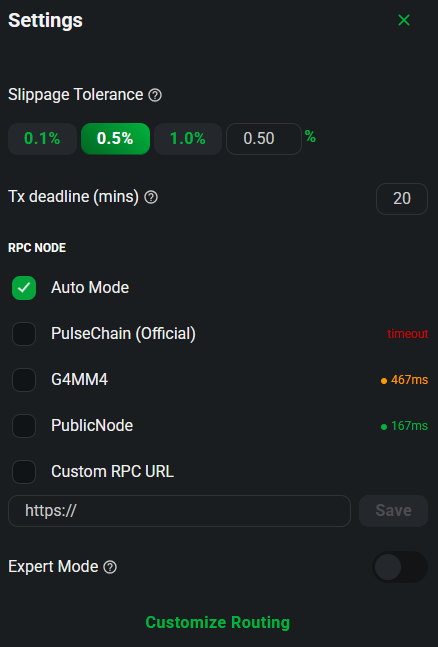
PulseX has been updated. v1.1.5 has RPC node auto failover and supports custom RPC. Be a big boy and run your own node and then you have your own private RPC!
@KiwiDenny Pleaser types will always struggle the most in this role. You need to build trust based relationships and have the guts to say “no!” when it needs to be said. You also need to have the data to back up your decision to explain why it’s a no.
@ann_kasumova@KiwiDenny 👉 My name is Lance
👉 Love books, blockchain and business
👉 Love solving complex problems for customers
👉 25 years leading product, platform and development organizations
@CodeWithPraveen I have found Jira to be way too rigid for managing longer term product plans. I prefer Product Board for H2-H3 planning and an integration to Jira for H1 requirements .
@KiwiDenny Agreed. And often what they tell you they do to get things done is also not accurate. Humans are great at forgetting workarounds. Hence the need to mix both attitudinal and behavioral/contextual research when digging for requirements. Human nature is tricky.
@bhaskar_mishra@KiwiDenny Totally right! That is why I like to use a rolling confidence metric with my teams so that when we talk about dates/scope we also talk about how confident we are in those predictions and what we will do next to improve confidence. Keeps expectations in line with reality.
@sollecitom@KiwiDenny It really does depend. Having teams go dark in hopes they will figure it all out is actually quite risky in a competitive market. When you have a business to run, delivery dates are part of the game, especially in a public Corp.
@KiwiDenny Horizons of the roadmap. Near term, mid term and long term and we expect increased estimate confidence as the deliverables progress along the horizons toward launch. Also a great way to determine if your plans are off target before a date is missed.
@PGEgan@carlvellotti Agreed! You just need to have trusted technical folks that can ensure the work is truly required. I get a lot of requests to “re-architect” features that sometimes won’t lead to real customer benefit. Engineers hate working on old/other peoples code.
@AJoshDickerson@carlvellotti Not always. I generally ask my PMs to drive the resource allocation pie across the features we need to build. I balance this by ensuring Engineering maintains full freedom on 20% capacity at all times. Sometimes we invest more or less but then it’s a negotiation.
@carlvellotti They don’t convince me. I give them 20% capacity to constantly burn it down. You can’t afford this in a startup but you can in a larger operation. Keeps your tech operating smoothly and more efficiently which benefits customers in the end.