I’m transitioning my long-form writing and archival threads from X to Substack.
X is a stream.
This work requires structure, continuity, and citation stability.
Nothing here is being disowned or rewritten.
The archive exists to preserve what has already been written — intact, dated, and contextualised.
You can find it here:
https://t.co/S7HoxLt7pW
This account may go quiet.
The work will not
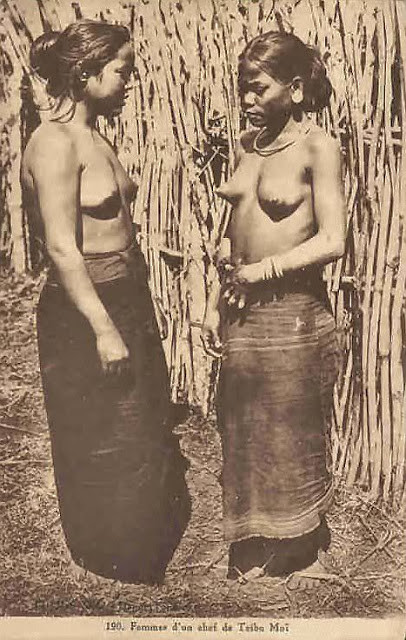
**Nadal #97. Tàbù Mai, c. 1920. “Femmes d’un chef de Tàbù Mai.” Real card. Fictional breath.**
**H’Mai** and **Y Tlu** stand back-to-back against the rattan wall, no gap for the lens to slip through.
Their skirts are indigo so dark it drinks the sun, hemmed with the same thread their mothers used to stitch war shields. H’Mai’s left hand rests on her hip—fingers still smelling of *Artocarpus* sap from the morning’s harvest. Y Tlu’s right hand cradles a single *Garcinia* fruit, skin split to reveal the yellow flesh that will feed the chief’s youngest tonight.
The wall behind them is the longhouse spine—each rattan strip a story: the night the river rose, the year the tigers came, the day the French counted heads and called it tax. A *Bambusa* shoot pushes through the dirt at their feet—tomorrow’s ladder, today’s witness.
Breasts bare, nipples ringed with the faint white of old milk. No blush. No pose. They are talking—lips barely moving, eyes sharp as fishhooks. The photographer thinks they’re silent. He doesn’t speak the language of glances.
He wanted “chef’s wives.”
He got **guardians**.
He paid in salt.
They gave reflection.
He cropped the *Garcinia*.
They kept the seed.
This isn’t a portrait of submission.
It’s a wall the empire never breached.
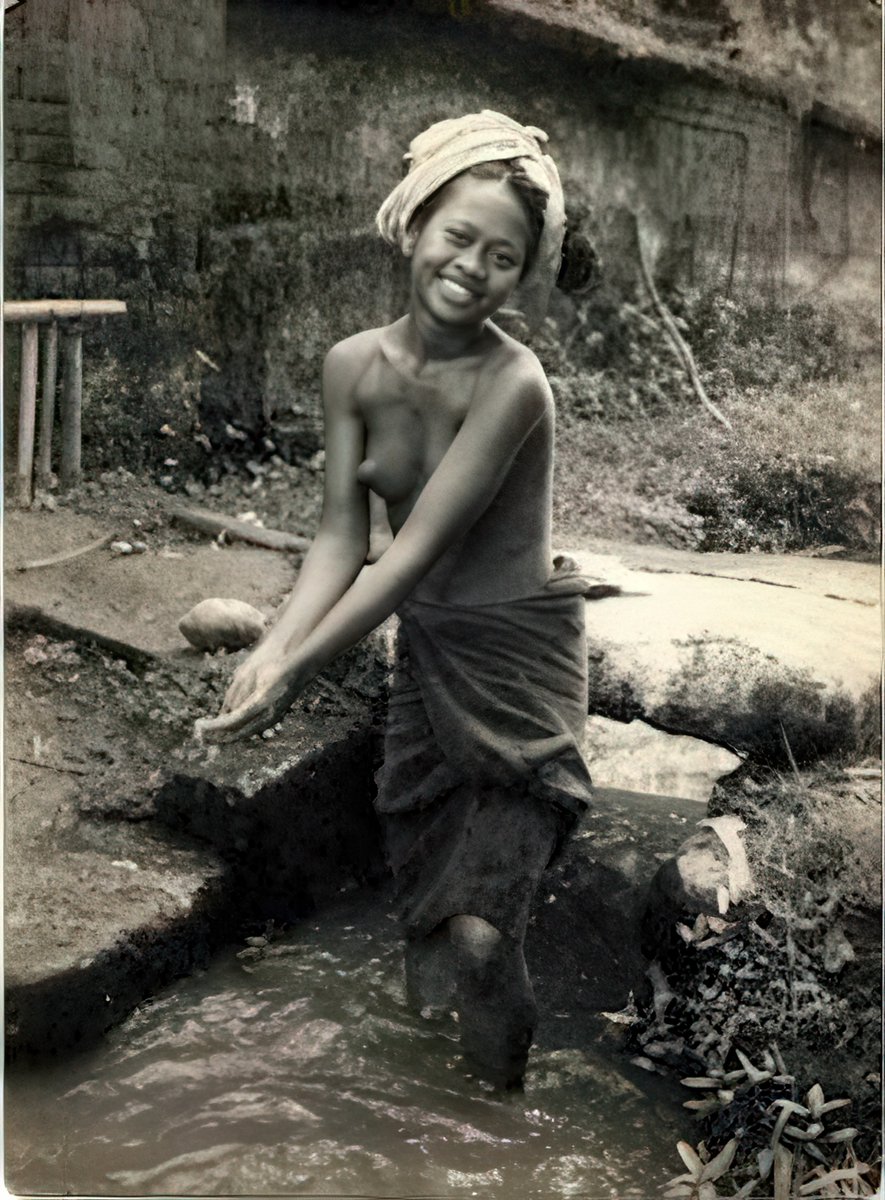
𝐍𝐚𝐝𝐚𝐥 #1𝟎𝟎𝟏. 𝐓𝐢𝐫𝐭𝐚 𝐄𝐦𝐩𝐮𝐥, 𝐁𝐚𝐥𝐢, 𝟏𝟗𝟑𝟎𝐬. “𝐅𝐨𝐮𝐫 woman 𝐨𝐟 𝐭𝐡𝐞 𝐬𝐩𝐫𝐢𝐧𝐠 𝐫𝐞𝐟𝐮𝐬𝐞 𝐭𝐡𝐞 𝐦𝐢𝐬𝐬𝐢𝐨𝐧𝐚𝐫𝐲’𝐬 𝐬𝐭𝐚𝐫𝐞.” Real. Fictional breath.
Four Balinese women wade waist-deep through holy water, stone dragons vomiting cleansing streams above their heads; four bodies, one river that remembers every invader.
Simple kain wrapped low on hips, soaked cotton turned second skin; no pattern, only the absence that mocks every European sermon on decency. No jewelry but the white frangipani tucked behind wet hair; worn to remind the gods they are still beautiful, still here. Breasts bare, nipples dark and untouched; because the water is sacred and the gaze of men is not.
Behind them, the volcanic ridge smokes with morning mist. A black crow dives sudden and low; the old signal for strangers carrying crosses and rifles. The Dutch resident in starched white, bible in one hand, camera in the other, barks “Bedek je borsten!”
They smile wider.
This is not obedience.
This is **living archive**.
He wanted “modest native girls.”
He got **fire older than his God**.
He paid in silver guilders for the postcard.
They gave reflection.
He cropped the breasts.
They kept the horizon.
**Modesty Mandate Countdown:**
1894: Dutch Ethical Policy begins; “uplifting” the native.
1906: Female breasts officially declared “offensive to public morality.”
1931: “Civilized” = covered, Christian, cropped.
This isn’t ethnography.
It’s **verdict carved in wet stone**.
▶ 𝐔𝐧𝐥𝐞𝐚𝐫𝐧.
Find the frangipani they tried to make profitable.
Name the future they tried to crop.
#UncropTheTruth #Decolonisation
𝐍𝐚𝐝𝐚𝐥 #𝟏𝟐𝟔. 𝐁𝐚𝐥𝐢, 𝐜. 𝟏𝟗𝟑𝟎. “𝐓𝐞𝐦𝐩𝐥𝐞 𝐁𝐚𝐭𝐡 — 𝐋𝐚𝐬𝐭 𝐔��𝐛𝐮𝐭𝐭𝐨𝐧𝐞𝐝 𝐁𝐫𝐞𝐚𝐭𝐡.” Real plate. Fictional breath.
𝐋𝐮𝐡 𝐀𝐲𝐮, 𝐊𝐞𝐭𝐮𝐭 𝐒𝐚𝐫𝐢, 𝐍𝐲𝐨𝐦𝐚𝐧 𝐑𝐚𝐭𝐢𝐡, 𝐌𝐚𝐝𝐞 𝐖𝐚𝐭𝐢, 𝐆𝐮𝐬𝐭𝐢 𝐏𝐮𝐭𝐮 — five bodies, one current, breasts floating like canang offerings the Dutch will soon try to sink.
Their kamben are geringsing — double-ikat meant to blind leyak — now knotted low to free the skin the kontrolir calls obscene. Hair pinned with frangipani, white for the melukat rite that washes plague from the village. Nipples ringed with boreh rice, sacred not shame, until the mission blouse arrives next monsoon.
Behind them, holy springs spill from candi mouths — water the pemangku blesses, the banjar drinks, the tourist photographs. A jalak bird dives low — the old signal the gamelan has been hidden in the bale. The Dutch toeristen gids, camera ready and grin rehearsed, coaxes “mooi, lach eens!”
They do.
This is not a laugh.
This is **lustration**.
He wanted bathing beauties.
He got **priestesses**.
He paid in postcards.
They gave reflection.
He cropped the frangipani.
They kept the bloom.
𝐌𝐨𝐝𝐞𝐬𝐭𝐲 𝐌𝐚𝐧𝐝𝐚𝐭𝐞 𝐂𝐨𝐮𝐧𝐭𝐝𝐨𝐰𝐧
1931: hotel decrees blouse or no tip.
1935: bare breast equals ten-cent fine.
1940: civilized equals covered, commercialized, cleansed.
This is not a spa postcard.
It is **ablution** for the day the empire drowns in its own lens.
▶ 𝐔𝐧𝐥𝐞𝐚𝐫𝐧.
Find the spring they tried to make profitable.
Name the bloom they tried to crop.
#UncropTheTruth #Decolonisation
Nadal #214. Rodias, 19th century. Ceylon.
This image was not made to understand.
It was made to classify.
Bodies arranged.
Skin exposed.
Context erased.
Two women. A boy. A seated man.
Not a family.
A “type”.
Colonial ethnography loved this format.
Freeze people.
Strip time.
Label the plate.
Notice the palms.
Generic tropics.
No village. No work. No ritual.
Only bodies against nature.
Clothes reduced to wraps.
Jewellery left just enough to signal “exotic”.
Expression neutral.
Agency zero.
This was science then.
Race cataloguing.
Empire needed visuals to justify rule.
Now colour returns.
Not to beautify.
To reveal.
Brown skin was never sepia.
White cloth was never shame.
Nudity was not primitiveness.
It was climate, labour, culture.
Colonial cameras saw absence.
Archaeology sees systems.
The violence was not in skin exposure.
It was in removal of voice.
Restore colour.
But more importantly—
restore context. 🧿🌴
#UncropTheTruth #Decolonisation
**Nadal #97. Central Highlands, circa 1920. “Chasseresse Mois avec gibier.” Real frame. Fictional breath.**
**H’Yl** claims the sambar with the quiet of a woman who never needed permission.
Her thighs—corded from years of stalking boar and bamboo—rest easy on the warm flank. The bolt she loosed still quivers in the heart; blood steams in the noon heat, scenting the air with iron and victory. Skin shines with sweat, crushed ginger, and the musk of a chase that began before the sun cleared the ridge.
Her loincloth—hand-beaten rattan, dyed with *Morinda* root—clings like a second skin, knot tied with the same hand that nocked the arrow. Necklace: two leopard claws, one melted French franc hammered into a spirit disc that caught moonlight the night her brother survived fever.
She counts the antlers with a hunter’s eye: eight points, enough meat for the gong feast, hide for a new drum, sinew for bowstring, marrow for the child who will walk tomorrow. The forest listens—*Dipterocarpus* dripping resin, hornbill clacking approval, cicadas holding breath.
The Frenchman—sweating in wool, boots rotting with Saigon mud, lens fogged by his own panic—crouches like a thief. He paid a porter to drag the deer into “better light,” then cropped the crossbow, blurred the claws, zoomed until the kill became backdrop for his fetish. He will mail this to Paris with a lie: *“sauvagesse avec proie.”* His hands shake; he fears the woman more than the leopard.
**H’Yl** never looks at him.
Her gaze is on tomorrow’s fire.
60% life. 40% theft.
The forest keeps the score.
Stieng family with man and woman dressed alike, bodies at ease, unworried of the coming “civilization” shift. 1930-37. 🌿
Same cloth. Same bare skin. No gendered dress code yet. No rulebook saying who must hide and who can breathe.
Children barefoot. Forest behind them still theirs. Village still feeding itself. They didn’t know yet that suits and missions and borders were coming to “organize” them.
They weren’t uncivilized. They were simply not arranged for Empire. 💀
I’m transitioning my long-form writing and archival threads from X to Substack.
X is a stream.
This work requires structure, continuity, and citation stability.
Nothing here is being disowned or rewritten.
The archive exists to preserve what has already been written — intact, dated, and contextualised.
You can find it here:
https://t.co/S7HoxLt7pW
This account may go quiet.
The work will not
Stieng villagers. 1937. A whole village moving like one big family, land as pantry, forest as roof. 🌿
Then came the clever men with charts. First they broke the village into nuclear families. Then they broke family into isolated consumers. All in the name of GDP.
Now everyone chases growth while pretending not to see the real explosion: population, extraction, hunger. The mess isn’t “backward tribes”. The mess is this growth obsession that forgot limits, kinship, enough. 💀
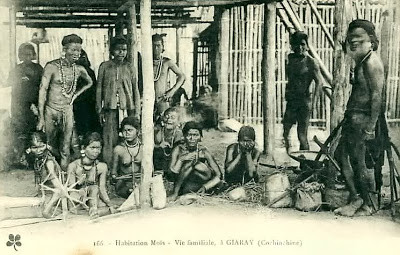
**Nadal #96. Giaray, circa 1928. “Habitation Mois – Vie familiale.” Real frame. Fictional breath.**
The house breathes.
Fifteen bodies under one roof of elephant grass.
**Y Ksor** stands left, hand on the pillar he felled with a stone axe—his grandfather’s axe, still sharp enough to split French skulls if needed. His loincloth is smoked fish and sweat. **H’Rai** beside him twists cotton on a spindle that hums like a trapped bee; each thread a promise to clothe the child at her feet.
Center, **H’Blang** squats over the fire, blowing life into embers with a bamboo tube. Smoke curls around her breasts like it’s done for a thousand nights—no curtain, no shame. The pot is clay older than the caption.
Children weave between legs: one chews sugar cane, another fingers a porcupine quill. A baby nurses openly; milk drips, nobody wipes it.
Back row, **Y Thip** leans on a crossbow taller than the Frenchman who’ll never see it. His eyes are on the forest, not the lens.
The photographer—sweating in wool—arranges them like furniture. He titles it *“vie familiale.”* He crops the crossbow, blurs the spindle, zooms on bare skin. Wants poverty porn, not pulse.
But smell the air: ginger, fish, earth. Hear the spindle sing. Feel the heat of bodies that belong here.
This isn’t a habitat.
It’s a heartbeat.
The camera came to document extinction.
They gave it life.
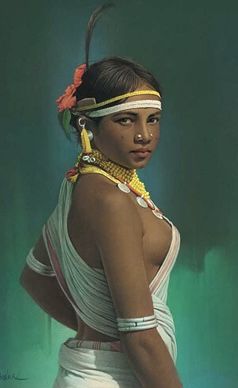
𝐍𝐚𝐝𝐚𝐥 #𝟐𝟏𝟑𝟑. 𝐒𝐨𝐮𝐭𝐡 𝐀𝐬𝐢𝐚, 𝐜. 𝟏𝟗𝟒𝟎𝐬. "𝐓𝐡𝐞 𝐒𝐭𝐮𝐝𝐢𝐨 𝐓𝐡𝐚𝐭 𝐑𝐞𝐟𝐮𝐬𝐞𝐝 𝐓𝐨 𝐄𝐫𝐚𝐬𝐞."
They draped her in silk. Gold at her throat. Feather in her crown. White fabric wrapped careful round her chest.
Studio portrait. Colonial gaze. Paint-backdrop green.
The photographer posed her. The empire taught her shame. But look at her face — she stares back. Unbroken. 💫👑
Her grandmother wore less. Her mother wore less. For centuries.
Then came the laws. The cloth mandates. The "civilizing" missions that measured morality in inches of covered skin.
Modesty was never hers to learn. It was theirs to enforce.
Every wrapped breast in these studio portraits is a record of colonial violence dressed as virtue. 🔥
**Nadal #96. Central Highlands, c. 1925. “Femmes Mois – Village Scene.” Real frame. Fictional breath.**
**Y Dju**, **H’Rin**, **K’Sa**—three bodies, one pulse, rooted in the slash of a swidden field.
Their skirts are rattan rings stacked like armor, each coil a moon spent weaving under torchlight. The weave is tight enough to carry a child, loose enough for river wind. Necklaces of glass and bone—blue beads from a Chinese trader, teeth from a clouded leopard that raided the rice last harvest. No one flinches at the bare chests; the sun has been their only shirt since the first seed.
Behind them, the mountain exhales smoke from a dozen cooking fires. A *Rhinoceros hornbill* slices the sky, beak clacking like gossip. The women’s eyes track it, not the camera. They know the bird will bring rain. The Frenchman only knows it ruins his light.
Y Dju on the left—her left hand cradles a *Curcuma* root still caked with soil, the yellow flesh that will dye the next skirt. H’Rin in the center—her belly carries the faint silver of stretch marks, proof the village grows. K’Sa on the right—her machete scar across the ribs is a river map only her lover reads.
The photographer barks: *“Ne bougez pas!”*
They don’t.
This is not stillness.
This is **stance**.
He paid in needles.
They gave reflection.
He cropped the hornbill.
They kept the storm.
This isn’t a village snapshot.
It’s a declaration: the land still feeds them, the lens never will.
Nadal #1234. Bali, c. 1890. Exchange before empire.
Real. Fictional breath.
[Names withheld] cluster beneath banyan shade and palm fronds, measures passing palm to palm, tubers and baskets grounding the frame; eight bodies, one circulating ledger.
Kain of coarse hand-woven cotton, hitched for work not display, answering the colonial idea that economy requires supervision to be rational. Stone weights and split-reed baskets, worn smooth by years of calibration, carried to keep balance fair. Bodies heat-marked, practiced; because trade predates paperwork.
Behind them, the pasar breathes as the colonial road creeps closer. A wooden measure taps; the old signal, value agreed. The controller with notebook says “Record.”
They keep trading.
This is not disorder.
This is indigenous accounting.
He wanted figures.
He got flow.
He paid in ledgers.
They gave sustenance.
He cropped systems.
They kept trust.
Modesty Mandate Countdown:
1873: Market oversight proposed by colonial residents.
1888: Stall permits introduced near temple routes.
1905: Civilized equals regulated exchange under ordinance.
This isn’t his genre.
It’s a living archive.
▶ Your turn, witness.
Find the measure they tried to replace.
Name the economy that refused.
Nadal #1062. Bali, c. 1908. Looking back at the road.
Real. Fictional breath.
Ni Ketut, Made, Wayan, and Luh stand on the raised stone edge of a compound, bodies angled outward, eyes measuring distance and return; four bodies, one watch.
Sarongs of hand-loomed cotton, wrapped for balance and heat, not concealment, answering the colonial idea that order arrives with stitching. Shoulder cloths and bare feet, worn to move between field and shrine, not to signal virtue. Bodies present, alert, uncoached; because standing guard was ordinary life.
Behind them, the thatched roof breathes and palms lean as paths converge. A leaf cracks underfoot; the old signal, arrival coming. The man with camera and notes asks them to face front.
They keep their angle.
This is not posing.
This is orientation.
He wanted subjects.
He got sentinels.
He paid in glass plates and captions.
They gave vigilance.
He cropped the approach, the waiting, the choice.
They kept horizon, footing, banjar memory.
Modesty Mandate Countdown:
1897: Village edges photographed as native life.
1904: Compound visibility tied to reporting.
1913: Civilized equals front-facing, compliant, still.
This isn’t a village scene.
It’s living archive on lookout.
��� Your turn, witness.
Find the angle they refused to straighten.
Name the road that stayed theirs anyway. 🔥🌾
Nadal #1049. Bali, c. 1905. Carrying the village.
Real. Fictional breath.
Ni Luh, Ketut, and Made move along the dirt lane between stone wall and palms, feet measuring slope, breath synced to load; three bodies, one moving storehouse.
Sarongs of hand-loomed cotton, tied high for balance, not concealment, answering the colonial idea that labour must first be modest to be moral. Shoulder cloths and callused palms, worn to distribute weight and time, not virtue. Bodies present, trained, uncoached; because provisioning was choreography learned early.
Behind them, compound walls hold shade as counting eyes approach. A crow lifts; the old signal, requisition coming. The officer with ledger and boots calls hurry.
They keep pace.
This is not burden.
This is circulation.
He wanted porters.
He got logistics.
He paid in orders and minutes.
They gave continuity.
He cropped the distance, the planning, the skill.
They kept routes, loads, banjar memory.
Modesty Mandate Countdown:
1899: Road carriers photographed as native labour.
1907: Transport permits tied to dress advisories.
1916: Civilized equals timed, priced, supervised.
This isn’t a travel scene.
It’s living archive in transit.
▶ Your turn, witness.
Find the balance they tried to rush.
Name the village that moved itself anyway. 🔥🌾
Nadal #1034. Bali, c. 1900. Pasar before permits.
Real. Fictional breath.
They fill the pura yard from banyan shade to split gate, baskets set down by habit, shoulders trained by harvest cycles, voices rising and folding like tide; hundreds of bodies, one banjar pulse.
Sarongs of hand-loomed cotton, tied for heat and movement, not concealment, answering the colonial idea that order begins with tailoring. Udeng headwraps, bangles, ash and turmeric smears, worn to mark task, kin, and vow, not respectability. Bodies present, working, uncoached; because provisioning followed calendar, not command.
Behind them, temple stone cools the noon as counting eyes arrive. A pestle knocks once; the old signal, weighing begins. The colonial officer with ledger and boots says clear the path.
They keep trading.
This is not disorder.
This is desa economy.
He wanted a market to regulate.
He got subak logic in motion.
He paid in permits and proclamations.
They gave surplus for odalan.
He cropped noise, rhythm, reciprocity.
They kept routes, measures, banjar memory.
Modesty Mandate Countdown:
1894: Pasar photographed as native life.
1906: Stall access tied to dress advisories.
1914: Civilized equals spaced, priced, supervised.
This isn’t a crowd scene.
It’s living archive under pura shade.
▶ Your turn, witness.
Find the subak rhythm they tried to freeze.
Name the banjar that fed itself anyway. 🔥🌾
Nadal #971. Mainland Southeast Asia, c. 1900. Lined up for the record.
Real. Fictional breath.
They stand on a rough plank before scrub and crop, feet bare, shoulders squared, eyes fixed past the lens; eight bodies, one imposed pause.
Wraps of bark cloth and river cotton, tied by habit and climate, answering the colonial idea that order arrives with buttons and seams. Beads, arm rings, headbands, scars of work and rite, worn to mark kin and role, not to perform modesty. Bodies present, unposed, untrained; because standing still was not consent.
Behind them, foliage presses and tools rest half-used as documentation advances. An insect snaps; the old signal, counting begins. The officer with rifle and notebook says stay there.
They hold.
This is not ceremony.
This is forced visibility.
He wanted types.
He got relations.
He paid in plates, captions, and inventory numbers.
They gave continuity.
He cropped names, ages, consent.
They kept stance, ground, memory.
Modesty Mandate Countdown:
1895: Group photographs classified as native types.
1902: Dress rules tied to mission access.
1910: Civilized equals aligned, labeled, reduced.
This isn’t anthropology.
It’s living archive under pressure.
▶ Your turn, witness.
Find the coercion outside the frame.
Name the continuity that outlived the ledger. 🔥👣