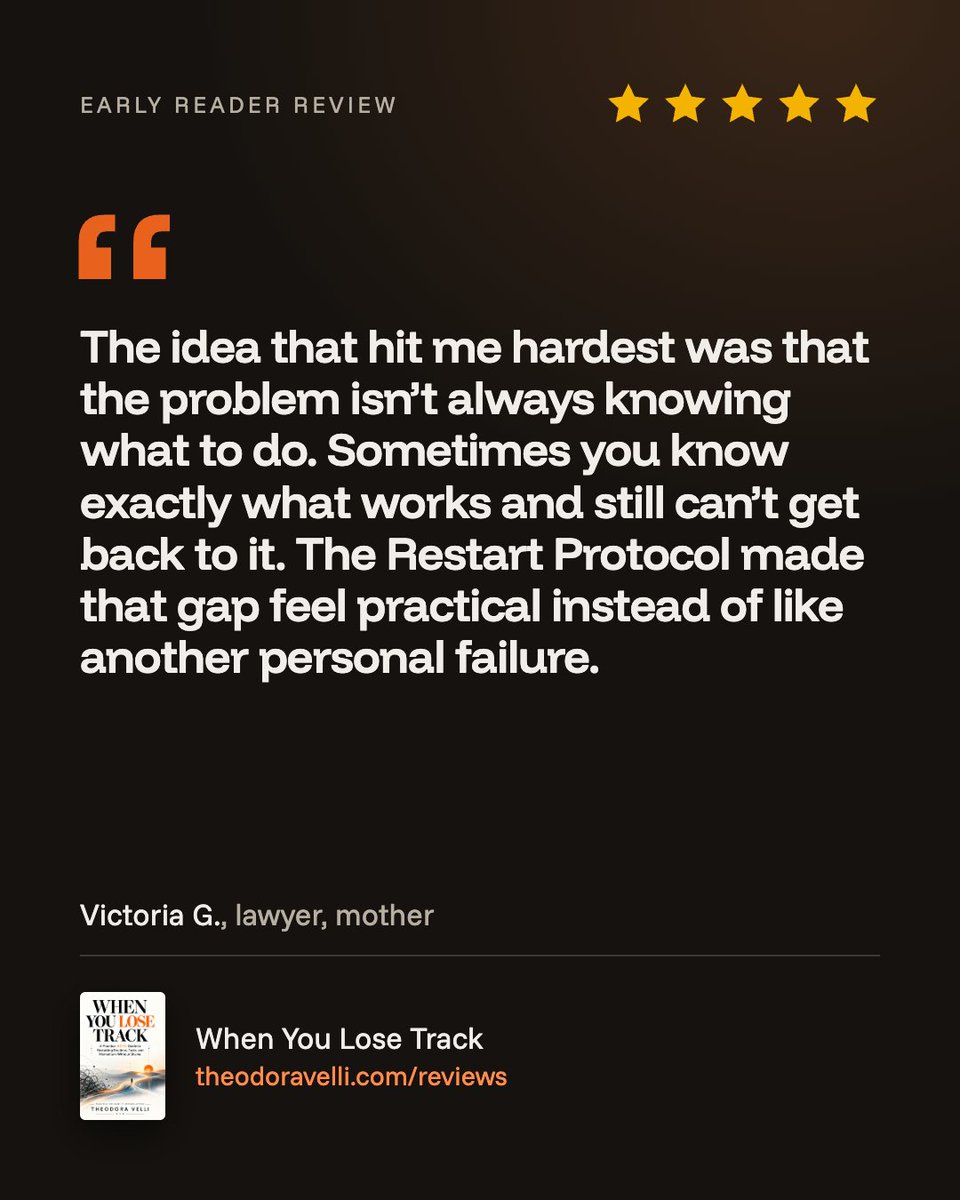
Sometimes you know exactly what works and still can't get back to it.
That gap is not a personal failure. It's a design problem.
https://t.co/Pqrd5utic2
You lost track. Again.
Day one, in 4 steps:
1. Don't rebuild your system tonight
2. Ask what gets more expensive in 24h
3. Message who's waiting, with a new date
4. Set a stop time, then stop
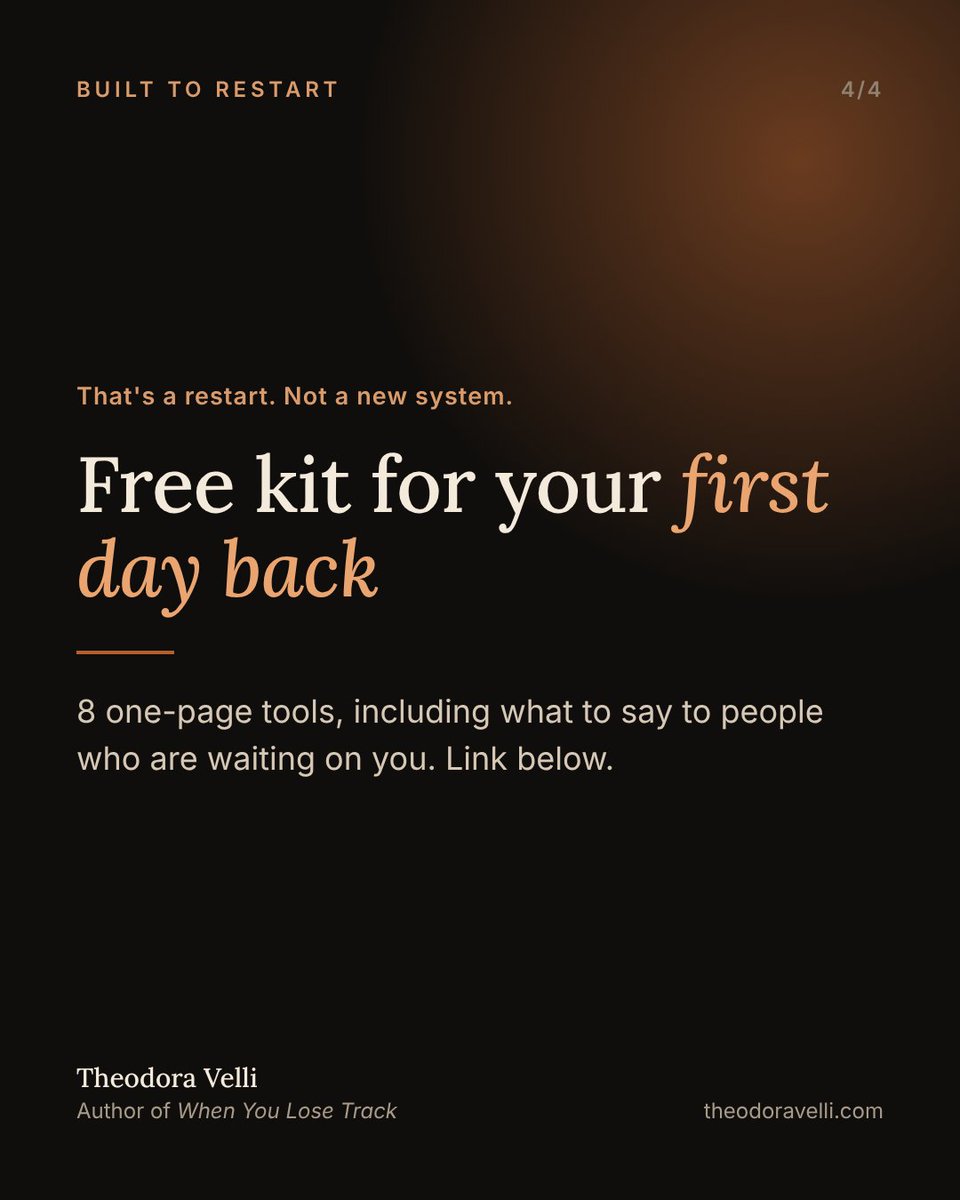
Free kit for your first day back: https://t.co/ub1JEJqnFP
Most ADHD systems work for a while, then disappear.
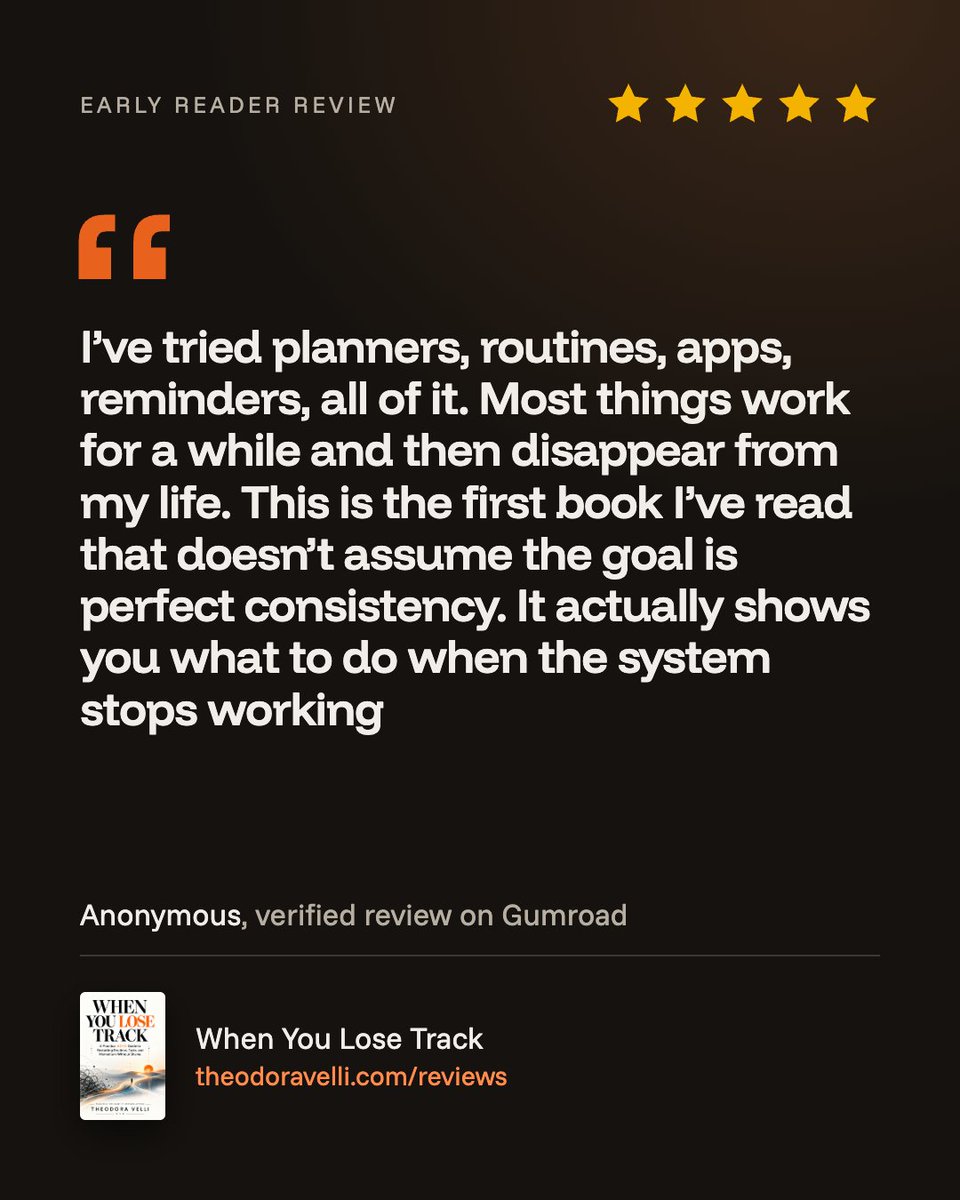
An early reader on When You Lose Track: "It actually shows you what to do when the system stops working."
https://t.co/Pqrd5utQ1A
The ADHD problem nobody warns you about:
The routine worked.
Then you missed 3 days.
Now reopening it feels harder than building a new one.
The problem isn’t always starting.
Sometimes it’s returning.
Most ADHD advice is built around one goal: stay consistent.
I think that’s the wrong target.
A good system isn’t one you never leave.
It’s one you can return to.
That’s the idea behind everything I’m building around When You Lose Track.
A system with only a full version has one gear.
That works until you don’t have a full-version day.
Low Power is not cheating.
It is the smallest version that protects what matters while capacity is low.
ADHD advice is obsessed with consistency.
I think that’s the wrong metric.
The real test of a system is not how long you can keep it going.
It’s how easily you can return after you lose it.
Stop measuring streaks.
Measure restart latency.
@tootsietoes22@tootsietoes22, don’t study longer. Make the return easier. Try 20–25 min, close the notes, write what you remember from memory, then check the gaps. Repeat later instead of rereading everything.