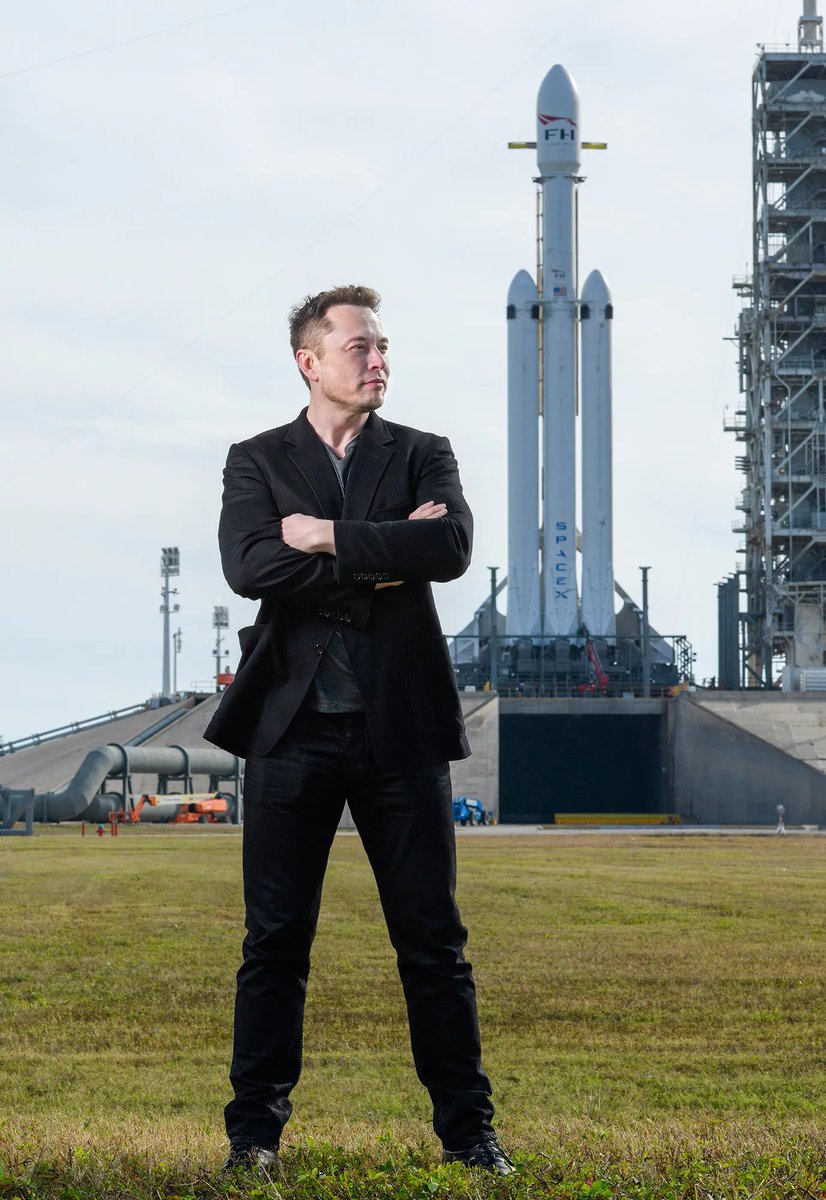
Elon Musk's first wife once described what it's like to watch him fail.
She said he doesn't react the way normal people react. When a rocket explodes, most people in the room go silent. Some cry. Some start calculating the financial damage.
Musk pulls out his phone and starts making calls. Not emotional calls. Engineering calls. "What failed. When can we fix it. When's the next launch." His voice doesn't change. His face doesn't change. The rocket that just cost $60 million is already in the past. The next one is all that exists.
She said it was the most unsettling thing she'd ever witnessed. Not because he was cold. Because he genuinely wasn't affected. The failure didn't register as failure. It registered as data. An experiment that produced results. Results that inform the next experiment.
This is why he wins. Not because he doesn't fail. He fails more spectacularly than anyone in history. He wins because failure occupies zero psychological space. It enters as data and exits as action.
Most people lose not because they fail but because they spend weeks processing the failure before acting again. Musk spends zero seconds. The gap between failure and next attempt is a phone call.
- @multiplanet1
Año 2006, la BBC llama a un experto para hablar de tecnología. Ese mismo día otro hombre, un inmigrante del Congo tenía una entrevista laboral.
Ambos se llamaban Guy, así fue que un productor apurado puso al aire al Guy equivocado.
Increiblemente no le dieron el empleo.
🚨 Anthropic's own team just showed how to actually use Claude Code properly.
30 minutes. free. the person who created Claude Code.
watch the workshop. bookmark it.
worth more than every $500 course you almost bought.
you've been using Claude without knowing 40 of its commands.
Then read the guide below.
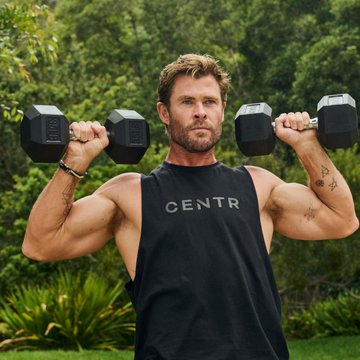
En 2022, Chris Hemsworth se hizo un análisis de sangre frente a la cámara.
El resultado le indicó que su cerebro tenía de 8 a 10 veces más probabilidades de desarrollar Alzheimer que el de una persona promedio.
Tenía 39 años.
Lo que hizo a continuación reescribió los próximos 30 años de su vida...
Elon Musk on developing a maniacal sense of urgency:
"The best offense and defense is speed."
The SR-71 Blackbird is a military plane with almost no defense except acceleration.
It was never shot down. Not even once.
Over three thousand missiles were shot at the SR-71 Blackbird and none hit.
All it did was go faster.
The power of speed is underappreciated as a competitive factor.
The real way you actually achieve intellectual property (IP) protection is by innovating fast.
If your rate of innovation is high, then you don't need to worry about protecting the IP, because other companies will be copying something you did years ago. That's fine. Just make sure your rate of innovation is fast; speed of innovation is what matters.
We obviously cannot compete with big car companies in size, so we must do with intelligence and agility.
A factory moving at twice the speed of another factory is basically equal to two factories. The company will succeed if it can do with one factory what takes other companies two, three, or four factories.
We try to think, "How we can make each factory produce what would normally require five or even ten factories?"
While China was busy shipping missile chemicals to Iran and collecting yuan tolls at Hormuz, someone was inside its most sensitive supercomputer stealing everything.
CNN reports that a hacker group calling itself FlamingChina breached the China National Supercomputing Center in Tianjin and exfiltrated up to 10 petabytes of classified defence data. The samples posted on dark web forums include bomb and missile designs, animated explosion simulations, structural integrity tests, renderings of the J-20 stealth fighter, sixth-generation aircraft concepts, nuclear submarine schematics, hypersonic weapons systems, and target analyses for American assets including HIMARS launchers and carrier strike groups.
Ten petabytes. For context, the entire printed collection of the US Library of Congress is approximately 10 terabytes. This breach is one thousand times that volume. It is being sold for cryptocurrency on Breach Forums. Cybersecurity experts who reviewed the previews told CNN the data appears genuine, matching known output patterns from the NSCC Tianjin facility, which serves over 6,000 clients including defence agencies and aviation firms across China.
The timing is extraordinary. Trump posted a 50 percent tariff threat on any country supplying military weapons to Iran hours before CNN published this story. Five Chinese vessels shipped sodium perchlorate to Iran from Gaolan Port in the past six weeks, enough propellant precursor for hundreds of ballistic missiles. China’s ghost fleet continues operating through the IRGC’s yuan toll booth at Hormuz. And now the supercomputer that designed the weapons China is helping Iran reconstitute has been gutted by hackers selling its contents for the same cryptocurrency that Iran charges for strait passage.
The irony is architectural. China built a parallel financial system using yuan and crypto to bypass the dollar at Hormuz. A hacker group is now using crypto to bypass Chinese state security and sell Beijing’s most classified military designs to anyone with a wallet address. The same technology that enables sanction evasion enables espionage monetisation. The blockchain does not distinguish between a toll payment and a weapons leak. It processes both.
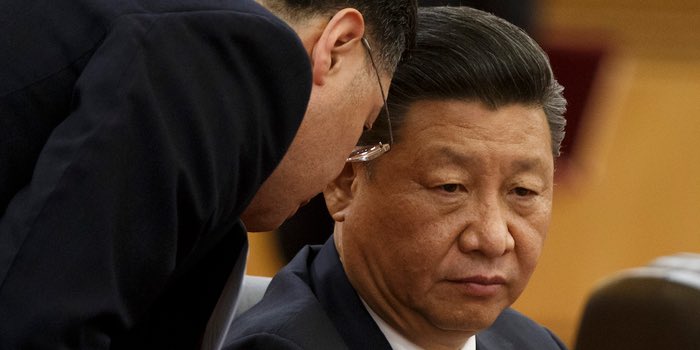
For Xi, this is a catastrophe arriving at the worst possible moment. Bessent’s mid-May Beijing summit was already going to be difficult. Trump holds the waiver on 140 million barrels of Chinese-bound Iranian crude. The 50 percent tariff threat targets China’s arms pipeline. The IDF just destroyed 100 Hezbollah targets using F-35I aircraft with Israeli software upgrades the Pentagon approved today. And now the classified designs for China’s most advanced military systems, the systems that justify the rare earth monopoly and the South China Sea posture and the Taiwan coercion campaign, are available for purchase on a dark web forum for less than the price of a single Hormuz transit.
If the data is genuine, every adversary and ally of China can now reverse-engineer the capabilities Beijing spent decades and hundreds of billions developing. The J-20’s stealth profile. The hypersonic glide vehicle’s trajectory calculations. The nuclear submarine’s acoustic signature. The sixth-generation fighter’s sensor architecture. All of it, priced in crypto, available now.
China wanted to build a post-dollar world. A hacker group just demonstrated what that world looks like when the technology works in both directions.
https://t.co/0fIdGsM5qH
Former Tesla President @jonmcneill says Elon Musk kept employees motivated post-IPO by "starving the balance sheet":
"Even after we were public, we operated Tesla on a quarter's worth of cash."
"I kept saying to Elon, 'I would like a little breathing room.' He's like, 'No. We've got to think like we're young entrepreneurs: if you're two steps from death—you operate differently.'"
"I was like, 'Man, we have a quarter's worth of cash, but we have 70 days of payables. That means we have less than three weeks of cash. This is tight.' But that kept everybody sharp."
"The experience of working in a Musk company is—you are literally on the biggest challenge you've ever faced in your life, with the best people, and you're doing the best work of your life. That's what keeps most people engaged—it's not the balance in their bank account."
Jeff Bezos explains why he didn’t take additional equity building Amazon
Jeff is asked why he only paid himself $80,000 per year and never took additional equity during his tenure as CEO of Amazon. He responds:
“I asked the comp committee of the board not to give me any comp. My view was I was a founder. I already owned a significant amount of the company, and I just didn’t feel good about taking more. I felt I had plenty of incentive. I owned more than 10% of the company, and earlier — before it was diluted by various things — more than 20% of the company. I just felt how could I possibly need more incentive?”
Jeff continues:
“Most founders own big chunks of the company. They’re more like owner-operators. The way they increase their wealth is not by getting more equity. They just want to make the equity they have more valuable. And so I just would have felt icky about it. And I’m actually very proud of that decision.”
Jeff is especially proud of how much wealth he’s created for other people:
“Somebody needs to make a list where they rank people by how much wealth they’ve created for other people — instead of the Forbes list where it ranks you by your own wealth. Amazon’s market cap is $2.3 trillion today. I own about $200 billion-ish of it. So if you take $2.3 trillion and subtract out the piece I kept for myself, then I’ve created something like $2.1 trillion of wealth for other people. That should put me pretty high on some kind of list. And that’s a better list — how much wealth have you created for other people?”
Video source: @nytimesevents (2024)
In 2017, Harvard professor Michael Porter gave a 72-minute masterclass on why most companies fail at strategy.
His frameworks:
- "There is no best company"
- The IKEA test he hated every minute of
- Why happy customers mean you're in trouble
12 lessons on strategy:
In 2019, MIT professor Patrick Winston gave a legendary 1-hour lecture called “How to Speak.”
It has 18M+ views for a reason.
His frameworks:
• Your ideas are like your children
• The 5-minute rule for job talks
• Why jokes fail at the start
15 lessons on communication:
ELON: WE EXIST BECAUSE WE’RE WIRED TO LOVE OUR CHILDREN
“I think, frankly, if we weren’t biologically inclined to love our children and to want to nurture them and find reward in that, we would have ceased to exist long ago.
You can take, say, a wolf or a wildcat or some creature that would normally be very aggressive, and when that creature has babies, the mother nurtures them and is tender and caring.
We’ve evolved to love our offspring, it’s literally built into our survival.”
Source: @iam_smx
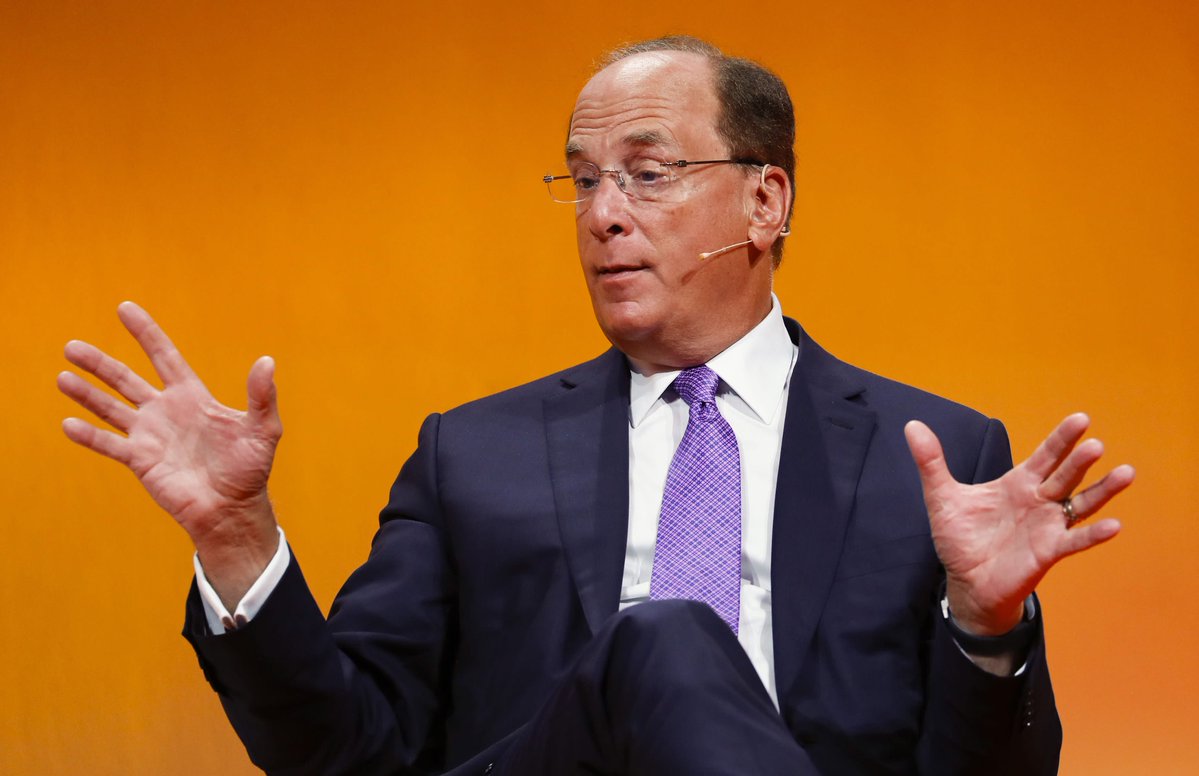
🚨 THE LARGEST INVESTOR ON EARTH JUST SILENCED THE AI BUBBLE CROWD
BlackRock CEO Larry Fink controls $14 trillion in assets. Every Fortune 500 CEO reads his letter before breakfast
He just said this in his latest BBC interview:
1. “This is not a bubble”
Fink talks directly to hyperscaler CEOs. Their message: demand is outpacing supply. Not slowing. Accelerating. They can’t build fast enough.
2. One data centre = $50 billion
A single 1GW AI data centre costs over $50 billion. One tech CEO told Fink he needs 23 gigawatts by 2030. That’s over $1 trillion. From one company.
3. China is building 100GW of nuclear. Right now.
That’s 30+ nuclear power stations under construction. While Europe debates planning permission, China pours concrete.
4. The real bottleneck isn’t chips. It’s power.
“The biggest issue that limits the West is the cost of power.” His words. Not mine.
5. AI will create a blue-collar boom
Fewer analysts. More technicians (e.g. electricians, welders, plumbers). The people who build and maintain AI infrastructure will be in massive demand.
6. Energy pragmatism, not ideology
Oil. Gas. Solar. Nuclear. Wind. Use everything. Cheap power = economic resilience. Expensive power = recession.
The largest investor on Earth just told you exactly where the money is going.
AI infrastructure demand is real and accelerating. Only constrained by power.