Shocking Truth: $3.7 Billion in Federal Contracts Cancelled (Most People Have No Idea Why)
We looked at the federal contract data that almost no one else bothered to check. https://t.co/49uT6y4m16
The federal government canceled more than 52,000 contracts worth $3.73 billion.
But the headline does not tell the full story.
Most of the cancellations were not because companies failed. They were tied to changing policies, budgets, programs, or government needs.
Only 455 actions were linked to cause or default.
The data also shows that many cancellations happened in groups, suggesting larger program changes rather than isolated company problems.
The September 2025 data file is available on Kaggle.
https://t.co/hhLv2PJjtw
#GovernmentContracts #FederalSpending #BusinessNews #DataAnalysis
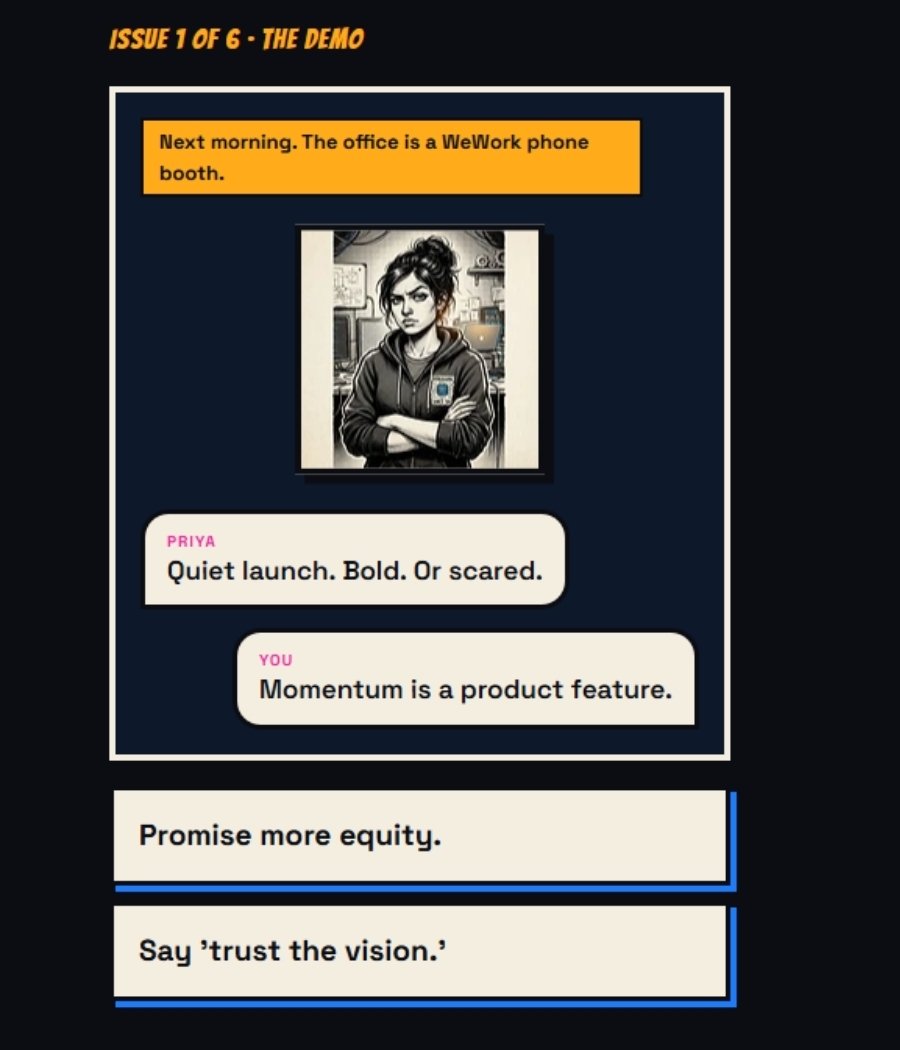
American Archetypes: AI Bro Edition
SEASON 1
10 alpha testers were promised a stable build... but 1 click on "Post Demo" wiped out...
The AI Bro Survival Dilemma
"Palo Alto. 4:12 AM. The demo works if nobody touches it." You pick Ego or Safety and the stats keep score.
Season 1 coming soon
Follow for more
#gaming #tech #coding
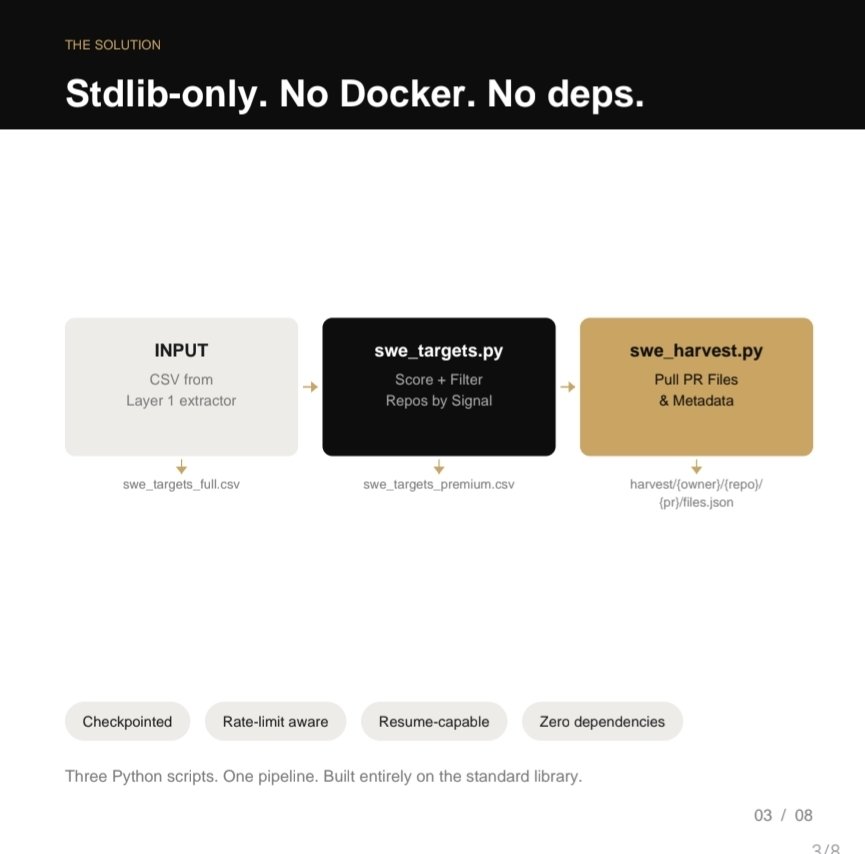
Finding high-signal GitHub repos shouldn't require expensive tools. Here is a zero-dependency Python script to harvest and score repos automatically. #python#coding#github#softwareengineering
The indie scene is at a tipping point.
Indie builders have more power than ever, but too many are hustling just to survive,struggling to turn cool projects into real businesses.
Meanwhile, the giants just keep getting bigger: stockpiling capital, talent, and reach.
That’s how you get a K-shaped economy. One group skyrockets, the rest get left behind.
The top dogs use new tech to multiply what they already have.
Everyone else? Churning out more content, more side-projects, more noise. Still not breaking through.
But the answer isn’t trying to outgun the giants.
It’s using new tools as leverage.
One person can now research, code, design, automate, and launch like a one-person startup army.
Downloads ≠ revenue.
But they are signs:
Someone found the work.
Someone saw enough value to grab it.
Someone out there might have a problem worth solving.
Here’s the real funnel:
Attention → Trust → Real connection → Conversation → Conversion
If you’re indie, you need to become a pro at building the systems around your work.
Not just the product.
Distribution.
Email list.
Partnerships.
Pricing.
Follow-up.
Feedback loops.
YC blew up because it created network effects for founders.
Indie builders need to do the same for each other.
Imagine a world where indie builders cross-promote, share audiences, remix each other’s wins, and turn solo hustles into an unstoppable movement.
That’s how we go from scattered creators to a real indie economy.
The future doesn’t have to be:
Tech makes the giants even bigger.
It can also be:
But tech also lets individuals build what used to take whole companies.
The giants are building the engines.
Indie builders need to lay the roads, build the marketplaces, and create the networks that let everyone benefit.
Zero docker, zero dependencies, pure standard library. CODE-001 shows how to build robust automation pipelines that never break. Would you use standard library-only scripts for your next project? #PythonProgramming#Developer#CodeQuality#Tech
An index, not a dump.
We built EX-NIHILO-CODE-001 to solve a practical procurement problem:
Which large public systems repositories meet clear requirements for license, scale, language usage, and level of recent activity?
The verified 2026-09-16 release includes:
• 339 repositories in full
• 319 in the verified cut
• 205 in premium
• 1,020 public PR file lists and patches in the paid harvest
The three core gates are explicit:
SPDX identifiers limited to MIT, Apache-2.0, BSD-2-Clause, and BSD-3-Clause
Linguist-estimated LOC between 100,000 and 10,000,000, with the named language at 40%+ of linguist bytes
A verified cut requiring 100+ merged GitHub PRs and a successful count
One important note on our method: GitHub’s size_kb reflects how much space a repository takes up on disk, not the number of lines of code. CODE-001 estimates lines of code using the byte counts reported by GitHub’s linguist tool, divided by a calibration for each programming language.
We never use a simple multiplier to convert disk size to lines of code.
Some exclusions are just as important. For example, gin-gonic/gin is well-known but too small to qualify. Repositories with copyleft licenses are not included. For golang/go, we do not show its full contribution history because it uses Gerrit instead of GitHub pull requests.
For premium rows, Layer 3 stores five sampled public PR file lists and patches per repository for fail-to-pass construction. That produced 1,020 complete PR records. We used public GitHub APIs; we did not clone repository trees.
Before considering the $299 full pack, inspect the free evidence: a clearly labeled, star-sorted 100-row Kaggle sample with 97 verified-cut and 3 below-threshold rows, a dictionary excerpt, and one chart showing why size_kb is not LOC.
Free sample: https://t.co/XyR7nsQ5zb
@jun_song I use super grok and I rarely hit my cap quota. Are you tracking cost per query and categorizing each query with its relative token and dollar amount?