Thank you so much to everyone who has followed this thread from start to finish!
We'd love to produce more series like this. What would you like to see next?
Thank you so much to everyone who has followed this thread from start to finish!
We'd love to produce more series like this. What would you like to see next?
Thank you so much to everyone who has followed this thread from start to finish!
We'd love to produce more series like this. What would you like to see next?
On 6 April 2019, Ring of Honor and New Japan drew 16,534 fans to Madison Square Garden. On 11 December 2021, Ring of Honor drew 1,620 to Baltimore for what was billed as its final show.
Almost six years after the first joint shows in Toronto and New York, the partnership appeared to be approaching its end. New Japan was running its own American events. ROH was struggling to replace the stars who had left for AEW. By December 2019, no NJPW wrestlers were booked for ROH shows. Nothing had been announced, but the regular cooperation had largely gone.
In early 2020, there were signs of life. Marty Scurll, approaching free agency, agreed to stay with ROH on a lucrative deal that gave him a significant role in the company’s creative direction. His ambition was to rebuild relationships with New Japan and possibly AEW. The obstacles were real, though. In 2019, NJPW had wanted Scurll for its Super J-Cup, but his ROH commitments prevented it.
Still, in February, ROH announced four War of the Worlds dates for May: Buffalo on the 6th, Toronto on the 7th, Kalamazoo on the 9th and Villa Park on the 10th. Toronto was a fitting choice, as Ted Reeve Arena had hosted Global Wars six years earlier. No NJPW talent was named, but after months of nothing, there was a plan.
Then the world stopped due to COVID-19. New Japan was among the first major promotions to suspend events and ROH halted operations too. International travel was impractical and the tour was cancelled. The pandemic also exposed the financial gaps. WWE and AEW had television deals to carry them without crowds, while New Japan depended on tickets and merchandise. ROH relied on Sinclair’s support, returned through empty-arena tapings with extensive health precautions and kept paying its contracted wrestlers, at significant cost.
That summer, Scurll became the subject of allegations during the Speaking Out movement. His position became untenable, and he was removed and left the company. The man meant to rebuild the NJPW relationship was gone, and no comparable programme of joint tours replaced it.
New Japan wasn’t standing still. Its American operation launched NJPW Strong, giving it a North American product while Japanese travel was restricted. It no longer needed ROH to produce wrestling in America.
A different door was also opening. AEW had approached New Japan in early 2019, but NJPW chose to stay with ROH, and the departures of Omega and The Elite had left tension. Even so, some bridges remained. Chris Jericho had negotiated the ability to work New Japan shows and Jon Moxley won the IWGP United States Heavyweight Championship in 2019 and regained it at Wrestle Kingdom in January 2020. But his AEW obligations meant American appearances needed approval, and during the pandemic that mattered.
That created an opening. On 3 February 2021, on AEW Dynamite’s Beach Break episode, KENTA attacked Moxley after the main event and hit the Go 2 Sleep. It was the first time a New Japan wrestler had appeared on AEW television in a storyline tied to the IWGP United States title. Moxley could now work New Japan’s American tapings so his delayed programme with KENTA could progress and in return AEW featured KENTA. It wasn’t a full alliance, but it showed a willingness to share talent that hadn’t existed before.
AEW also had what ROH never did: national television and the financial resources to match. New Japan talent was now appearing for AEW and Impact while largely absent from ROH.
Neither NJPW or ROH formally declared their partnership over. In July 2021, ROH’s Joe Koff said he believed the relationships with NJPW and CMLL would continue. But there was no date, no announcement and no final break. The partnership simply became inactive.
By October 2021, ROH faced a far bigger problem. It hadn’t regained its pre-pandemic momentum, and Sinclair’s pandemic support couldn’t keep an unchanged model going. The company announced it would suspend regular operations after Final Battle and reconsider its structure, with a possible return in 2022. Contracts wouldn’t be renewed beyond the end of the year.
On 11 December 2021, Final Battle took place in Baltimore before 1,620 fans. Former ROH performers paid tribute, among them the Young Bucks, Adam Cole and Bryan Danielson, a reminder of how many careers the company had shaped.
When it began in February 2014, each side needed something the other had. ROH had an American audience but not WWE’s resources. New Japan was recovering at home but had little direct connection to Western fans. Together, they produced sold-out joint shows, international opportunities for wrestlers and storylines that crossed two markets. Bullet Club became a presence in both and The Elite found the audience that would eventually support AEW.
The biggest night was Madison Square Garden: 16,534 spectators and around $1.1 million in ticket revenue. It was also ironic, as several of the performers who created the demand were building a rival by then.
No single argument ended the partnership. There were disputes over booking and individual wrestlers, but they worked through them. What changed was the industry. New Japan got what it wanted, an international audience and the ability to promote under its own name. ROH, challenged by companies with more money and television, lost its position among dedicated fans, and AEW took it.
By helping international wrestling grow, ROH and NJPW created a market where more companies could compete for the same fans and wrestlers. The partnership changed professional wrestling, and wrestling changed enough that the partnership was never quite the same again.
Ring of Honor and New Japan sold out Madison Square Garden, and by the end of that year they had barely been working together.
On 6 April 2019, the G1 Supercard became the first non-WWE wrestling show at the Garden since 1960. The tickets had sold in summer 2018, when Omega, Cody and the Young Bucks were still part of the picture. By April, they were gone.
New Japan’s side delivered. Okada beat Jay White for the IWGP Heavyweight Championship, Kota Ibushi beat Tetsuya Naito for the Intercontinental title and Dragon Lee won the junior title match. ROH’s matches drew a more mixed response, with the crowd clearly preferring New Japan.
There was also a misfire. After Tama Tonga and Tanga Loa won the ROH World Tag Team Championship, Enzo Amore and Big Cass staged a fake disturbance at ringside. New Japan hadn’t been told and even Tonga and Loa knew nothing. It left an event meant to celebrate cooperation looking uncoordinated.
The two promotions had split the proceeds equally, which raised an awkward question. If New Japan was providing the greater enthusiasm, how much was ROH relying on its partner?
ROH tried to rebuild, signing Rush, Bandido, PCO and Brody King. But it now faced WWE’s NXT and AEW for talent and attention, and New Japan was looking elsewhere. On 21 October 2019, it formed New Japan Pro-Wrestling of America, led by Takami Ohbari, with about 27 American shows planned for 2020. Meanwhile, ROH went months without New Japan wrestlers, relying on CMLL talent for its Global Wars tour, and few ROH wrestlers were working in Japan beyond Jeff Cobb.
In December, Harold Meij insisted the American expansion could strengthen existing partnerships. Yet ROH’s Joe Koff confirmed there were no NJPW wrestlers booked for ROH. AEW, now on TNT, complicated things further. Meij said New Japan was still assessing it, and there was no formal agreement.
No formal split ever came. Instead, the alliance gradually lost its purpose. New Japan no longer needed ROH to run American shows and ROH could no longer count on New Japan stars.
But an unexpected development inside ROH was about to bring renewed hope. The alliance was fading, but it wasn’t finished.
Ring of Honor helped make All In possible. All In helped create All Elite Wrestling.
In August 2018, ROH and New Japan sold out Madison Square Garden with about 15,000 tickets. But the stars driving that success were nearing the end of their contracts. Kenny Omega, Cody, the Young Bucks and Adam Page had become central to wrestling outside WWE and they now had a bigger idea.
On 1 September 2018, Cody and the Young Bucks staged All In at the Sears Centre Arena in Hoffman Estates, Illinois. 10,000 tickets sold quickly, even though it had no established promotion’s name behind it. ROH provided production and organisational help, with Gary Juster publicly thanked by Cody. But the event proved The Elite could draw without anyone else.
ROH was doing well, having drawn about 6,000 to Supercard of Honor in New Orleans, headlined by Omega vs. Cody. Cody’s contract expired in September, though he agreed to stay through the end of 2018, and the Young Bucks and Page were nearing the end of theirs. ROH offered improved money, but it couldn’t match the chance to found a new company. WWE also pursued them, reportedly offering the Young Bucks a deal that would put Being the Elite on the WWE Network, while Page was offered money to join NXT.
By December, All Elite Wrestling, backed by the Khan family with Tony Khan central, was taking shape. Some in ROH were reportedly unhappy that their offers to keep the group hadn’t been taken seriously. Cody and the Young Bucks made their final ROH appearances that month. Omega’s NJPW contract expired in January 2019, and Jay White was being positioned as a potential successor in the foreign heel role.
At midnight Pacific time on New Year’s Eve, Being the Elite announced AEW, with Cody, the Young Bucks and Page outside the Tokyo Dome. AEW wanted New Japan, as many of its stars had built careers there, and Chris Jericho had arranged to keep working NJPW events. Early talks reportedly went well, but New Japan wasn’t ready for a formal relationship. It chose to stay with ROH and wait to see if AEW could survive.
Madison Square Garden was now just months away. It was meant to showcase ROH and NJPW at their peak, but the wrestlers who helped them get there had left to build a rival.
The Garden would be the first test of the alliance without them.
🇻🇳 ARES vs. 🇯🇵 YOTA TSUJI | The Road To #BoundforUnbound
From Vietnam to Japan's legendary Korakuen Hall!
Witness the incredible story of VPW's “THE UNSTOPPABLE FORCE” ARES and NJPW's YOTA TSUJI as they prepare to make history in a non-title singles match on Nov. 20!
#NJPW
Ring of Honor helped make All In possible. All In helped create All Elite Wrestling.
In August 2018, ROH and New Japan sold out Madison Square Garden with about 15,000 tickets. But the stars driving that success were nearing the end of their contracts. Kenny Omega, Cody, the Young Bucks and Adam Page had become central to wrestling outside WWE and they now had a bigger idea.
On 1 September 2018, Cody and the Young Bucks staged All In at the Sears Centre Arena in Hoffman Estates, Illinois. 10,000 tickets sold quickly, even though it had no established promotion’s name behind it. ROH provided production and organisational help, with Gary Juster publicly thanked by Cody. But the event proved The Elite could draw without anyone else.
ROH was doing well, having drawn about 6,000 to Supercard of Honor in New Orleans, headlined by Omega vs. Cody. Cody’s contract expired in September, though he agreed to stay through the end of 2018, and the Young Bucks and Page were nearing the end of theirs. ROH offered improved money, but it couldn’t match the chance to found a new company. WWE also pursued them, reportedly offering the Young Bucks a deal that would put Being the Elite on the WWE Network, while Page was offered money to join NXT.
By December, All Elite Wrestling, backed by the Khan family with Tony Khan central, was taking shape. Some in ROH were reportedly unhappy that their offers to keep the group hadn’t been taken seriously. Cody and the Young Bucks made their final ROH appearances that month. Omega’s NJPW contract expired in January 2019, and Jay White was being positioned as a potential successor in the foreign heel role.
At midnight Pacific time on New Year’s Eve, Being the Elite announced AEW, with Cody, the Young Bucks and Page outside the Tokyo Dome. AEW wanted New Japan, as many of its stars had built careers there, and Chris Jericho had arranged to keep working NJPW events. Early talks reportedly went well, but New Japan wasn’t ready for a formal relationship. It chose to stay with ROH and wait to see if AEW could survive.
Madison Square Garden was now just months away. It was meant to showcase ROH and NJPW at their peak, but the wrestlers who helped them get there had left to build a rival.
The Garden would be the first test of the alliance without them.
Madison Square Garden hadn’t hosted a non-WWE wrestling show since 1960. Not even WCW at its peak could get in.
In summer 2018, Ring of Honor and New Japan set out to change that, planning an event for 6 April 2019, the night before WrestleMania 35. The Garden is deeply tied to the McMahons. Vince McMahon Sr. promoted there from the 1950s and it hosted the first WrestleMania in 1985, plus X and XX. The last outside show was in November 1960, drawing 12,815.
Then WWE reportedly stepped in. After Sinclair CEO Chris Ripley publicly discussed ROH’s plans in June, WWE contacted the arena and Madison Square Garden pulled the date. Sinclair threatened legal action, arguing that the arena had made commitments, though no final written agreement had been signed. The Garden restored the date and the dispute never reached court.
On 8 August 2018, the G1 Supercard went on sale to ROH HonorClub members, then to the public on 10 August. About 15,000 tickets sold, one of the fastest wrestling sellouts in Garden history and eight months before the show. The card hadn’t even been announced, with only Okada, Tanahashi and Naito named. Ticket brokers bought around 3,300 of the tickets, so a sellout didn’t mean every ticket reached a fan.
Credit was shared. ROH provided the infrastructure and Sinclair’s backing, while New Japan brought stars with growing American appeal. The Elite had brought new audiences, WrestleMania weekend was already drawing fans and the Garden itself was part of the attraction. Together, they showed that the audience outside WWE might be bigger than assumed, though the venue, timing and talent made it hard to repeat.
But the success hid a problem. Cody and the Young Bucks were nearing the end of their ROH contracts, and Kenny Omega’s NJPW deal expired in January 2019. Their independent show All In had already sold about 10,000 tickets, and a new wrestling organisation was starting to take shape.
ROH and New Japan had secured the biggest event in their partnership. But would the wrestlers who made it possible still be there when the doors opened?
New Japan sold out Long Beach without Ring of Honor and the partnership never looked the same.
In July 2016, owner Takaaki Kidani said he wanted New Japan to stage its own American events, starting with 3,000 to 4,000-seat venues. ROH had given NJPW a platform, supplying venues, marketing, television and an audience. Now the question was whether New Japan could draw that audience alone.
NJPW World, launched in December 2014, had made the company far more accessible. After Wrestle Kingdom 11 and the Okada vs. Omega match in January 2017, interest soared. Website visits from the United States rose from 21% in late 2016 to 35% around the event, while Japan fell from 64% to 42%. By May 2017, NJPW World had around 50,000 subscribers, about 10,000 outside Japan. Plans included an American dojo, regular touring and wrestlers developed for the market.
Then came the test. On 1 and 2 July 2017, G1 Special in USA at Long Beach Convention Center sold out both nights, with 2,370 and 2,305 paid. Around 80% of the crowd came from outside Southern California, including 38 states, so it proved a national audience but not yet a local one. The shows also introduced the IWGP United States Heavyweight Championship and Kenny Omega beat Tomohiro Ishii to become the first champion.
ROH remained a partner, with Bullet Club connecting the two audiences. But their interests were no longer automatically aligned. A fan buying a ticket for a joint show might now buy one for a New Japan show, and if they wanted Okada, Omega or Tanahashi, New Japan could offer them directly.
Growth continued. In March 2018, Strong Style Evolved sold out Long Beach’s 4,700-seat set up. In July, the Cow Palace in San Francisco drew 6,333 paid, though it hadn’t sold out immediately, with about 3,000 tickets sold on the first day. The crowd was also more local, which was encouraging for a regular touring business.
That May, Harold Meij became president, tasked with turning New Japan into a genuinely international company with bigger digital and licensing revenue.
By summer 2018, the alliance was at a crossroads. New Japan had once needed ROH to enter America and now it didn’t.
Next came Madison Square Garden and another confrontation with WWE.
In 2012, just 616 fans outside Japan paid to watch New Japan online. Ring of Honor’s biggest online show had only around 2,300 buyers and its stream still struggled. Two small audiences, right? The promotions, however, would change wrestling.
By 2014, the American landscape looked bleak for anyone challenging WWE. Hulk Hogan and Eric Bischoff had arrived in TNA in January 2010 with dreams of reviving the Monday Night Wars, moving Impact head-to-head with Raw. The experiment failed, the company returned to Thursdays, and by late 2013 TNA was focused on controlling costs rather than expansion.
Ring of Honor had the talent and the dedicated audience and in 2011 it gained Sinclair Broadcast Group as an owner. But ownership by a television company wasn’t the same as WWE’s resources and there was no overnight fix. In May 2012, Border Wars, headlined by Kevin Steen and Davey Richards, suffered major streaming problems, and by 2013 there were serious doubts about ROH’s profitability.
Across the Pacific, New Japan was being reborn. Bushiroad bought it from Yuke��s in February 2012 for a reported 500 million yen, about $6.55 million, and Hiroshi Tanahashi, Kazuchika Okada and Shinsuke Nakamura were producing some of the most acclaimed wrestling in the world. NJPW's iPPV King of Pro Wrestling drew 52,617 orders in Japan but just 616 abroad (mainly the US and Canada). The audience was there but the route to it wasn’t.
NJPW also knew the risks of trusting an American partner. Okada’s time in TNA saw him reduced to a masked associate of D’Angelo Dinero, before he returned to win the IWGP Heavyweight Championship within two years.
Two promotions had two different problems. ROH needed stars and reach, while New Japan needed venues, experience and fans already receptive to its style. But questions of booking control, protecting talent and who benefited most hung over any deal.
On 22 February 2014, at HonorCon, New Japan announced joint shows in Toronto and New York.
The partnership was about to begin and its consequences would reach far beyond either company’s expectations.
New Japan sold out Long Beach without Ring of Honor and the partnership never looked the same.
In July 2016, owner Takaaki Kidani said he wanted New Japan to stage its own American events, starting with 3,000 to 4,000-seat venues. ROH had given NJPW a platform, supplying venues, marketing, television and an audience. Now the question was whether New Japan could draw that audience alone.
NJPW World, launched in December 2014, had made the company far more accessible. After Wrestle Kingdom 11 and the Okada vs. Omega match in January 2017, interest soared. Website visits from the United States rose from 21% in late 2016 to 35% around the event, while Japan fell from 64% to 42%. By May 2017, NJPW World had around 50,000 subscribers, about 10,000 outside Japan. Plans included an American dojo, regular touring and wrestlers developed for the market.
Then came the test. On 1 and 2 July 2017, G1 Special in USA at Long Beach Convention Center sold out both nights, with 2,370 and 2,305 paid. Around 80% of the crowd came from outside Southern California, including 38 states, so it proved a national audience but not yet a local one. The shows also introduced the IWGP United States Heavyweight Championship and Kenny Omega beat Tomohiro Ishii to become the first champion.
ROH remained a partner, with Bullet Club connecting the two audiences. But their interests were no longer automatically aligned. A fan buying a ticket for a joint show might now buy one for a New Japan show, and if they wanted Okada, Omega or Tanahashi, New Japan could offer them directly.
Growth continued. In March 2018, Strong Style Evolved sold out Long Beach’s 4,700-seat set up. In July, the Cow Palace in San Francisco drew 6,333 paid, though it hadn’t sold out immediately, with about 3,000 tickets sold on the first day. The crowd was also more local, which was encouraging for a regular touring business.
That May, Harold Meij became president, tasked with turning New Japan into a genuinely international company with bigger digital and licensing revenue.
By summer 2018, the alliance was at a crossroads. New Japan had once needed ROH to enter America and now it didn’t.
Next came Madison Square Garden and another confrontation with WWE.
Bullet Club was on every Ring of Honor show but ROH didn’t control who could join it - New Japan did.
By 2016, the stable was one of wrestling’s most recognisable acts and it had been shaken by January’s departures. WWE signed AJ Styles, Shinsuke Nakamura, Karl Anderson and Doc Gallows, and Kenny Omega became the new leader as New Japan rebuilt the group. ROH became central to that rebuild.
In May 2016, at War of the Worlds, Adam Cole joined. The Young Bucks pushed for him and Matt helped design the angle, but the final decision belonged to New Japan. The next night, Adam Page joined too, turning on Mark Briscoe with a chair in what was presented as a betrayal. He was a far less obvious choice. Page hadn’t yet become a leading ROH attraction, but Gedo wanted him and the decision had already been built into plans for a Japanese tour.
That showed who held the power. ROH could suggest ideas, such as Hunter Johnston’s February 2017 angle for Frankie Kazarian to appear to join the group, but it still needed Gedo’s approval. Bullet Club’s presence could also limit ROH’s own booking, as New Japan protected its stars from unnecessary singles losses.
The alliance also shaped contracts. By late 2016, ROH was trying to keep talent with better offers, and a proposed two-year deal for the Young Bucks covered both ROH and New Japan.
In May 2017, Cole was heading to WWE. After a farewell against Hiroshi Tanahashi at War of the Worlds, the Young Bucks embraced him. Then the lights went out and a prerecorded Omega ended Cole’s membership. When they came on again, Marty Scurll stood in the ring. The Bucks superkicked Cole and Scurll struck him with his umbrella. The story drew on the Young Bucks’ Being the Elite series, but New Japan decided to add Scurll and his role in the Best of the Super Juniors followed. Omega appeared on video because his visa problems prevented him from travelling.
By mid-2017, the two companies’ stories were hard to separate. ROH supplied the events, television and stage, while New Japan kept control of Bullet Club. The faction had become part of ROH’s identity without becoming ROH’s property.
And New Japan was now planning to stage major shows in America under its own name...
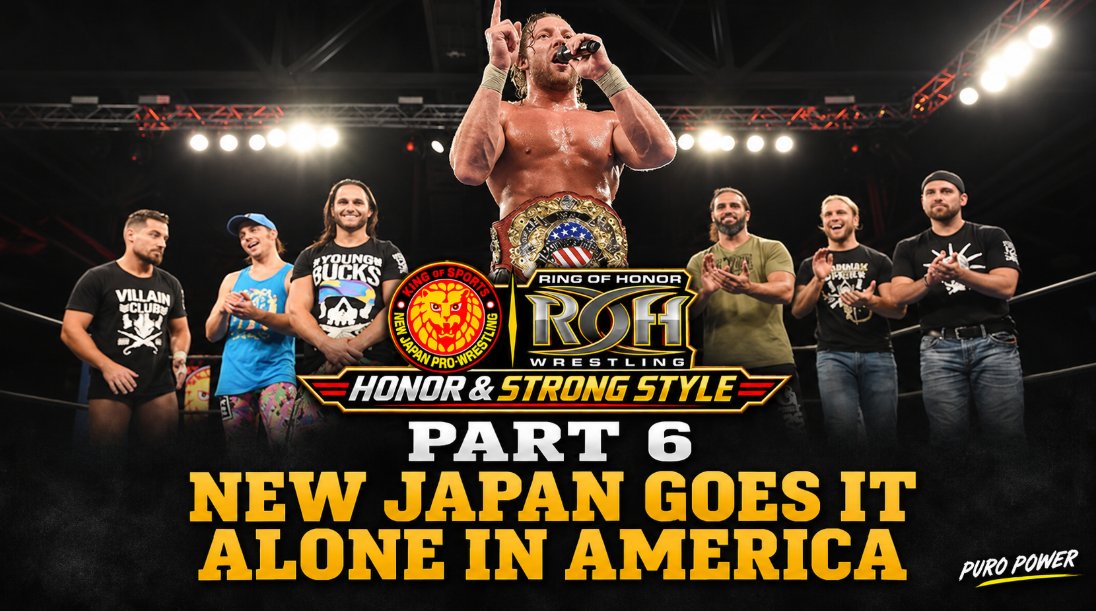
Up next: Part 6 - New Japan goes it alone in America
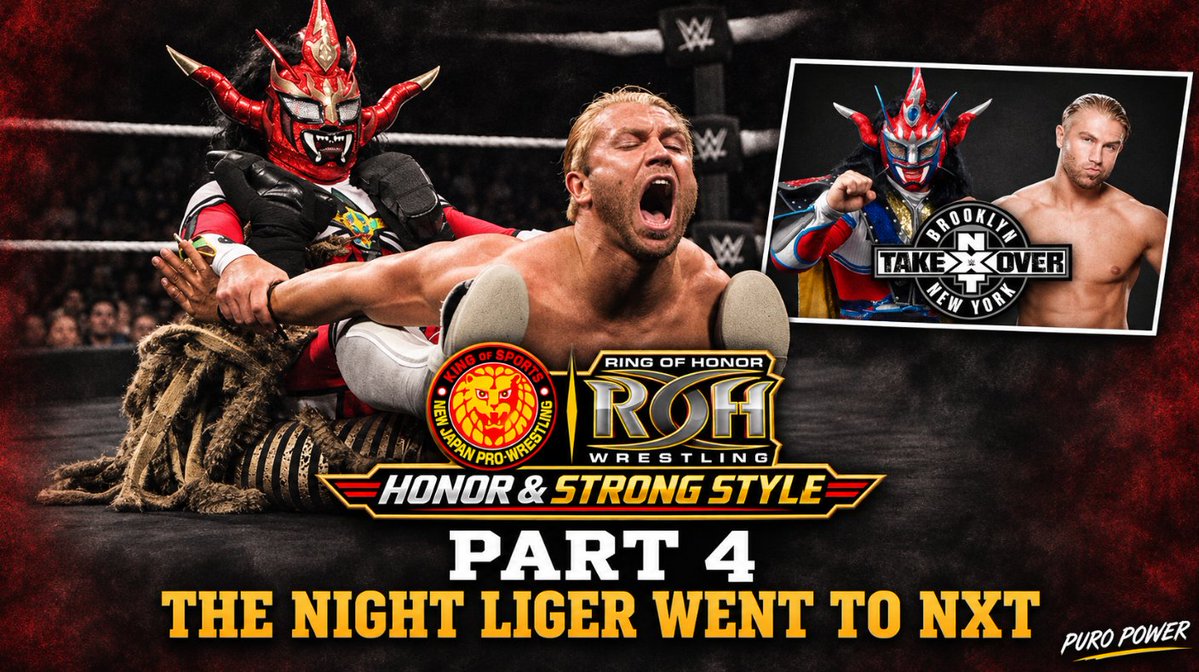
Ring of Honor found out about Jushin Thunder Liger’s WWE booking from the announcement itself and he was set to appear on the same night as ROH’s Brooklyn show.
By summer 2015, the NJPW partnership was thriving. The two promotions had run four further sold-out joint shows, reDRagon had won gold in New Japan and Michael Elgin was in the G1 Climax. Early ROH shows on Destination America with NJPW talent averaged about 288,000 viewers across two airings, against about 204,000 without them, though it was a small sample.
Then NXT got in the way. Under Triple H it was growing into something far more ambitious, and NXT TakeOver: Brooklyn on 22 August at the Barclays Center would see Finn Bálor face Kevin Owens (FKA Steen), Sasha Banks face Bayley and, at 50, Liger finally wrestle for WWE against Tyler Breeze. ROH had already booked MCU Park in Brooklyn for the same night, with Kazuchika Okada, Shinsuke Nakamura and Kushida.
Reports suggested ROH wasn’t told in advance and there was talk of the partnership ending. But ROH had plenty to lose: its access to two markets, its stars and its edge in keeping wrestlers.
Liger’s booking had been months in the making. In March 2015, he visited an NXT event in Northern California to see Bálor, his former colleague, and spoke with him afterwards. Bálor, Matt Bloom and William Regal then contacted New Japan and the request went through Masao “Tiger” Hattori. New Japan approved it, so the problem wasn’t the booking itself but the timing and the lack of warning.
Repairs followed quickly. Hirooki Goto was added to ROH’s Brooklyn show, seen as a peace offering, and Hunter Johnston travelled to Japan for talks. By late August, the dispute was settled. During the G1 Climax, Johnston told the Japanese crowd that ROH would be coming to Japan in 2016, in a format similar to NJPW’s Fantastica Mania events with CMLL.
The alliance survived its first diplomatic crisis. But the incident showed that New Japan’s partnership with ROH didn’t give ROH control over its access to the American market, and that would only matter more.
Thanks a lot, so happy to hear you are enjoying it! There's still a lot more to come.
This period of time wasn't all that long ago. I'm pretty sure many of our followers will remember it vividly. But at the same time, it was so interesting to both look back on and see how much things have changed in a relatively short space of time!
Ring of Honor found out about Jushin Thunder Liger’s WWE booking from the announcement itself and he was set to appear on the same night as ROH’s Brooklyn show.
By summer 2015, the NJPW partnership was thriving. The two promotions had run four further sold-out joint shows, reDRagon had won gold in New Japan and Michael Elgin was in the G1 Climax. Early ROH shows on Destination America with NJPW talent averaged about 288,000 viewers across two airings, against about 204,000 without them, though it was a small sample.
Then NXT got in the way. Under Triple H it was growing into something far more ambitious, and NXT TakeOver: Brooklyn on 22 August at the Barclays Center would see Finn Bálor face Kevin Owens (FKA Steen), Sasha Banks face Bayley and, at 50, Liger finally wrestle for WWE against Tyler Breeze. ROH had already booked MCU Park in Brooklyn for the same night, with Kazuchika Okada, Shinsuke Nakamura and Kushida.
Reports suggested ROH wasn’t told in advance and there was talk of the partnership ending. But ROH had plenty to lose: its access to two markets, its stars and its edge in keeping wrestlers.
Liger’s booking had been months in the making. In March 2015, he visited an NXT event in Northern California to see Bálor, his former colleague, and spoke with him afterwards. Bálor, Matt Bloom and William Regal then contacted New Japan and the request went through Masao “Tiger” Hattori. New Japan approved it, so the problem wasn’t the booking itself but the timing and the lack of warning.
Repairs followed quickly. Hirooki Goto was added to ROH’s Brooklyn show, seen as a peace offering, and Hunter Johnston travelled to Japan for talks. By late August, the dispute was settled. During the G1 Climax, Johnston told the Japanese crowd that ROH would be coming to Japan in 2016, in a format similar to NJPW’s Fantastica Mania events with CMLL.
The alliance survived its first diplomatic crisis. But the incident showed that New Japan’s partnership with ROH didn’t give ROH control over its access to the American market, and that would only matter more.
Kevin Steen lost twice in a week and Ring of Honor’s biggest partnership had a problem nobody could ignore.
When ROH and New Japan sold out Toronto and New York in May 2014, there was a catch. Hiroshi Tanahashi, Kazuchika Okada and Shinsuke Nakamura were not to lose. New Japan had spent years rebuilding its business around them, and a defeat to an outsider could damage their standing at home. The three were too valuable to risk.
For ROH, that created a real dilemma. If its own wrestlers lost too often to visitors, what would that say to its regular audience? But if it avoided competitive matches, the partnership lost its appeal.
At War of the Worlds, the problem showed. Nakamura beat Steen, Tanahashi beat Mike Bennett, and in the main event, AJ Styles retained the IWGP Heavyweight Championship over Okada and Michael Elgin. Styles knocked Okada out of the ring and pinned Elgin, so the protected star avoided the loss and ROH’s man took the fall. Anderson and Gallows also beat the Briscoes for the IWGP Tag Team Championship.
Steen had already lost to Adam Cole in Toronto. Reports suggested he was unhappy, with his contract close to expiring, though how serious it was and when it was resolved remain disputed. The wider concern was bigger than one man. Steen, Elgin and the Briscoes, three of ROH’s leading babyface acts, had all lost to wrestlers who could return to Japan. ROH’s wrestlers had to stay in America and carry the next shows.
The wins weren’t all one-way. Cole beat Jushin Liger and reDRagon took the ROH World Tag Team Championship from the Young Bucks. But the balance at the top of the card was clear.
The shows were a success, with sellouts and a strong stream by ROH’s standards. Yet they raised a question that would follow the partnership throughout: could Ring of Honor grow through New Japan without being overshadowed by it?
Up next: Part 4 - the night the partnership almost died...
@TruHeelSP3 Were you in New York, Toronto or both?!
It's really interesting that you vividly remember the personal shift. That change in perception is gonna be an important part of this series. Thank you for joining us, we are excited to post the rest!
I was at this show and it definitely made me a bigger #NJPW fan coming out of it, while continuing my love for the #ROH product, but it became clear which promotion was the superior of the two coming out of it.
I remember being blown away by Bucks vs reDRagon as well as the star power of Nakamura & Okada this night.
Tetsuya Naito says that if he loses the GHC Heavyweight Championship, he may be out of a job.
He made his second his second successful defence yesterday, against Kenoh.
Two challengers appeared in Kaito Kiyomiya and Yoshiki Inamura and both declared their interest. They meet on 6 December at Korakuen and the winner faces Naito on 31 December in Yokohama.
“This year and next year, I am the protagonist of Pro Wrestling NOAH.”
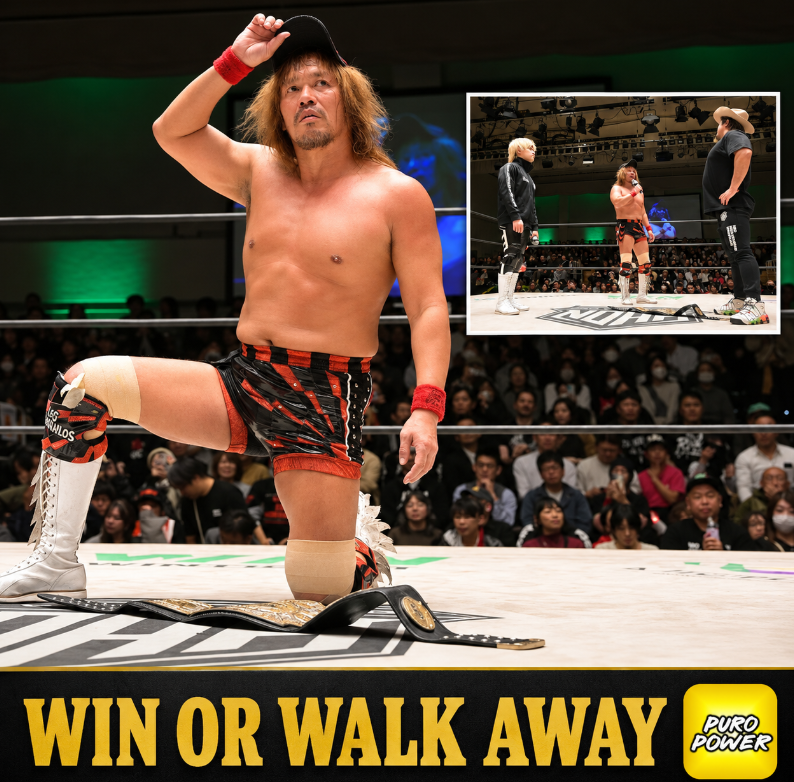
He knows what a loss would cost. Naito has led Los Tranquilos de Japon with NOAH as his main promotion since New Year’s Day, but he is still a freelancer and has no plans to join the roster. He acknowledged that some wrestlers see him as an obstacle, so a lost belt could affect his contract. “If I lose the belt, who knows what happens to next year’s contract," he admitted to Tokyo Sports.
He also dismissed those who want him to change. “I just do the wrestling I want to do. Once I can’t do that anymore, isn’t that the end?” And to critics of his ring style: “I won the belt with my current style. If anyone has a problem with it, why don’t they just thoroughly crush me in the ring?”
He wants the NOAH roster to feel the same crisis he does. If he and his stable were gone, he believes the level of attention would drop. He accepts a handover to Inamura and Kiyomiya will come one day, but not yet. “I still can’t step aside. I have to remain a high wall for them to climb.”
#noah_ghc
Kevin Steen lost twice in a week and Ring of Honor’s biggest partnership had a problem nobody could ignore.
When ROH and New Japan sold out Toronto and New York in May 2014, there was a catch. Hiroshi Tanahashi, Kazuchika Okada and Shinsuke Nakamura were not to lose. New Japan had spent years rebuilding its business around them, and a defeat to an outsider could damage their standing at home. The three were too valuable to risk.
For ROH, that created a real dilemma. If its own wrestlers lost too often to visitors, what would that say to its regular audience? But if it avoided competitive matches, the partnership lost its appeal.
At War of the Worlds, the problem showed. Nakamura beat Steen, Tanahashi beat Mike Bennett, and in the main event, AJ Styles retained the IWGP Heavyweight Championship over Okada and Michael Elgin. Styles knocked Okada out of the ring and pinned Elgin, so the protected star avoided the loss and ROH’s man took the fall. Anderson and Gallows also beat the Briscoes for the IWGP Tag Team Championship.
Steen had already lost to Adam Cole in Toronto. Reports suggested he was unhappy, with his contract close to expiring, though how serious it was and when it was resolved remain disputed. The wider concern was bigger than one man. Steen, Elgin and the Briscoes, three of ROH’s leading babyface acts, had all lost to wrestlers who could return to Japan. ROH’s wrestlers had to stay in America and carry the next shows.
The wins weren’t all one-way. Cole beat Jushin Liger and reDRagon took the ROH World Tag Team Championship from the Young Bucks. But the balance at the top of the card was clear.
The shows were a success, with sellouts and a strong stream by ROH’s standards. Yet they raised a question that would follow the partnership throughout: could Ring of Honor grow through New Japan without being overshadowed by it?
Up next: Part 4 - the night the partnership almost died...
Tanahashi, Okada and Nakamura were not allowed to lose. That one condition shaped New Japan’s first shows with Ring of Honor.
On 22 February 2014, at HonorCon in Philadelphia, NJPW chairman Naoki Sugabayashi and Masao “Tiger” Hattori announced two joint events: Global Wars in Toronto on 10 May and War of the Worlds in New York a week later. For ROH, it meant presenting Japan’s biggest stars to American fans. For New Japan, it meant a foothold in North America with an existing audience and infrastructure.
By late April, the 1,800-seat Hammerstein Ballroom had sold out, and Toronto was within 100 tickets of the same. At Ted Reeve Arena, around 1,500 fans packed in while roughly 100 more were turned away. ROH also used Ustream, New Japan’s own streaming provider, as a chance to rebuild its reputation after years of streaming trouble.
But control was shared carefully. Gedo and Jado booked New Japan’s side, while ROH’s Delirious handled his own matches. New Japan had also learned from the TNA experience and wanted its stars protected, which meant Tanahashi, Okada and Nakamura could not lose.
In New York, the main event reflected the cooperation. AJ Styles retained the IWGP Heavyweight Championship in a three-way against Okada and ROH’s Michael Elgin. Elsewhere, Nakamura faced Kevin Steen, Tanahashi faced Mike Bennett and Jushin Liger challenged Adam Cole for the ROH World Championship. The broadcast also performed well by ROH’s standards.
The restriction came at a cost, however. Steen was reportedly unhappy about losing to Cole, and then to Nakamura, though the seriousness of his objection was disputed and it was resolved. It showed the balance both sides faced: New Japan needed its stars to stay strong and ROH needed its own wrestlers to stay credible.
The relationship was already growing. Takaaki Watanabe, later EVIL, was expected to work regularly with ROH, which wanted to show him better treatment than TNA had given NJPW talent. Adam Cole was approved for Japan, while Elgin was not, at that stage.
The partnership had proved it could draw. The next question was how far each side would compromise to keep it going.