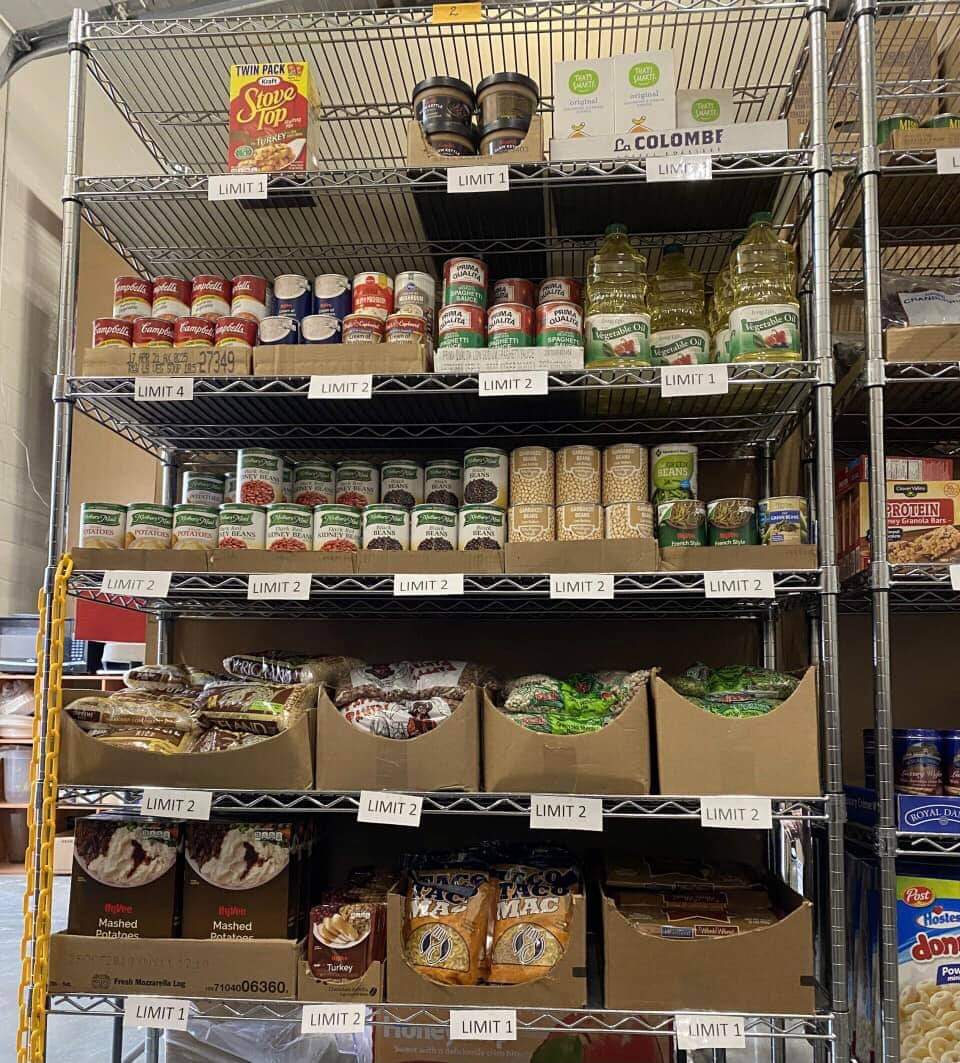
So, I spoke to people getting food at a food bank and here are some things I learned from those in need:
1. Everyone donates Kraft Mac and Cheese in the box. They can rarely use it because it needs milk and butter which is hard to get from regular food banks.
2. Boxed milk is a treasure, as kids need it for cereal which they also get a lot of.
3. Everyone donates pasta sauce and spaghetti noodles.
4. They cannot eat all the awesome canned veggies and soup unless you put a can opener in too or buy pop tops.
5. Oil is a luxury but needed for Rice a-Roni which they also get a lot of.
6. Spices or salt and pepper would be a real Christmas gift.
7. Tea bags and coffee make them feel like you care.
8. Sugar and flour are treats.
9. They fawn over fresh produce donated by farmers and grocery stores.
10. Seeds are cool in Spring and Summer because growing can be easy for some.
11. They rarely get fresh meat.
12. Tuna and crackers make a good lunch.
13. Hamburger Helper goes nowhere without ground beef.
14. They get lots of peanut butter and jelly but usually not sandwich bread.
15. Butter or margarine is nice too.
16. Eggs are a real commodity.
17. Cake mix and frosting makes it possible to make a child’s birthday cake.
18. Dishwashing detergent is very expensive and is always appreciated.
19. Feminine hygiene products are a luxury and women will cry over that.
20. Everyone loves Stove Top Stuffing.
In all the years I have donated food at the Holidays, I bought what I thought they wanted, but have never asked. I am glad I did. If you are helping a Family this Christmas, maybe this can help you tailor it more. It does for me!
12 Reasons Why Cities Need More Trees:
1. Temperature Control
One large tree is equivalent to 10 air conditioning units, and the shade they provide can reduce street temperature by more than 30%.
2. Noise Reduction
Trees can reduce loudness by up to 50%. In urban areas filled with the sound of cars, construction, sirens, aeroplanes, and music, trees are essentially the best way to block noise and keep cities — along with the homes and workplaces in them — quieter.
3. Air Purity
Trees remove an astonishing amount of harmful pollutants and toxins from the air. In urban areas air quality is often disastrously bad — with severe consequences for our health. Trees make the air we breathe much cleaner.
4. Oxygen
And, while absorbing all those pollutants, trees also put more oxygen back into the urban environment. Oxygen levels are significantly lower in cities compared to the countryside; trees help to solve that problem.
5. Water Management
Trees do more than just shelter us and our buildings from rain — which is, in fact, extremely important. They also absorb huge quantities of water, reduce run-off, neutralise the severity of flooding, and make flooding more unlikely altogether. Not to forget that their roots absorb pollutants and prevent them from feeding back into a city's water supply.
6. Psychological Health
Studies have proven what we instinctively know to be true: that human beings are significantly happier when surrounded by nature rather than sterile urban environments. Our emotions, behaviour, and thoughts are shaped by the places we spend time — and trees have a profoundly positive effect on our psychology. The consequential benefits of being happier and more peaceful — as individuals and as a society — are immense.
7. Physical Health
Beyond all the other ways in which trees improve air quality and the urban environment, much to the benefit of our health, they also encourage people to go outside. Cycling, running, and walking are all more common in urban areas with plenty of trees. A knock-on effect of people spending more time outdoors is also social integration and stronger communities.
8. Privacy
A simple point, but not inconsequential, is that trees provide privacy.
9. Economics
The total economic benefit of urban trees is hard to calculate. There are costs, of course, including the repair of infrastructure damaged by roots and maintaining the trees themselves. But the total economic benefit — a consequence of everything else in this list and more — far outweighs the expenditure. Trees make cities wealthier.
10. Wildlife
Trees are miniature cities all of their own, serving as a habitat for hundreds of different species, including birds and mammals and insects.
11. Light Pollution
Trees don't only block the light shining down, therefore keeping us and our cities cooler — they also disrupt light shining up, from street lighting, cars, houses, and billboards. Skies are clearer in cities with more trees.
12. Aesthetics
And, finally, trees are beautiful. They break up the potential monotony of urban environments — the sharp geometry, the greyscale roads and buildings, the endless rows of cars — with their trunks, boughs, canopies, and flowers.
Just think: the gold and red of falling leaves in autumn, the white and pink blossom of spring, the vast green canopies of summer, and the branches lined with hoar-frost in winter. Every single tree is a myriad of intricacy and texture, of colour and scent, of dappled light on the pavement, mottled bark, knotted roots, of clustered leaves and delicate petals and stern boughs.
Few streets would not be improved by the kaleidoscopic aesthetic delights of a tree, not to mention the many different species of tree, all over the world, whether willow, oak, lime, cherry, aspen, maple, birch, horse chestnut, dogwood, hornbeam, ash, sycamore... the list goes on.
There are some drawbacks to urban trees, most of them context-specific, and they are not — of course — universally appropriate. But it seems fair to say that many cities would benefit from at least a few more trees here and there.
Today is the 60th anniversary of #IHaveADream.
Here, I share from my father’s speech, along with my thoughts on his full dream and the work still undone.
Full video: https://t.co/NHsmG1exEC
Let’s #DreamAgainMarchForward#WorkingOnADream#MLK
Sixty years ago, the March on Washington for Jobs and Freedom showed us what's possible when ordinary people come together to push for change. Now it’s up to all of us to protect and build on that progress, and create a better future for generations to come.