The WFA promotes an interest in the people, campaigns, events and aftermath on all fronts of the #WW1. Friendly and constructive discussion is encouraged.
Captain Francis Dodgson, a kinsman of Lewis Carroll, fell near Contalmaison on 10 July 1916. The memorial his family raised on the spot went missing in 2024. It has now been recovered, restored and rededicated, 110 years on. #FirstWorldWar#Somme
https://t.co/bEm4SRS6a2
Verdun 1916: the longest battle of the First World War. But did it matter, and could the German plan ever have worked? Christina Holstein, leading authority on Verdun, examines the offensive from first bombardment to final counter-attack. https://t.co/ekfkLgUCil
2026 marks the 110th anniversary of the Somme. The WFA’s Autumn Competition asks students aged 12–14 to write a diary entry, poem or sketch from the perspective of someone involved – soldier, nurse, war artist, or tunneller. Closing date: 20 November.
https://t.co/cI3DL6lQ1C
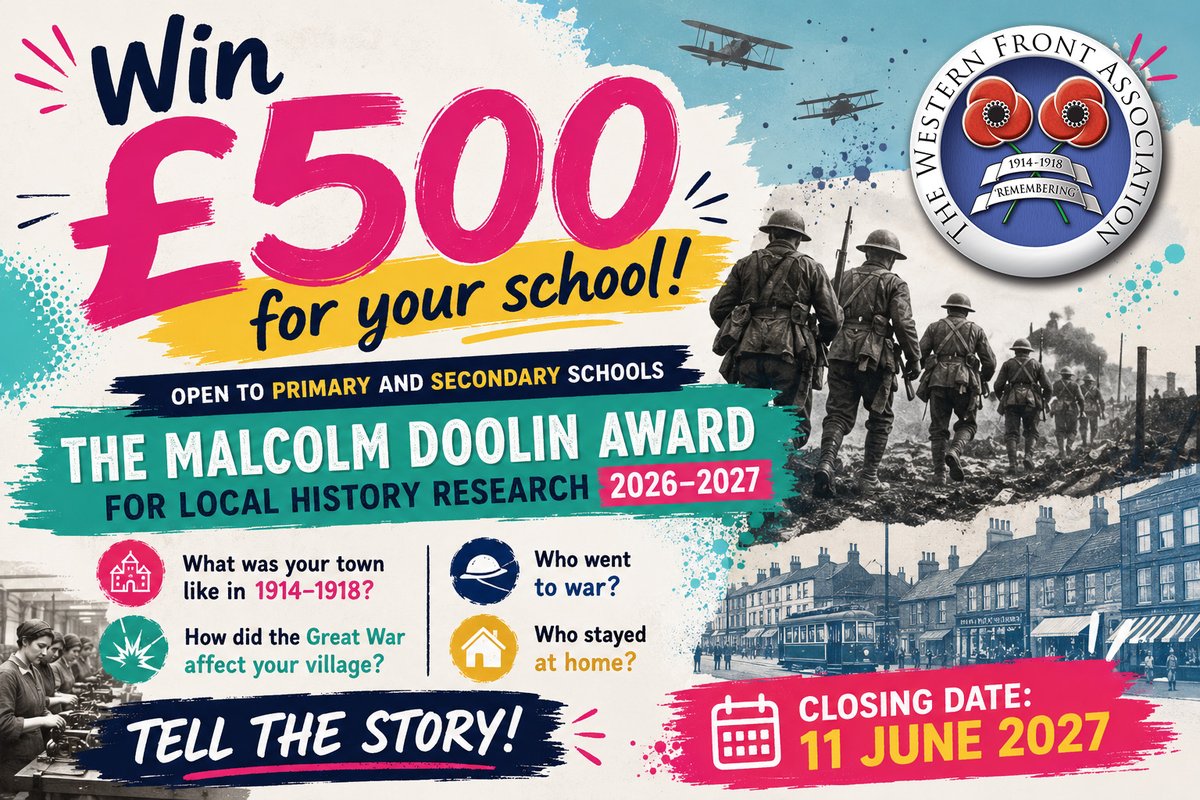
The Malcolm Doolin Award opens for registration in September – and schools can start planning now. Local history research into the 1914–18 period, for primary and secondary pupils. Two £500 prizes, mentorship from WFA members, and publication.
https://t.co/7ayf0QrYqd
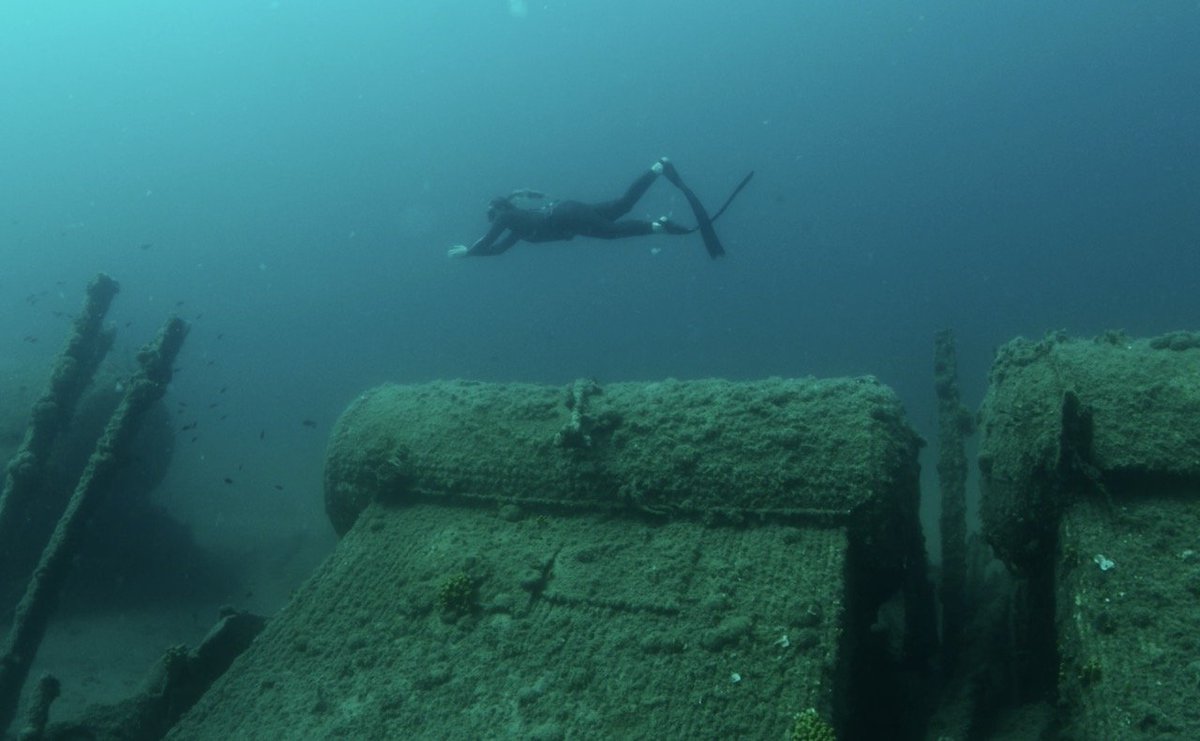
The Gallipoli Historical Site Directorate has launched ‘Deep Heritage’, a conservation project to preserve WWI shipwrecks. HMS Louis, a 1913 destroyer, is the first to receive cathodic protection to slow metal corrosion.
https://t.co/GQS0blAhYJ
‘He did his duty. Now at rest.’ The epitaph of Rifleman Edward Compton, dead at 21 of Spanish influenza, six days after his wedding in October 1918. Rob Kirk pieces together a brief and tragic story from a single headstone near Bath.
https://t.co/r4WqQfu1Dw
Hunting a lost Tudor palace at Ampthill, Beds, archaeologists struck WW1 instead: timber-revetted practice trenches from the Bedfordshire Training Depot, where Kitchener’s volunteers prepared for the Western Front. Photos: @TheDigVenturers
https://t.co/9cTB4Eztre
Just published: Alan Wakefield on the British Salonika Force in WW1. How terrain, climate and disease in Macedonia – plus the BSF’s own weaknesses – shaped very different experiences for British troops across the four sectors of the Salonika front. https://t.co/8IcjKHYMAC
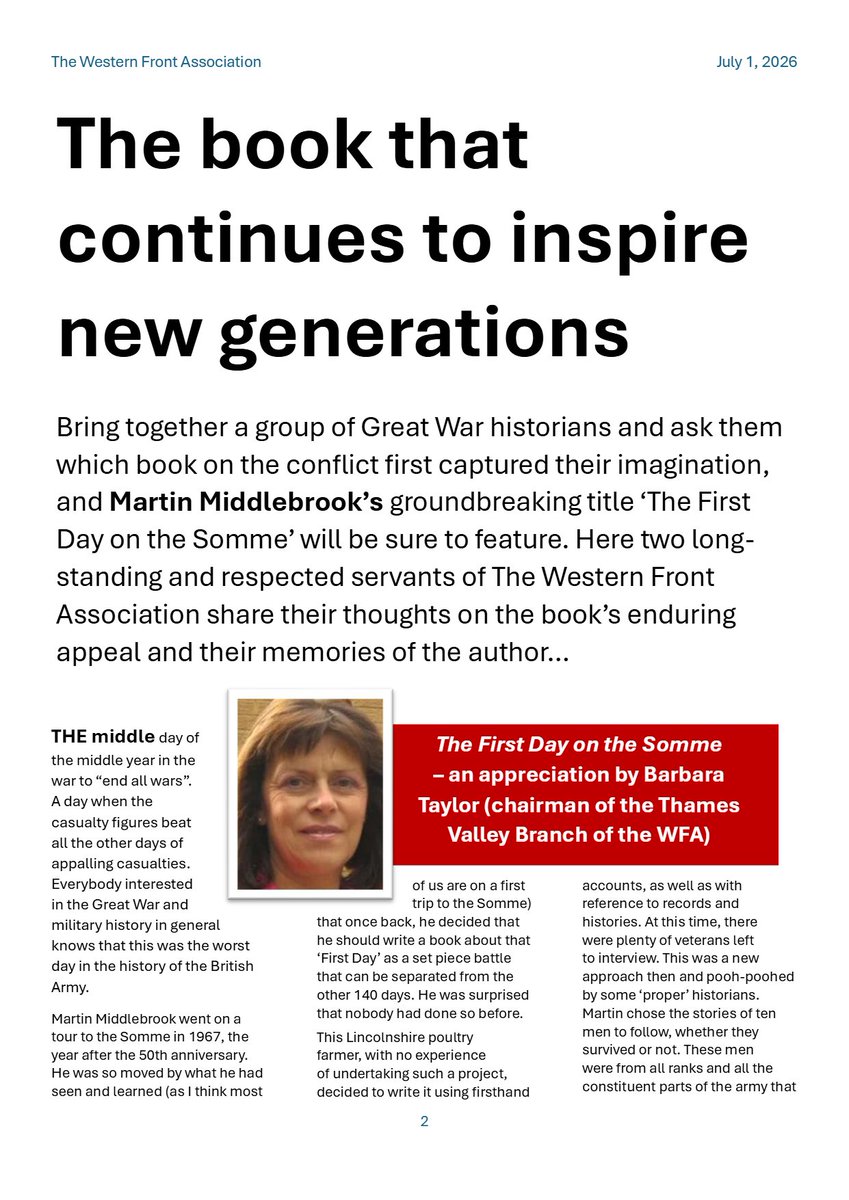
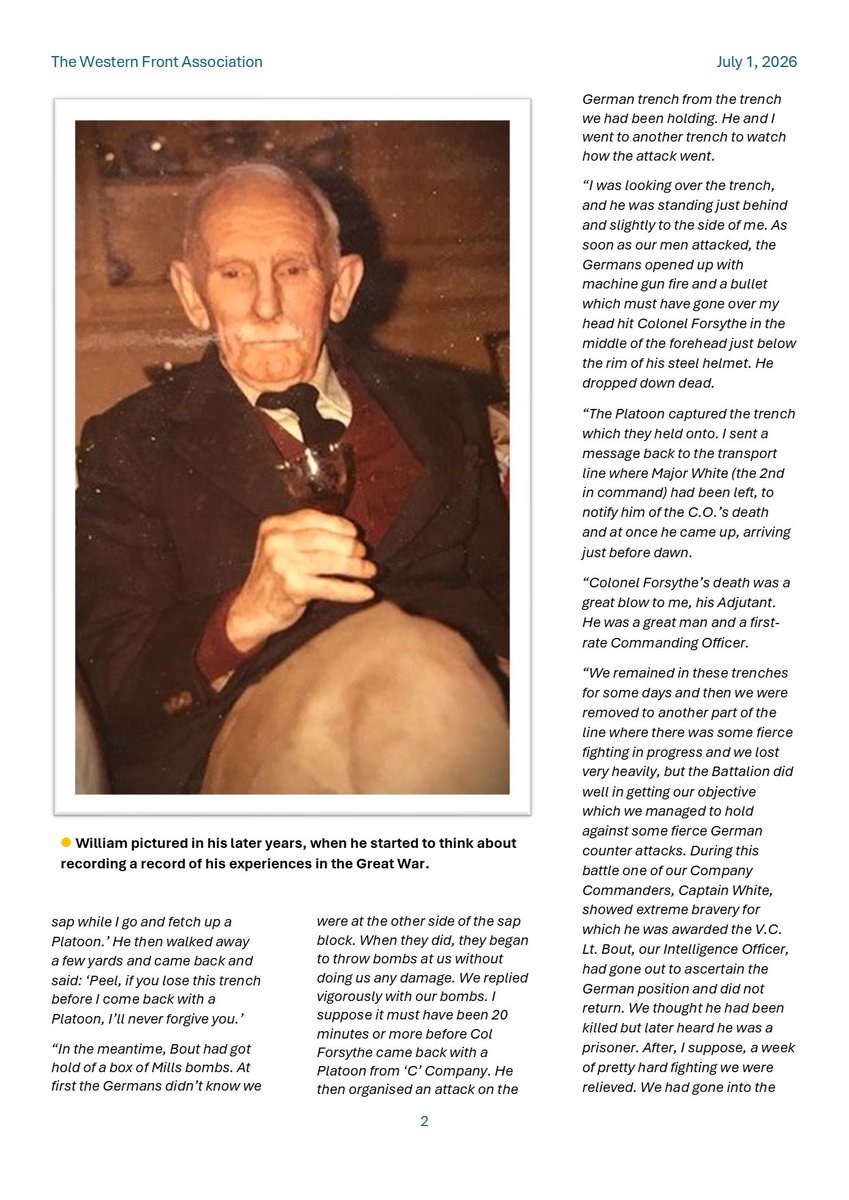
“As soon as our men attacked, the Germans opened up... a bullet which must have gone over my head hit Colonel Forsyth.”
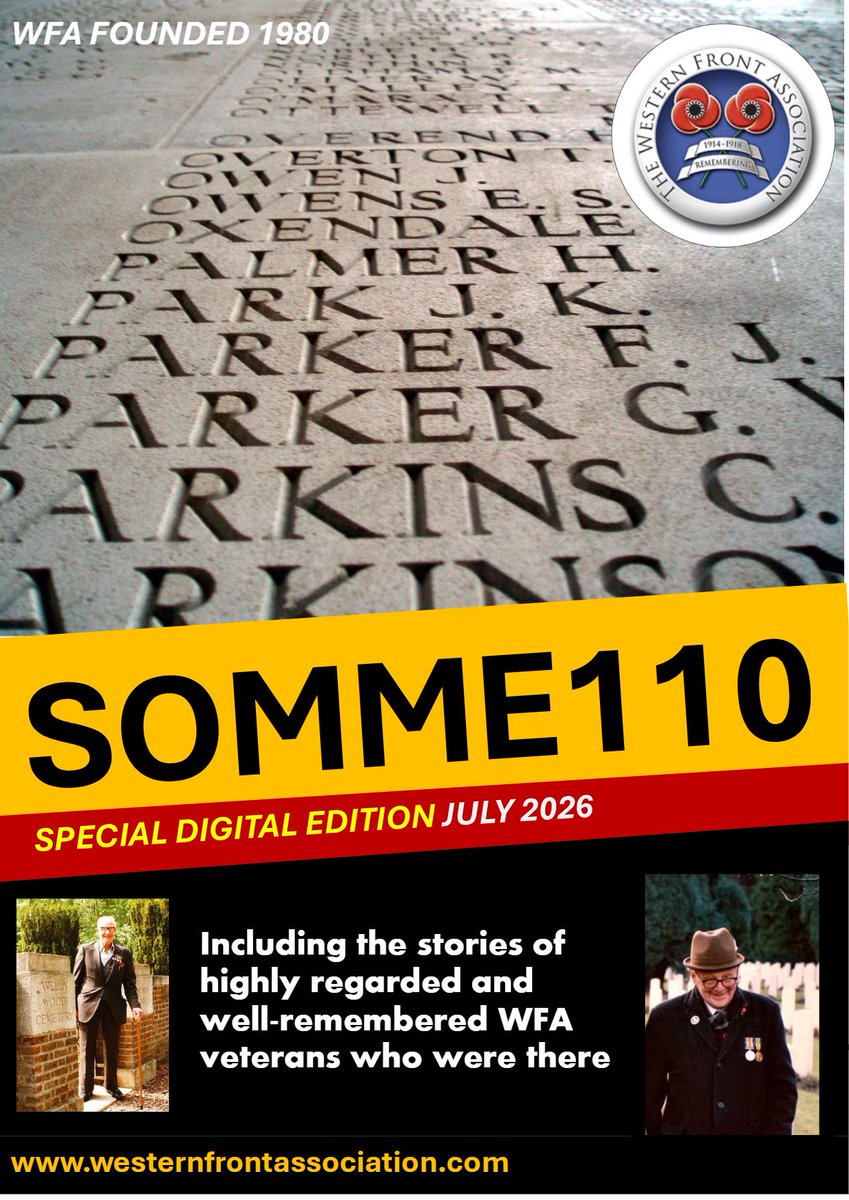
To mark the Somme 110 anniversary, we are releasing a special digital magazine. Subscribe to ‘Trench Lines’ for your free copy – coming soon.
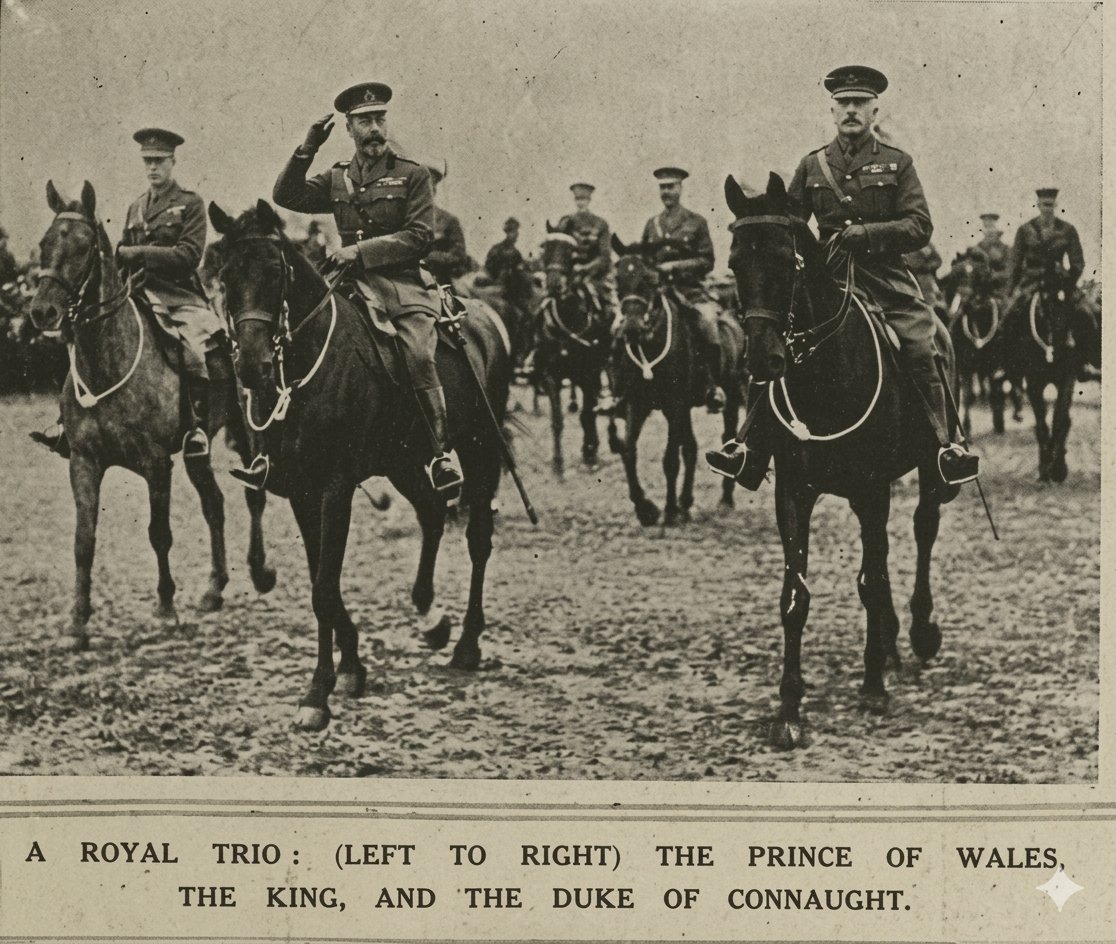
@simonharley Thank you for the feedback – you make a completely valid point. We generally state when an image has been processed with AI, but we missed it here. We used an AI upscaler on a very low-res original, which unfortunately hallucinated those inaccurate details on Haig.
Saturday’s Trooping the Colour honoured the King’s birthday. The largest ever was held in 1919 – eleven guards on parade, in service-dress khaki, the peace not yet signed.
New on the WFA site:
https://t.co/TyHLrWU7kn
By November 1918 the British Army alone numbered 5,336,943 men. The War Office’s 1922 report ‘Statistics of the Military Effort of the British Empire’ set it all down – casualties, munitions, even the millions of horses, mules and camels. Free to read: https://t.co/GHmBqABGH0
The WFA President’s Conference: SOMME 110 has nearly sold out. Four historians – Badsey, Prime, Parker and Doyle – mark the battle’s 110th anniversary at the Army & Navy Club, Pall Mall, on 4 July 2026. Book before the last tickets go:
https://t.co/8z4Eax76xW
One for your diary in October: The WFA’s Milton Keynes branch hosts a full day of Great War talks – Q-Ships, the Bantam battalions and war photographer Ariel Varges among them. Details: https://t.co/QJp6kv67rt
Ace in a day: instances of WW1 airmen shooting down multiple opponents in a single day. https://t.co/8Eq7cvjo8W → featured in the excellent (and free!) newsletter of the @GWAS1914_1918
Jack Tar: Churchill’s Little Army at Gallipoli → now on our YouTube channel. Steve Chambers’ excellent presentation on the RND. https://t.co/7JucXn0vCr
A petrol-engined narrow gauge locomotive built for service on the Western Front has been purchased by the Lincolnshire Coast Light Railway (LCLR) at Skegness, joining nine other Simplex machines already in the care of the railway’s Historic Vehicles Trust. https://t.co/QlWWAmEyGn
The WFA’s education grants support schools and colleges in running First World War learning activities that might otherwise be out of reach. Teachers can find details on our website. Warwickshire students were a recent beneficiary. https://t.co/JTgBnA5PTj