AI delivers organized information enabling students to effortlessly access knowledge from varied sources. Through AI-driven systems educational platforms classify information for students such that it's easy for them to locate relevant resources.
AI has a variety of positive aspects related to its application in healthcare. Currently, it is primarily used in the diagnosis of cancer, neurological diseases, and cardiovascular diseases.
AI delivers organized information enabling students to effortlessly access knowledge from varied sources. Through AI-driven systems educational platforms classify information for students such that it's easy for them to locate relevant resources.
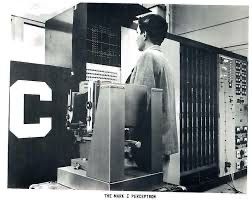
The birth of AI (1950s): The Dartmouth Workshop in 1956 is considered a defining
moment. Soon after, the Perceptron, an early neural network model, was introduced.
Early Inspiration (1920s-1950s): Science fiction like Metropolis (1927) and Isaac Asimov's I, Robot (1950) sparked ideas of intelligent machines. The groundwork for AI research was laid in mathematics and logic.
Early Inspiration (1920s-1950s): Science fiction like Metropolis (1927) and Isaac Asimov's I, Robot (1950) sparked ideas of intelligent machines. The groundwork for AI research was laid in mathematics and logic.
The concept of artificial intelligence (AI) has captivated humans for centuries, with ancient myths depicting intelligent machines. But it wasn't until the 20th century that AI truly began to evolve.