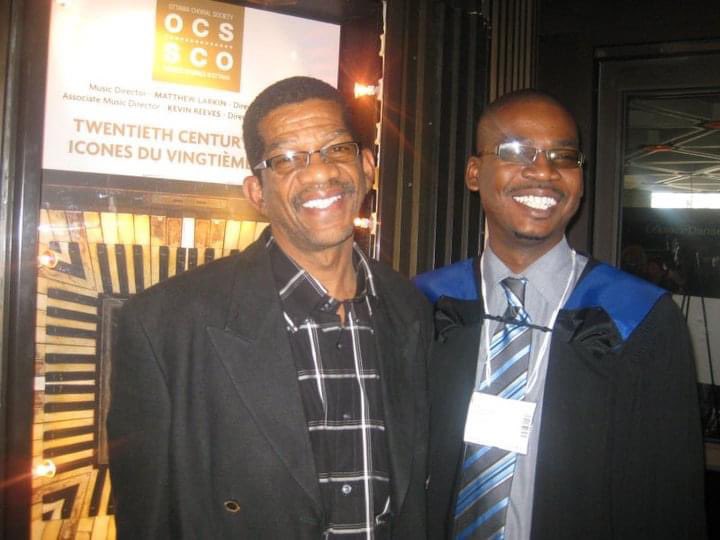
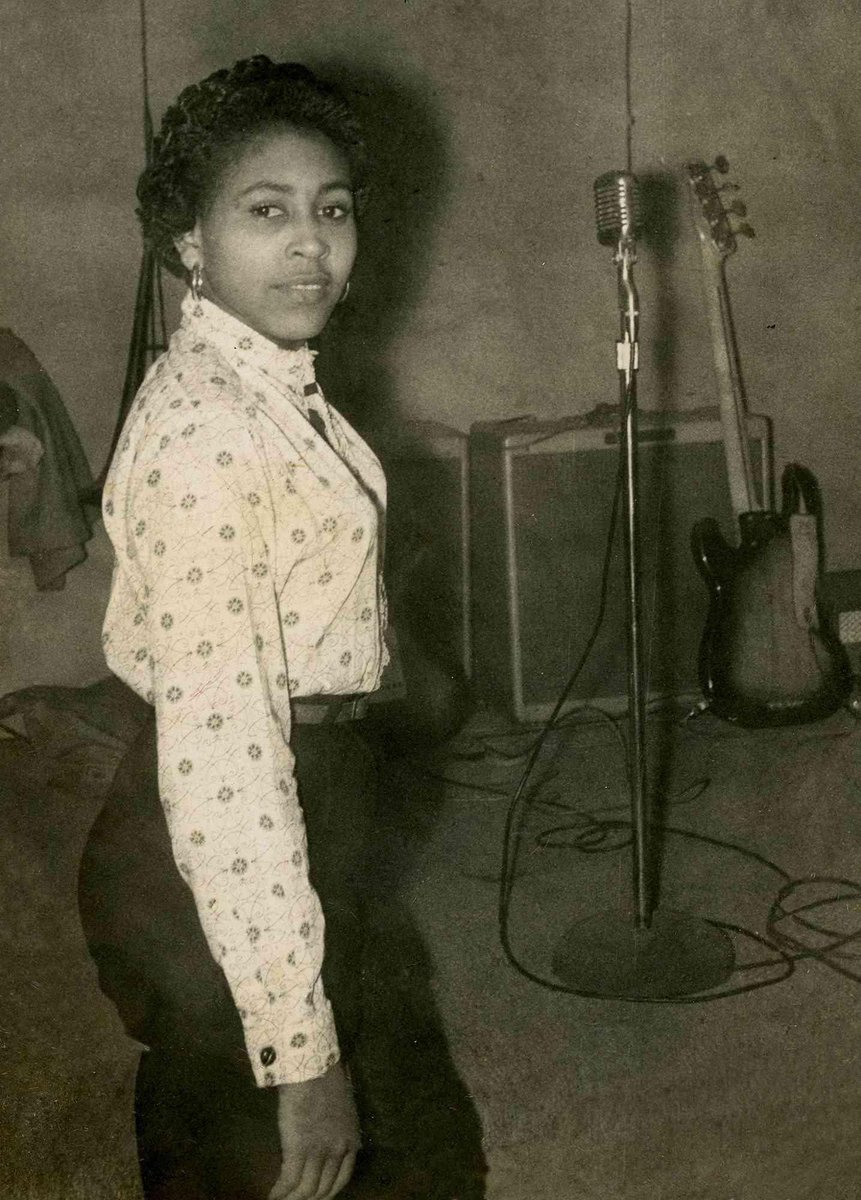
To learn more about the Steering Group’s Report - A Roadmap for Transformative Change: Canada’s Black Justice Strategy see the link below: https://t.co/WlxpRgt9fr
Thank you to the Steering Group & the Report authors. I look forward to collaborating on concrete measures that will help confront anti-Black racism and address the overrepresentation of Black people in our justice system, including as victims of crime.
Barriers stemming from systemic discrimination and anti-Black racism are a reality for too many in our criminal justice system. Developing Canada’s Black Justice Strategy is one of my top priorities. I welcome the Steering Group Report—which makes key recommendations to the GoC.
Pour en savoir plus sur le rapport du Groupe directeur externe – Étapes pour un changement transformateur : Stratégie canadienne en matière de justice pour les personnes noires, consultez le lien ci-dessous : https://t.co/c4bHJPx8z7
Merci au Groupe directeur externe et aux auteurs du rapport. J’ai hâte de collaborer sur des mesures concrètes pour lutter contre le racisme anti-Noir et réduire la surreprésentation des personnes noires dans notre système de justice, y compris en tant que victimes.
Les obstacles de la discrimination systémique et du racisme anti-Noir touchent trop de gens dans le système de justice. Développer la Stratégie en matière de justice pour les personnes noires est une priorité. J'accueille le rapport et les recommendations du Groupe directeur.
Over 40,000 children in Democratic Republic of the Congo 🇨🇩 are forced to work in cobalt mines so we can drive electric cars and use mobile phones.
Your comments on this ...
(2/4) If you are a Black person living in Canada, or represent an organization that provides justice-related services and supports to Black communities in Canada, we want to hear from you.
(1/4) Concrete action is urgently needed to address anti-Black racism, systemic discrimination, and the overrepresentation of Black people in Canada’s criminal justice system, including as victims of crime.
Biais et déficiences dans la couverture médiatique, déficience dans la formation, diabolisation des défenseurs des droits de l'homme, baisse des exigences à l'entrée de la fonction, élargissement des mesures législatives permettant…https://t.co/k8slmrF0pA https://t.co/zEP13jTpsY
To the fathers, to the stepfathers and to the uncles who take on the role of being dad… to the fathers in heaven watching over us (I feel you dad)… and to those about to become fathers… count your blessings. Happy Father’s Day!
We're adding 13 countries to the electronic travel authorization (eTA) program:
🇦🇬Antigua and Barbuda
🇦🇷Argentina
🇨🇷Costa Rica
🇲🇦Morocco
🇵🇦Panama
🇵🇭Philippines
🇰🇳St. Kitts & Nevis
🇱🇨St. Lucia
🇻🇨St. Vincent and the Grenadines
🇸🇨Seychelles
🇹🇭Thailand
🇹🇹Trinidad & Tobago
🇺🇾Uruguay
When Tina Turner left her first husband - who was also her boss, captor, and brutal tormentor - she snuck out of their Dallas hotel room with a single thought in her mind: "The way out is through the door."
From there she fled across the midnight freeway, semi-trucks careening past her, with 36 cents and a Mobil gas card in her pocket. As soon as she decided to walk out that door, she owned nothing else.
When she filed for divorce, she made an unusual request. She didn't want anything: not the song rights, not the cars, not the houses, not the money. All she wanted was the stage name he gave her - Tina - and her married name - Turner. This was the name by which the world had come to know her, and keeping it was her only chance to salvage her career.
Things could have gone a lot of ways from there. She could have labored in obscurity for decades, maybe making records on small labels to be prized by vinyl connoisseurs in Portland. She could have stayed in Vegas, where she first went to get her chops back up, and worked as a nostalgia act. And, of course, given what she had been through, she might have ... not made it.
What happened instead is that Tina Turner became the biggest global rock star of the 80s. I'm old enough to barely remember this, but if you aren't, it was like this: The Rolling Stones would headline a stadium one day, and the next day it would be Tina Turner. A middle-aged Black woman - she became a rock star at 42! - sitting atop the 1980s like it was her throne.
She managed this because of whatever rare stuff she was made of (this is a woman whose label gave her two weeks to record her solo debut, Private Dancer, which went five times platinum); because she decided to speak publicly about her abusive marriage and forge her own identity, and in doing so give hope and courage to countless women; and also because - in a perhaps unlikely twist for a girl from Nutbush, Tennessee - she had her practice of Soka Gakkai Nichiren Buddhism, to which she credited her survival. She remained devout until the end.
Tina's second marriage - to her, her only marriage - was to Edwin Bach, a Swiss music executive 16 years her junior. Of him, she said, "Erwin, who is a force of nature in his own right, has never been the least bit intimidated by my career, my talents, or my fame."
In 2016, after a barrage of health problems, Tina's kidneys began to fail. A Swiss citizen by then, she had started preparing for assisted suicide when her husband stepped in. According to Tina, he said, "He didn't want another woman, or another life."
He gave her one of his kidneys, buying her the remainder of her time on this earth and perhaps closing a cycle which took her from a man who inflicted injury upon her to a man willing to inflict injury upon himself to save her from harm.
Born into a share-cropping family as Anna Mae Bullock in 1939, she died Tina Turner in a palatial Swiss estate: the queen of rock 'n roll; a storm of a performer with a wildcat-fierce voice; a dancer of visceral, spine-tingling potency and ability; a beauty for the ages; a survivor of terrible abuse and an advocate for others in similar situations; an author and actress; a devout Buddhist; a wife and mother; a human being of rare talent and perseverance who, through her transcendent brilliance, became a legend.
Will Stenberg
Claiming the number of Black executives at CHRC increased from 6% to 14% sounds like major improvements but in reality it is just going from 1 in 2020 to 2 in 2023. Should I clap for that??? What is the over representation of white executives in that same time period? And are any of these executives anti-racist? Skin colour alone isn’t enough. There needs to be executives willing and empowered to challenge the persistence of systemic racism that is deeply embedded in organizational culture at the Human Rights Commission