@hehehenrihenri If you’re going to put any meaningful production load, you probably need some thermal barriers/heat conduits to carry heat away from the stacked Mac devices. Otherwise you risk low life expectancy for these.
A very sad announcement.
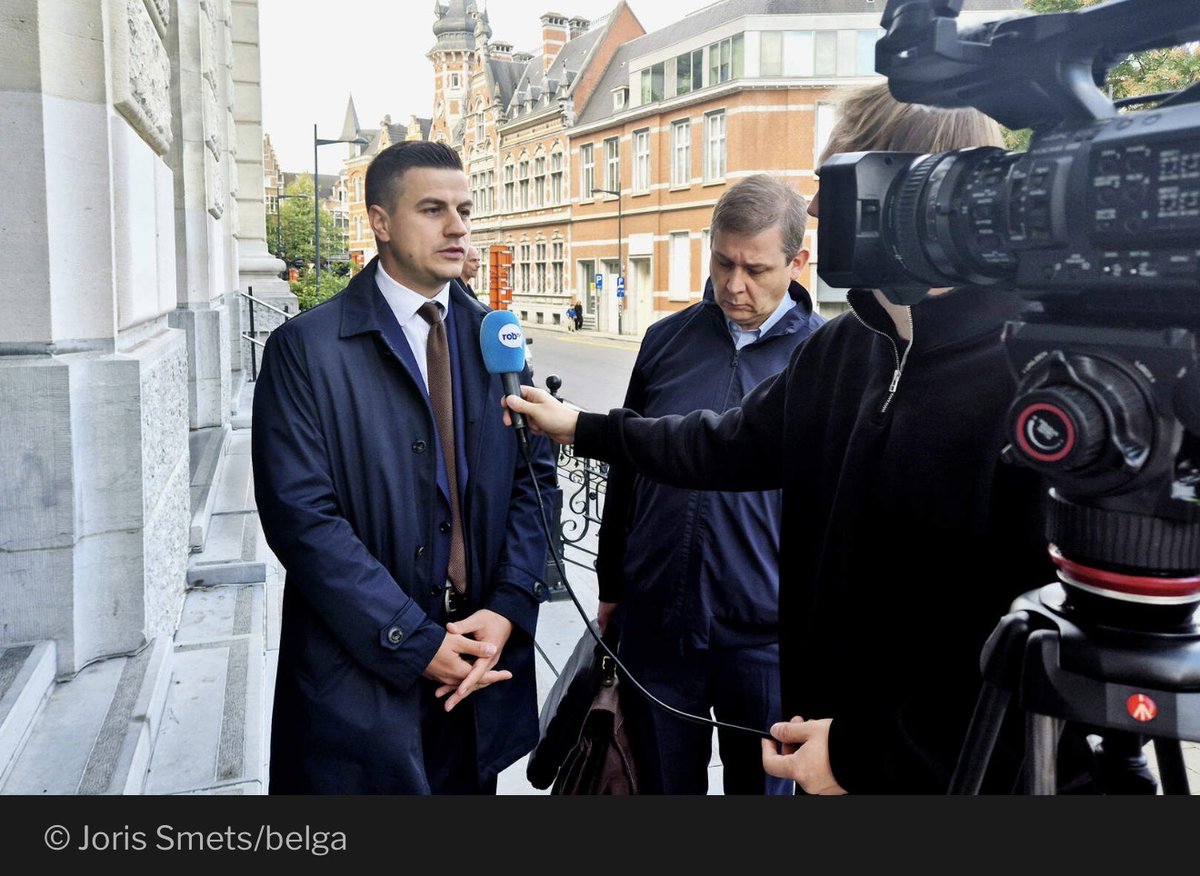
I have just been convicted a second time for 'hate speech' and it is only due to a technicality that I could not immediately be sent to jail —to the judge's frustration.
In an ironic turn of events it's actually thanks to my previous prison sentence (for memes in a private group chat) that I am now still free —in a physical sense, at least.
Call me naive but I didn't think they would take it this far, given that this precedent criminalises many of the arguments used by even the most moderate politicians critical of mass migration.
In February 2024 I gave a lecture at Catholic University Leuven wherein I linked mass migration to crime and a deterioration of our quality of life. Every single point I made was 100% the truth and based on scientific evidence.
Cynically, even the judge that convicted me admits as much by writing in his verdict: “Even if all of the statements made by Van Langenhove are based on scientific evidence and statistics, it makes no difference to the criminal intent. Van Langenhove is not charged with spreading false information. He is charged with presenting facts in a way that incites hatred against persons on the grounds of one or more of the protected criteria in the Anti-Racism Law.”
That's a lot of words just to say he wants to send me to prison for speaking the truth.
Even the regime media write: "It did not matter to the court that Van Langenhove was quoting scientific sources. The judge argued that Van Langenhove's main message was that a big part of the societal problems like insecurity, housing shortages and lowering educational standards are due to mass migration."
You may think the regime media are being sympathetic to me in the first sentence, but in reality they are warning people: even if you speak the truth, if you go against our narrative, we will crush you in every way possible.
Both the public prosecutor and the judge did not present a single real argument as to how or against whom I would have incited hatred. So even if I would accept their crazy, dystopic law, I still did not break it.
The only argument they present is that I created a "hostile atmosphere of us versus them” in regards to migrants. But even this silly argument (which is not even a punishable offence) is not true. To me, the deadly disease is self-hatred and one of its worst symptoms is replacement migration. My enemy is thus NOT the migrants themselves but those orchestrating the mass migration.
Sadly, in Belgium, evidence is not needed and ‘vibes’ are enough to put someone in jail.
Given the fact that I have another court case coming up in September and that I have a dozen active criminal investigations for hate speech, time is running out for me. I have already paid more than €420,000 in legal fees and there is no ending in sight. I have been in an intense battle of attrition for eight years and must now regroup to make sure I can still win.
If you want to help me, you can do so via the links below. If you can help in other ways, please contact me via DM.
If you live in a country that still has free speech, never let them touch it, however noble they make the motives sound, because this is where it leads to.
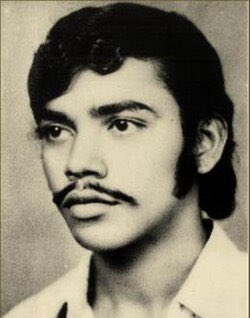
His name was Rajan.
He was a final year engineering student at the Regional Engineering College in Calicut, Kerala. His father, T V Eachara Varier, was a Hindi professor at the Government Arts and Science College in the same city.
On the morning of March 1 1976 the police came to the college campus and took Rajan away.
India was under Emergency. Civil liberties were suspended. Courts had effectively turned away.
His father found out the next day from the college principal.
He went to every police station in the district. No one admitted to having his son.
He met the Home Minister of Kerala, K Karunakaran, directly.
He sent petitions to the Home Secretary of the Government of Kerala three times. Not a single reply or acknowledgement came.
He wrote to the President of India and the Home Minister of the central government, with copies to every Member of Parliament from Kerala.
Nothing.
What Eachara Varier did not know at the time was that his son had been taken to an illegal police interrogation camp at Kakkayam.
He was tortured.
A practice called uruttal was used, where a heavy wooden log is rolled over the body of the victim.
Rajan died from his injuries. His body was disposed of by the police and was never found.
When the Emergency ended in 1977 Eachara Varier filed a habeas corpus petition in the Kerala High Court.
It was the first such petition filed in Kerala after the Emergency.
He did it without legal training, without political backing, without money.
He had spent everything searching for his son.
The court case slowly unravelled the truth.
It forced K Karunakaran to resign as Chief Minister of Kerala in 1978 when the adverse judgment came.
Rajan’s mother became mentally unstable from the grief. She died in 2000 still not knowing where her son was.
Eachara Varier wrote his memoir, Memories of a Father, which won the Kerala Sahitya Akademi Award in 2004.
In its final lines he wrote, “I don’t close the door. Let the rain lash inside and drench me. Let at least my invisible son know that his father never shut the door.”
He died on April 13 2006. He never found his son’s body.
Rajan was picked up from his college campus on a March morning in 1976. He was never seen again.
Repost this. Some stories must not be allowed to disappear.
product managers are still basically worthless.
you need someone who wants to not vibe code an app to 90% (that is most people). But finish it to 110%, plus the terrible monotony of testing, iterating, tweaking, connecting and perfecting.
engineers are still invaluable. most people do not have that relentless obsession with detail.
POD-OF-ONE: THE NEW ORG BUILDING BLOCK
As a @coinbase board member, t’s been a privilege to watch @brian_armstrong@emiliemc, and the Coinbase team build a true AI-native company.
Brian's whole post is worth reading in depth. I want to focus in on one thing that Coinbase is testing: “one-person product teams.”
Most of the AI discourse has focused on one-person companies. The more powerful and more broadly applicable construct will likely be one-person teams inside companies.
The old product org split context across 3 people. The designer held the user experience. The PM held the customer and prioritization context. The engineer held the code and systems context. Coordination was the price you paid to combine those views into one shipping decision.
Agents reduce that coordination cost.
A single high-agency person can now ask agents to draft flows, write code, run QA, summarize customer feedback, generate variants, check edge cases, and produce release notes.
This model rewards a very specific kind of builder:
• Technical enough to inspect the work
• Product-minded enough to choose the right problem
• Tasteful enough to reject mediocre output
• Fast enough to ship before the org forms around the idea
The scarce skill is judgment.
One strong person with customer context and good taste can now do the work of a small pod. One weak person with agents just creates more output for someone else to review.
This changes how early-stage founders should hire.
The most useful hiring question is now: “Can this person own the outcome end-to-end?”
That’s a higher bar than a functional job description. It blends product sense, technical range, design taste, writing clarity, and operating discipline. The title matters less. The span matters more.
Call it pod-of-one thinking.
A pod-of-one builder can go from ambiguous customer pain to shipped v1 without waiting for specs, mocks, tickets, handoffs, or meetings. Agents fill in missing labor. The human carries the context.
Teams still matter. They should form when the surface area is real: multiple customer segments, production risk, complex GTM loops, or enough product depth that specialization pays for itself.
Before that, a pod-of-one may be the fastest shipping unit in the company.
Founders: hire people who can be pods-of-one, who can carry the whole problem in their head and use agents to increase their throughput.
We are hiring a Lead Data Architect for https://t.co/hqIqcjooId - As a Lead Data & #AI Platform Architect, you will serve as the technical domain expert on foundational data, integration, and AI infrastructure technologies. You will steer technology strategy, define target state architectures, and build reference implementations for scalable, resilient data platforms optimized for Generative AI and Machine Learning. You will also be responsible for identifying and evaluating emerging technologies beneficial to this domain. You will be expected to possess hands-on expertise in modern cloud technologies, including but not limited to Databricks, Dremio, Snowflake, and tools for data governance, protection, and quality. This position requires a practical approach to testing and validating solutions in lab environments, ensuring that data pipelines are AI-ready, performant, and secure. You will act as a thought leader in data architecture, providing guidance on governance, security, and compliance.
https://t.co/jZXyzn8JjK
#careers #jobs
Let me explain what just happened today because it deserves so much recognition.
GalaxEye is a Bengaluru startup founded in 2021 by IIT Madras engineers. Today they launched Mission Drishti on a SpaceX Falcon 9. It is India's largest privately built satellite at 190 kg. And it carries a technology that no commercial satellite has ever carried before.
Normal satellites take photos of the Earth using optical cameras. Like your phone camera, but from 500 km up. The problem is obvious. Clouds. Night. Fog. Smoke. If any of these are in the way, the photo is useless. India has monsoon cover for 4 months a year. That is 4 months where optical satellites are partially or fully blind over large parts of the country.
The alternative is SAR. Synthetic Aperture Radar. Instead of taking photos with light, it sends radar waves down and reads what bounces back. Radar goes through clouds, through darkness, through smoke. A SAR satellite can image a flooded village at 2 AM during a cyclone when no optical satellite can see anything.
The problem with SAR is that the images look nothing like photos. They look like grainy black-and-white radar maps. A military analyst or a trained geospatial engineer can read them. A farmer, a disaster response team, or a city planner cannot.
Until today, if you wanted both optical and SAR data for the same location, you needed two different satellites, passing over at different times, at different angles. Then someone had to manually align and fuse the two datasets. Expensive, slow, and the data never perfectly matched because the satellites saw the same spot minutes or hours apart.
GalaxEye put both sensors on one satellite. Optical and SAR, fused into what they call OptoSAR. Three times more information than a single sensor. Processed onboard by an NVIDIA AI chip at 1.8 metre resolution.
Now in practice, during the next cyclone hitting Odisha, one satellite pass gives you a clear image of which villages are flooded, which roads are cut, and which buildings are standing. Day or night. Cloud or clear. In near real-time.
For defence, it means you can monitor a border area 24/7 regardless of weather. For agriculture, it means tracking crop health across an entire monsoon season without a single cloud gap. For infrastructure, it means monitoring construction progress on highways and bridges without waiting for a clear day.
GalaxEye tested their SAR tech on ISRO's POEM orbital platform. The satellite was tested at ISRO facilities. IN-SPACe provided regulatory clearance. NSIL, ISRO's commercial arm, will distribute the imagery globally. And it launched on SpaceX because ISRO's PSLV doesn't have the right orbit slot for this mission.
Yes, four IIT Madras graduates built a world-first satellite in 4 years in Bengaluru.
Take a bow!
@codegraph I wonder how we can better use files own metadata to store this. What attributes would need to be added.
Delta Lake / iceberg have separate metadata logs, this is a similar idea except more granular which makes me think it needs to be OS level
@AdamTornhill Can’t sleep because brain has too many thoughts and loose threads, i need a neuralink interface to download all my thoughts and empty out my queue
@danielkempe I am glad to be alive in this age of AI. I have committed to building one idea to end every week. This week built a personal cash flow management app - https://t.co/nQ1lc5BMJW
@shivsakhuja Brilliant, reading some of the comments though I wonder if @MemPalace type set up might work here for laying out skills. https://t.co/B8tOHrrCMV