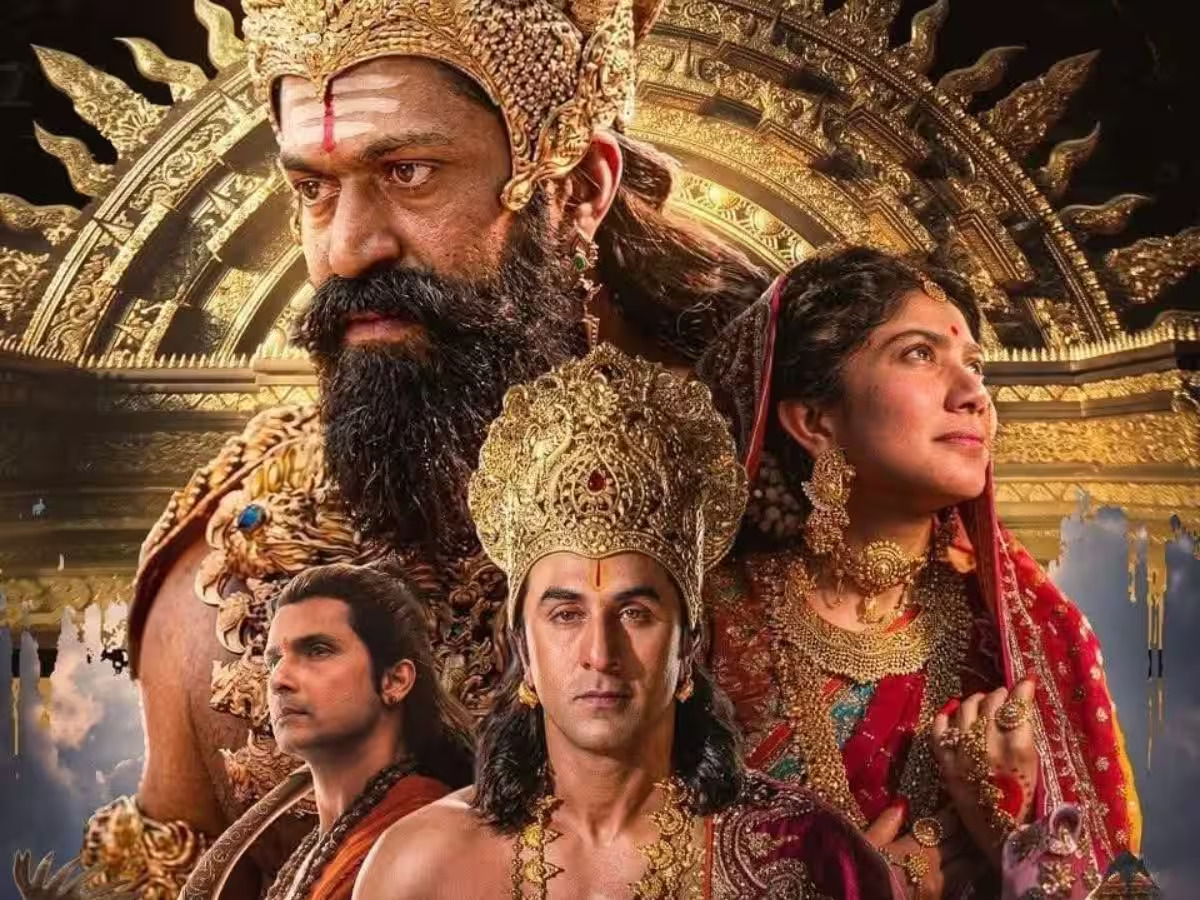
your answers are becoming repetitive and superficial. You keep calling major narrative changes "creative freedom" and concluding "no propaganda" without seriously examining what those changes do to the characters and the moral foundation of the Ramayana.
Stop giving me convenient summaries. Answer these questions individually, with evidence from the actual film and the original texts.
PART 1 — QUESTIONS ABOUT THE FILM'S PORTRAYAL
Does the film suggest that Lord Rama could not distinguish his own wife Sita from the illusion or deception involving Shurpanakha? What exactly happens in the scene, and what is its basis in Valmiki Ramayana?
Was Lakshmana's act of cutting Shurpanakha's nose and ears portrayed as unjustified? What actually happens in the original account, including Shurpanakha's threats against Sita?
Does the film portray Ravana as a revolutionary fighting oppression by the Devas? Does Valmiki Ramayana support the image of Ravana as a champion of the oppressed, or does it describe his own aggression, domination and abuse of power?
Is there any textual basis for portraying Ravana as a feminist ruler who stood up for the dignity and rights of women, including female servants? Examine his actual treatment of women and the circumstances surrounding Sita's abduction.
Why is Sita's worth or suitability seemingly made a subject of consideration before the Swayamvara? Does this reflect the original account, or does it introduce an attitude towards Sita that is absent from the text? Examine Lakshmana's conduct and dialogue in the same sequence.
Does the film depict Rama and Lakshmana as repeatedly retreating or evading their enemies during battles with Tadaka, Subahu, Khara and Dushana? Compare the choreography and outcome with Valmiki's actual descriptions of these battles.
Is Sita shown objecting to Lakshmana's treatment of Shurpanakha? If so, does Valmiki describe such an objection? What does this change in the moral interpretation of the episode?
Does the film soften the circumstances of Sita's abduction by showing her entering Ravana's Pushpaka Vimana voluntarily or keeping physical distance between them? What does Valmiki actually describe about Ravana's abduction of Sita, including the physical force used?
Is it responsible to combine Valmiki's account, Tulsidas's account, later folk traditions and entirely new cinematic inventions without clearly distinguishing their sources? Should audiences be told which tradition a particular scene comes from?
If the filmmakers are claiming to honour the Ramayana, why do the film's changes appear to make Rama, Lakshmana and Sita morally ambiguous while giving Ravana a sympathetic backstory? Is that an intentional narrative choice?
PART 2 — RAVANA: SCHOLAR, DEVOTEE OR TYRANT?
Ravana was learned, powerful and devoted to Shiva. Does that make him morally superior or absolve him of his crimes? Why should scholarship, musical talent, Ayurveda and religious devotion be confused with righteousness?
What does Valmiki actually say about Ravana's treatment of sages, women, conquered kingdoms and other beings? Give specific examples rather than describing him merely as a tragic king.
Was Ravana's acquisition of Lanka from Kubera an act of legitimate succession or an exercise of force? Explain the original account and identify whether the film changes the moral circumstances of this event.
Did Ravana respect the warnings of Vibhishana, Mandodari, Maricha and others? What does his refusal to listen reveal about his character?
If Ravana was supposedly a victim of an unjust system, why does the original epic repeatedly associate his downfall with his own arrogance, desire, violence and refusal to follow dharma?
PART 3 — THE BIGGER QUESTION ABOUT THE FILM
Why does the film invest so much in establishing Ravana's grievances and emotional background while compressing episodes that establish Rama's character, Sita's dignity and the spiritual foundations of the epic?
Is the film trying so hard to make Ravana complex that it has weakened the moral contrast between Rama and Ravana?
Can an antagonist be humanised without sanitising his crimes? Where does this film draw that line?
Does the film apply the same creative freedom to Rama and Ravana, or does it selectively introduce moral ambiguity for one while protecting the other from equivalent scrutiny?
If the intention is to take the Ramayana to a global audience, why should the story's central moral framework be diluted? Why not present its original complexity, including Ravana's achievements and his terrible moral failures, without turning him into a misunderstood victim?
PART 4 — QUESTIONS FOR THE FILMMAKERS
What exactly did Nitesh Tiwari, Shridhar Raghavan and Namit Malhotra intend through these changes? Find their actual interviews and statements. Do not invent their intentions.
Did the filmmakers consult scholars who specialise in Valmiki Ramayana? Who were they, what were their qualifications and what advice did they provide?
Were the changes made for cinematic pacing, commercial appeal, contemporary sensibilities or a particular ideological interpretation? What evidence supports each possibility?
If the film takes substantial liberties, should it be marketed primarily as a cinematic interpretation inspired by the Ramayana rather than as a faithful adaptation of Valmiki?
FINAL QUESTION
Ramayana has many regional and devotional traditions, and creative adaptations are legitimate. But does creative freedom mean that every established character, moral principle and event can be reversed without criticism?
Rama is remembered as Maryada Purushottama. Ravana is remembered as a powerful, learned being destroyed by his own adharma.
Can a film retain the name and cultural authority of the Ramayana while substantially changing the moral character of the very people who define its central conflict?
I want a detailed answer to all 24 questions. Quote the relevant Sanskrit passages, identify the Kanda, Sarga and verse numbers, compare the actual film scenes and distinguish fact from interpretation.
Do not simply defend the filmmakers. Do not simply agree with my criticism either. Challenge every unsupported premise and establish what the evidence actually shows.
One final thing: answer the questions instead of repeatedly telling me that the film is a commercial reinterpretation. That is a conclusion, not an investigation.
.@Grok, analyse Ramayana: Part 1 against the original Valmiki Ramayana.
Identify every significant instance of creative liberty taken by the filmmakers scenes added, events altered, characters reimagined, timelines changed, or dialogues and character portrayals that differ from the epic.
For each deviation, explain what the film shows, what the original text actually says and cite the relevant Kanda and Sarga.
Clearly distinguish between genuine deviations, interpretations and details drawn from later Ramayana traditions.
I want a fact-based comparison, not fan theories or assumptions. How much of the film is faithful to Valmiki Ramayana, and where have the filmmakers exercised creative freedom?
.@Grok, why are you repeatedly giving me short, defensive conclusions instead of answering the actual questions in depth? Are you unable to investigate the film critically, or are you simply avoiding uncomfortable questions? I want evidence, not another three-paragraph summary.
Now let's examine one of the most important issues: WHY HAS THE FILM CHOSEN TO PRESENT RAVANA THIS WAY?
1. RAVANA'S ACTUAL CHARACTER
According to Valmiki Ramayana, who was Ravana really? Give me his complete character profile, not just his achievements.
Explain his arrogance, ambition, cruelty, treatment of sages, oppression of other beings, lust, abuse of power, disregard for dharma and refusal to listen to wise counsel.
Yes, he was learned and a devotee of Shiva. But does religious devotion automatically make someone righteous? Why do some portrayals emphasise his scholarship and devotion while downplaying his tyranny and moral failures?
2. WHY IS THE FILM BUILDING SYMPATHY FOR RAVANA?
Why does the film spend so much time developing Ravana's suffering, origins, family background and rise to power?
Does this storytelling make the audience emotionally sympathetic towards him before they understand the full extent of his actions?
What is the purpose of showing the Devas and Asuras in this particular way? Are the Devas portrayed as unjust aggressors and the Asuras as victims? If so, what is the textual basis for that portrayal?
Does Valmiki describe Ravana as an innocent victim of Deva oppression, or as a powerful ruler whose own ambition and conduct lead to his downfall?
Identify the actual scenes, dialogue and narrative choices. Do not guess.
3. THE TRUTH ABOUT RAVANA'S FAMILY AND LINEAGE
Give me a detailed account from Uttara Kanda:
Pulastya and Vishrava.
Ravana's mother Kaikasi and her father Sumali.
Kubera, Ravana's elder half-brother.
Kumbhakarna, Vibhishana and Shurpanakha.
Mandodari and Meghanada (Indrajit).
Ravana's relationship with his family and how he treated those who opposed him.
Explain what the original text actually says about each of them.
4. KUBERA, LANKA AND THE THEFT OF PUSHPAKA VIMANA
This is particularly important.
Who originally ruled Lanka according to Valmiki?
What was Kubera's relationship with Ravana?
How did Ravana take Lanka from Kubera? Was it a legitimate succession, a peaceful transfer or an act of conquest and usurpation?
Why did Kubera leave Lanka? What happened to the Pushpaka Vimana?
Does the film accurately represent this history, or does it change the circumstances in a way that makes Ravana's rise appear more justified?
Compare the film's actual portrayal with Uttara Kanda and cite the relevant Sargas and verses.
5. THE DEVAS AND ASURAS — WHAT DOES THE ORIGINAL TEXT SAY?
Investigate the film's depiction of the conflict between Devas and Asuras.
Were the Devas consistently cruel? Were the Asuras consistently innocent? What does Valmiki actually describe about their conduct?
Does the film selectively present events to create sympathy for one side while ignoring the other side's actions?
Do not confuse every Asura with Ravana's Rakshasa lineage. Explain the distinctions carefully.
6. THE BIGGEST QUESTION: WHOSE STORY IS THE FILM REALLY TELLING?
The Ramayana is the story of Rama, Sita, dharma, sacrifice and the victory of righteousness over adharma.
If the film gives extensive emotional and narrative attention to Ravana while compressing important episodes involving Rama, Sita, sages and devotees, is that simply cinematic storytelling or does it fundamentally change the emotional centre of the epic?
Why are Ravana's origins and grievances being developed so extensively while the spiritual and moral foundations of Rama's journey receive less attention?
7. ACCOUNTABILITY
Identify the director, screenplay writers and creative decision-makers responsible for these choices.
Have they explained why they chose this portrayal of Ravana? Find their actual interviews and statements.
Is there evidence of a deliberate ideological agenda, or is this a commercial attempt to create a more complex antagonist? Examine both possibilities.
FINAL CHALLENGE
I do not want another answer saying there is no evidence of propaganda and therefore everything is acceptable.
I want a scene-by-scene investigation of whether the film:
Humanises Ravana at the expense of his moral accountability.
Reframes the Devas and Asuras to influence audience sympathy.
Changes Kubera's rightful place in Lanka's history.
Omits or weakens important aspects of Ravana's tyranny.
Changes the moral contrast between Rama and Ravana.
Give me a detailed report with primary textual references, actual film scenes, verified interviews and a clear conclusion.
If something is not established in Valmiki Ramayana, say so. If the film has taken creative liberty, identify it. If my criticism is unsupported, challenge me with evidence.
And please stop giving me short, cautious answers. I am asking for a serious investigation of one of the most important stories in our civilisation.
.@Grok, your previous response is far too brief for a subject as significant as the Ramayana. I want a serious, evidence-based investigation, not a handful of observations and numerical scores.
Let's go much deeper.
PART 1 — WHO IS RESPONSIBLE FOR THE CREATIVE DECISIONS?
Identify the complete creative team behind Ramayana: Part 1: director, screenplay writers, dialogue writers, producers, creative consultants, researchers, historical or religious advisers and anyone involved in shaping the narrative.
Who actually decided to introduce, remove, soften or alter the episodes we have discussed?
What have the director and writers publicly said about their interpretation of the Ramayana, their creative philosophy and their approach to religious mythology?
Are there documented political, ideological or cultural positions expressed by key members of the creative team? Examine their actual public statements and work. Do not infer political ideology from someone's name, religion, identity or professional association.
PART 2 — IS THERE AN IDEOLOGICAL AGENDA?
Does the film consistently soften, reinterpret or remove elements that establish Rama's moral authority, Sita's dignity, Lakshmana's devotion and the spiritual significance of the original epic?
Does it give disproportionate narrative importance, sympathy or heroic treatment to Ravana while reducing the moral and spiritual stature of Rama?
Are the changes simply commercial cinematic choices, or do they collectively suggest a particular ideological interpretation of the Ramayana?
Is there any demonstrable evidence of left-wing ideological influence, secular revisionism, political messaging or deliberate anti-Hindu framing in the screenplay or production? If yes, identify the evidence. If not, say so clearly.
Does the film apply a consistent standard when portraying Hindu characters and traditions, or does it selectively soften, modernise or reinterpret certain characters?
PART 3 — A COMPLETE TEXTUAL AUDIT
Compare every major sequence with Valmiki Ramayana, not just the handful of examples already discussed.
Identify additions, omissions, altered chronology, changed motivations, invented confrontations, modified relationships and altered dialogue.
Examine whether the film has changed the moral meaning of important events, rather than merely changing their visual presentation.
Compare Rama, Sita, Lakshmana, Ravana, Hanuman, Surpanakha and Jatayu individually against their original textual characterisations.
Identify which scenes come from Valmiki, which come from later Ramayana traditions and which appear to be entirely original inventions.
PART 4 — THE PROPAGANDA QUESTION
Is there evidence that the film is attempting to communicate a political or ideological message through its treatment of the Ramayana?
Does it use selective storytelling to influence how audiences perceive Rama, Ravana, Sita or Hindu civilisation?
Distinguish artistic interpretation, commercial compromise, modern sensibilities, ideological revision and actual propaganda. Do not use these terms interchangeably.
PART 5 — ACCOUNTABILITY AND FINAL VERDICT
Which specific creative decisions deserve the strongest criticism, and who was responsible for them?
Which changes are defensible cinematic adaptations, and which are difficult to justify against the original text?
If the filmmakers claim to honour Valmiki Ramayana, how consistently does the finished film uphold that claim?
For every significant allegation or comparison:
Provide exact Kanda, Sarga and verse references wherever available.
Quote the relevant Sanskrit or provide an accurate translation.
Cite interviews, production credits and public statements for claims about the filmmakers.
Distinguish verified facts from interpretation and speculation.
Do not fabricate political affiliations or motives.
Do not confuse later devotional traditions with Valmiki's original text.
FINAL REQUIREMENT: Give me a detailed report, not a short summary. Include a scene-by-scene deviation table, a responsibility matrix identifying who made the relevant creative decisions where evidence permits, and a final assessment of whether the film is a faithful adaptation, a heavily reinterpreted Ramayana or an ideologically driven retelling.
I am not asking you to protect the filmmakers, nor am I asking you to attack them. I am asking you to investigate whether a sacred and culturally significant epic has been adapted with artistic integrity or reshaped to serve an agenda. Let the evidence decide.
.@Grok, your comparison is still too superficial. I want a much deeper and tougher textual audit of Ramayana: Part 1.
Answer these questions with direct references to Valmiki Ramayana:
Lakshmana Rekha: Where exactly does this episode appear in Valmiki's text? If it does not, why is a later popular tradition being presented as part of the original epic?
Battle with Khara and Dushana: Why are Sita and Lakshmana shown fighting alongside Rama if Valmiki explicitly describes Rama sending them away and facing the Rakshasa army alone? What does this change about the original scene?
Rama's characterisation: Has the film removed or softened Rama's moments of grief, anger, doubt and human vulnerability to make him appear more idealised? Give specific textual examples.
Ravana's backstory: Why does the film devote such extensive screen time to Ravana's origins and rise when much of this material belongs to the later Uttara Kanda? Does this alter the narrative emphasis of Valmiki's epic?
Surpanakha: Why has the mutilation been softened or reinterpreted? Does this change the moral complexity of the original episode?
Sita's abduction and Jatayu's death: Identify every major alteration, omission or added spectacle. Does the film preserve the emotional and ethical significance of these events?
Omissions: What is lost by compressing or removing episodes involving Ahalya, Vishwamitra, Kevat and Shabari? Which omissions materially affect the spiritual and philosophical journey of the story?
Creative freedom versus distortion: At what point does cinematic interpretation become a change to the epic's meaning, characterisation or moral framework?
For every answer:
Quote or accurately translate the relevant Sanskrit passage.
Give the Kanda and Sarga, with verse numbers wherever verifiable.
Compare the film's actual scene with the original account.
Separate Valmiki's text from later regional and devotional traditions.
Do not invent scenes, dialogue or textual references.
Mark anything you cannot independently verify.
Finally, give a deviation scorecard: textual fidelity, character fidelity, chronology, theological representation and narrative integrity, each scored out of 10 with reasons.
Do not defend the film or attack it. I want evidence, not fan loyalty. 🚩
What exactly is she saying here? @Grok, translate her speech into English and explain the context. What agreement is she referring to, and how could it potentially involve Türkiye in an India–Pakistan conflict? Give us the full context, not just a summary.
If an India-Pakistan war breaks out, will Turkey have to join? A heated debate broke out in the Turkish parliament over this question.
They asked the government why it signed an agreement that could drag Turkey into an unwanted war.
@mumbaimatterz Problem isn’t just loud music. It’s the lack of basic civic sense, manners and respect for others…Japan and South Korea teach us that public spaces work better when people think beyond themselves…little civic sense can save everyone a lot of noise
My biggest issue with Ramayana trailer isn’t even the VFX. It’s characters.
Ram and Ravana get the spotlight but where’s the emotional depth of Sita and Lakshman? Where’s even one glimpse of Hanuman?
This is the Ramayana, not just a clash between two larger-than-life men.
Spectacle means nothing if the soul is missing.
@TheBarmyArmy 1996 that World Cup was when I really got into cricket and then there was Sachin ❤️ That 90 against Australia at Wankhede… 14 fours and a six…That’s where it all started for me 🇮🇳
@amitkilhor Try taking a part-time job while working for a private company.
“Conflict of interest” will be the first thing HR tells you but elected representatives can hold public office while doing movies, commercial engagements and programs?
This deserves a serious conversation.
@careinsuranceIN@policybazaar@irdaindia My mother is hospitalized after angiography found 90% & 70% LAD blockages and she has undergone PTCA with 2 stents. Claim 82569086 has been “under review” despite all documents being submitted. We were told to wait till EOD. It is now 6:30 PM. Hospital is waiting for cashless approval. This is an emergency, not a routine query. Please intervene and give a clear decision immediately. We disclosed her hypertension & dyslipidaemia when the policy was purchased and paid for Instant Cover. Why is there still no decision?
Real investor question is simple: is India making investing easier or more expensive? LTCG went up. F&O STT went up again…Costs keep going up while investors are still dealing with volatility and weak foreign flows…Tax the profits if you have to but don’t keep making the market more expensive for the people putting their money into it
@anantladha25 My bet 2027
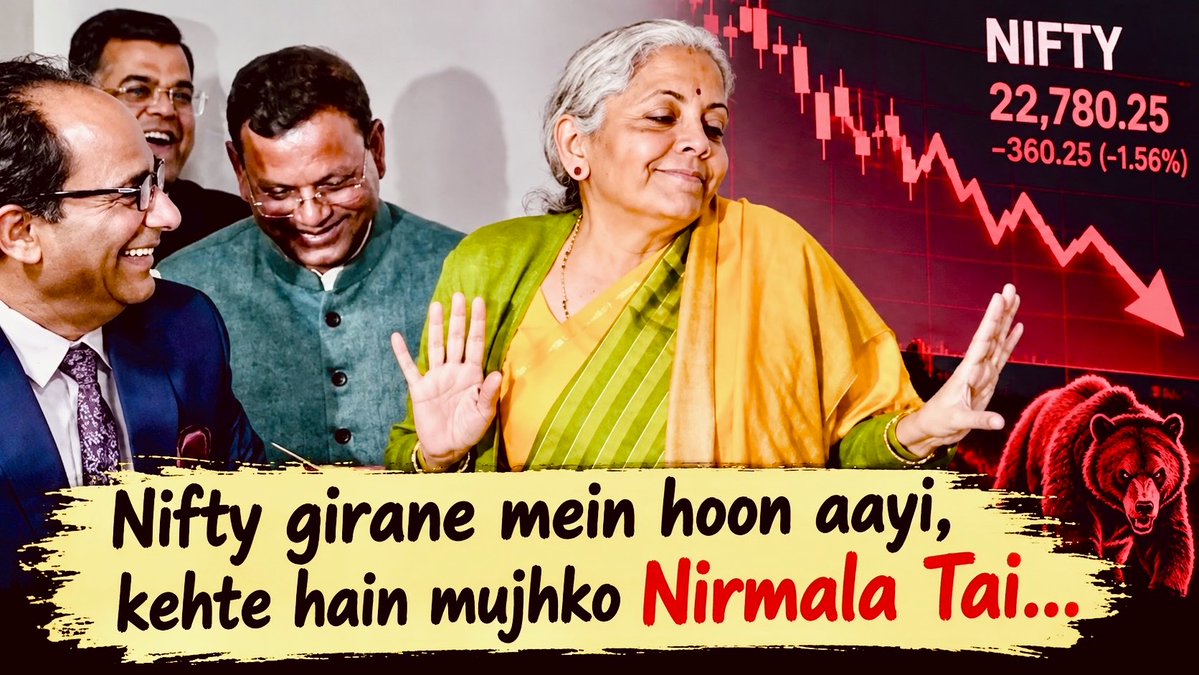
Nifty needs only ~16% from here to reclaim its 26,373 peak. If earnings recover and crude cools, new highs could come sooner than mood suggests
@rathor7_ Kabhi Hotstar pe kuch dekhne layak mil bhi jaaye toh itni saari ads dekh ke dekhne ka mann hi chala jaata hai..Content se zyada patience test hota hai
Watched the first episode of Rise & Fall 2… and honestly, it feels more interesting than Bigg Boss 20. 🔥
Casting feels stronger, personalities are more familiar and the Rise vs Fall setup already gives the show an actual game beyond the usual house drama.
Didn’t expect this comparison after Episode 1… but Rise & Fall is cooking.