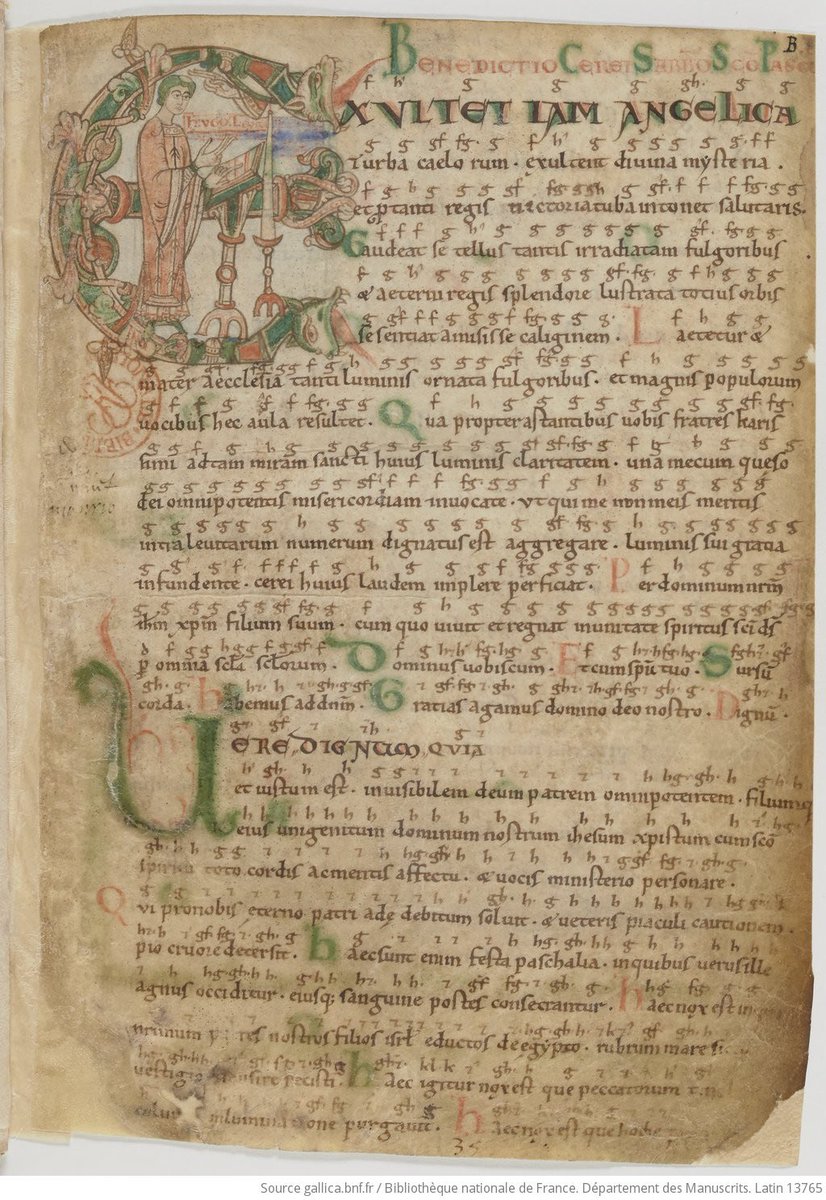
The Normans injected a bit of flair into the Easter Vigil Service: at the moment the Paschal candle was lit, the cantor would elaborate on the melody over ‘accendit’, introducing extended melismas found only in sources from England, Normandy, and Norman Sicily.
The BENEDICAMUS project edited volume is now published Open Access! So grateful to all of the contributors and for the support of @ERC_Research@CambUP_Music@PMMusicSociety
Thrilled to share my first piece of published work. I’m extremely grateful for the opportunity to contribute to this fantastic 17-chapter volume - huge thanks to Catherine Bradley @CamUniMusic@Brepols
Now open access! (see link below)
https://t.co/a15uqfyLTx
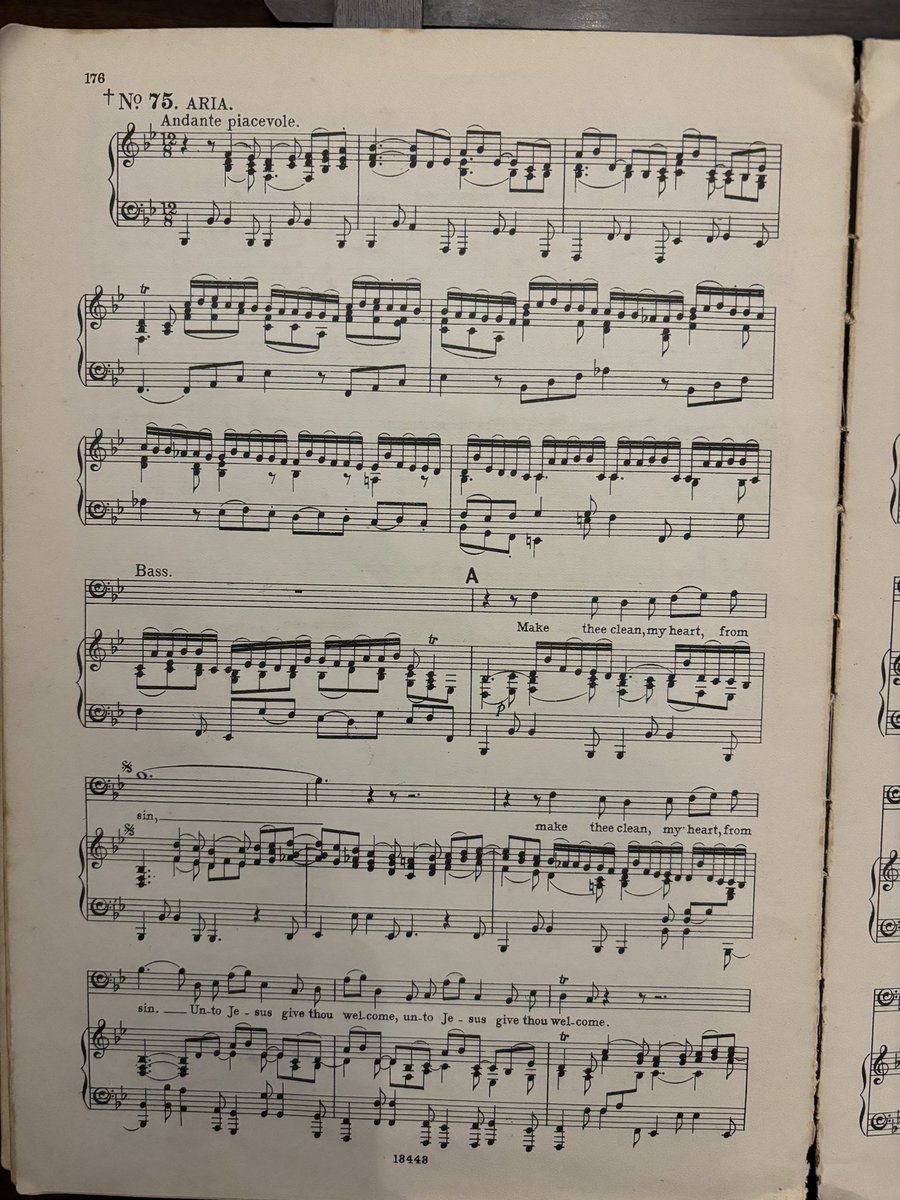
Amazing what you find when someone moves house. This is an English setting of Bach’s St Matthew Passion, published in 1911, owned by my great-great-aunt, Beatrice Lewis. When she dated this book in 1924 she would have been 28 years old.
@elsie33 I don’t understand the rule of no photography being enforced if the manuscript is in good condition. I’ve emailed the reference team but they won’t budge. I’m not giving up.
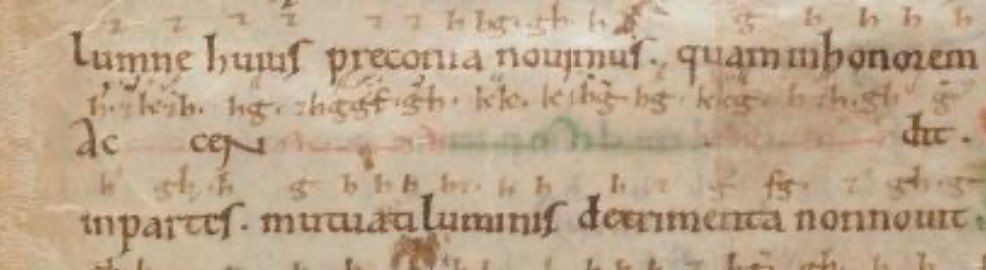
Mistakes are always fun things to notice. In this case, the scribe forgot to leave enough horizontal space between the syllables ‘Vi-’ and ‘-ri’ to accommodate the notation. Fortunately, he noticed this immediately and corrected his work accordingly.
(Bodl. MS. Laud Misc. 4)
It was a pleasure to pop into St Peter’s Church Hall in Wisbech earlier today where I met local artist Mia Hanson.
Mia has been working on a full scale replica of the Bayeux Tapestry since 2016 - as well as doing commissions, offering tuition, and writing a number of books.
Available to pre-order now @Brepols
ed. Catherine A. Bradley @ERC_BENEDICAMUS
I'm incredibly grateful for the chance to contribute to this volume (my first publication).
https://t.co/FG971qc4cm
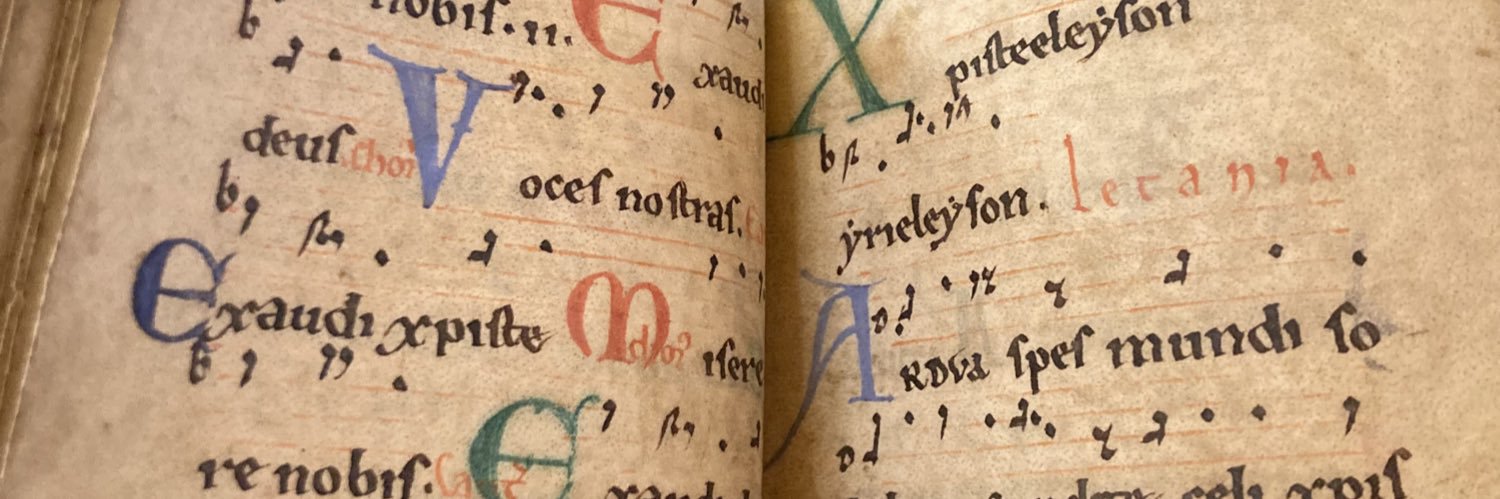
Nice to see an ‘Ite missa est’ melody from Winchester that survived the Norman Conquest. This melody is based on the Alleluia ‘Multifarie olim’ (Cambridge, CCC, MS. 473 ‘Winchester Troper’, f. 54v). Found in post-Conquest sources from Christ Church, Canterbury and St Albans.