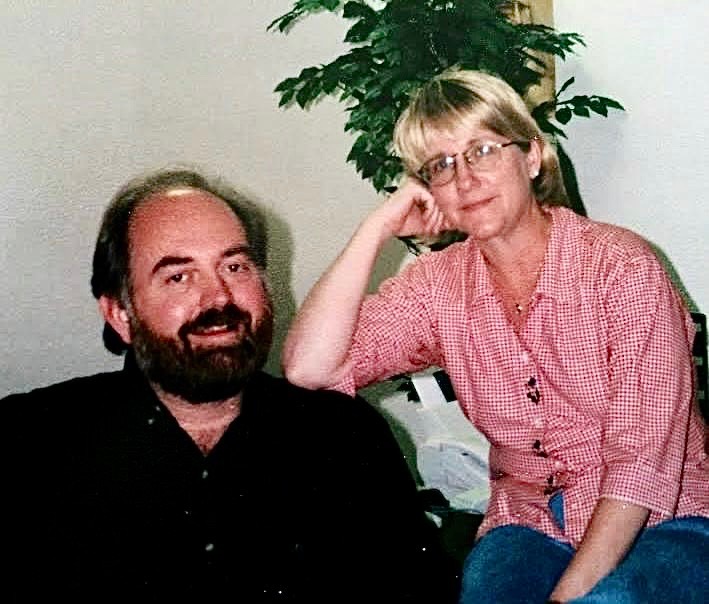
Deb's Journey - When Love Is Measured in Ordinary Moments
How do you measure a lifetime of love?
Maybe it isn't the grand gestures. Maybe it's 19,000 photos of ordinary days. Sitting beside a hospital bed at 2 a.m. Helping someone you love take one more step. Reading one more sentence. Holding onto faith when tomorrow is uncertain.
This is one of the most personal pieces I've ever written—a reflection on Deb's journey through hospice, the extraordinary kindness of family and caregivers, and the quiet strength that continues to inspire all of us.
If you've ever loved someone through their hardest days, I hope you'll take a moment to read it.
https://t.co/lYgh9Wan3o
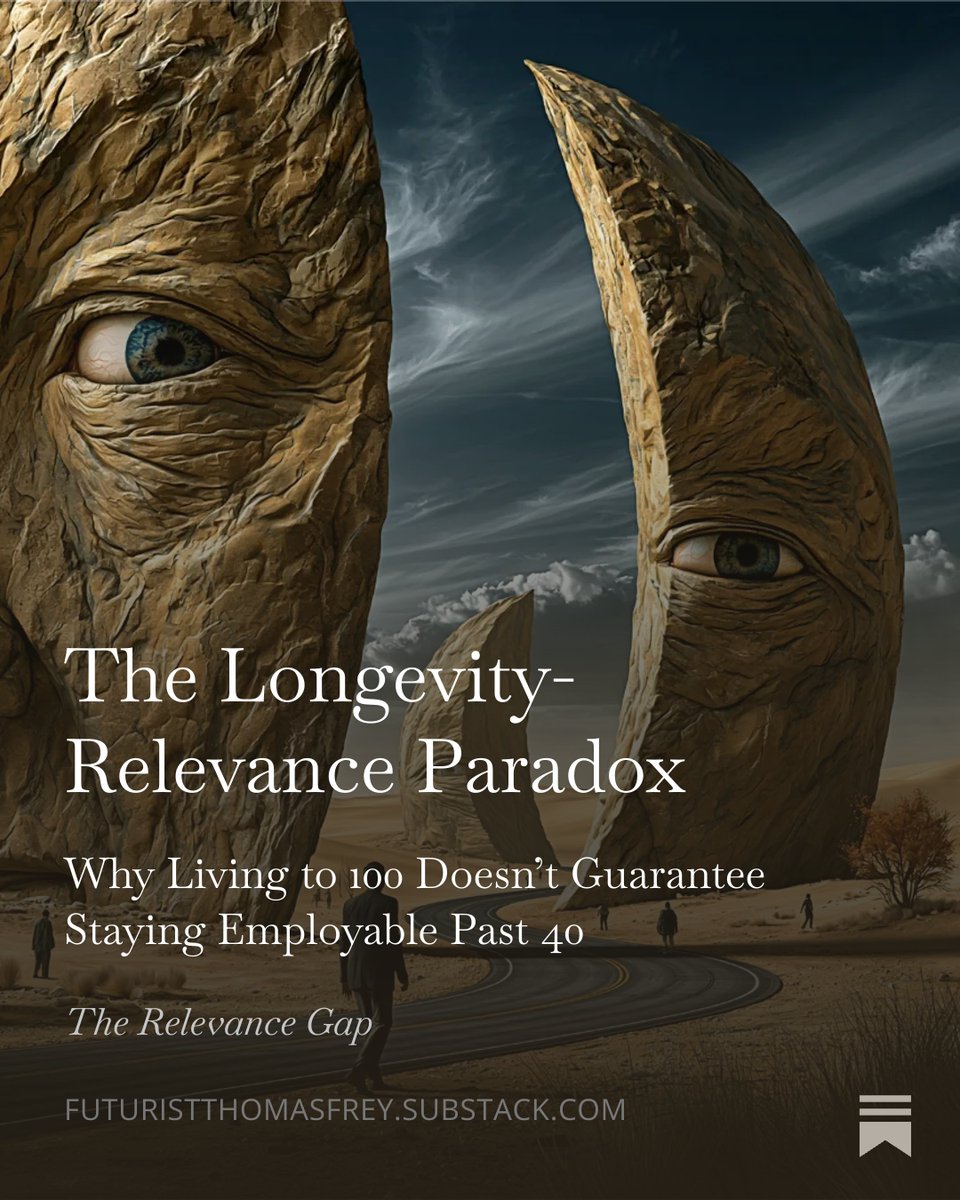
The Longevity-Relevance Paradox
We're on the verge of living longer than any generation before us. But there's a catch.
As human lifespans stretch toward 100 and beyond, the lifespan of our professional skills is shrinking to just a few years. The real challenge of the future won't be retirement—it will be staying relevant through decades of relentless change.
The winners won't be those who know the most today. They'll be the ones who never stop reinventing themselves.
Read the full column:
https://t.co/oHjatw7TMe
**The End of Average**
For over a century, we've built our schools, careers, healthcare systems, and workplaces around one dangerous assumption:
That the average person exists.
It doesn't.
AI is ushering in the end of one-size-fits-all. Personalized education. Personalized medicine. Personalized careers. Personalized products. The future won't be designed for the average.
It will be designed for *you*.
Those who continue managing for averages will increasingly lose to those who optimize for individuals.
The age of average is ending.
What comes next is far more personal.
Read more:
https://t.co/djjBXyUdSs
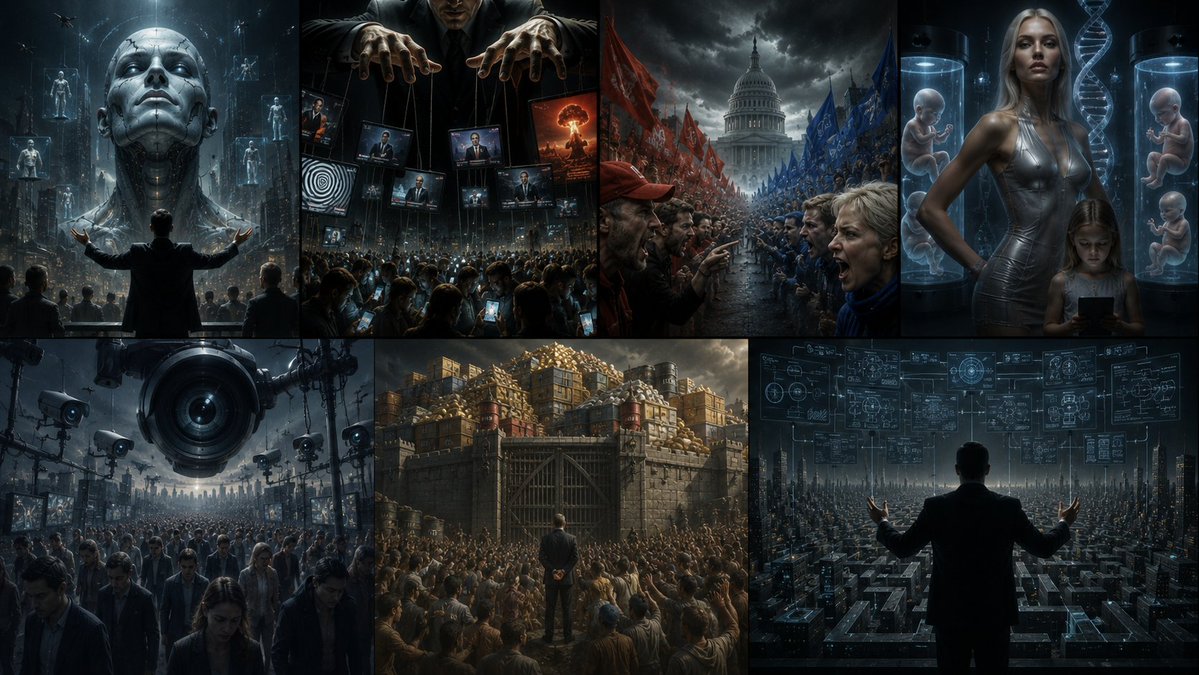
Seven Deadly Sins of the Future: The 2026 Update
The greatest threats to our future may not be the technologies we invent.
They may be the blind spots we refuse to see.
Every era has its defining mistakes. In 2026, they're no longer just personal failings—they're systemic. They hide inside our algorithms, our institutions, our incentives, and even our best intentions.
The future won't be shaped only by breakthroughs in AI, robotics, or biotechnology.
It will also be shaped by the ethical shortcuts we choose to ignore.
If we fail to recognize the new sins of the future, we risk building extraordinary technology on a deeply flawed foundation.
The future doesn't just test our intelligence.
It tests our character.
Read more:
https://t.co/7Br0PjPizV
What's Another Word for "Relevant"?
Maybe we've been asking the wrong question.
Instead of asking, "How do I stay relevant?" perhaps we should be asking, "How do I become indispensable? Influential? Trusted? Irreplaceable?"
Relevance isn't a destination you reach.
It's the byproduct of solving meaningful problems that other people can't—or won't—solve.
In an age where AI can replicate skills, summarize knowledge, and automate routine work, your greatest advantage won't be what you know.
It will be the unique value only you can create.
Stop chasing relevance.
Start becoming unforgettable.
Read more:
https://t.co/tX3Jzdnq77
Information Is Everywhere. But Clarity Is Becoming the Ultimate Competitive Advantage.
We've never had more information at our fingertips.
We've also never been more overwhelmed.
AI can generate answers in seconds. Search engines return millions of results. Social media delivers an endless stream of opinions disguised as facts.
The problem isn't a shortage of information.
It's a shortage of judgment.
In the coming decade, the people who rise above the noise won't be those with access to the most data.
They'll be the ones who can separate signal from noise, insight from distraction, and wisdom from information.
Clarity isn't just a skill anymore.
It's becoming a superpower.
Read more:
https://t.co/wy5QBy4pqN
A Tuesday in 2040
The most shocking part of 2040 won't be the AI.
It will be how ordinary it feels.
No frantic inbox. No endless scheduling. No hours lost searching for information or juggling administrative tasks. Your AI agents quietly handle the busywork while you spend your day thinking, creating, building relationships, and solving meaningful problems.
The biggest disruption of the AI era won't be smarter machines.
It will be giving humans their time back.
The future isn't about doing more.
It's about finally having the freedom to do what matters most.
Read more:
https://t.co/VUIjrkc07r
How to Future-Proof Your Relevance
Here's a hard truth:
You can't future-proof your relevance by trying to keep up.
By the time everyone is learning the latest skill, following the latest trend, or adopting the latest technology, the future has already moved on.
Relevance isn't built by chasing change.
It's built by becoming the kind of person who leans into uncertainty, experiments before others do, and learns faster than the world can change.
The future doesn't reward those who stay current.
It rewards those who arrive early.
Read more:
https://t.co/shwqkOyFVi
Creating a Framework for Becoming the Future You That You're Hoping to Meet
We all have a future version of ourselves living in our imagination.
Healthier. Wiser. More successful. More fulfilled.
But that person doesn't appear by accident.
They are built through thousands of tiny decisions, uncomfortable conversations, and moments when you choose growth over convenience.
The future you isn't waiting somewhere ahead.
They're watching your decisions today and quietly asking one question:
"Are you becoming the person I need you to be?"
Every action you take is either an introduction… or an apology.
Read more:
https://t.co/fYrM9CC1na
The First Five Questions Every Solopreneur Must Answer
Most people don't fail because they lack talent.
They fail because they never asked the right questions.
What problem am I solving? Who is it for? Why me? How do I reach them? And what does a "yes" actually look like?
Those five questions sound simple. They're not.
They're the difference between having an interesting idea and building a business that actually makes money.
In the age of AI, one person can build what once required an entire company. But technology doesn't eliminate the need for clarity. It makes clarity more valuable than ever.
Before you launch your next venture, ask yourself the hard questions.
Because a business built on fuzzy answers rarely survives contact with reality.
Read more:
https://t.co/FAnKaSQoON
What the People Who Left Your Industry Know That You Don't
Pay attention to the people who walk away.
Not because they're quitting.
Because they're often the first to see what's coming next.
The engineers leaving legacy companies for AI startups. The bankers building fintech platforms. The educators creating alternative credentialing systems.
They're not abandoning their industries. They're following the future.
The smartest competitive intelligence in the world may be hiding in the career moves of your former employees.
Because when enough talented people start heading in the same direction, they're not just changing jobs.
They're mapping where the value is migrating.
And by the time everyone else notices, the future has already left the building.
Read more:
https://t.co/elWh9CcwUI
What It Will Take to Stay Relevant as a Solopreneur: Why the One-Person Business Is Becoming the Smartest Bet in an Uncertain Job Market
The old career formula was simple: get hired, climb the ladder, stay loyal, retire.
That formula is breaking down.
As AI gives individuals the power of entire teams, the fastest-growing company in your industry may soon have only one employee. The safest job may no longer be a job at all.
The future belongs to people who can spot opportunities, solve problems, build audiences, and create value without waiting for permission.
In a world of uncertainty, becoming a solopreneur isn't just a career option.
It's becoming a survival skill.
Read more:
https://t.co/s4iwWO4sls
Here's a thought that might change the way you think about your own mind:
Your brain isn't full of useless information.
It's full of information that hasn't found its moment yet.
The random facts. The forgotten experiences. The odd connections. The conversations you barely remember. Most people see them as mental clutter. But innovation rarely comes from knowing more than everyone else. It comes from connecting things no one else thought belonged together.
In an age where AI can retrieve information instantly, the real value isn't memorization.
It's relevance.
Your future may depend less on what you know and more on your ability to combine seemingly unrelated ideas into something the world has never seen before. The most valuable knowledge isn't always the newest.
Sometimes it's the old idea waiting for the right question.
https://t.co/NdAIPRbfnv
Should the US Government Own a Piece of the AI Giants?
What if the most valuable asset in human history is being created right now... and the public owns none of it?
A handful of AI companies are building systems that could automate trillions of dollars of economic activity. Their technologies were born from decades of publicly funded research, public universities, government grants, and taxpayer-supported infrastructure.
So here's the uncomfortable question:
Should the American people own a small stake in the AI giants that may reshape the future of work, wealth, and opportunity?
Not to control them. Not to run them.
Just enough so that when AI creates unprecedented prosperity, the benefits don't flow exclusively to a handful of founders and investors.
When Donald Trump and Bernie Sanders begin circling the same idea from opposite directions, it's a signal that this debate has moved from the fringe to the mainstream.
The real question isn't whether AI will create immense wealth.
The real question is who gets to share in it.
https://t.co/q1VW6jEoZA
Will Wars Still Matter in the Future?
Here's a more provocative, future-focused version:
For thousands of years, war has been the ultimate instrument of power.
Nations fought over land. Resources. Trade routes. Ideologies. Whoever controlled territory controlled the future.
But what happens when territory matters less than algorithms?
When cyberattacks can cripple a nation without crossing a border. When AI can manipulate public opinion more effectively than an invading army. When autonomous systems can fight battles at machine speed. When economic sanctions, digital currencies, and information warfare become more powerful than tanks and missiles.
We're entering an era where the most important conflicts may never be declared, never be televised, and may never involve a traditional battlefield.
The question is no longer whether nations will go to war.
The question is whether war itself is evolving into something we no longer recognize.
Future historians may look back on today's military thinking the same way we look back on knights charging into battle with swords.
Wars won't disappear.
But they may stop being the primary way power is won.
And if that happens, the countries preparing for the last war may lose to the ones inventing the next one.
https://t.co/1tl9O96y9w
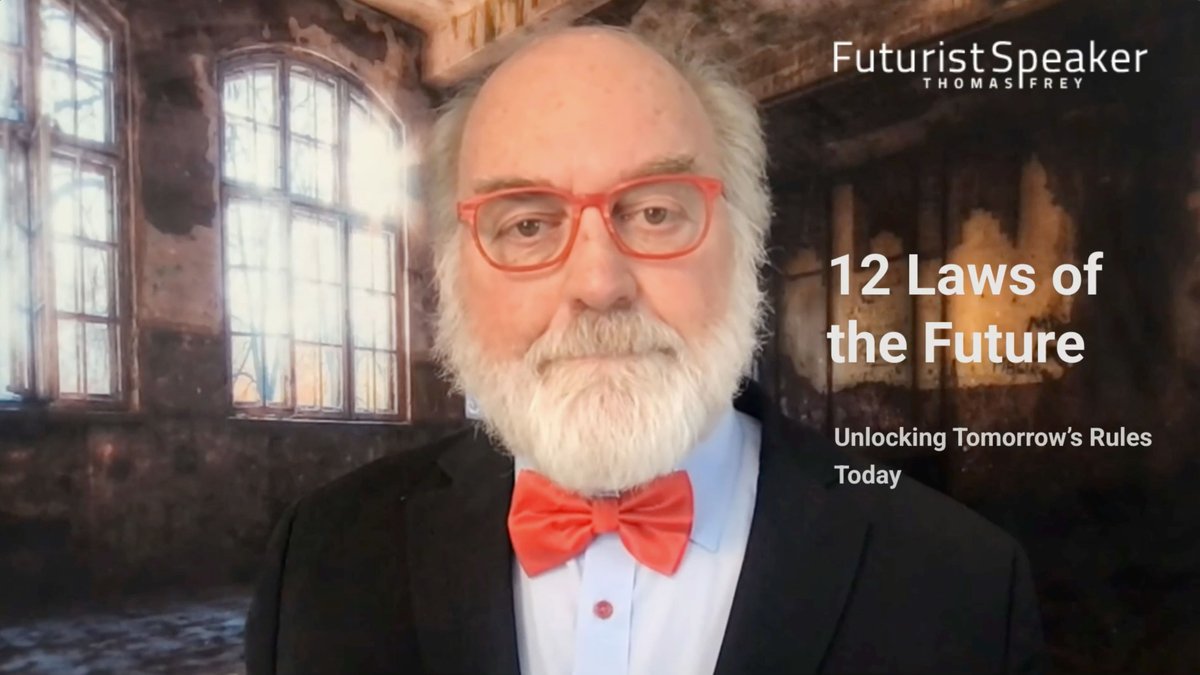
"12 Laws of the Future"
Most people think the future is chaos.
A random collection of disruptions, surprises, breakthroughs, and crises that somehow appear out of nowhere.
But what if the future has laws?
Not laws written by governments. Not laws passed by Congress. Fundamental operating principles that shape every technological revolution, every societal shift, and every major disruption long before most people notice them.
One of the most dangerous assumptions we make is believing the future will arrive when we're ready for it. It won't. The future is already in motion. It doesn't slow down for our comfort, our skepticism, or our five-year plans.
The people who thrive in the coming decades won't be the ones with the strongest opinions. They'll be the ones who learn to recognize inertia, understand compounding forces, and spot the tiny snowflakes that eventually become avalanches.
Every major transformation begins as something small enough to ignore.
Until it isn't.
The future isn't a place we're going.
It's a force we're already inside.
https://t.co/Dd9K8Wf4u9
Last night I had an argument with my future self.
Not the optimistic, motivational version we like to imagine. The real one. The version that has already lived with the consequences of every excuse, every delay, every distraction, and every opportunity I failed to act on.
What caught me off guard wasn't the criticism.
It was the realization that my future self wasn't asking me to work harder.
He was asking me to stop spending so much energy on the wrong things.
The future doesn't arrive all at once. It shows up in the tiny decisions we make today—the call we avoid, the question we don't ask, the first step we keep postponing.
Sometimes progress begins with something almost embarrassingly small.
And sometimes that's enough to change the entire trajectory of your future.
https://t.co/MeV7J6S3k2
When Big Tech Goes Shopping for Diplomas
We may be approaching a moment that sounds unthinkable today but feels increasingly inevitable. As hundreds of small and mid-sized colleges struggle with declining enrollment and financial pressure, some of the world's most valuable technology companies are sitting on mountains of cash and facing an insatiable demand for talent.
What happens when those two trends collide?
I don't expect to see headlines announcing that Google or Amazon has bought a university. But I can easily imagine "partnerships" that gradually evolve into something far more significant—new buildings, new curriculum, new research centers, and direct pathways into tomorrow's workforce.
The real question isn't whether higher education will change. It already is.
The question is whether the next generation of colleges will be run by educators, or by the companies that need skilled graduates faster than traditional institutions can produce them.
It sounds provocative today.
That may be exactly why it's worth paying attention to.
https://t.co/ijvOqF67BJ
YOUR DEGREE HAS AN EXPIRATION DATE
Not because the diploma disappears.
Because the knowledge underneath it does.
For most of modern history, education was front-loaded. You learned a profession in your twenties and spent decades applying it. Today, entire industries can transform in less time than it took to earn the credential that qualified you for them.
The question is no longer, "What degree do you have?"
The question is, "How recently have you updated yourself?"
In an age of AI, automation, and accelerating change, the most valuable credential isn't hanging on a wall. It's your demonstrated ability to continuously learn, adapt, and reinvent.
The future won't be divided between educated and uneducated people.
It will be divided between those who keep learning and those who assume they're finished.
The most dangerous words in the modern economy may be:
"I already know that."
— Futurist Thomas Frey
https://t.co/TfQk5tM8uI
Subscribe to The Relevance Gap:
https://t.co/sUBqawDLTf