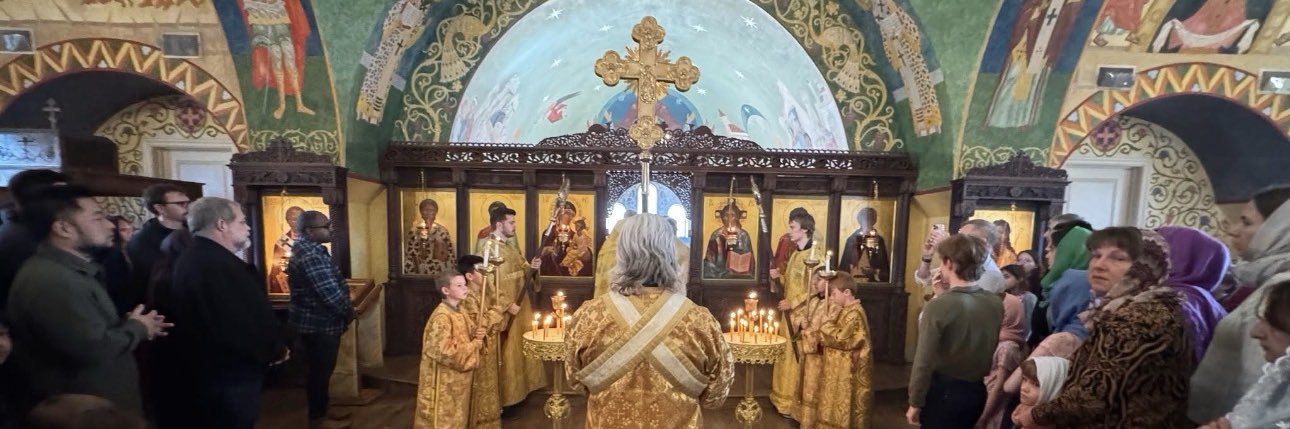
"The Church is a hospital for sinners, not a museum for saints."
In the ancient Christian tradition, sin is an illness, not a crime to be punished.
You're healing, and Christ is the spiritual doctor.
Before his death, the old man called a young monk to him and quietly said:
When I'm gone, you'll find a bag in my cell, under the window shelf. Do not open it for forty days.
The old man peacefully passed away to be with the Lord. Everyone talked about his holiness at the funeral, remembering miracles, wise advice, and his love for people. The young monk cried and thought, "Perhaps there are great spiritual instructions that will help all the brothers."But his curiosity was stronger.
At night, he lifted the shelf, took out a small canvas bag, and carefully untied it.
Inside was just a piece of paper.
On it, written in the old man's trembling hand, was the following:“If you’re reading this before the deadline, it means you haven’t learned obedience yet. Close the bag and put it back. The most important instruction you have already received - and you have already broken it."The monk felt a chill. It was as if lightning went through his heart.
He realized that all his life he had been looking for great revelations and extraordinary spiritual mysteries, while the Lord tested him in the simplest way - whether he could fulfill one small obedience.
That night, he fell on his knees for a long time and prayed for the first time—not for gifts, not for wisdom, or for spiritual experiences, but for the ability to do the will of God.
The years have gone by. This monk has become an old man himself. And when people came to him for "great spiritual advice", he most often answered:
Start with small things. Follow what you already know. The Lord reveals the following not to the curious, but to the obedient.
Because the kingdom of God does not begin with great deeds, but with faithfulness in small things. It is in this that real humility is born, without which it is impossible to approach God.
Something very important about prayer Fr. Stephen said in the interview is making demands to God in prayer or trying to change or bend the will of God to ours is akin to magic and sorcery in the ancient world.
Kind of goes with something Fr. Trenham referenced once with hearing an Athonite Monk tell a women she should want what God gives her instead of asking for what she wants from God
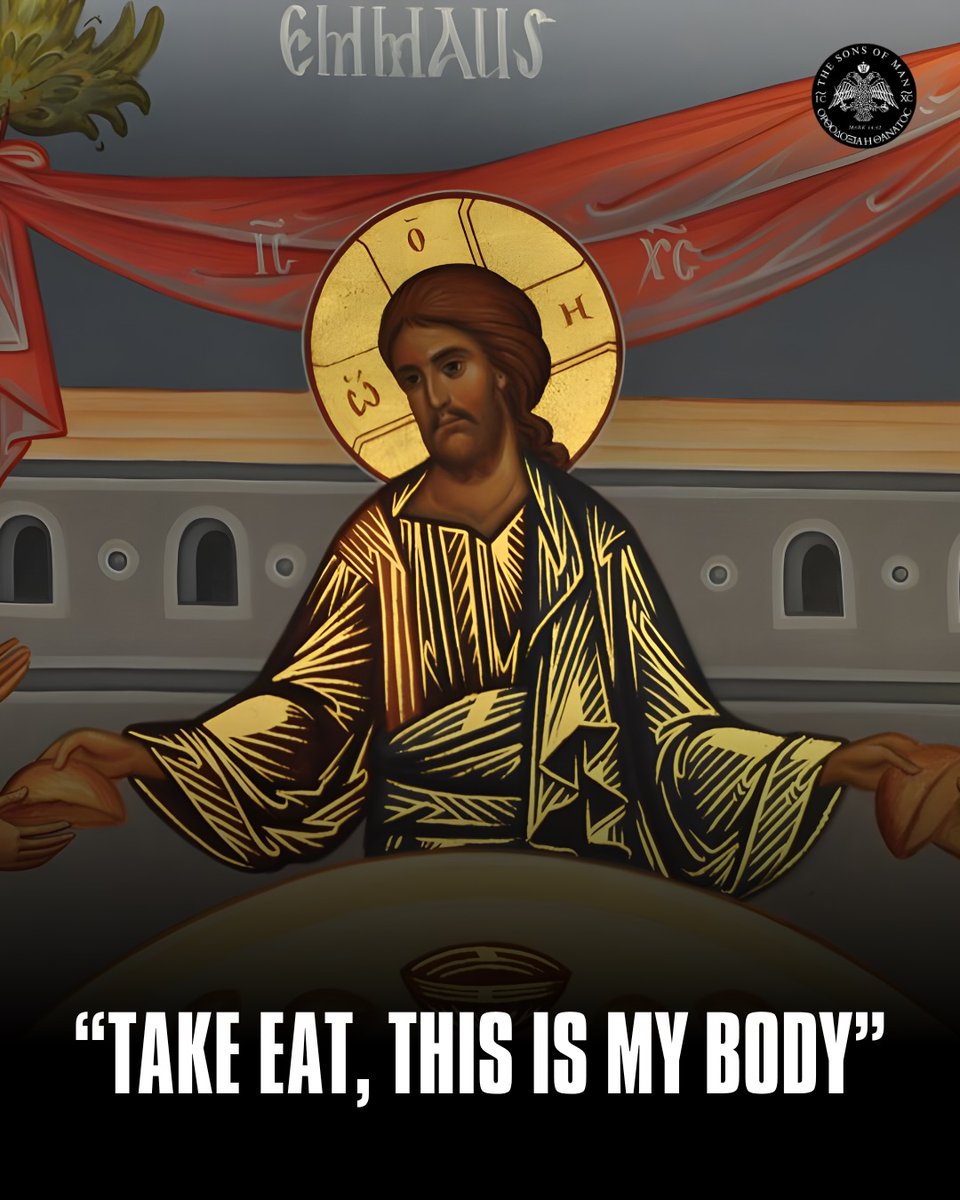
Take, eat; this is My Body, which is broken for us, for the remission of sins. Drink of it, all of you; this is My Blood of the New Covenant, which is shed for you and for many, for the remission of sins.
Went to hell and back: Priest Anatoly Pershin, a former rock musician, survived clinical death. What he said afterward is thought-provoking.
"I was stabbed 11 times. With my last strength, bleeding profusely, I crawled along the asphalt to the ambulance. Luckily, it was right there. The last thing I saw before losing consciousness was the silhouettes of the medics running towards me.
I died during the operation. My soul left my body and rushed upward. I saw the operating room, my body, and the doctors who were trying to bring me back to life from the outside. However, my soul—my essence, with all its thoughts—rose and left the space through the ceiling.
Gradually moving away, I saw our planet from the outside, and with it the life I had lived.
It was at that moment that I realized that I had been living completely wrong and doing the wrong thing.
I really wanted to return to earth again to fix everything. Only it was impossible. I had no body. That is, the feeling of myself remained the same, I understood and felt everything, but there was no physical body.
Then something terrible began to happen—I ended up in hell. For some reason, the Lord decided to show it to me. It was empty Space. A huge space and a terrible, crushing feeling of loneliness, mixed with pain and inexplicable horror, full of despair. It seemed then that I had been here for an eternity.
Only later did I learn that one of the meanings of the word hell is "alone." That is, hell is a place where God is not present.
Suddenly, turning around, I unexpectedly saw a large silver Angel with a sword in his hands. He approached and extended his hand to me, as if wanting to pull me out of this terrible place.
I came to in intensive care. For some reason, God decided to bring me back to life. The most amazing thing is that shortly before the tragic situation in which I was mortally wounded, I confidently tried to prove to my friend that God does not exist.
I believed more in science than religion. Although God sent me warnings, trying to reach my heart.
Only after finding myself in the afterlife did I realize that I had lived wrongly. I returned from there and now have become a deeply religious person.
After the operation, I developed sepsis. A long treatment lay ahead. However, no physical pain It was incomparable to the pain I experienced in hell.
I underwent treatment for several years, but it was all in vain. I was getting worse every day. The tests I took at the Military Medical Academy clearly showed that a person with such blood could not survive.
After that, my good friend Yuri Shevchuk advised me to visit the Antonievo-Siysky Monastery in the Arkhangelsk region. To be honest, I no longer believed that anyone could help me.
The first thing I did upon arriving at the monastery was receive Unction. Then, after placing me in my cell, the monks began to pray over me. After some time, I began to turn to the relics of St. Anthony myself.
One day, while reading an akathist, I felt the space around me fill with a wondrous fragrance. I lost consciousness. When I came to, I immediately realized I was feeling much better. It turned out that on that day, for the first time in several hundred years, the saint's relics had begun to emit a fragrant fragrance in the church.
So I gradually began to recover. And with that, I joyfully took on any work in the monastery. I wanted to do as much as possible for the church and for the Lord.
The monastery was in a deplorable state. Its restoration became the meaning of my life. Or rather, the opening of its dependency in St. Petersburg. I realized that this was far more valuable than rock concerts and all the applause from the audience.
Thus, a few years later, the Church of St. Anthony of Siysky appeared on Prosveshcheniya Avenue in St. Petersburg. And I began a completely different life, a righteous, Orthodox one. As the abbot of a monastery."
On February 9, 1881, the great Russian writer Fyodor Mikhailovich Dostoyevsky departed to the Lord.
In 1881, this man found peace. He was one of the few who were read the Gospel before their death. He died to the sounds of the Gospel, and said very important words to his wife: "Annechka, I never even thought of cheating on you in my mind!". His children came to him for a blessing, and he blessed them and gave his soul to God, this consumptive former convict, emaciated and tormented, about whom critics said that he stood in a linen shirt, kneeling before God for all of humanity.
Then interesting things began to happen. They wanted to bury him in the Lavra, but the Metropolitan of St. Petersburg and the governor of the Lavra said: "Why bury some writer near the monks? It's not worth it, you know!"
But fortunately, Konstantin Petrovich Pobedonostsev, the all-powerful Procurator General, banged his bony fist on the table and put everyone in a terrible tremor. And Dostoyevsky was buried not only in the Lavra, but also at the Lavra's expense. Everyone took it upon themselves. Because Pobedonostsev understood who we were burying. And the then-Metropolitan didn't understand.
Today, in the pantheon of famous people of the 19th century, on the way to the Lavra, on the right side there is a well-trodden path only to him. There lie Baratyinsky, Grandfather Krylov, Zhukovsky, Tchaikovsky, Borodin, and Mussorgsky. But the path is always to Dostoyevsky. And the flower-strewn grave is inscribed with an epigraph from the Gospel of John to the novel "The Brothers Karamazov": "... the grain that falls to the ground does not die, but it remains alone."
In general, Dostoyevsky died. They laid him in the Holy Spirit Church of the Alexander Nevsky Lavra, which is no longer in operation and is occupied by a Cultural Center. And there he lay. They came to read the Psalter. The dead man lay, and the anicon stood on the altar, and the Psalter lay on the anicon, and people came to read it according to the kathismas. Then others came - "I also want to pray, and I, and I", and they read according to the kathismas, then according to the Psalm, then three lines, then one line, then one word.
One word was read and then another. Because there were several thousand people who wanted to read the Psalter at Dostoyevsky's grave. People suddenly felt who they had lost. Clerks, students who had finished and not finished their studies came to pray. Ladies came, priests came, officers came, intellectuals came.
For the first time, those who had long forgotten to be baptized were baptized. Because atheism had swept across Russia like a wave, many people had stopped going to church at all. And suddenly they began to pray again over the dead man's grave, who all his life only said: "Believe, repent, Christ is, and God is, and the immortality of the soul is, everything is, repent, believe."
When they carried him out of the church to be carried around the church to the sound of the troparion for the departed "By the sea wave", it didn't work out, because the churchyard was packed with people. It was necessary to pass the coffin literally over the heads. That is, the coffin went, and the people didn't move. They couldn't. There were so many people. The windows of the surrounding houses were wide open, and people stood at the windows with lit candles.
And when they carried him to his resting place, they sang "Holy God, Holy Strong, Holy Immortal, have mercy on us". The whole city sang, it seemed that all of Petersburg had gathered.
Russia has not known such funerals, except for two. Such large-scale funerals were at General Skobelev, the White General. The one who beat the Turks in Bulgaria, and fought in Turkestan. And then the funeral of John of Kronstadt, which also gathered all of Russia, it was something grandiose.
>>>>