A non-controversial statement.
If u treat patients post-ACLR, tennis leg, Achilles tendon rupture and u don't scan them for DVTs u will probably miss hundreds of non-symptomatic DVTs.
@Rheumatology Constructive criticism: I bought the book. You guys share some the highest quality US images on X. Unfortunately, this doesn't transfer well to the book, where the quality of the images and text is quite a bit lower.
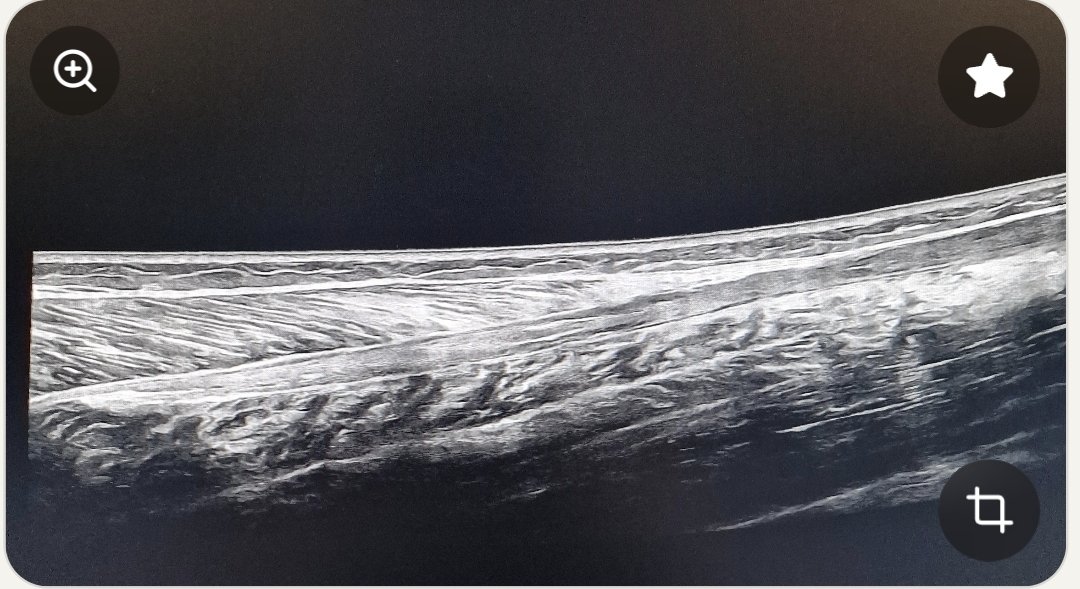
To aspirate or not?
If u don't, then this is the risk.
Big interaponeurotic fibrous scar tissue. Pain with calf streching, limited and painful calf raise, pain walking.
@carlespedret
@irifuneshinmori@carlespedret There is no hematoma at the moment
I see what u mean though. The "" hematoma" is just muscle anterior to the central tendon. There WAS a significant hematoma in the interaponeurotic space, but that's like a concrete block. The injury was 2 years ago.
New research shows that high-load (8–12RM) and low-load (20–30RM) training performed to failure produced similar increases in biceps tendon thickness. These findings challenge the common belief that heavy loads are necessary for tendon adaptation and instead support the idea that intensity of effort—not load magnitude—may be the key stimulus for tendon remodeling. Nice work from the lab of @jploenneke
https://t.co/ewTBPEL5oR
🚨NEW PUBLICATION!🚨
We reviewed virtually every major claim behind the seed oil hysteria, and the evidence doesn’t support the fear. The controversy is largely social media-driven, built on ecological correlations, mechanistic speculation, and flawed trials...
@NickIlic_Physio I've sent too many of these to MRI to be confident in the cm rule. Athletes can have over 10 cm of tenderness, but with focal areas of extra tenderness that can range from grade 1 to 4a.
In my opinion, we are shit at truly distinguishing these entities.