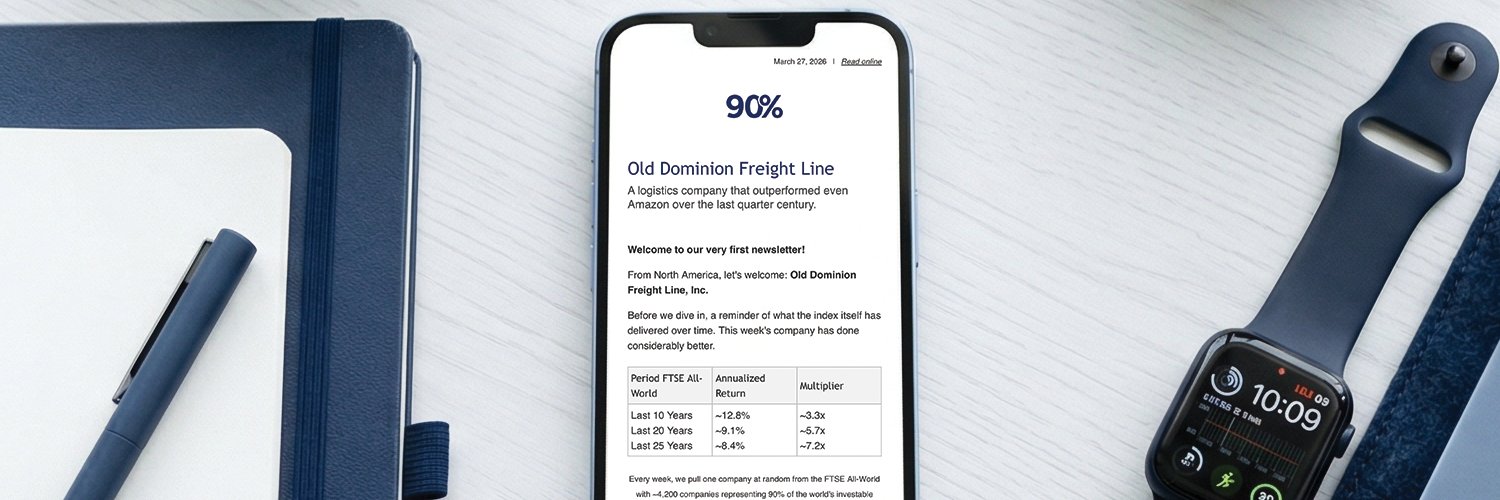
A trucking company outperformed Amazon over 25 years. I had no idea I owned it. That's why I'm writing 90 Percent, a weekly newsletter exploring the companies hiding inside your passive investment portfolio. https://t.co/XB9NJi5Jhg
This one company employs 49,000 worldwide. A workshop grew into a city. Most people have never heard the name.
Featured in 90 Percent tomorrow: https://t.co/XB9NJi5Jhg
An electrician, an administrator, and a mechanic walked into a garage in 1961.
It sounds like the start of a joke but it's as real as it gets!
First year: they made 146 motors
Last year: 19 million
Their company is now the world's largest maker of low-voltage electric motors.
And it's quietly part of the AI story too.
The transformers that step down the voltage before it reaches a data centre? They make those.
The motors running the cooling systems inside? Those too.
The town where it all started had a few thousand people. Today it has 180,000.
@TweetsOfSumit@vonderleyen True! I am not too optimistic though that bureaucracy and regulations get removed on an EU and/or national level... I just see more regulation coming and not less.
In 1988, a Tokyo media company brought down the Prime Minister of Japan.
His entire cabinet. Two former Prime Ministers. Leaders from every major political party.
One of the largest corruption scandals in postwar Japanese history.
You wouldn't expect that company to still exist.
It does. Today it's one of the most valuable companies in Japan.
And it owns Indeed, the website where you probably last applied for a job.
Have you ever used Indeed? Drop it in the comments.
€25 billion of orders already booked. €4.6 billion in free cash flow, a company record. 16 consecutive years of dividend increases.
It's in our index fund and we'll feature it tomorrow. https://t.co/XB9NJi5Jhg
Every conversation about AI mentions chips.
Nobody mentions who keeps those chips cool, powered, and protected from surges.
That's Schneider Electric. A 190-year-old French company that quietly became the world's largest electrical equipment maker.
The S&P 500 is the most-watched index on earth.
One company has beaten it by roughly 8x over the last 28 years.
$10,000 at the IPO in 1998 is worth roughly $800,000 today.
In a company that picks up your bin every week.
It's in your index fund and we profile it tomorrow.
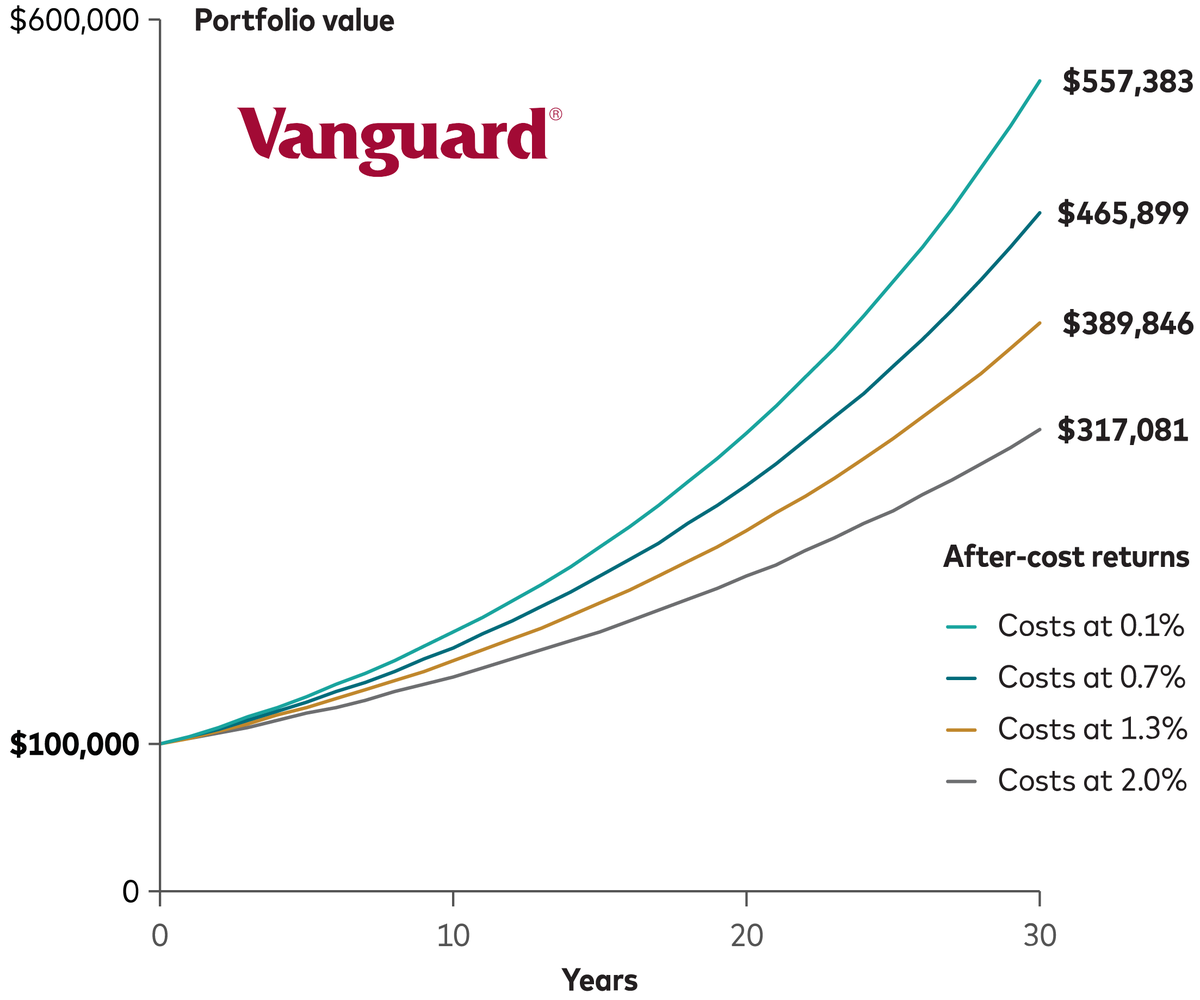
1% of assets sounds small.
But if you're compounding at 7% per year, a 1% fee actually costs you 14.3% of your returns each year.
Here's a chart illustrating the idea we talked about on our Vanguard episode.
Saving $500 a month for 30 years.
The difference between a typical global active fund (1.0%) and a cheap world index ETF (0.15%):
$113,000.
Two years' salary, gone to fees.
Black Monday. Dot-com bust. Global Financial Crisis. COVID-19.
Four crashes in forty years. Each one felt, at the time, like the end of something.
This is what happened to $10,000 left alone through all of them.
The strategy isn't complicated. Stay invested.
Great visualisation by @Vanguard_Group that shows time in the market beats timing the market.
Even the most unlucky investor picking the worst timings made a 340% return with an FTSE All-World investment in 30 years [in German]:
A trucking company outperformed Amazon over 25 years. I had no idea I owned it. That's why I'm writing 90 Percent, a weekly newsletter exploring the companies hiding inside your passive investment portfolio. https://t.co/XB9NJi5Jhg




![ThomasTiroch's tweet photo. Great visualisation by @Vanguard_Group that shows time in the market beats timing the market.
Even the most unlucky investor picking the worst timings made a 340% return with an FTSE All-World investment in 30 years [in German]: https://t.co/RjVE7X86vD](https://pbs.twimg.com/media/HIIjE0nWEAAsr-V.jpg)





