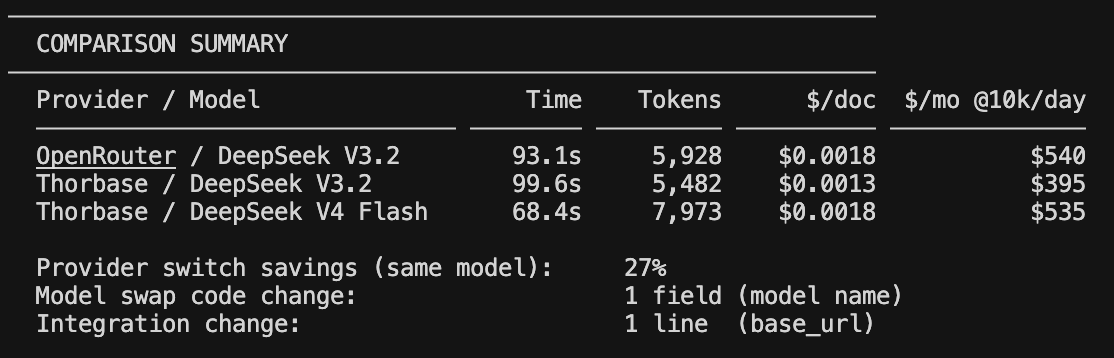
Wrote a script to compare inference prices between us and the cheapest provider on @OpenRouter and we came in at 27% cheaper
Note that our run did spend 8% less tokens tho
Valuemaxxing > tokenmaxxing
Your use case does not need frontier models with predatory pricing for a few extra points on a benchmark.
Been using kimi with my marketing agent and haven't noticed any drop in quality.
Not switching is paying for laziness with your wallet
The Big Crunch is here.
Companies are realizing:
- their inference bill grew 10x in the last few months
- another 10x growth will bankrupt them
This is what @OpenRouter is for! The best market prices for each model, + clear data & routers to help you choose the best OSS model
A reminder that tokengo has the most price competitive open weight model supply online.
For example, we serve GLM 5.1 at FP16, and we are STILL cheaper than every other provider (Including those serving it at FP8)
It’s 3 AM in a region with surplus wind power. GPUs are idle; tokens are cheap. It’s 10 AM in a major tech hub; demand is peaking. We are building the Global Token Spot Market. We’re heading toward a world where "Inference Traders" arbitrage compute across time zones in real-time.
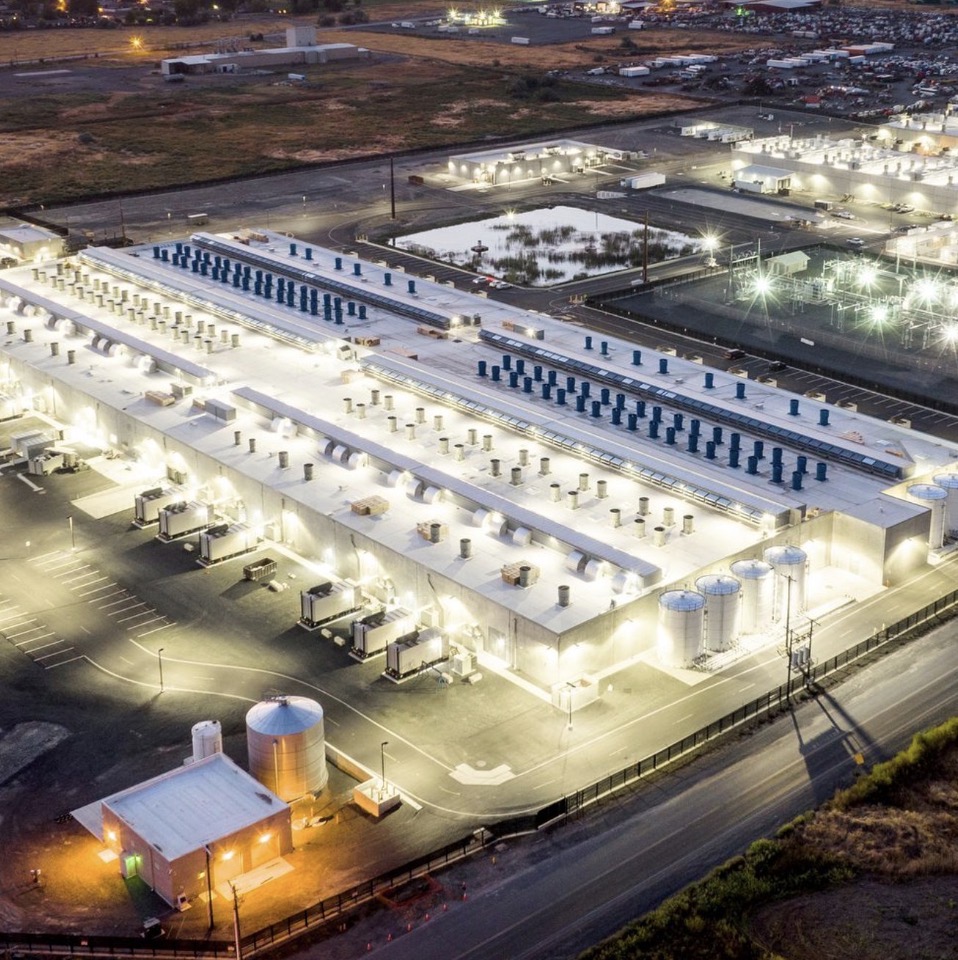
Residents living within a half-mile of new AI data centers are reporting dizziness, nausea, vertigo, and sleep disruption from sound they can't hear.
The source is infrasound. Frequencies below 20 Hz sit beneath the floor of human hearing but not beneath human physiology. The body's vestibular system registers low-frequency vibration directly, triggering the same response as motion sickness. The cooling systems and gas turbines running these facilities 24/7 produce exactly this range.
Noise ordinances were written for audible noise. Decibel measurements start at 20 Hz. Infrasound doesn't appear. A 200-megawatt data center with tens of thousands of tons of cooling equipment can run around the clock with zero measurable noise violation under any existing zoning law in the country.
The developers know this.
They're not randomly selecting sites. Rural jurisdictions get targeted because they lack the legal staff, the engineering expertise, and the regulatory framework to mount any challenge. These facilities require new transmission interconnects that take 5 to 10 years to process through utilities. Building behind-the-meter with gas turbines bypasses that queue. Speed to power, zero delay, zero grid dependency.
Households who bought before the announcement have two options. Sell at a price no buyer will pay, or stay and live with symptoms their family doctor has no framework to diagnose as infrastructure-related.
That cost never appears in a hyperscaler's earnings call.
The regulation will catch up eventually. It always does. But the facilities will already be running. The permits will grandfather everything in place.
The turbines don't stop when the legal framework finally notices them.
pretty sure some providers quietly downgrade under load, uptime stays the same but quality goes down. is there a way to have quality SLAs instead of uptime?
@audiencon https://t.co/JC2RMfZ58m boring MaaS platform in the front, traffic analysis and idle compute aggregation in the back for some of the most cost competitive tokens online.