Mostly reading books around the issue of national decline, cultural rot, loss of traditions and the British Old New Left, while unpicking Whig history.
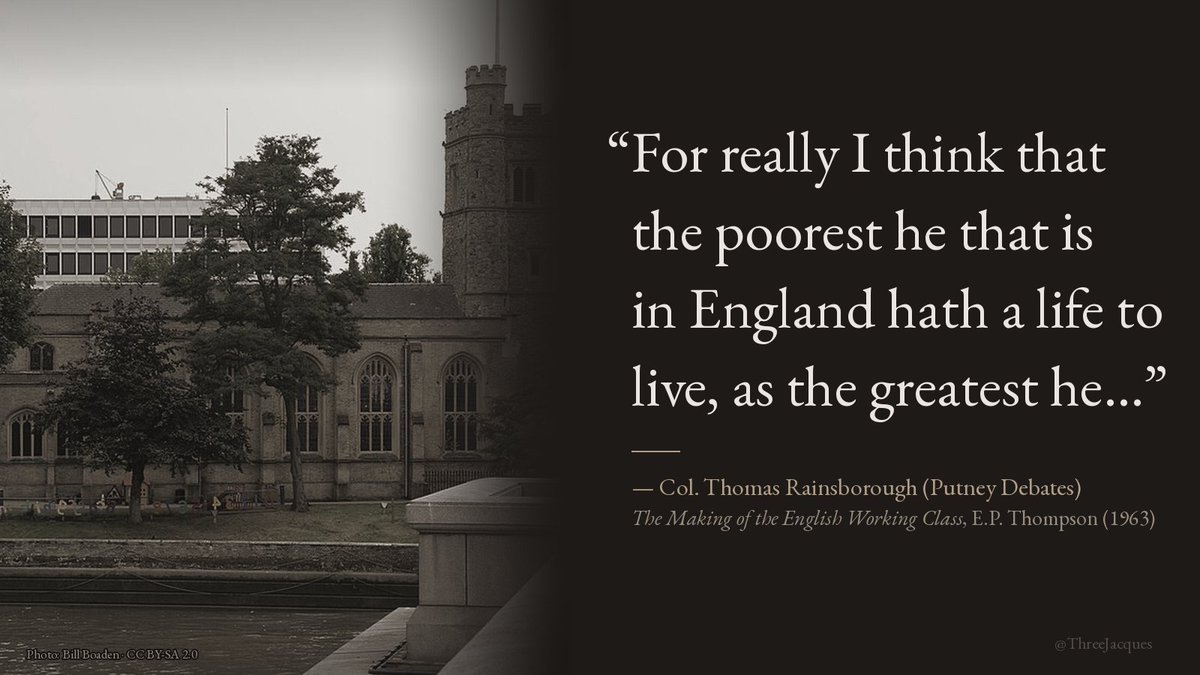
Colonel Thomas Rainsborough of Parliament's New Model Army at the Putney Debates in 1647, during the English Civil War, arguing that the poorest man in England had as much right as the greatest to a say in how he was governed. Quoted by the historian E. P. Thompson.
From The Making of the English Working Class by E.P. Thompson (1963)
I think part of it is that it dates from a time when there was still a lot of optimism that urban planning and education could really fix all the problems. Social science material from the same period is much more unguarded than later. It was another few years before the questions touched on in Nigel Barton became too embarrassing and unsolvable to acknowledge.
Stand Up, Nigel Barton, by Dennis Potter, dir. Gareth Davies (1965)
"One says UP to Oxford." "Does bloody Oxford move up and down the bloody mountain?" The class system in one argument about prepositions.
#DennisPotter#ClassicTV
Richard Hoggart, who grew up in working-class Leeds, in his 1957 classic about English working-class life, on neighbours who always knew, or thought they knew, everyone's business.
From The Uses of Literacy by Richard Hoggart (1957)
Historian Simon Ball on a 1922 agreement by Britain's Colonial Office and India Office that Indians in Kenya, then a British colony, should be able to settle freely and have the same political rights as European settlers. The settlers fought the plan off.
From The Guardsmen by Simon Ball (2004)
#MilitaryHistory #history
Daniel Finkelstein, the British journalist, in his family history, on a court case in Germany before Hitler took power, against antisemitic writing, under laws that banned attacks on any religion. His grandfather was involved in such trials.
From Hitler Stalin Mum & Dad by Daniel Finkelstein (2023)
#history #JewishHistory
@GordonDComstock The two Nigel Barton things are fantastic. I got them with the idea of looking into the 1964 election, and maybe writing an essay on it. You get a depiction of the bigoted woman thinking the Labour candidate is going to send the West Indians home that Bowden mentions.
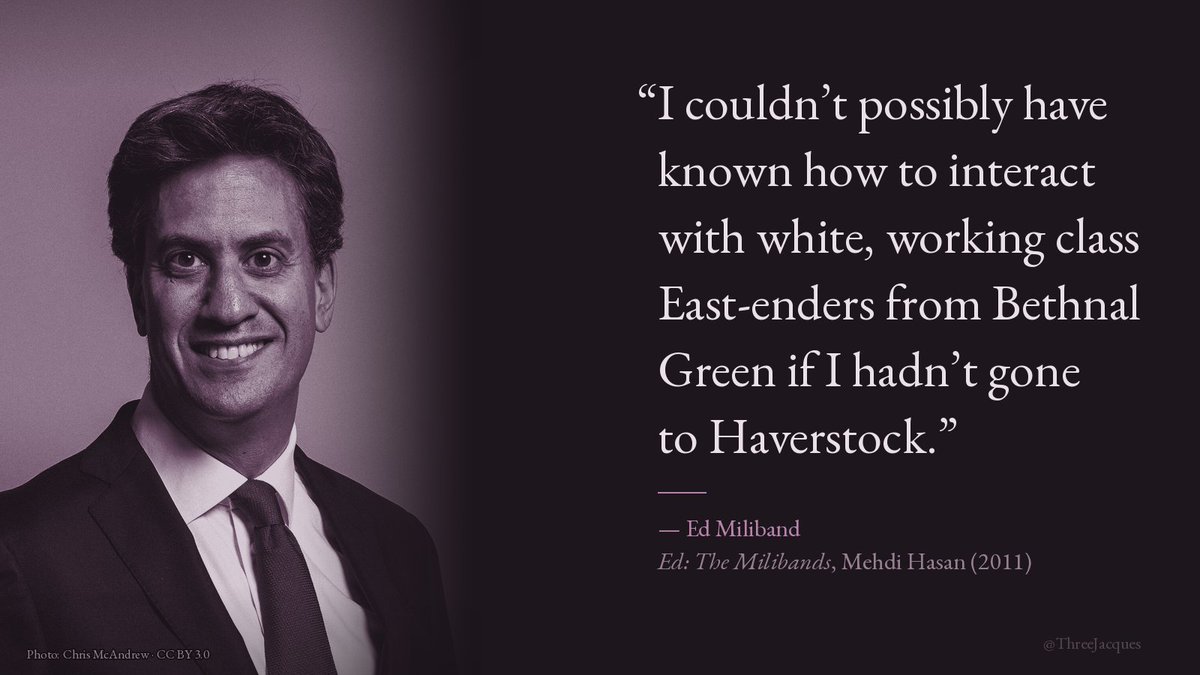
Ed Miliband, then leader of the Labour Party, quoted in a 2011 biography on how Haverstock, his comprehensive school in Camden, north London, taught him to get on with white working-class East Enders.
From Ed: The Milibands by Mehdi Hasan (2011)
Are you sure...? From what I've been able to discover, the idea of a postwar labour shortage being the cause of Windrush, "you asked we came" and "jobs English people wouldn't do" didn't really start to come in until the 70s, once the race relations bureaucracy had begun to get going and contrary voices shut out. You get the odd Punjabi claiming they were doing jobs the English wouldn't to sociologists in the late 50s/early 60s, but that wasn't part of any national story about what was happening until much later.
@baylissbaghdad@Cheetoignocnito@sammysangel There was a push after Blair got in in 97 for the 50th anniversary. That's when the idea of "the Windrush Generation" comes from, though back then it just meant the people on the original voyage.
@Aliathewhite@copyright4001 The British Nationality Act came in months after the Windrush and other ships bringing West Indians docked. It has nothing to do with West Indian migration and didn't enable them to come. The Home Office call the idea that the Act opened the door "a myth".
@MorgothsReview Isn't it odd how, when it's some kind of half a billion pound national infrastructure project, concerns about the impact on voles being able to get a good nights sleep become an impossible regulatory obstacle. With migrants, an objection from three Popes would be insufficient.