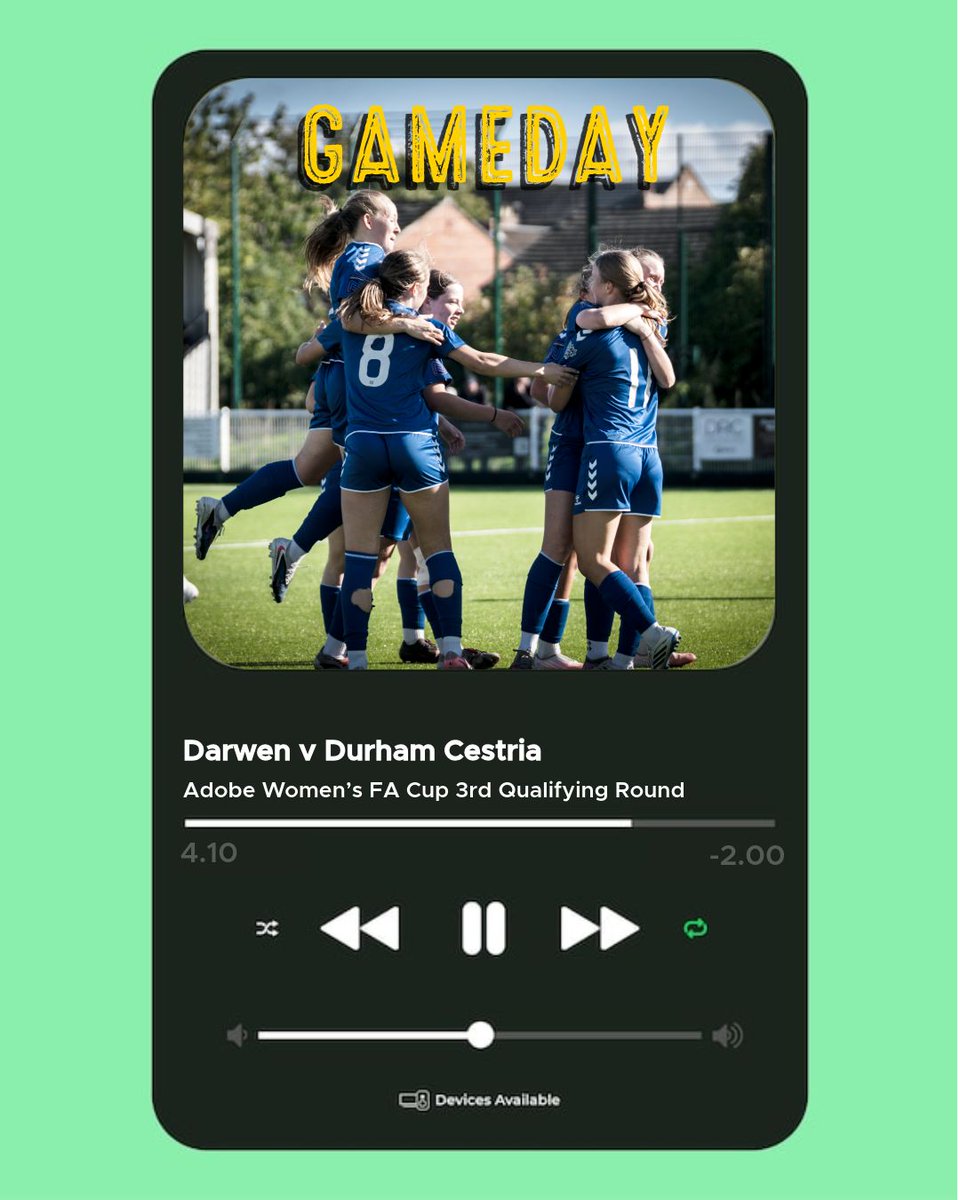
So thankful for John's support over the years, a passionate supporter and advocate of women's football and we were incredibly lucky to have his support and sponsorship. Thank you for everything John ❤️
Everyone at Durham Cestria is heartbroken to learn of the passing of one of our most dedicated supporters and sponsors, John Parkinson
John's followed Cestria home and away across the seasons, sponsoring at least one player per season, and eventually our front of shirt sponsor.
So thankful for John's support over the years, a passionate supporter and advocate of women's football and we were incredibly lucky to have his support and sponsorship. Thank you for everything John ❤️
Everyone at Durham Women FC is saddened to learn of the passing of John Parkinson.
John was a loyal supporter and sponsor of our teams at all levels, and our thoughts are with his friends and family.
Rest in peace, John 💙
🚨 Lisa Carrick on the emotional toll of Manchester United's treatment of her husband, Michael Carrick:
🗣️ People see football as a game. They see the results, the league table, the managers, the players and the decisions made by the club. But sometimes, they forget that behind every manager is a family watching everything happen.
And as Michael's wife, I have watched him go through some very difficult moments.
Since the beginning of the season, I have noticed a change in him. He hardly sleeps properly anymore. There are nights when he lies awake thinking about the club, the players and what he could do differently.
Sometimes, he comes home and barely speaks. He doesn't always have the appetite to eat, and even when our children want his attention, I can see that his mind is somewhere else.
I don't always ask him what is wrong because, honestly, I already know.
I know how much Manchester United means to him. This is not just another job. This is a club he has represented as a player, served as a coach and now managed. He has given so much of himself to this football club.
I have watched him deal with criticism, pressure and difficult results. I have watched our children notice when their father isn't happy. And as a wife and mother, all I can do is encourage him, support him and remind him that there is more to life than football.
But what has happened recently has been particularly difficult to watch.
Imagine waking up every morning, preparing yourself for another day at work, knowing that the same club you are trying to help is reportedly looking for someone to replace you.
I have seen the reports linking the club with Mauricio Pochettino and other potential replacements. Yet Michael continued going to Carrington. He continued attending training, preparing the players and carrying out his responsibilities.
He would leave early in the morning, sometimes without even having breakfast, because he had work to do.
And that is what hurts me the most.
He kept showing up. He kept doing his job. He kept giving the club everything he had, even when the uncertainty surrounding his position was becoming impossible to ignore.
I understand that Manchester United want to win. I understand that supporters expect results. I understand that football is a business and that decisions have to be made.
But there is also something called respect.
If the club had decided that Michael was no longer the right person to lead the team, why couldn't they handle the situation with more consideration? Why allow someone to continue carrying the responsibility of the job while the club is reportedly preparing for his replacement?
My husband is not asking for special treatment. He understands the demands of football. He understands that managers can lose their jobs.
But he is also human.
He has a family. He has children who want their father to be happy. And he has given years of his life to Manchester United.
I am not speaking because I want to fight the club. I am speaking because I have watched someone I love carry a burden that most people will never understand.
Whatever happens next, I and his family is proud of him.
Manchester United may have made their decision about his future, but I wish they had remembered that the man they were making that decision about has given so much of himself to this club. My husband deserved better."
Content note: this film refers to child sexual abuse in football.
One voice, then hundreds more. Ten years ago, survivors broke a silence in football that should never have existed.
Today we pay tribute to everyone who has spoken out and reached out, and to all those whose voices went unheard for too long.
Voices of Truth is a lasting home for their stories.
https://t.co/NpPwbShAbq
🎥 Women’s FA Cup.
Ellen-Marie, Fran and Lleucu were all on the score sheet in our 3-2 victory over Hull City, check out full highlights on the Women's FA Cup YouTube page! 👇
https://t.co/XRjMoNgTRj
#HearUsRoar#womensfacup
WHERE IS THE BUTTON that sends this to every parent with a child in academy football????
“It is possible to reach the first team at an older age. You don't need to go up there at 16. There's no rush. There's no rush.
My advice is tell the youth players to stay calm. Their parents should be even more at ease. Let them study, let them train, let them listen to the coaches and trainers at the club.
There's no rush to become a professional. In the end, it's better to arrive at a point of maturity.
There are cases like Messi's, who get away because they already have such a high level that it's normal for them to rise when they are sixteen or seventeen years old.
The vast majority do not have to go up to that age. They can try out for the first team or the reserve team, but they have to go back down, they have to recover, they have to live with people their own age, they have to live human experiences that will make them mature.
There's no rush. There's always too much haste. You can feel it among the parents. It's not a mistake. Tranquillity.
You can be a professional at twenty two or twenty three years old, playing for the first team in the First Division, and still play for ten more years.
The important thing is that when you go up, you stay when you go up and when the time comes, you are prepared. That is important.
There are countless cases of players who taste the sweetness of victory at a very young age. They are unable to assimilate a complicated experience, neither are their families, and then they end up in a category that perhaps they shouldn't have even tried.”
- Luis Enrique
The Women’s FA Cup comes to Shildon this Sunday as we welcome the Tigresses to Dean Street!
🆚️ Hull City Ladies
📍 Dean Street, Shildon, DL4 1EZ
🕑 14:00
🎟 Adults £6 | Children/Concession £1
👕 Merchandise Available
#HearUsRoar#womensfacup
Got to credit @DanAbrahams77 here for making me aware of this piece of absolute coaching gold dust ⭐️ Listen up and take heed of this coaches, because this is the best lesson you’ll learn today 🙌🏼 #SundayShare@SundayShare10
Coaches…your influence extends far beyond the training ground…
Think about that for a moment.
A player leaves your session. They go home. They talk to their parents, their friends, their teammates. They think about what happened in training. They remember the activity that challenged them. They replay the words you used after a mistake. They recall how you responded when things weren’t going well. They reflect on how they felt during the session.
Your coaching continues to influence players long after the final whistle. And that makes three aspects of coaching particularly important…
1. The activities you design
Every practice creates opportunities for players to perceive, decide, act, adapt and learn.
The conditions you create matter. The constraints you manipulate matter. The problems you ask players to solve matter.
Activities aren’t simply ways of keeping players busy. They’re opportunities to shape attention, challenge existing abilities, encourage exploration and develop game intelligence.
Design with intention. Design with learning in mind.
2. The words you choose
Your communication can influence what players notice, how they interpret situations and what they attempt next.
The questions you ask can encourage curiosity. The feedback you offer can direct attention. The instructions you give can clarify responsibilities. And your tone, pace, volume and timing can influence how your message is received.
Sometimes the most powerful thing a coach can do is say less…and allow players to search, discover and solve.
3. The behaviours you demonstrate
Players don’t just listen to their coaches. They observe them.
How do you respond to mistakes?
How do you behave when you’re frustrated?
What happens to your body language when the team is losing?
How do you treat players who are struggling?
Your behaviours communicate expectations, values and standards. They can help create an environment where players feel able to explore, take risks, make mistakes and keep learning.
Consistency matters. Not because coaches must behave identically in every situation, but because players benefit from understanding what their coach stands for.
Activities. Words. Behaviours.
Three powerful sources of coaching influence.
Of course, learning is complex. Players bring different experiences, motivations, abilities and interpretations into every session. No coach can completely control what a player learns or takes away. But coaches can be intentional about the environments they create and the experiences they help shape.
So perhaps three useful questions to ask after your next session are…
What did my activities invite players to learn?
Where did my words direct their attention?
What did my behaviours communicate?
Because coaching isn’t simply about what you deliver during a session. It’s also about what players take away from it. And what they carry into the next one.
When Jonathan Walters was 11, his mum Helen sadly passed away from bowel cancer.
She was only 40.
About a week before she died, his dad sat him and his brothers down.
“Your mum’s not going to be around for much longer.”
Walters took himself away on his own.
“I probably would have cried for about six hours, seven hours.”
The day after Helen passed away, his dad sent him straight back to school.
He did not really know what else to do.
Walters walked back into his Year Six classroom and his mates immediately asked him:
“Are you alright?”
“You pretend you are.”
From that point, that became how he dealt with it.
“You put up a wall and nobody knows you.”
His mum was barely spoken about afterwards.
Walters later described her almost becoming a taboo subject in the family.
He could be upset about her and still never really allow himself to grieve.
“You ask me how I deal with it.”
“I don’t deal with it.”
“I lock it away. That’s how I deal with it.”
But there was one thing about Helen that Walters carried with him.
She was from Dublin.
As a child he had spent summers in Ireland with her family, and when he started getting closer to becoming a professional footballer, he already knew which country he wanted to represent.
“When my mother died, I promised I’d play for Ireland.”
“For her.”
Walters declared for the Republic of Ireland and eventually made his senior debut in 2010.
Over the next few years he became one of the most important players in the side, but the night that brought everything back came against Bosnia in November 2015.
Ireland were one game away from qualifying for Euro 2016.
Walters had missed the first leg through suspension.
He came back for the second in Dublin and scored both goals in a 2-0 win to send Ireland to the tournament.
Afterwards, he went back out onto the pitch on his own looking for his family in the stands.
For a player who had made that promise as an 11-year-old boy, there was only one person missing.
“My mum passed away when I was 11 and I made the decision at a very young age to come and play for Ireland.”
“She was smiling down on me tonight, I’m sure.”
Even years later, standing with Ireland before a game could still take him straight back to her.
“It’s very emotional when I hear the Irish national anthem.”
“When you are younger you want to do everything to make your mum proud.”
“Everything I did, I did for my mum.”
#football