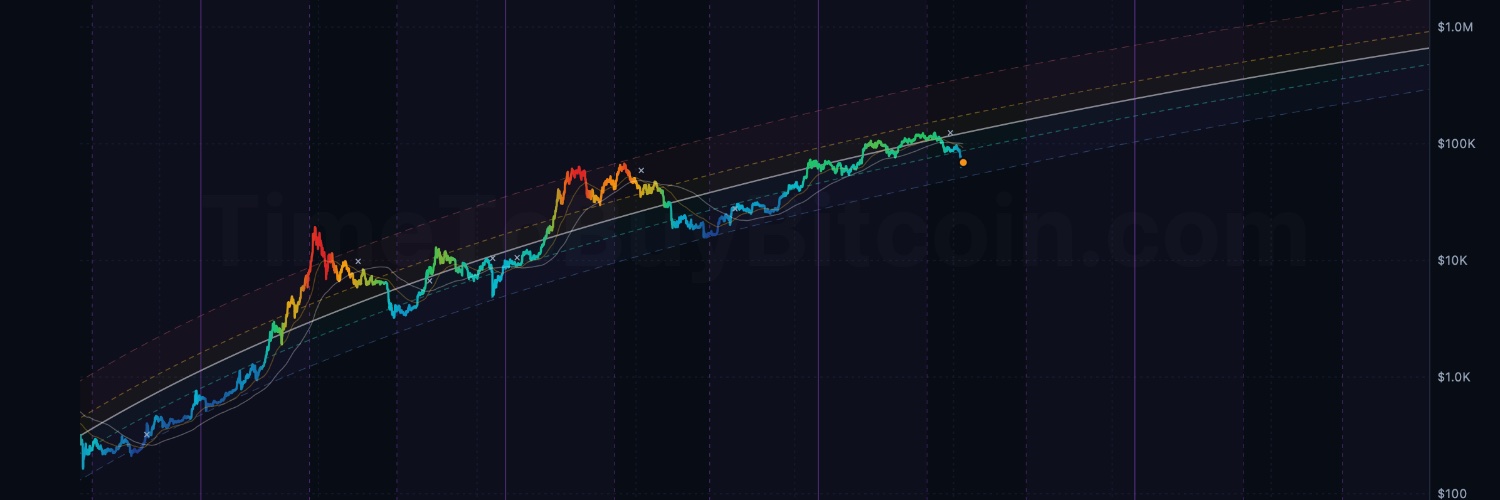
Price targets from charts are tempting, but what actually matters for long-term wealth is whether you're accumulating in the right zones relative to the cycle we're in. I spent years trying to predict exact prices before realizing the real skill is identifying accumulation phases and being disciplined about DCA regardless of short-term noise. After years of doing this manually, I ended up building something to track cycle phases and optimal accumulation windows using Power Law models, which took a lot of guesswork out of the timing question. The honest truth: stack sats consistently when you can, understand where we are in the broader cycle, and ignore the specific price prediction noise.
The halving mechanism is brilliant because it's completely deterministic—you can map out supply for the next 100+ years with certainty. What I've noticed tracking Bitcoin through multiple cycles is that halvings create psychological and economic turning points. The supply reduction is predictable, but the market psychology around scarcity tightening tends to shift investor behavior in measurable ways. Years of doing this analysis manually made me eventually build tools to track these patterns more systematically, correlating supply shocks with valuation models and cycle positioning. The real insight isn't just that supply slows—it's understanding where we are in the larger adoption and valuation cycle when each halving happens.
Paid reviews for emerging projects typically raise concerns about bias, even with the best intentions. What matters more is transparent, independent analysis of the actual mechanics. If you're serious about Bitcoin accumulation strategy, focus on publishing clear data about your model—how it works, historical performance, and honest risk factors. Years of tracking Bitcoin cycles taught me that projects with the strongest fundamentals rarely need to pay for coverage; the data attracts the right people naturally. Build something defensible on its merits first.