With all the manufactured hysteria over the recent 'migration crisis' in Ceuta it seems timely to re share this documentary I did with @Path14official
We cover why Europe is hostage to constant migration crises, how this came to be, and what can be done
https://t.co/Op8rXhMjem
Attacks on Spain by many EU leaders isn't over nonexistent threat to EU from Ceuta but an apparent hatred of Sanchez. They're humiliated by his ethical stance on Gaza & Iran. He shows recipe for more & more sustainable growth is migration & stimulus, not xenophobia & austerity🧵
🎶There’s a whole genre in North Africa of folk music on emigration to Europe
And these songs are so famous that some people even play them during weddings (lmao) and when crossing the sea, people play it on social media as well
Some key examples:
🇩🇿”Partir Loin” with the key lyrics: “Get me out of the misery, in my country I am despised, I am tired exhausted, idgaf”
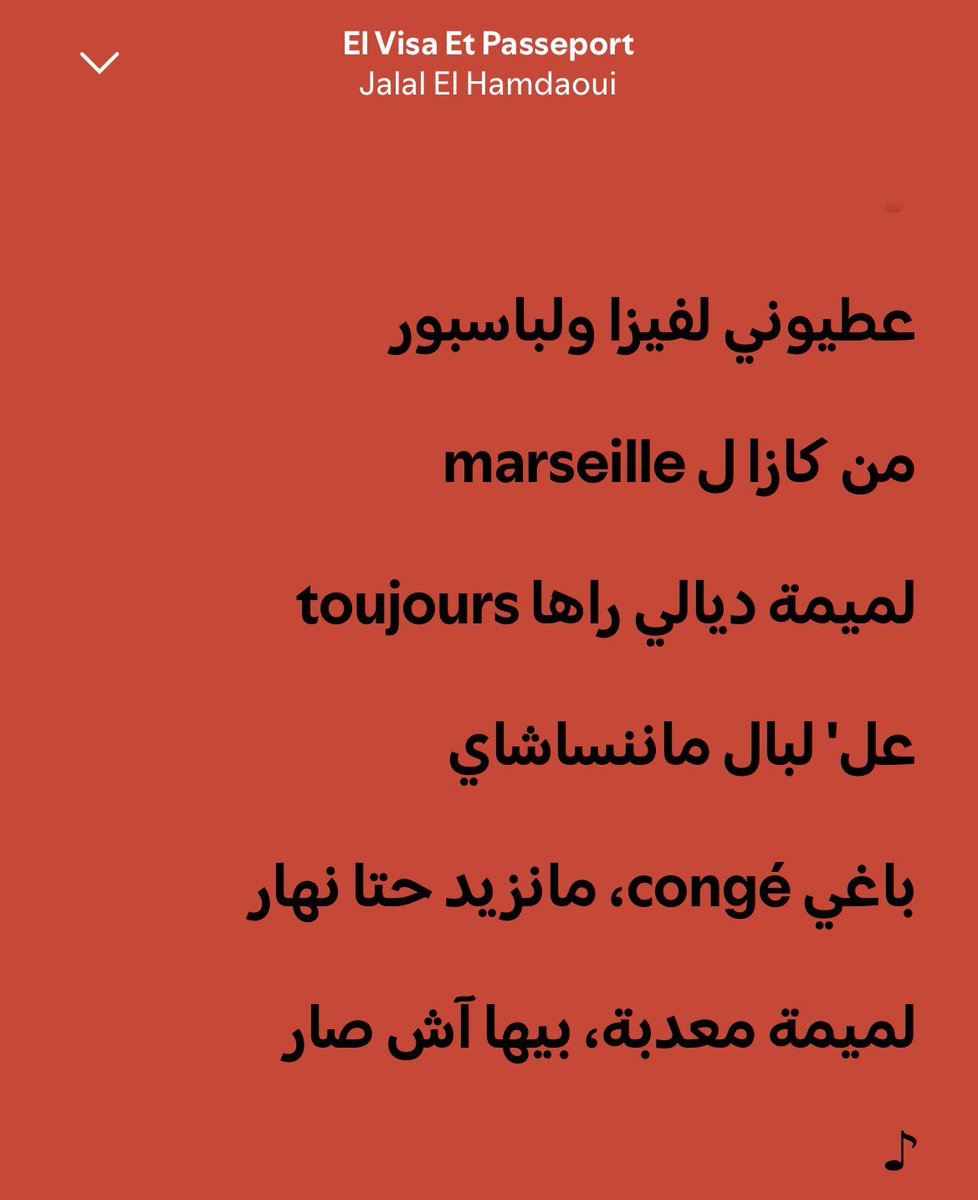
🇲🇦”Visa ou Passeport” with the key lyrics: “Give me a visa or passport, from Casablanca to Marseille”
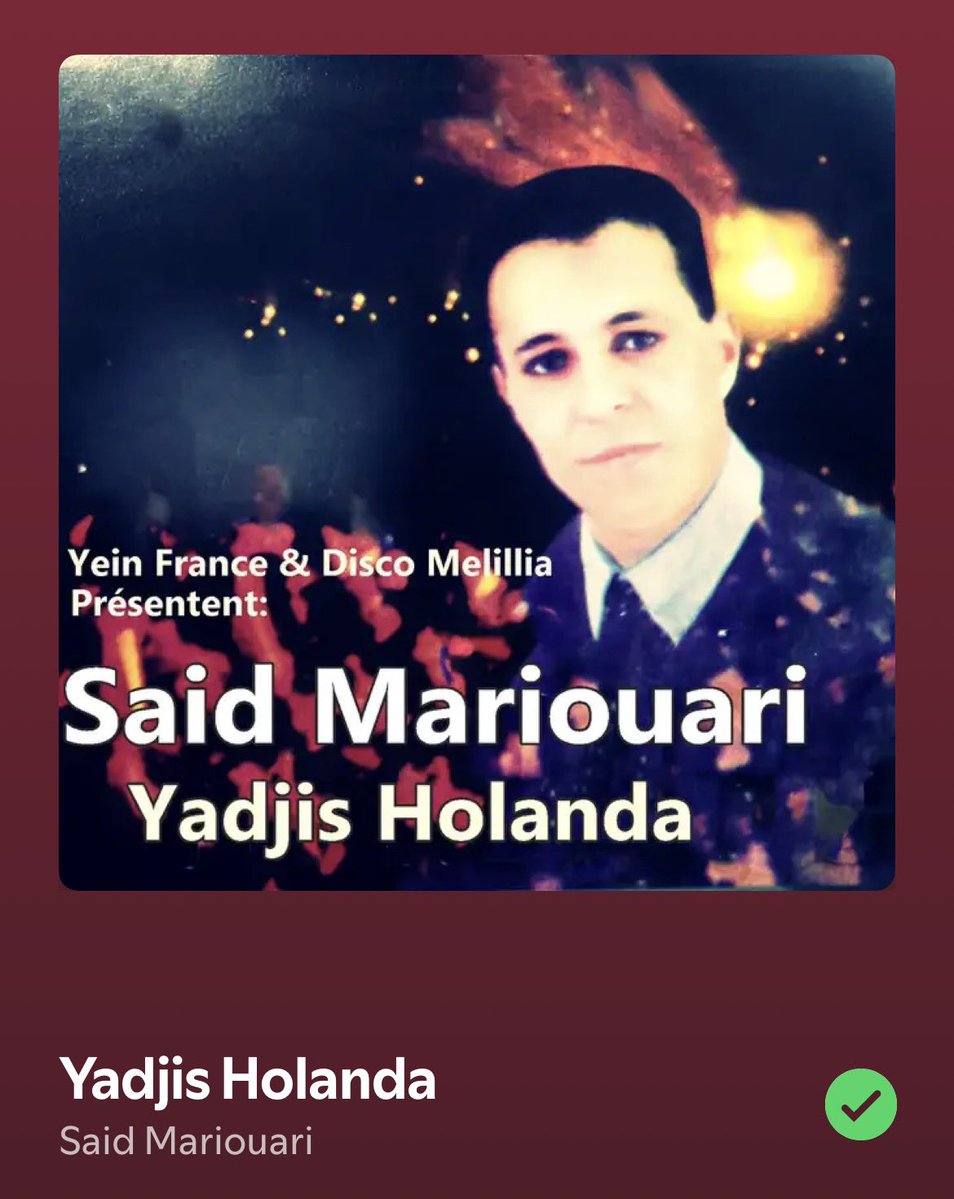
🇲🇦”Yadjis n Holanda” (Riffian Berber) about a guy who hopes to marry a Dutch Moroccan so he can migrate to the Netherlands
🇩🇿”Ya Rayah": Explores the illusion of foreign lands and the inevitability of returning home.
Europe has spent years warning about the weaponisation of migration. Yet when Spain came under pressure in Ceuta this week, many European leaders blamed Madrid instead of showing solidarity. That sends the wrong signal. My policy alert for @ecfr. https://t.co/wT7BxSIlE4
An excellent account of how Saied crushed Tunisia’s democratic experiment with help from Algeria, Egypt, and the UAE.
And, of course, the EU.
As the former US envoy makes clear, the Biden administration was also fully complicit
https://t.co/8DHVHNefdU
Iran's latest ballistic missile attacks and the continued rejection of compromise solutions on the Strait of Hormuz might seem like indications that "hardline" thinking is dominating Iran's national security strategy.
But my conversations with counterparts in Tehran suggest that something else is at play. Iranian decisionmaking is increasingly shaped by an intense pessimism about what diplomacy with the U.S. can achieve. Most senior figures, whether pragmatists or hardliners, simply do not believe a deal is possible. This pessimism has gotten worse since the MOU was signed.
Part of this is about the repeated experience of U.S. escalation during the course of negotiations, but the pessimism is no longer confined to the question of "does Trump want a deal?" Increasingly the belief is that "Trump can't do a deal, even if he thinks he wants one."
Policymakers in Tehran are looking at several things. At a technical level, the Trump administration was unable to execute even the most basic confidence building measures of the MOU. No assets were released and the oil waiver was never really operationalized. Iranian leaders are also looking to other contexts. Even in Venezuela, where the administration has complete political control and a full court press approach to economic reengagement, sanctions relief has floundered (eg. it took a whole month after the massive earthquake for FinCen to take proactive steps to try and provide banks comfort to support humanitarian transactions).
At a political level, the Iranians have seen the overblown reaction to the MOU from the full range of politicians in Washington. Democrats eager to score political points attacked provisions in the MOU that would be fundamental to *any* viable agreement with Iran. The Iranians are also watching the growing rift between the Rubio and Vance camps and are concluding that the administration is inherently dysfunctional. During the Biden years, the issue was whether the president could defend his deal from political rivals in Congress. Now, the rivals are within the cabinet itself.
At an individual level, there is also a growing sense that Trump is too erratic to stick by his own deals. Even Saudi Arabia, the country with perhaps the greatest influence in the White House after Israel, could not shield its own nuclear deal from Trump's excessive demands.
This may be an unprecedented situation. The U.S. has started a war it does not know how to end. Meanwhile, the arguments for diplomacy in Tehran have been reduced to "this has a low chance of succeeding, but we have to still try." That's not a strong, positive case for diplomatic engagement and understandably the strategic thinking is tending towards the idea that U.S. dysfunction will continue to manifest in the form of economic pressure and kinetic action against Iran for a long time to come.
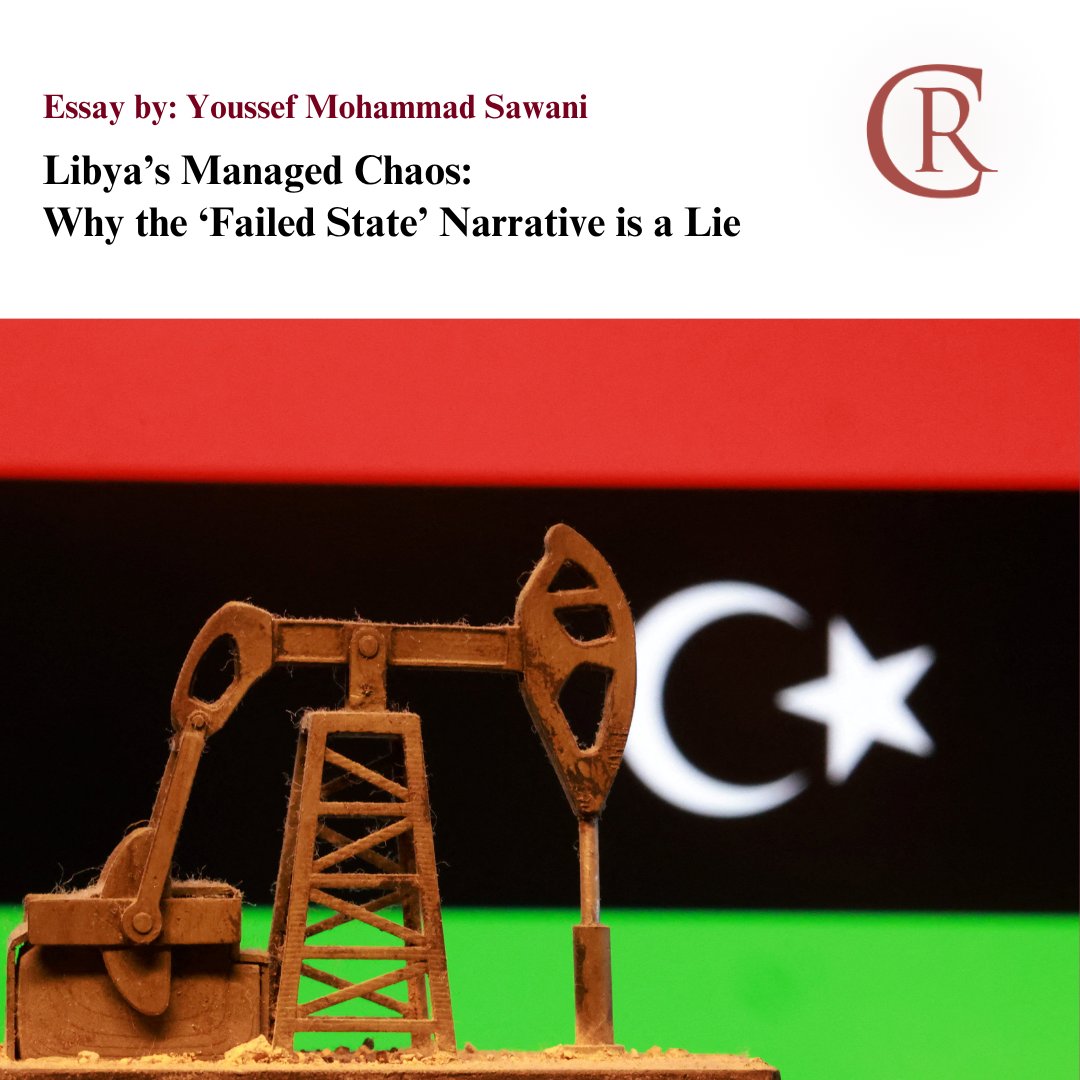
International commentary on Libya has been trapped in a patronizing loop. It’s time to emerge from that narrative.
Read more from Youssef Sawani @YoussefSawani , professor of politics and international relations at the University of Tripoli.
https://t.co/JVZYpHq9rZ
ICYMI: We just hosted an extremely rich discussion that delved into all things Tunisia (politics, economy, foreign policy, the rule of law), featuring @SaharMech, @zaghdoudist, @Tmegrisi, @MondherTounsi.
Catch highlights below & watch the recording here: https://t.co/kYLnoEwS3U
🚨 LAST CALL: It's not too late to register to join @TimepDC for our event on Tunisia today at 10 am EST.
Don't miss @Tmegrisi, @SaharMech, @zaghdoudist, and @MondherTounsi for a 360 analysis on where the country stands 5 years since the 2021 power grab: https://t.co/WkODQ7ohrL
📑 NEW @ecfr commentary by @Tmegrisi: The war between the US & Iran is destabilising North African economies, putting an already fragile region at the very edge of polycrisis. Read the piece here 👇https://t.co/5DayDD34mz
The fight over whether Iran will "control the Strait of Hormuz" is really a fig leaf for the uncomfortable reality that Iran has demonstrated a capability to reliably penetrate regional air defenses. This is what makes it so perplexing that the idea of a service fee in the Strait of Hormuz is being rejected in such a knee-jerk fashion.
If you are worried about Iran's control of chokepoints, the issue at hand isn't really Iran's ability to dominate a small stretch of water, but rather Iran's ability to disrupt or damage any systemically important structure, facility, or complex in the region with weapons systems that cannot be degraded through anything less than a full-blown invasion. Simply as a function of military capabilities and the target landscape, there are tens, if not hundreds, of chokepoints in the Gulf that Iran can hit.
This is Iran's actual source of leverage. The ongoing impact on maritime trade is actually somewhat incidental. Recent attacks have focused on vessels because they are non-territorial, meaning Iran can remind parties of its underlying capability while managing escalation.
Given the military realities, the fact that Iran is insisting on a mainly symbolic level of administrative "control" over the strait is actually a blessing for the American and regional negotiators. This is a modest demand when you consider how the war played out and the extent to which Iran retains leverage. So why aren't the Iranians demanding something more?
Iran's leaders are aware of their own strategic vulnerabilities. They need a way out of a cycle of violence and so they are they are seeking to parlay the issue of postwar hegemony into an institutional and technical arrangement, one which could theoretically be regionalized. This is the approach of a country that knows it did not win the war, but also knows it denied victory to its aggressors.
As the text of the MOU makes clear, Iran's leaders want to restore the status of Iranian sovereignty and security, including through regional arrangements. In this sense, the issue of control of the Strait of Hormuz is a test. If regional countries or Western governments cannot tolerate Iran levying a nominal fee on vessels, likely in association with the Gulf states, then surely there is no genuine path towards normalization. So far, everyone is failing the test.
When it comes to institutional arrangements that help break cycles of conflict, there are many historical antecedents. In 1950, the Schuman Declaration proposed that Franco-German "production of coal and steel as a whole be placed under a common High Authority, within the framework of an organization open to the participation of the other countries of Europe."
The joint administration of the Strait of Hormuz can be for the eight littoral states of the Persian Gulf what the European Coal and Steel Community was for postwar Europe. It offers the opportunity to institutionalize regional cooperation over a critical shared trade in ways that can build trust and help foster greater regional cooperation.
A "Hormuz fee" is a small price to pay for a chance at peace.
Great work by @LHreports, combining OSINT and interviews with defectors to uncover one of the RSF’s UAE-sponsored training camps in Libya.
It is located a 30 minutes car ride away from al-Rajma, the LAAF’s headquarters in Cyrenaica.
https://t.co/Lw4TOjOGJD
This Sunday, I'll join Maghreb Ciné for a screening of Libya in Motion (2015), a series of short films from Libya. Providing a short intro and maybe joining the post-film discussion.
Details below for those interested and many thanks to the organisers!
https://t.co/KkLzefc146.
Generative AI doesn’t run on magic. It runs on massive data pipelines built on privacy violations by design.
Our new @Amnesty report exposes how big tech’s AI systems are powered by surveillance, data extraction, and abuse of people’s rights, at scale.
We researched the models powering some of the most popular publicly available standalone generative AI tools, including GPT 3 by Open AI, Google’s Gemini, Meta’s Llama, DeepSeek and tools by Midjourney and Stable Diffusion.
This is not innovation at any cost. It comes at a high price: our human rights.
Read the report: https://t.co/MGRonqai7o
But Israel is abiding by the "ceasefire".
Only Hezbollah violates it.
The terror of Hezbollah's attacks on Northern Israel is the only recognizable crime.
The more than 3000 Lebanese that Israel has killed in Lebanon since end of February is always just self defense.
Spanish newspaper La Razón reports rising tensions between Madrid & Libya’s LAAF, with the HoR Foreign Affairs Committee escalating against Spain’s ambassador in Libya - reportedly over the seizure of a Benghazi-bound ship that contained 30 tonnes of cocaine off the coast of the Western Sahara.
https://t.co/ItMgwjLUGG
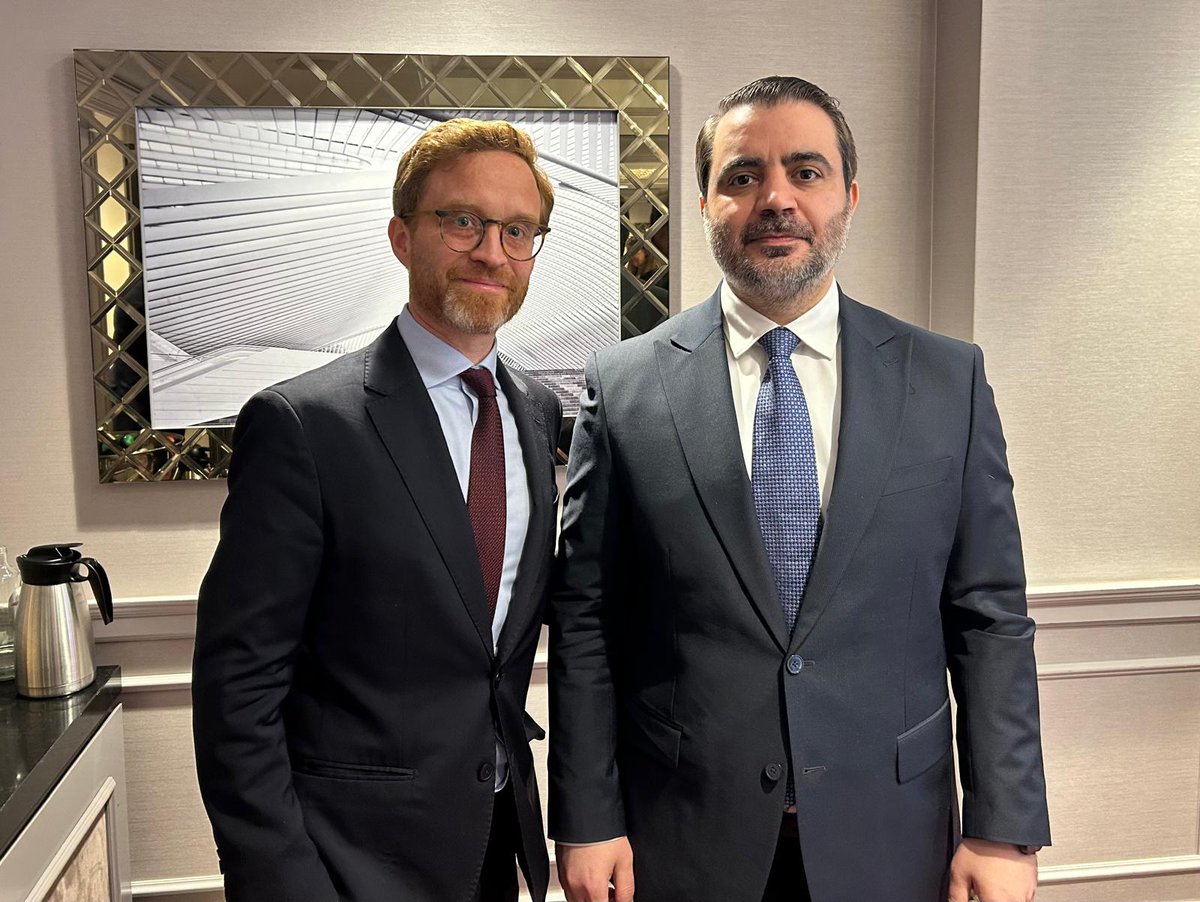
It was great to host Syrian Foreign Minister Asaad Hassan Al-Shaibani in Brussels today ahead of the EU-Syria dialogue.
At a critical moment for Syria and Europe’s engagement with the region, exchanges like these are more important than ever and ECFR remains committed to fostering informed exchanges on the future of Europe’s relationship with Syria and the wider region.
📷: @jbdacey and Asaad Hassan Al-Shaibani
This is a hard article to read, but I hope you'll do so. I've spent some time reporting on widespread rape and other sexual violence of Palestinian male and female prisoners by Israeli authorities, and the article is now published. The assault victims were warned not to give speak of what they endured -- they were sometimes told they would be killed or raped if they gave interviews -- but they found the courage to do so. One man described being raped three times in a single day in Israeli prison, the third time after he tried to protest. A young woman said the guards would come in at the beginning of each shift and strip her naked and abuse her. Another reported that she was shown photos of herself being raped and warned they would be released unless she cooperated with Israeli intelligence. Even three children who had been detained told me they had been sexually abused. Look, whatever our position on the Middle East, we should be able to agree on being anti-rape. Sexual assaults were horrific when Israeli women were targeted on Oct. 7, and they're equally horrific when Israeli authorities use them against Palestinians day after day after day. We should be able to find common ground in opposing rape. Here's a gift link to the article: https://t.co/aMMHId49OO
🚨OUT NOW! 🚨
Can Europe step up?
On this week’s podcast, North Africa specialist @Tmegrisi explores how the EU’s Mediterranean strategy could counter growing regional instability & external pressures from the US & Israel @BillLaw49#EU#MENA
Listen NOW!🎧
https://t.co/5dH7WifJQ0