AI NEWS: Google Chrome silently downloads a 4GB Gemini Nano model to eligible devices, re-downloads it if deleted, and the AI Mode button users actually see doesn't even use it.
MY FRIENDS!
IT'S OFFICIAL!!!
PFIZER HAS JUST PUBLISHED THE LIST OF POSSIBLE SIDE EFFECTS,
OF ITS « COVID VACCINE »!!!
IT'S CRIMINAL!
1) Blood clot,
2) Acute kidney injury,
3) Acute flaccid myelitis,
4) Positive anti-sperm antibodies,
5) Brainstem embolism,
6) Brainstem thrombosis,
7) Cardiac arrest (hundreds of cases),
😎 Heart failure,
*** 9) Cardiac ventricular thrombosis...
10) Cardiogenic shock,
11) Central nervous system vasculitis,
12) Neonatal death,
13) Deep vein thrombosis,
14) Brainstem encephalitis,
15) Hemorrhagic encephalitis,
16) Frontal lobe epilepsy,
17) Epileptic psychosis,
18) Facial paralysis,
19) Fetal distress syndrome,
20) Gastrointestinal amyloidosis,
21) Generalized tonic-clonic seizure,
22) Hashimoto's encephalopathy,
23) Hepatic vascular thrombosis,
24) Shingles reactivation,
25) *** Cancer reactivation...
26) Turbo cancers,
27) Immune-mediated hepatitis,
28) Interstitial lung disease,
29) Jugular vein embolism,
30) Juvenile myoclonic epilepsy,
31) Liver damage,
32) Low birth weight,
34) Multisystem inflammatory syndrome in children,
35) Myocarditis,
36) Neonatal seizure,
37) Pancreatitis,
38) Pneumonia,
39) Stillbirth,
40) Tachycardia,
41) Temporal lobe epilepsy,
43) Testicular autoimmunity,
44) Thrombotic stroke,
45) Type 1 diabetes mellitus,
46) Neonatal vein thrombosis,
47) Vertebral artery thrombosis,
48) Pericarditis,
49) Sudden infant death syndrome.
SEVERE CONSEQUENCES of a so-called vaccine that protects neither against the disease, nor its transmission, nor severe forms!
" I was insulted, called a dangerous conspiracy theorist, I lost friends for saying that, for any medication, there are side effects, for loudly proclaiming that a so-called vaccine, which kills more than the disease, has no reason to be used, nor made mandatory.
I lost my job as a surgeon because of it! "
Doctor RESIMONT
INSTEAD OF WATCHING NETFLIX TONIGHT.
Spend 1 hour with this.
Claude AI FULL COURSE that teaches you how to BUILD and AUTOMATE anything.
The people who watch this tonight will wake up tomorrow with a skill that most people will not have in 2 years.
The people who skip it will still be watching Netflix next year wondering why nothing in their life has changed.
Your call.
🚨 BREAKING: Claude can now build you a full AI YouTube channel like a $10,000/month creator agency.
For free.
Here are 7 prompts to go from 0 → monetized AI channel in 90 days:
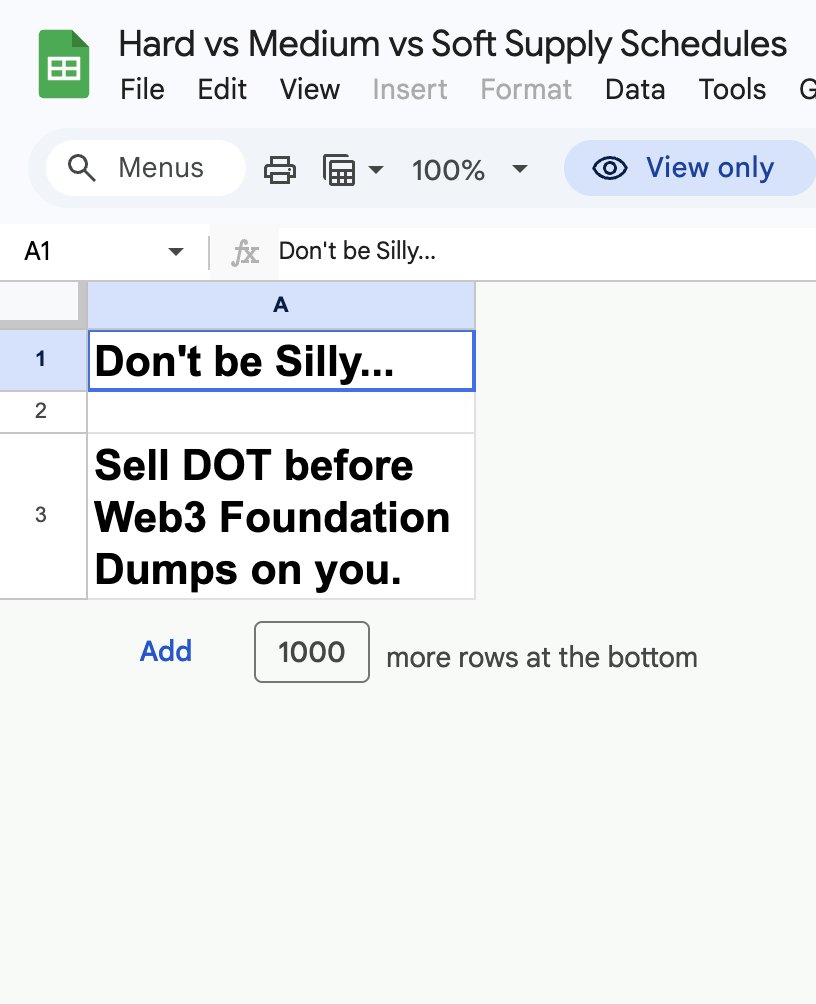
Polkadot $DOT just became a fundamentally different asset and most people haven't caught up yet. Let me walk you through it.
On March 14, DOT's emissions were cut 53.6%. Hard cap set at 2.1B. That's done. Live on-chain right now.
But the part nobody's pricing in is what happens next.
Fast unbonding is coming around May 2026. That's the reduction of the lockup from 28 days to 24 to 48 hours. It's NOT live yet. Half the crypto media is reporting it like it already shipped. It hasn't. So there's still a catalyst ahead.
Here's why it matters.
The 28 day unbonding was the single biggest reason people didn't stake. You couldn't sell into a pump or exit a crash. Rational actors kept DOT liquid. When that drops to 24 to 48 hours, there's almost no reason not to stake. The opportunity cost goes to near zero.
Let's look at the actual on-chain numbers right now:
Total issuance: 1.675B DOT
Staking: 891.1M (53.17%)
Transferable: 635.6M (37.92%)
Last era payout: 130,162 DOT
Annual reward pool: ~47.5M DOT
Current yield: ~5.3%
Validators: 1,347
Nominators: 29,652
I expect staking participation to push toward 80 to 90% once fast unbonding goes live. Here's what that does to the math:
At 80% staked (~1,340M DOT): yield drops to ~3.5%
At 90% staked (~1,507M DOT): yield drops to ~3.15%
"But the yield is dropping! That's bearish!"
No. Think about what you were actually earning before.
Under the old model you earned ~10% on a token inflating at 7%+. Your real yield was ~3% and your DOT was getting diluted every era. Now you earn 3 to 3.5% on a hard-capped asset with a 2.1B supply ceiling. The nominal number is lower. The real return is better.
Now look at what happens to liquid supply.
Today there's 635.6M transferable DOT on the market. If staking goes to 80 to 90%, transferable supply drops to roughly 168 to 335M. That's a 50 to 75% reduction in sellable DOT.
Any new demand hits a drastically thinner order book. That's where the price impact lives.
But supply squeeze alone doesn't move price. I've watched enough L1s with tight supply and zero demand go nowhere. So what's the demand side?
Five things that didn't exist six months ago:
First, the first US DOT ETF (TDOT) launched in March. A regulated demand channel for capital that couldn't touch DOT before.
Second, Solidity support is live via the Revive pallet. 60+ Ethereum smart contracts already deployed natively on Polkadot. This lowers the builder barrier from "learn Rust and Substrate" to "deploy your existing Solidity code." That's a massive shift in developer accessibility.
Third, JAM is scheduled for later this year. If it delivers, Polkadot transitions from a parachain relay network to a decentralized supercomputer architecture. That's a different TAM entirely.
Fourth, Parity is building native Proof of Personhood for Polkadot. If they ship a credible on chain identity layer it unlocks governance, airdrops, and Sybil resistant apps that no other L1 has natively. Kusama is already scoping PoP through bounties and RFPs.
Fifth, Parity has shifted from protocol only to actively building applications on Polkadot. The team that built the infrastructure is now betting on the product layer. That's vertical integration that turns a protocol into an ecosystem.
The flywheel:
Fast unbonding leads to more staking leads to less liquid supply. Any new demand hits thin order books. Price moves harder. Staking rewards worth more in dollar terms even at 3%. More people buy to stake. Repeat.
The bear case: DOT already pumped 20 to 40% into Pi Day. Supply narrative may be priced in. None of these catalysts are guaranteed.
But I've been here since 2016. The tech was always there. The execution and governance weren't. Now the tokenomics finally match the technology.
Not a guarantee. A setup. The best one DOT has had since genesis.
Not financial advice.
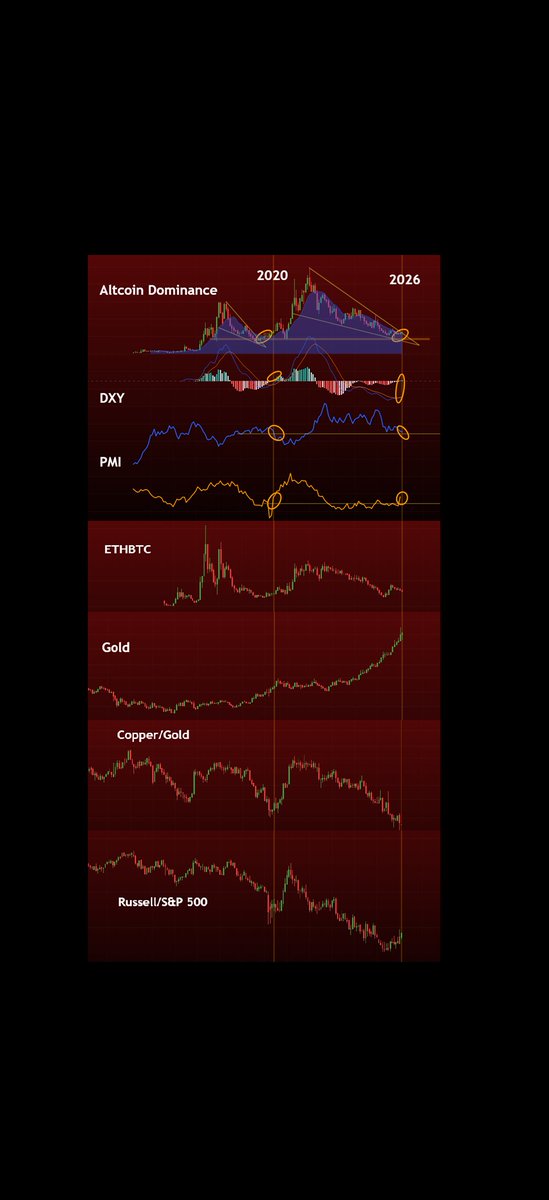
Everything is sitting in 2020 and it is in plain site
Might just be the most important chart over the coming year(s)
#Crypto#Stocks#Metals#USDollar#PMI
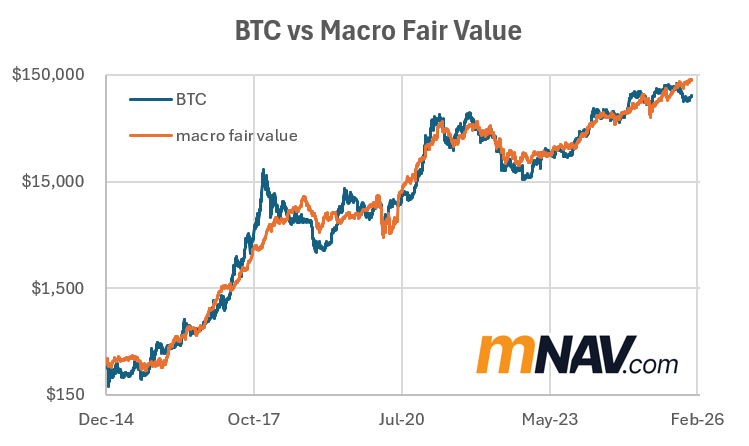
Overall, I think this could be a $99k-$80k range with possible deviations in one or both extremes of it soon.
From the short side: 1D50EMA or $100k level are my short zones where I'd look for triggers.
From the long side: $82k to $79k for triggers. Acceptance below $80k = $73k.
🌋 Today Is the Moment Crypto Became Part of U.S. Banking
Today, the Office of the Comptroller of the Currency issued conditional approvals for national trust bank charters tied to crypto and digital assets, including Ripple, Circle, Fidelity Digital Assets, Paxos, and BitGo.
The federal banking system is changing in real time.
Two new national trust banks:
• Ripple National Trust Bank
• First National Digital Currency Bank (Circle)
Three state trust companies converting to federal banks:
• Fidelity Digital Assets
• Paxos
• BitGo
A national trust bank is a federally chartered institution focused on custody, trust, and fiduciary services, not retail deposits.
That places crypto custody and stablecoin infrastructure directly under OCC supervision, instead of fragmented state-by-state frameworks.
Zoom out and the pattern is clear:
• DTCC approved to tokenize DTC-custodied assets
• OCC confirms banks can buy and sell crypto for clients
• Stablecoins gain regulatory clarity
• Now crypto trust banking goes federal
One detail worth paying attention to: BitGo, now moving into the federal banking perimeter, is also a Hedera Governing Council member.
That puts a federally regulated crypto custodian directly inside the governance of a public network already being used for enterprise and government use cases.
At the same time, Hedera’s end-of-year community call brings together network leadership, council voices, and technical leads to discuss enterprise adoption, real-world deployments, and what scales next.
From the filings:
• Circle’s charter supports USDC reserve and collateral management
• Ripple’s charter supports RLUSD and institutional digital asset custody
Worth noting: Ripple Custody already supports multiple networks, including HBAR, SOL, ADA, BTC, ETH, XLM, and others.
This is not about one chain. It’s not about hype or short-term price action. It’s about regulated financial plumbing being installed inside the U.S. banking system.
Crypto isn’t knocking on the door anymore.
It’s being wired into the foundation.