Mickey Drexler is an American retail icon:
-President of The Gap at age 39
-Takes it from 450 stores to 4,000
-Steve Jobs got him to Design the Apple Store
-Started Old Navy
-Ran J. Crew
He's perhaps the most brilliant retail mind ever, and we sat down for an unfiltered conversation:
1) I want to start by saying that Mickey Drexler came from nothing. He grew up in the Bronx with no money or connections, and his father made $15k/year.
Mickey made it work in the 1960s, but I asked him if the same thing holds true now.
What's someone supposed to do in today’s world if they’re smart, ambitious, but don’t come from wealth and don’t have a great network?
Mickey dove right in.
I quickly realized that Mickey likes to answer questions by telling stories to drive home his messages.
He told me that while we was running The Gap, he had a chance to tour a high school in Harlem. While walking through the hallway that day, a teenager approached him out of nowhere and asked who he was and what he was doing there.
He could sense her confidence and energy right away. He could tell within seconds of speaking with her that she was a natural leader. That she was curious. She just had it.
So, Mickey hired her to work at The Gap that summer.
This was just one example of the countless times he would unexpectedly come across somebody in day-to-day life and get a feel for that person’s talent right away. That was the lesson.
Many great leaders have an uncanny ability to spot talent instantly, and are always on the lookout to recruit the next standout.
You don’t always need a formal interview or a fancy degree to get in front of the right people and make an impression quickly.
You just need to create interactions with as many people as you can, as you never know who that person is that you just approached.
If you have it – they will see it.
So, what ever happened to that 16-year-old girl from Harlem that Mickey hired for that summer job all those years ago?
Yandy Smith is now known to millions around the world as the star of Love & Hip Hop, and has had a storied career as an entrepreneur, singer, and actress.
Mickey's instincts were correct.
2) Mickey on a College Degree
Although Mickey believes that true learning doesn’t happen in college, he thinks a degree is critical.
For one, the social skills that college helps develop are critical.
But beyond that, a harsh reality: As is the case with many companies, Mickey rarely gets a chance to formally interview folks without degrees, as few ever get through the screening process that allow them to get to him in the first place.
Does it matter where somebody went to college? Not really, but he believes some universities produce a greater percentage of graduates with a sense of entitlement, A MAJOR pet-peeve of Mickey’s.
He thinks that feeling the world owes you something is a huge barrier to success, and terrible for company culture.
He also warns graduates about chasing jobs for the sake of prestige and money, and highlights the fact many end up working countless hours in jobs they find boring and don’t like, but stay hooked only because of the financial incentives.
Big school or small, gotta keep that sense of humility.
3) Mickey on the un-mentor, and Smelling BS
Mickey is quick to note that he never had a mentor, and that he had to learn to trust his own instincts. He also learned early on that he had an ability to identify BS very quickly -- a skill he thinks is incredibly important for success.
He has a great admiration for leaders who are humble and keep their pride in check, and is wary of those who fly too close to the sun.
He looks up to folks who are down-to-earth, who came from tougher backgrounds – those that had to fight their way to the top, and CEOs that live their product.
He was thrilled when I mentioned that Uber CEO Dara Khosrowshahi got behind the wheel as a driver a couple years ago. “Exactly!
Mickey takes great pride in returning emails himself, spending time with new-hires, and being approachable.
Who stands out to Mickey as a leader he really respects?
He immediately mentioned Andy Grove, the former CEO of Intel, and noted Mr. Grove’s book.
The name of that book?
“Only the Paranoid Survive.” Enough said.
4) Mickey’s Big Break
When Mickey was just 35-years-old, after a few years as a rising star at Bloomingdale’s and Macy’s, he was offered the job of running the clothing brand Ann Taylor.
The call caught Mickey off-guard, and he wasn’t even sure how they got his number or how they knew him.
He said no right away. Why? Well, he was just too conservative at that young age.
He didn’t have much money, and feared taking a leap that may cause him to go broke.
Luckily for Mickey, he happened to be having dinner with New York executive Arthur Levitt Jr and told him the story of this clothing brand that had been trying to recruit him for months.
“Take the job!” Mr. Levitt proclaimed immediately.
He was the smartest person Mickey knew, was quite successful, and had the lifestyle Mickey wanted.
It was the nudge he needed. Mickey took the job the following morning.
5) The Gap Comes Calling
One day in 1983, the phone rang.
It was Donald Fisher, the founder of The Gap. Mickey was just 38-years-old, and The Gap has been long fledgling.
It had 450 stores, $400M in sales, and profits were down to $20m and shrinking. It needed a change.
The two men began talking on-and-off for several months, and eventually the discussions turned to Mickey joining The Gap.
The thought of leaving the world he knew in New York City for The Gap’s corporate headquarters in San Francisco, or suddenly running a public company, didn’t intimidate Mickey.
Rather, he was worried what failure would do to him and his wife financially. Again, those same overly-conservative thoughts that hold back so many entrepreneurs were creeping back in.
After the deal included a guarantee that would allow Mickey and his wife to secure adequate housing in New York if things didn’t work out, he was off to California to rebuild The Gap.
6) Determination over Misery: Turning Gap Around
When Mickey took over The Gap, things were a mess.
The first two years were a complete nightmare for him – the worst period of his life. He was miserable every single day, and he felt depressed like he never imagined possible.
He wished he wasn’t there, and thought he might be making a huge mistake. But – he showed up every single day.
When I asked him why, Mickey quickly brought both hands up to the sides of his face, placed them next to his eyes, and mimicked the placement of blinders on a horse. “I had a vision, and I was relentless. I had my warrior uniform on.”
Mickey explained that he put together a list of exactly what he wanted to do, and he would see that list through at all costs. -a million colors, button-downs, sweatshirts in eight different colors, jean jackets, sweatpants, and eliminating all the low margin Levi's jeans.
“America needed a cool place to shop that was affordable” Mickey told me.
When Mickey left gap in 2002, it had 4,000 stores and revenue had grown to $14B. It was one of the greatest turnaround stories in corporate American history.
I was in awe of the story, and the pain and out-of-this world determination it took for Mickey to get from 1983 to 2002.
I asked him to pick a characteristic that he most attributed his success to.
"You know the song writer, Diane Warren? There’s a great documentary."
What’s is called? “Relentless”
6) Mickey on Steve Jobs and The Apple Store
Mickey first met Steve Jobs at a friend's birthday party in Napa. He had no idea that Jobs was determined to recruit him from that very first meeting.
Jobs told Mickey he wanted to “take Apple retail," and he knew Mickey had the eye to help create the Apple Store.
Mickey was hesitant, but after a year of non-stop attempts, Jobs promised Mickey he would join Gap’s Board if Mickey would join Apple’s.
Deal done. Jobs got his man.
It was 1999, and the two men got to work. When Jobs showed Mickey the first design, Mickey told him right away he hated it.
I asked Mikey what he hated about it.
“If somebody has an ugly button on their shirt, it’s just ugly!”
Mickey wanted to see a simple design and a “less is more” approach. The product had to be easy to see, and there needed to be white everywhere. It needed to be timeless.
Mickey also insisted on the actual store being fully built in a warehouse, so you can feel the full experience, windows and all.
Did Jobs push back?
No. He recruited Mickey for this exact reason. He backed down and let Mickey take the lead.
The two men got along beautifully, and Mickey looks back at Steve with great admiration. When the Gap board was told in confidence that Mickey would soon be fired, Jobs immediately picked up the phone to let his friend know what was coming.
I asked Mickey what skill stood out most that made Steve great.
“He was extraordinarily fearless!”
Then he paused, looked down:
“The world misses him”
7) Mickey and the Work-From-Home World
I arrived for our meeting a few minutes early and watched Mickey passionately address his team at Alex Mill.
There he was in the center of the office, engaging everyone, asking questions, driving home his lessons.
He did the same during our meeting -- spontaneously calling people over, asking them questions, and popping into a nearby conference room after overhearing something that piqued his interest.
Mickey’s entire approach to the corporate world is the exact opposite of a work-from-home environment. He told me companies need serendipity.
That breakthrough ideas come from collaboration, and in-person is essential to true learning and creating and maintaining company culture. He said watching people make mistakes in real-time creates invaluable lessons that don’t happen otherwise.
Mickey even questions whether work-from-home was good for civilization as a whole, and chuckled as he told me about a large tech company that’s getting rid of office space entirely.
“How many of them are working!” Is he totally closed to the idea forever?
Well, his team now has the option of working from home on Fridays.
8) Mickey on Fame
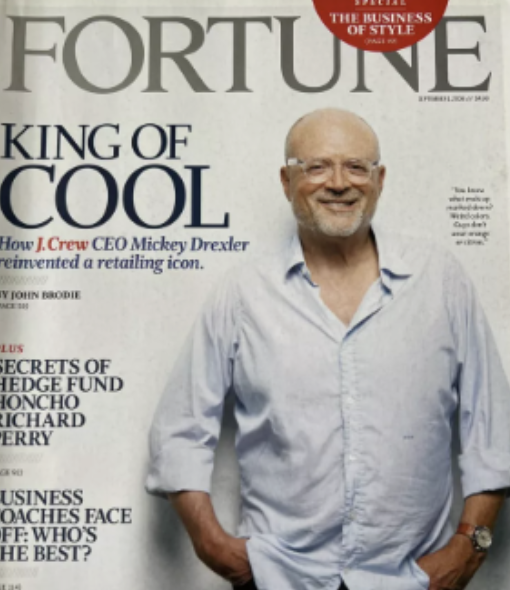
The Fortune Magazine cover, the notoriety, the fame. Many seek that stuff – but for Mickey, it mostly just made him nervous.
It did nothing but raise the bar for Mickey, and reminded him what he had to live up to.
“Sometimes I wonder if I have imposter syndrome.”
8) Mickey on What Motivates Him Today
Steve Jobs and Elon Musk biographer Walter Isaacson called Mickey “one of the few people in the world who were as successful and savvy as (Steve) Jobs on matters of design, image and consumer yearnings.”
Mickey ran Ann Taylor and The Gap. He started Old Navy (he named it after a bar in Paris!) He was at the help of J Crew.
Today he shows up every day running the Alex Mill clothing brand.
So why the heck is he still working.
“It never ends!”
He says he’s always trying to do better, and that at 81-years-old he’s better at creativity and detail than he’s ever been.
As he’s explaining this to me, he notices an Associate not far away, and calls her into the conference room area.
“How do you grade yourself after our conversation,” he asks her.
Mickey challenges her, they go back and forth – she holds her own.
You can easily see the admiration they have for each other.
As she walks away, Mickey turns to me, and points back in the direction of the rest of the office.
“It’s about them.”
Then adds:
“And I love what I do. You have to.”
Most nineteen-year-olds who drop out of college do so because they can't hack the coursework, or afford the tuition, or just prefer to play video games in their parents' basement. @ethanrthornton dropped out for a slightly different reason: he wanted to build a better missile, and MIT was slowing him down. So, Ethan left the Ivy League, took a hundred-grand from Peter Thiel, and set out to disrupt the entire military-industrial complex before he was old enough to legally buy a beer. And I think he’s on the verge of doing that very thing.
Ethan grew up on a farm in Texas, working as an auto mechanic and hammering out custom kitchen knives to pay for his early engineering experiments. When he looked at the state of American manufacturing, he didn't see a lack of apps or software; he saw a nation that had forgotten how to bend metal, spark welds, and build heavy things at scale.
Today, Ethan is 22, and his company, Mach Industries, is valued at nearly two billion dollars. They’re building the next generation of autonomous defense hardware, and a lot of people are paying very close attention, including those in the Pentagon. Mach’s weapons are inexpensive, (relatively) easy to mass-produce, and most of all, lethal. I heard him speak last year at an energy conference and immediately invited him on the podcast. This was the first blank square on his calendar, and I was honored that he spent a few hours chatting with me.
Pay attention. This kid is going places.
Our whole conversation is here.
https://t.co/lI0dq5kDBI
We were remodeling a client’s bathroom today and one of the steps going upstairs was loose.
My guys had walked over it a quite a bit. I walked over it too.
Finally I said, Guys, fix that step.
Wasn’t part of the bathroom.
Wasn’t on the estimate.
Wasn’t our fault or our problem.
But we’re already here.
Take the extra few minutes and leave their house better than we found it.
That’s something I want every guy who works with me to understand and to pass down.
It’s not always about what you’re getting paid to do.
Sometimes you just fix the damn step.
How @elonmusk fixed Starlink:
“Starlink was a mess. It was 10X too expensive and they were building 1/10 of how many they needed.
Elon’s like I've had it. This is now the bottleneck. I'm fixing this.
He grabs a team of engineers that he trusts and they fly up to Seattle.
They fire the entire Starlink leadership team.
They sit down in a war room and they start running the algorithm.
•What is the first principles of satellite design?
•How simple can we make this thing?
•Why does this exist?
•Why are these two things so far apart?
•Why do we need this much energy?
•Why do we need this manufacturing process?
And over the course of a few months they make a two order of magnitude leap.
These people had never encountered this design before, but just by applying the algorithm and working with maniacal urgency towards this extremely high design bar, they created this product that's now —if it was a standalone business —would be worth tens of billions of dollars or more.”
Some people workout each morning & strive for a 6-pack of abs…others never workout & frequently enjoy a 6-pack of their favorite brew…
But how about a 7-pack? 😳😂
This pic from the basement of 1425 Cumulus in Granby, Colorado shows a load-bearing column made from seven 2x6’s sistered & face-nailed together. This stud pack is carrying a concentrated point load from overhead & transferring that load down to the foundation.
Our basement at 1425 Cumulus is 10-feet tall & at 31 Thunderbolt we have 12-foot basement ceilings. Both of these walkouts don’t even feel like basements! 👊🏽
A lot of successful people drop dead shortly after retiring. Golf doesn't cut it. Building, innovating...it's their lifeblood. They're not models or nepo babies who fell into a fortune out of sheer luck. The money is secondary. They NEED to build.
I was a bricklayer.
It was how I paid the bills when I first moved to America. Even the biggest title in bodybuilding, Mr. Olympia, only paid a thousand dollars back then.
It makes me proud that in March, the winner of our Arnold Classic and our Arnold Classic UK took home more than a million dollars. He can focus on bodybuilding.
But in our day, that wasn’t an option. Some guys were teachers. Some sold insurance. Franco and I laid bricks.
We put an ad in the paper and sold ourselves as European craftsmen. We figured if people heard the accents, they would picture old-world masonry instead of two bodybuilders with a wheelbarrow.
It worked.
The phone rang. And then we had to go out and actually do the job, which was the part nobody could fake. Luckily, Franco knew what he was doing.
The work was simple. Mix the mortar. Set the brick. Tap it level. Scrape the edge. Then do it again. And again. Nobody claps for you. There is no crowd, no music, no trophy. There is just the next brick sitting there waiting for you.
You can still find some of the walls we built in Venice.
That’s where my lesson today comes from.
One brick doesn’t look like anything. Ten bricks don’t look like anything. A hundred bricks, you’re starting to see something, but it doesn’t impress anyone.
You just keep laying bricks until the job is done.
And you know what happens after four or five hours on a wall?
You are so damn tired, or you feel so great that you stop measuring.
You are not standing back every ten minutes asking how far from finished it is. You are covered in mortar, your hands are raw, you’re schvitzing, and you are happy. The work took the question away from you.
That is the part nobody tells you about hard work: It doesn’t just build the wall. It terminates the voice that keeps asking when the wall will be done.
The announcement of Musk's Terrafab project in Texas doesn't bode well for Oregon.
While Intel will be a partner in the project, they have shelved expansion in Oregon.
If we had leaders with foresight they would read the room,they aren't. In a very short period Oregon has gone from #19 to 37th in businesses.
Within 5 years the once deep pool of talent which spurred growth in Intel will diminish. The lack of foresight by Oregons government class will spin the doom loop faster.
#orpol
@braedalibby In Oregon they would still be talking about doing another study of the study of the study until 2075. Then they would want to discuss all the studies against another study. Oregon is now where business goes to die.
A fascinating path to turning $2.4M into ~$10M of real estate, and probably not making much money doing it.
A developer bought this rent controlled 1937 Venice bungalow court for $2.4M in 2015:
7 tiny RSO 1BR units on an ~11,000 SF lot with 7 garages.
In 2018, LA amended its Small Lot Subdivision Ordinance to make it easier to preserve and subdivide existing bungalow courts.
Four months later, they filed plans to substantially remodel all 7 bungalows.
Instead of demoing them, they kept the original structures, gutted them, added second stories, and eventually used the new ordinance to carve the property into 7 separate fee-simple homes.
Each now has its own lot and APN, plus a garage.
Basically turned one old 7-unit RSO apartment property into 7 individually saleable houses without tearing down the original buildings.
The neighborhood association fought the project, arguing the developer intentionally permitted the remodel first and filed for the subdivision later to avoid requirements that might have applied had it been submitted as one project from the start. The City ultimately rejected the appeal.
The finished homes are ~1,000 SF and they have sold around $1.3M–$1.5M. Affordable for starter homes in Venice.
Whether they bought in 2015 intending to hold rentals and later found this exit, or spent nearly a decade (lol) executing the plan, I have no idea.
Either way, LA real estate is hard. The path is dark and winding and full of terrors.
As Barry Roland says: Stick to the S&P.
Some dude tried to troll Optimus at the Tesla Diner...
But the humanoid robot trolled him right back.
Just think how great its trolling will be in 5 years 😂
Writers: Sol, Michael
Oregon has everything it takes to be the best place in America to live, work and raise a family, but we need leaders who are focused on solving problems for Oregonians. I’m running for Governor because it’s time to hold government accountable to the people of Oregon and deliver the results they deserve.
Join the movement: https://t.co/fS85bjXgEw
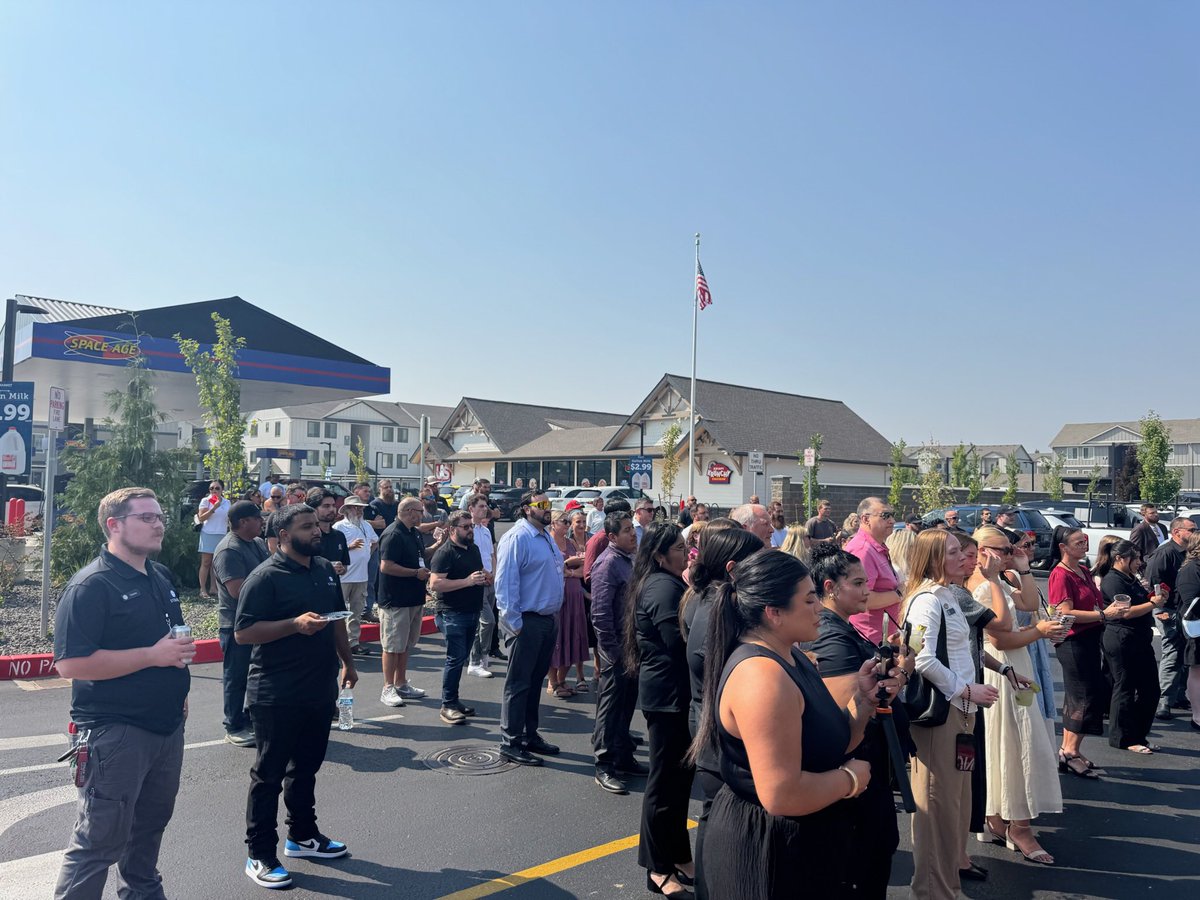
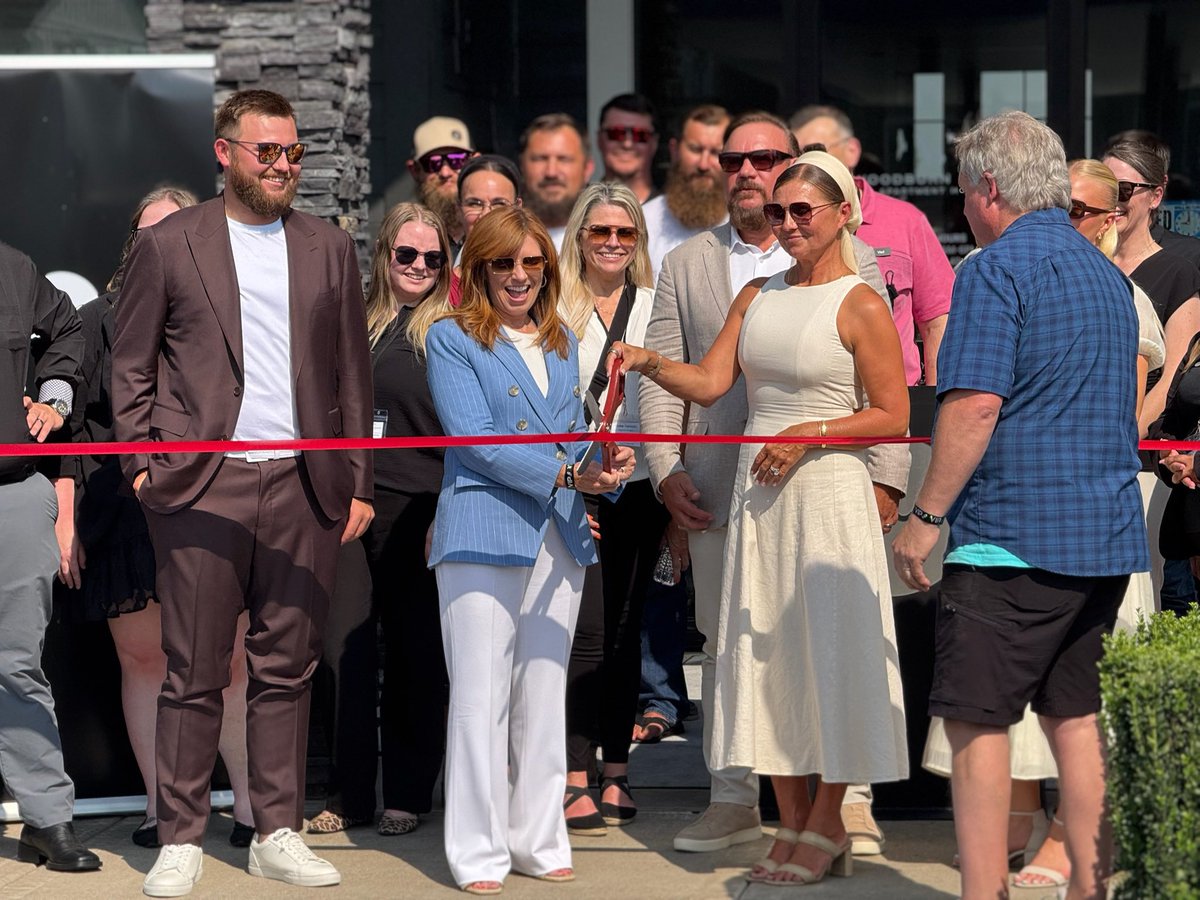
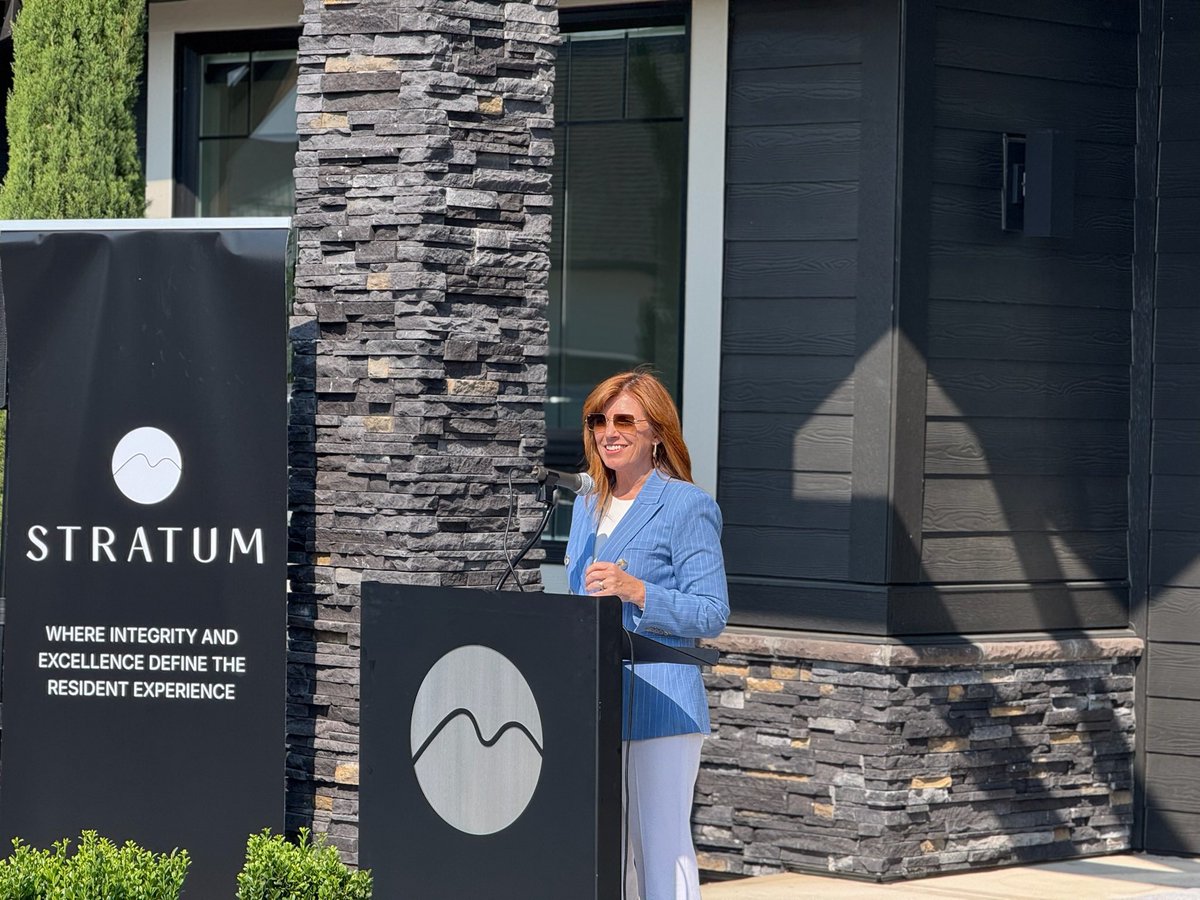
Yesterday we got to celebrate the opening of Woodburn Place Apartment Homes West, a beautiful 44-building property bringing 478 new homes to this growing community, along with a new US Market.
At a time when housing is out of reach for too many Oregonians, we need more people willing to invest and build here. As governor, I’ll clear the way for that investment and make Oregon more affordable.
Thank you to I&E Construction, Stratum and US Market for having me!
@ChristineDrazan Open up the UGB when you get into office and Oregon will thrive. There will be no need for "affordable housing", the market will take care of that.
Many people blame George Soros for triggering both the UK Black Wednesday of 1992 and the Asian Financial Crisis of 1998.
Scott Bessent worked for George Soros and has been conducting currency arbitrage his entire career.
He's the 5 star general you want in charge if you're about to destabilize the global financial system.
If you want to understand what happened during the UK's Black Wednesday and the Asian Financial Crisis, these videos explain how quickly currency arbitrage can trigger a financial crisis.
Basically, it can go from "everything is fine" to "we've lost control of our currency" in a matter of days.
George Soros appears at 22m 20s in the UK video
and 2m10s onward in Asian Financial Crisis video.
Is this a preview of what's coming for the entire world?
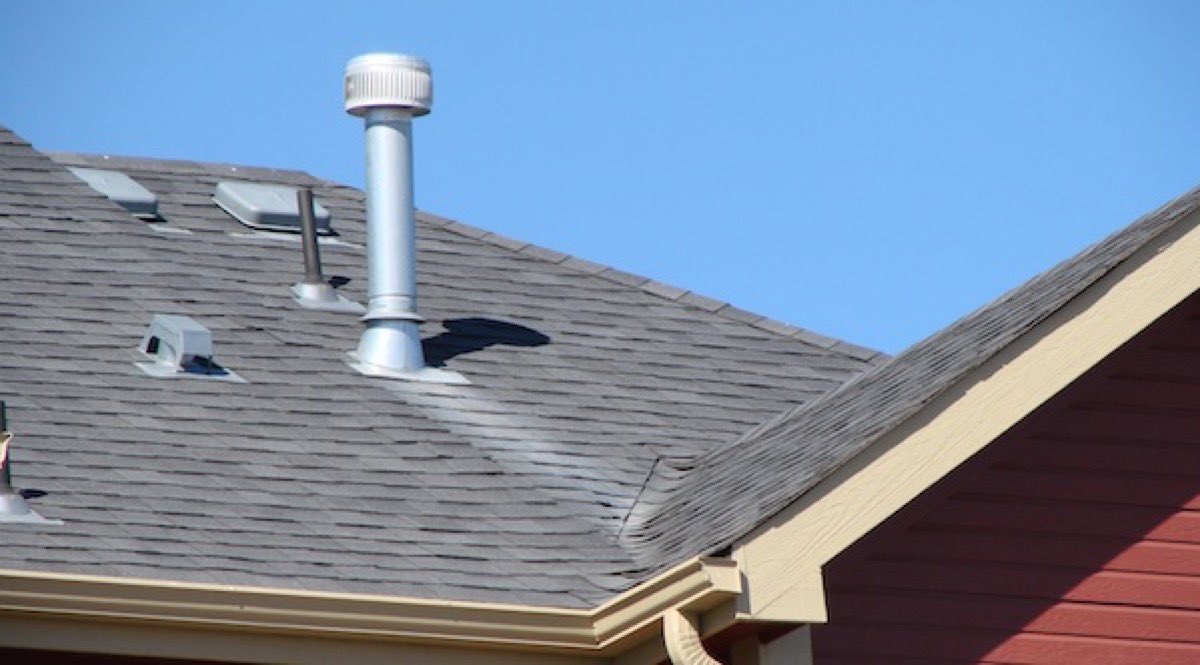
Let's talk about roofs.
Roofs with "warts," in particular.
In residential construction, several systems require exhaust or venting. Guess where those pipes/flues go?
They go up & out through the roof.
In many cases, this is inevitable.
Aside from the unsightliness of these roof penetrations, they are a weak roofing spot. Even when properly installed, they are a potential point for leaks, especially over time. Especially in snowy climates.
Additionally, some very specific requirements determine the projection & proximity of vents & flues, which makes it tough to hide them. So, what if there was a way not to put vents through the roof? Many plumbers will say "impossible."
Ladies & gents, I'd like to introduce you to Jimmy. Master plumber & artist. This is his work. He combined all plumbing vents into a single stack & brought it up the chimney/feature wall.
(Image while the house was in construction)
When I told Jimmy my intent to have no roof penetrations, he was intrigued. He'd never done that before. I explained the low-pitch roof design & the intent to have the snow melt slowly on the roof. Immediately, he understood why we couldn't put holes through the roof.
He quickly came up with routing that would allow him to combine vents & pop out at a single location while maintaining pitch & length requirements. His pride in meeting the challenge was inspiring & he was thrilled with the result.
Working with teams willing to stretch to do things they've never done before is a privilege & getting to experience the built result is why I do what I do.
Sure, there are 'easier' ways. I could have built a house with a warty roof, but I didn’t want to.