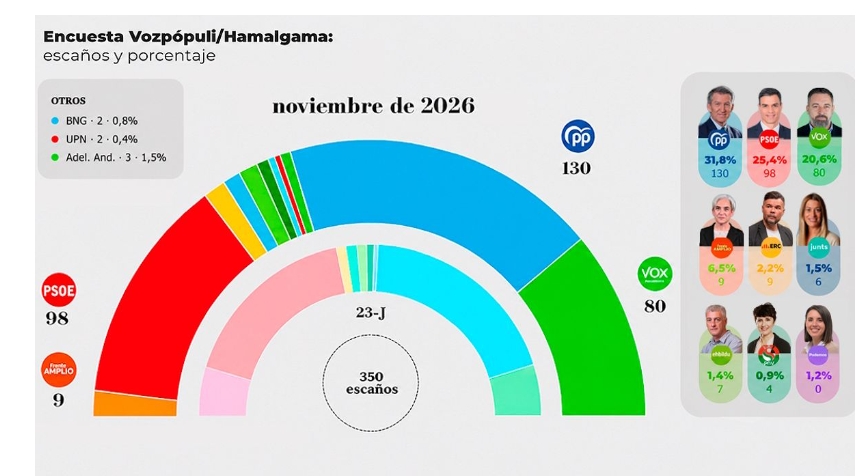
Mucho me temo que esto es una fumada equivalente a las encuestas de la séptima, aunque es buena señal que sigamos con estas fumadas a una semana de las elecciones.
Desde Quito, Ecuador, acabo de ejercer mi derecho al voto en el Consulado de España.
Porque la defensa de los derechos y la justicia social no tienen fronteras: voté por el @PSOE de @sanchezcastejon.
Socialdemócrata aquí, en España y en el mundo.🇪🇨🌹🇪🇦
#VotaPSOE.
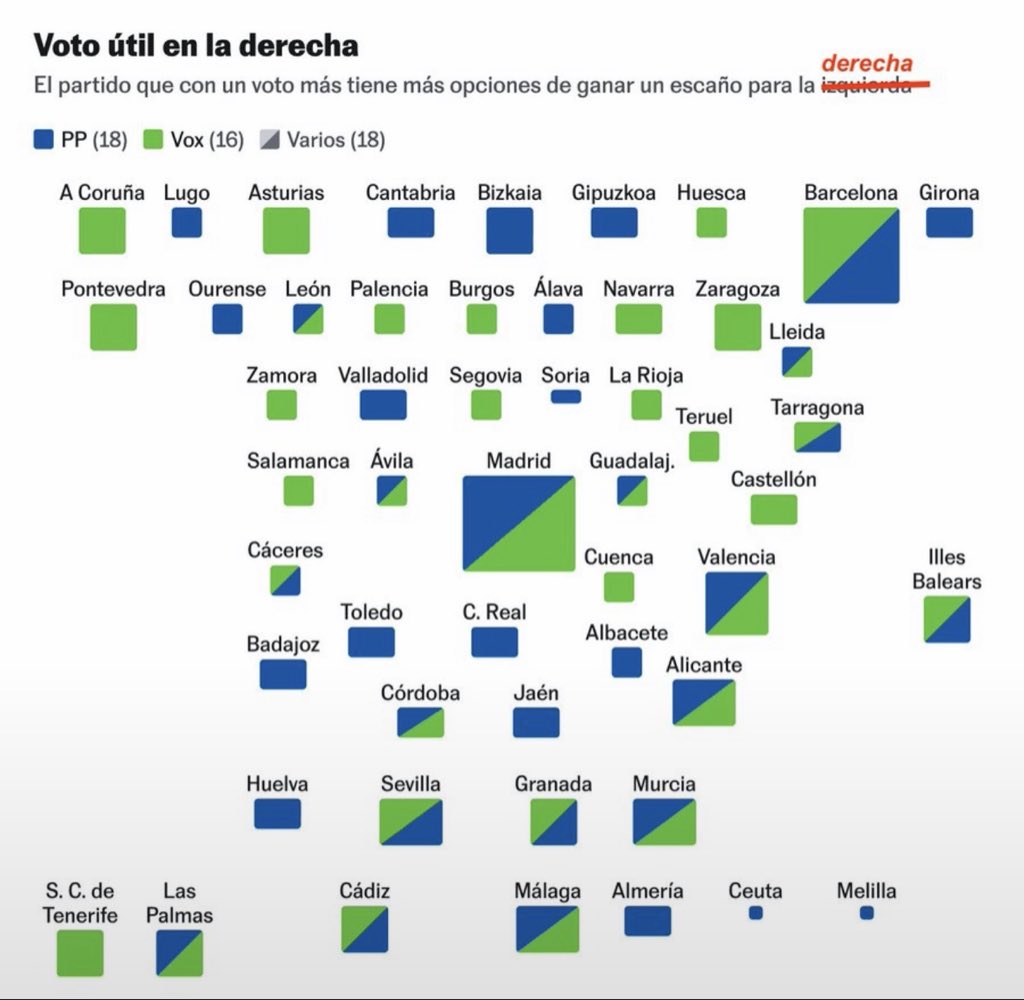
Voto útil en la derecha: votar al PP en Lugo, Ourense y Guipúzcoa. En el resto no tiene demasiado sentido votar tácticamente o corres el riesgo de quedarte con cara de tonto el 30 de noviembre.
Esto no tiene sentido alguno. Si mucha gente vota de manera estratégica la estrategia pierde sentido, además de que está estrategia está basada en extrapolaciones sobre la media de encuestas que no tienen porqué cumplirse.
Voy a pediros un favor. No es algo personal, es algo que nos afecta a todos. Dadle difusión a esto. El único voto útil es el que maximiza nuestra probabilidad de sacar el máximo provecho a la lógica del sistema electoral.
Votad PP cuando convenga votar PP, votad VOX cuando convenga votar VOX. Nos jugamos mucho.
Ellos están coordinados. Nosotros debemos estarlo. Difundidlo.
Asturias 2025 Update - Catastrophic
The Principality of Asturias recorded a TFR of 0.95 in 2025, basically no change from 2024. Nearly three deaths for every birth: 4,582 births against 13,082 deaths. 41 years of natural decline.
It has long been one of Europe's lowest fertility regions, in fact for 3 decades it has had godawful fertility, dropping as far as 0.80 in 1998. It has since rebounded somewhat, and stabilized around the 0.95 mark. Worth noting that there has been relatively little immigration here (ramping up now).
Of the 8 comarcas, Oviedo (0.97), and Gijón (0.93) are the ones with big urban areas. The more rural comarcas here are uniformly very low-fertility, much more so than the average Spanish countryside.
Nalón (1.06) has the highest fertility (still awful) thanks to Langreo municipality (1.24) being unusually strong, likely due to it being an affordable hub for young families seeking housing in the Oviedo area. The rest of the municipalities in Nalón are just as doomed as the rest of Asturias.
Eo-Navia (0.79) is in a very dire situation. Already rapidly depopulating thanks to emigration, the ultra-low fertility poses a real threat to the cultural continuity of this unique comarca where Eonavian (Galician-Asturian) is spoken.
Full list in the comments.
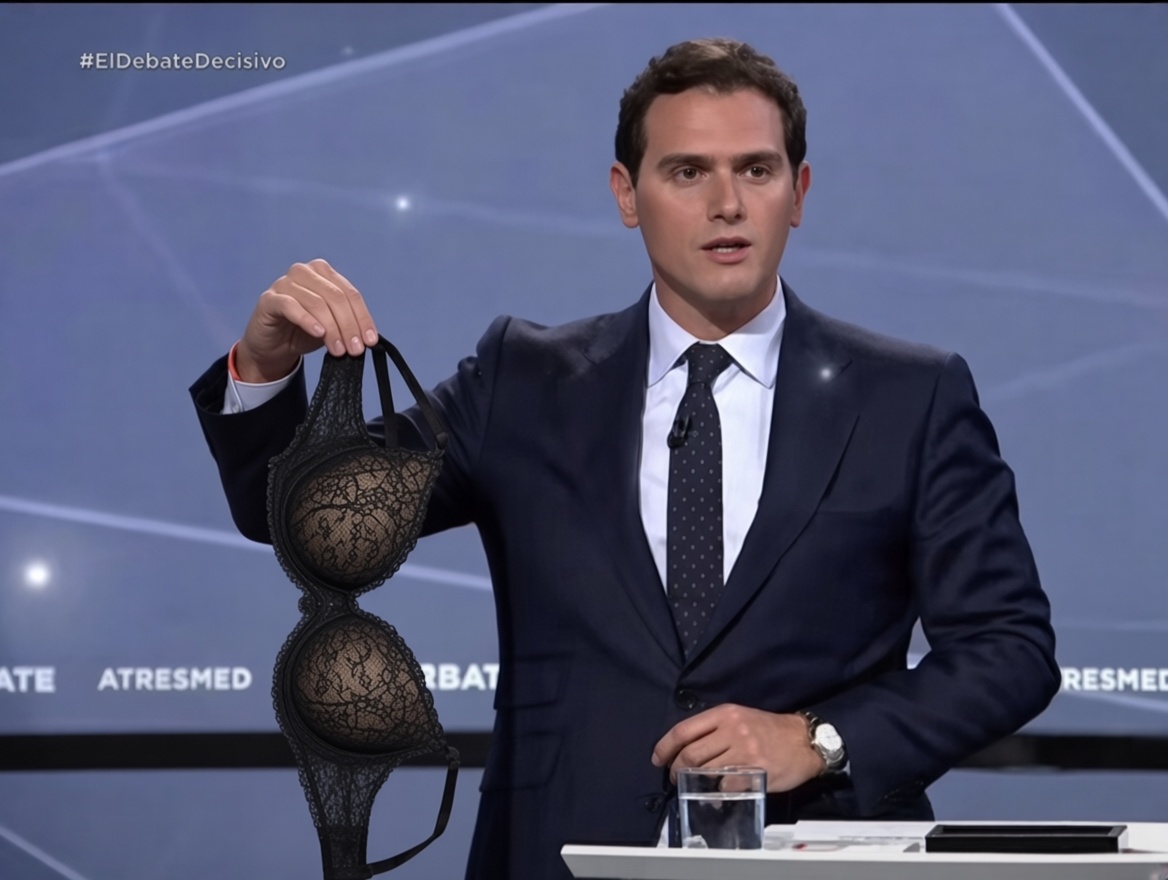
✊🌹 Los miembros del comité electoral ya van camino del debate decisivo.
Es el momento de hablar de proyecto y de la España que nos merecemos todos y todas.
¡Vamos a por ello!
#ElDebate4N#AhoraSí#VotaPSOE
The evolution of regional fertility levels in Spain over the last 125 years!
In 1900, before the fertility transition, the TFR tended to be high in the central and southern Castilian speaking parts of the country, and lower in Catalonia and Galicia. The TFR of Barcelona province was already well below the national average.
Over the next 40 years, this pattern intensified and the TFR dipped below 2 in Catalonia (1.5 in Barcelona) while it stayed much higher in the interior parts of the country.
At the end of Franco's reign, the pattern had shifted a bit. Pockets of lower TFR appeared all over the North, while the South gained an advantage. Pretty uniquely, fertility was also higher than average in the booming urban areas of Madrid and Barcelona.
Over the next 25 years, there was a major fertility decline and the regional pattern shifted again, this time into the now familiar Northwest/Southeast divide.
Yet 25 years later, after a major immigration wave that continues to today, the pattern disappeared somewhat. While the overall TFR declined furher, there was a minor rise of the TFR in the Northeast.