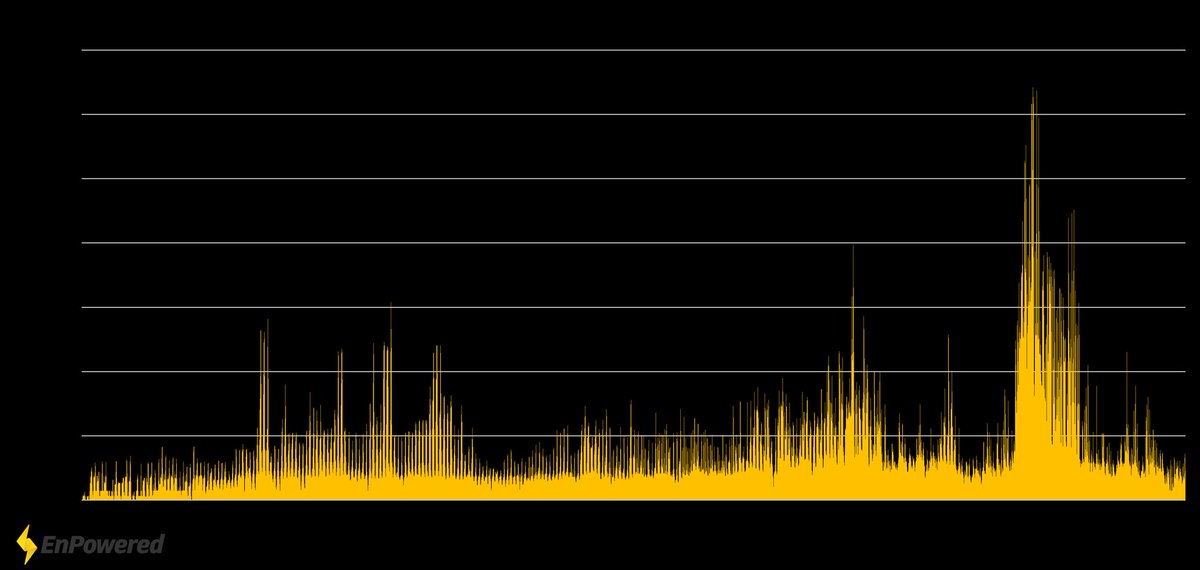
Ontario electricity prices are back to normal after nearly 2 months of extremely high prices.
The question many businesses are asking is whether we can expect more extreme price spikes like this in the future.
I swear at least 50% of posts I see are written by AI - it's drowning out the good original posts from thought leaders.
This is especially noticeable looking at all the AI generated posts about the Iran war right now. It's much worse now than I've ever seen it.
Our team spoke with an automotive parts manufacturer that had 2 different 5-second power outages in the last few weeks, each one shutdown their paint lines and forced them to lose $100,000s in product. A reminder that strained grids have significant real world consequences.
We ran the numbers for a 1MW customer in Ontario, net of all fuel costs they would have saved $87,059 over the past 9 months by turning on their gas generator whenever the grid was strained and electricity prices spiked.
That is a meaningful amount of money, nearly $120k/yr.
Businesses with flexible assets - such as batteries, generators, or building automation systems - can save over $100,000/year now by avoiding high hourly commodity prices.
This requires actively turning on/off based on hourly prices, but it's become increasingly lucrative
Electricity prices are so high in Ontario right now that it makes sense for customers with natural gas generators to run them 24x7 to produce their own electricity.
It costs roughly 15c/kWh to produce their own power. While the grid costs between 20-60c/kWh for the past week.
Electricity prices are crazy high right now, 60c/kWh in Ontario and even higher in New York!
This cold winter weather is forcing our grids to rely on more expensive sources of power, such as gas peaker plants.
But these high prices are putting a lot of strain on manufacturers.
As electricity demand continues to grow as we electrify our world and increasingly re-industrialize, the need to invest more into our electricity grids will become more and more urgent.
Ontario's grid is continuing to grow so the grid is looking for more capacity. In the latest capacity auction, this resulted in a major increase in the clearing price paid to suppliers.
We expain exactly what happened here:
https://t.co/PWecZ3oOCj
The value of 1MW of flexible load in Ontario's Demand Response program has just increased from $59K/year to $170K/year. That's an enormous increase, and an enormous opportunity for businesses in Ontario!
It's too early to say with certainty that electricity prices will drop in January, but at a minimum the grid will be in a better supply position which should put downward pressure on prices.
Ontario electricity prices have surged, with November averaging nearly $80/MWh. This is costing businesses a lot, with greenhouses especially struggling.
The main driver isn't cold weather, it's congested supply. I break down what's happening here:
https://t.co/P1Nja5WrVK
Looking forward, nearly 4,000MW of supply will come back online in the next few weeks. Even though demand is expected to increase by up to 2,000MW in January as temperatures drop, this means we should still see downward pressure on prices as we get more new supply than demand.
The current debates in Germany and Japan surrounding their existing nuclear power plants are extremely important. How can we seriously be talking about replacing existing nuclear with coal/gas - the only realistic alternative for this much base load.
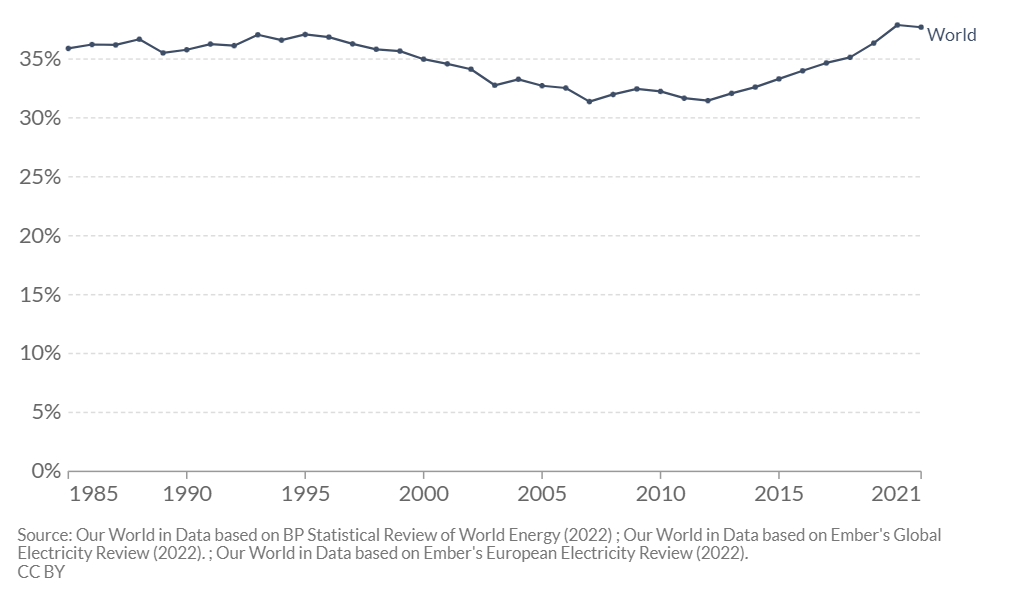
The percentage of global electricity coming from low-carbon sources has barely changed since the 1980s. All of the work done to increase renewables around the world has been replacing nuclear, it has barely made a dent on fossil fuels.
Source: https://t.co/f0F1rDBnco