UNODC-WCO-INTERPOL Passenger & Cargo Control Programme @UNODC_WCO_CCP
Regional Coordinator-Southeast Asia & the Pacific
#IllicitTrafficking
Perso views only RNE
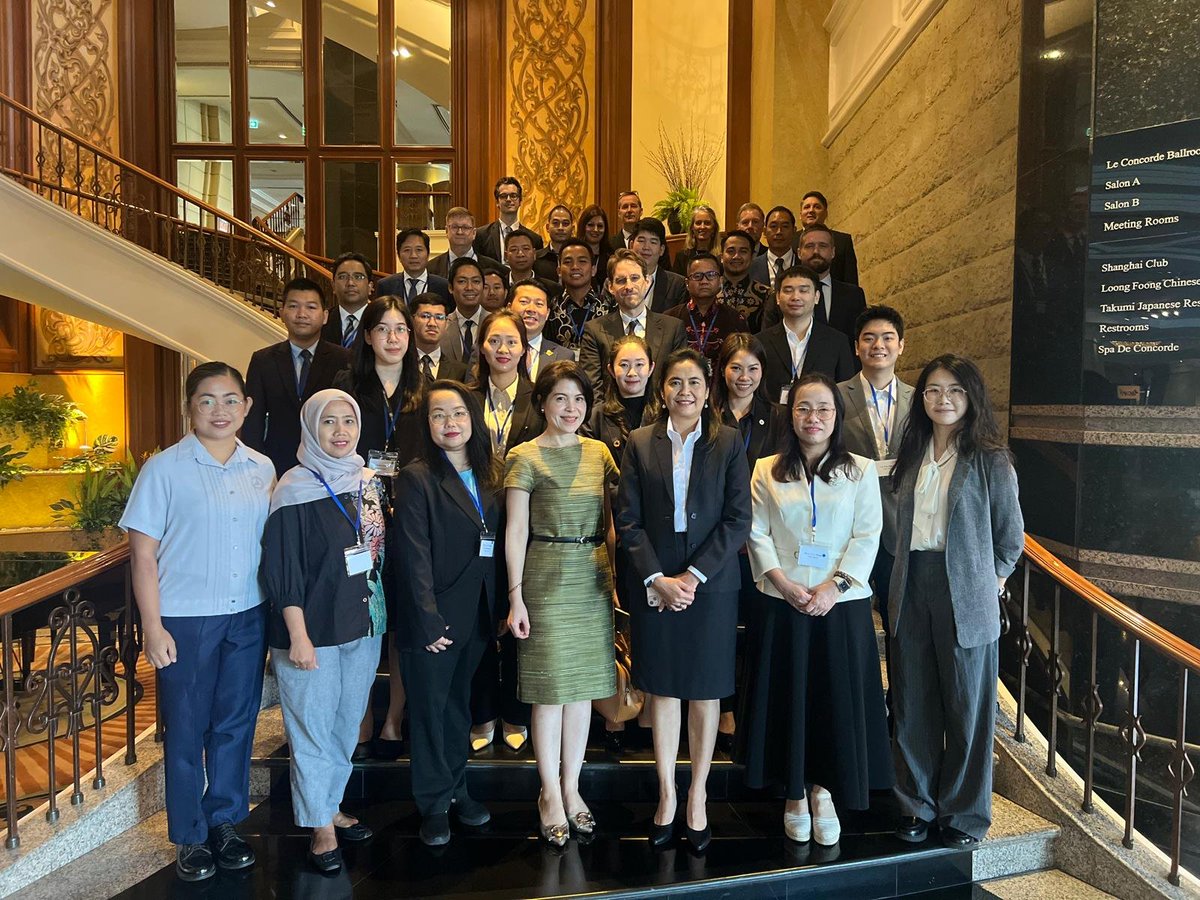
Tabletop exercises are a great way for military, law enforcement & other authorities to put theory into practice, operationalizing training concepts & overcoming obstacles to cooperation under realistic conditions. Looking forward to working w/ @UNODC_TPB & @INTERPOL_CBRNE again!
Three Mexicans have been arrested in Sydney over an alleged plot to import $185M worth of meth infused in shipping container paintwork into Australia.
Follow: @NoticerNews
The same networks involved in illegal fishing are becoming logistical arteries for transnational drug trafficking. It’s a growing challenge for Indo-Pacific security. https://t.co/SpNnGfBDDX
USA: Two Chinese nationals, Ruhuan Zhen and Hongce Wu, were charged with conspiracy to commit money laundering for the Sinaloa Cartel and Cartel de Jalisco Nueva Generación (CJNG).
From at least November 2016 to April 2025, they and their associates allegedly laundered drug proceeds using mirror transfers, foreign bank accounts, encrypted communications, serial-number verification, and trade-based money laundering.
The network operated across the US, Mexico, Latin America, China, and other locations. Laundered funds came from cocaine and fentanyl trafficking. Both suspects remain fugitives. If convicted, they face up to 20 years in prison.
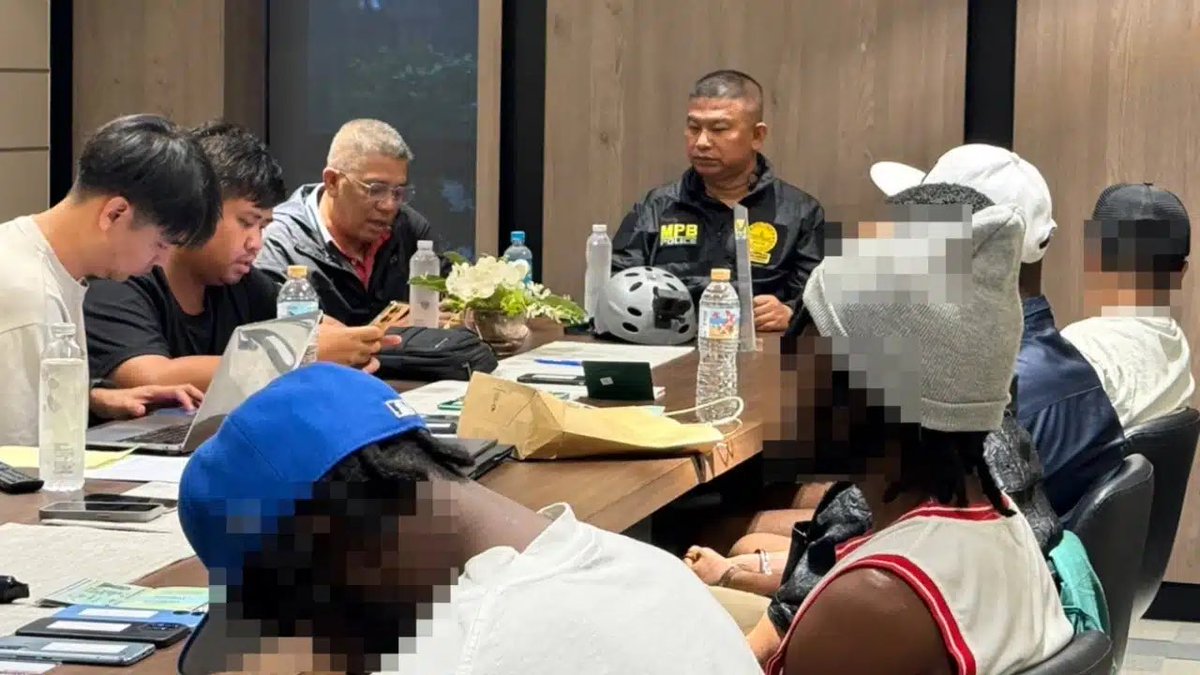
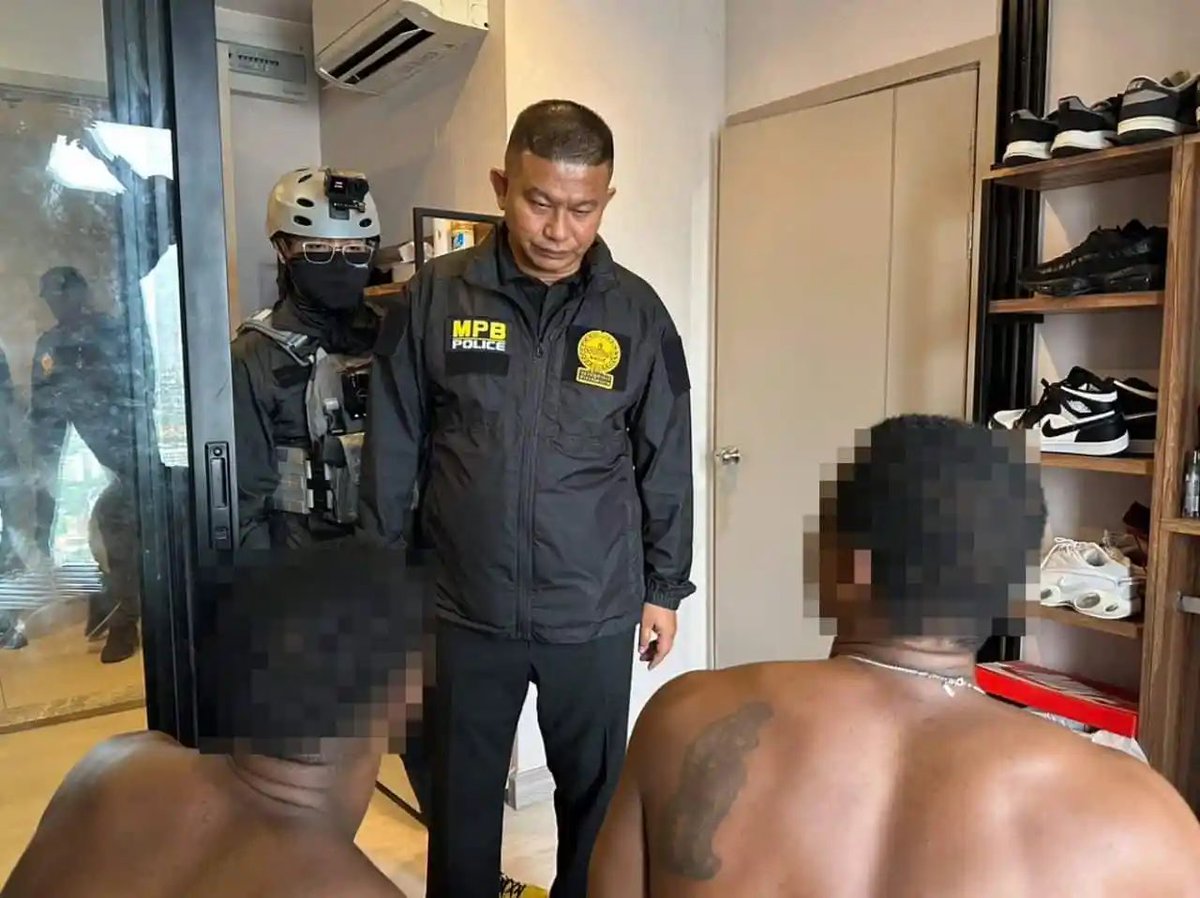
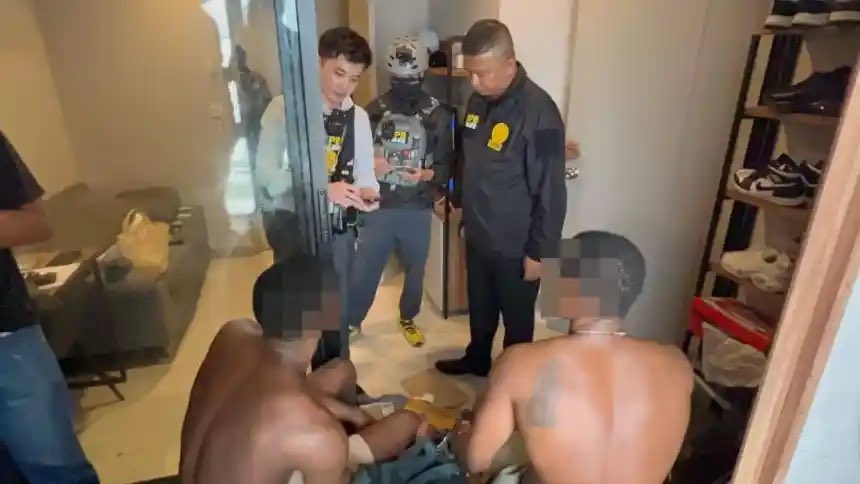
Thai cocaine bust didn’t end at cocaine. The money trail led police to a Nonthaburi condo and six Nigerians running an AI deepfake romance scam on older Thai women. Five had overstayed student visas; one by 1,560 days.
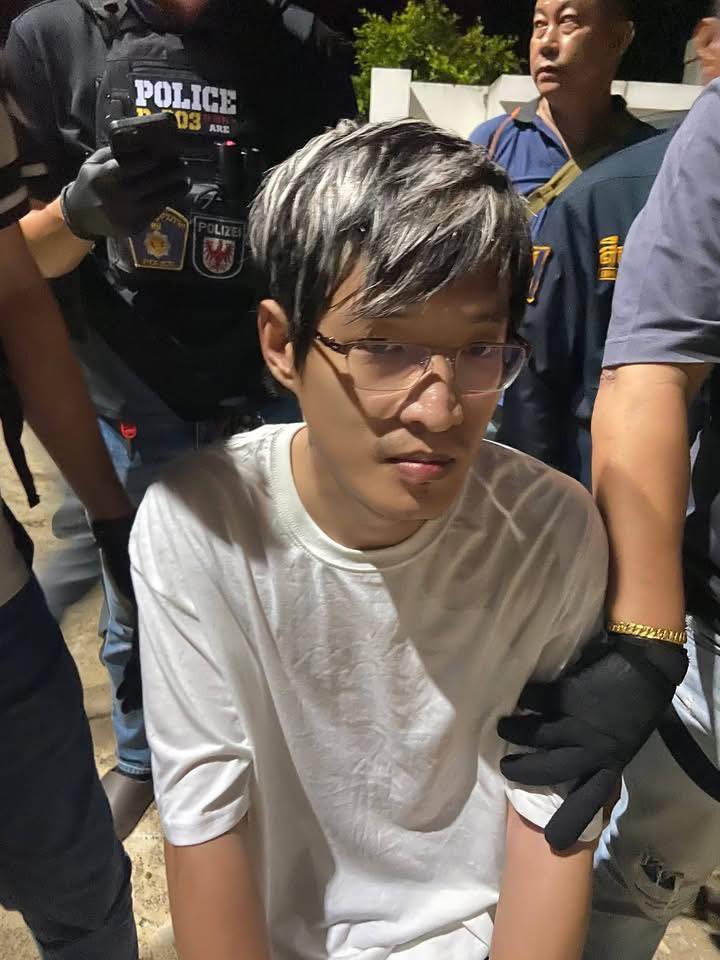
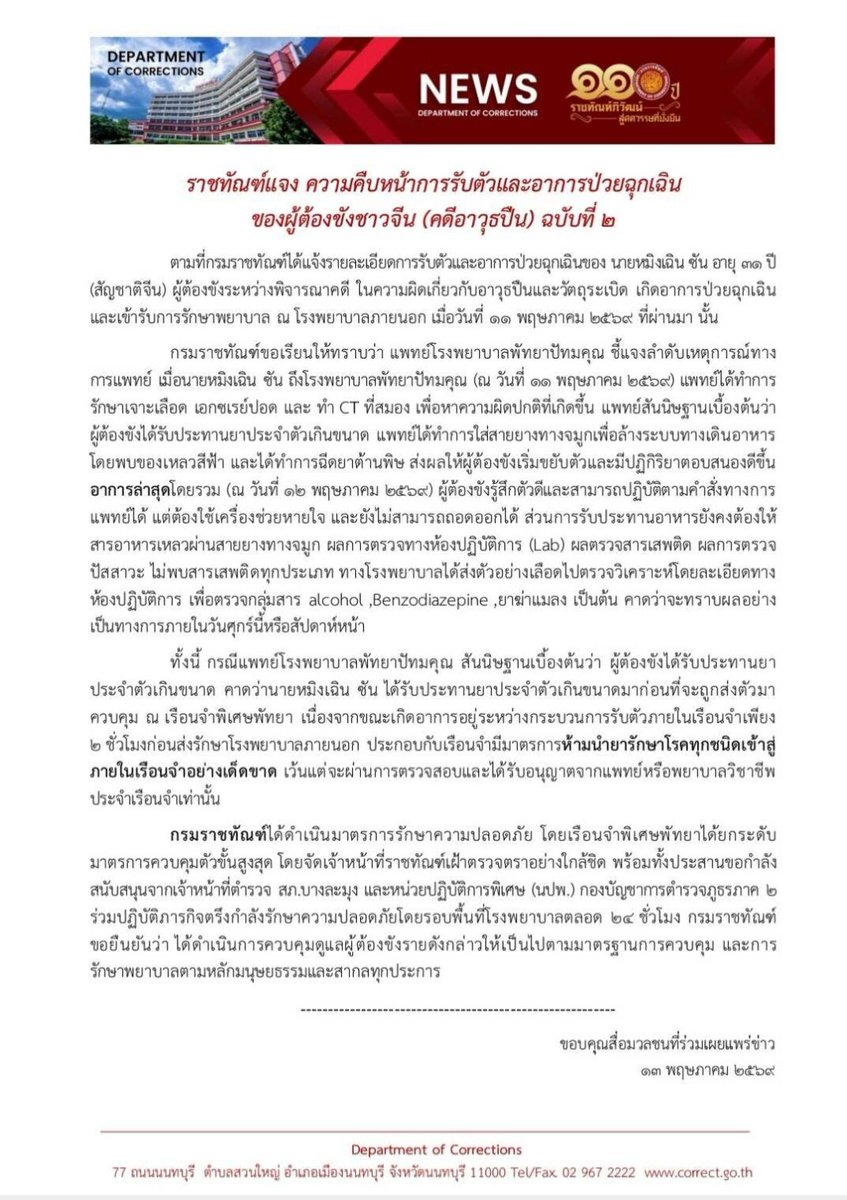
Chinese Arms Suspect on Ventilator as Thai Police Link Case to Cambodian Scam Network
Chinese arms suspect Mingchen Sun, 31, remains on a ventilator under tight security at a Pattaya hospital after suffering a medical emergency shortly after being transferred to prison, while Thai police say investigations have linked him to Cambodian scammer networks.
The Department of Corrections said Sun is conscious and able to follow medical instructions but still requires respiratory support and tube feeding. Initial tests found no illegal drugs in his system, while doctors suspect he overdosed on personal medication before entering Pattaya Special Prison. Further toxicology results are expected within days.
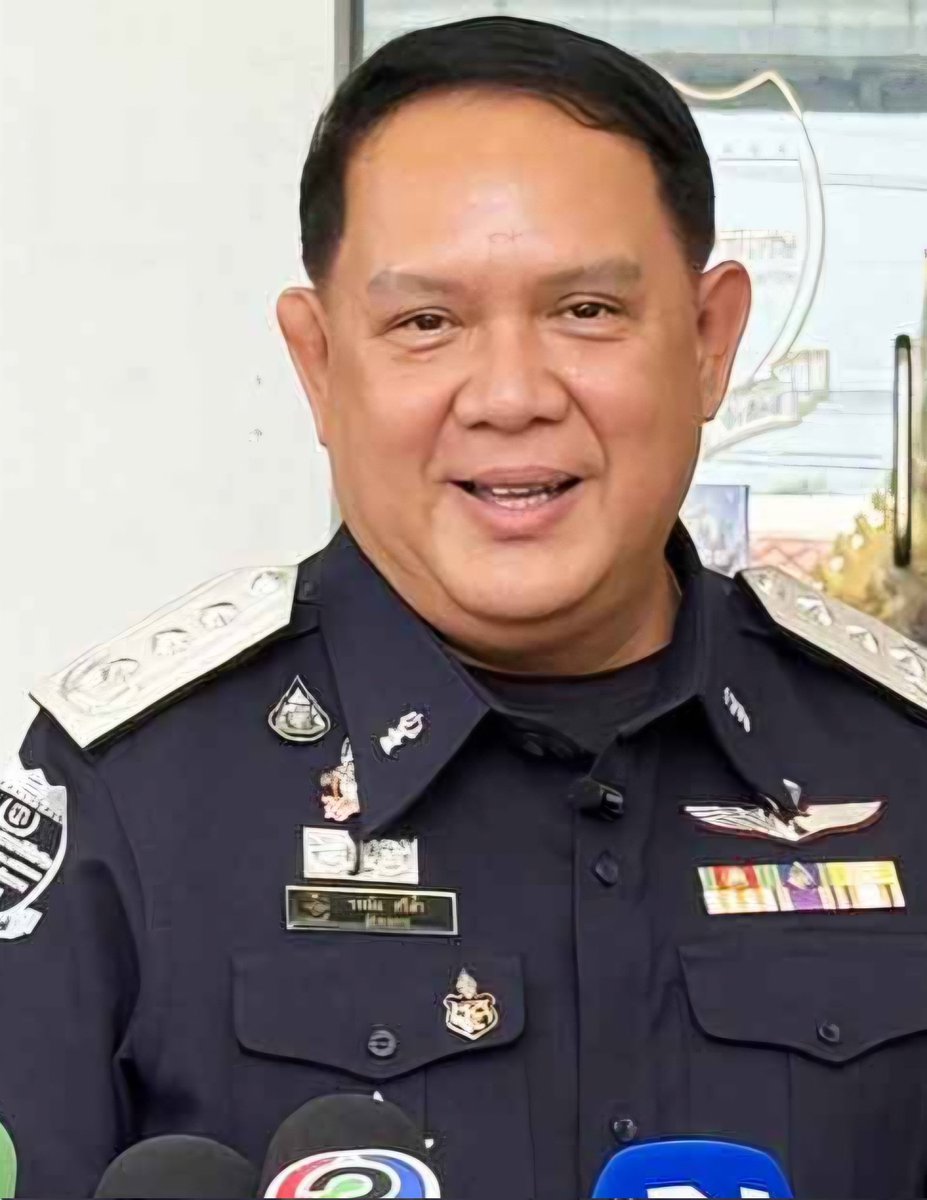
Sun was arrested after a car crash in Chonburi led police to raid a luxury house in Pattaya, where they seized weapons including C4 explosives, M16 rifles and grenades. National police spokesperson Lt. Gen. Trairong Phiwphan said investigators found chat records, weapons training images and evidence of weapons stockpiling dating back to late last year, linking Sun to scammer gangs operating in Cambodia.
Police said allegations that Sun accepted assassination jobs in Cambodia remain under investigation. Authorities also said they have found no links to Thai politicians and no evidence the group planned attacks in Thailand or intended to target Thai citizens. The case has expanded from one suspect to six, with more charges expected.
#Thailand #Cambodia #China #จีนเทา
Thailand has emerged as one of the primary targets in a major mobile malware campaign linked to industrial-scale scam operations across Southeast Asia, according to a new investigation by Infoblox Threat Intel and Chong Lua Dao.
The report traces a sophisticated Android banking trojan to a malware-as-a-service network believed to be connected to scam compounds in Cambodia, including the K99 Triumph City complex in Sihanoukville. The findings reference individuals including Kok An and Yim Leak in connection with corporate and operational ecosystems associated with the site.
The same ecosystem is also linked to wider cyber-enabled fraud operations, including cryptocurrency investment scams and so-called “pig butchering” schemes that rely on long-term social engineering to defraud victims.
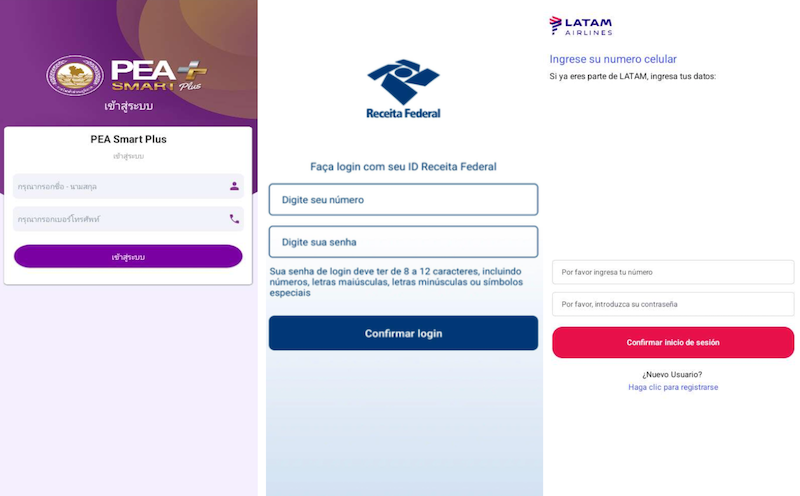
Photo - Screenshots of sample login screens following installation of the malware, and impersonating the Thai Provincial Electrical Authority, Brazilian Receita Federal, and LATAM Airlines
Link - https://t.co/3YIbzbSrbl
#Thailand #Cambodia #Malware #ScamCenters #Scammers #OnlineScams #CryptoScams #CyberCrimes
Benjamin Mauerberger is the master criminal you’ve never heard of. Today, Thailand added drugs and human trafficking to his rap sheet. In total, authorities have seized $625 million — much of it from scam centers — and he still controls billions more. 1/2
The Department of Special Investigation (DSI) says the number of suspicious offshore oil transfer voyages has risen to 99 as it investigates the disappearance of 57 million litres of fuel at sea.
Officials said the figure had increased from an earlier 96 trips, based on cross-checks with data from the Excise Department and the Department of Energy Business. Authorities are now reconciling shipment records, tax documents and delivery data to verify discrepancies. The routes mainly involve oil transported from refineries in Si Racha and Rayong to Surat Thani.
Investigators also flagged irregularities in travel times, noting some vessels took unusually long to complete routes, raising suspicion of possible illegal activities during transit. Authorities said the case remains under investigation, with further inspections of oil depots and related companies expected.
#Thailand
I put China’s Ministry of Public Security arrest videos for Prince Group founder Chen Zhi and former Huione Group chairman Li Xiong next to each other. Almost identical. The plane pulling up, the scene cuts, the dramatic music, black hoods, handcuffs, SWAT escorts. Both were Chinese-born Cambodian citizens. Both had their citizenship revoked. Both extradited from Cambodia to China, Chen Zhi in January, Li Xiong today. Beijing clearly knows how to make videos that send a message.
At 2 a.m., Li Xiong was taken out of Cambodia’s National Police HQ.
Hours later, he was on a plane to China.
He wasn’t just the head of Huione — Chinese authorities call him a core member of Chen Zhi’s network.
What this arrest really signals:
https://t.co/VQU0Hv27U1
What's going on these days in Thailand that we're not hearing about? World events are not black & white. There's more going on here than what meets the eye.
Below is a synopsis of important events happening in Thailand and the region that nobody is talking about.
The US is quietly pivoting a significant slice of its Southeast Asia engagement, especially with long-time treaty ally Thailand, around countering transnational organized crime, with a heavy emphasis on the explosion of pig-butchering/crypto-investment scam centers operating out of Cambodia, Myanmar, Laos and border areas.
This is not replacing traditional military/diplomatic ties; it is layering on top of them and using law enforcement and intelligence tools as a core predicate for aid, training, sanctions and even some military assistance.
While the Middle East events dominate headlines, the Thailand/SE Asia story is playing out in joint task-force war rooms, multibillion dollar crypto forfeitures, and targeted aid packages that get almost no media coverage.
Here’s what’s actually happening on the ground right now (as of early April 2026) based on public U.S. government, Thai, and regional reporting:
1. Military assistance? The U.S. recently delivered 17 armored Stryker vehicles to the Royal Thai Army. . Thai officials framed the transfer as part of a broader $100 million U.S. military-support package that also includes border-security enhancements and help modernizing Thai armored units. This is classic alliance maintenance, but it is increasingly justified in Thai and U.S. statements as helping Thailand secure its borders against the same criminal networks that run scam compounds just across the line in Myanmar and Cambodia.
2. FBI, Royal Thai Police integration in Bangkok is deep and operational The FBI’s Legal Attaché office (Legat Bangkok) has embedded personnel inside Thai led War Room task forces and the Royal Thai Police Anti-Cyber Scam Center (ACSC). They are running real-time information-sharing ops with the Thai police and other partners. Recent Joint Disruption Weeks have led to:
Mass account takedowns (150,000+ scam-related accounts disabled in one March 2026 operation).
Dozens of arrests inside Thailand.
Victim rescues and domain seizures targeting compounds in Myanmar (e.g., the Tai Chang network).
This is not advisory, U.S. agents are co-located and co-investigating with Thai counterparts on a daily basis.
3. The $15 billion Prince Group crypto seizure was the biggest law-enforcement headline almost nobody in the West noticed
In October 2025 the DOJ and FBI, under Director Kash Patel, announced the "largest asset forfeiture in U.S. history": roughly 127,000 Bitcoin, valued at ~$15 billion, tied to Cambodian tycoon Chen Zhi and his Prince Group conglomerate. Chen was indicted for running forced labor scam compounds that specialized in crypto pig-butchering fraud targeting Americans. Thailand itself later seized hundreds of millions in linked assets and issued arrest warrants. This is an ongoing enforcement wave, not a one-off.
The U.S. government explicitly links these networks to Chinese organized-crime syndicates and, in some FBI statements, to implicit Chinese Communist Party tolerance or facilitation. The scam centers are treated as a hybrid national-security threat: they generate billions in illicit revenue, traffic thousands of people, and fleece U.S. citizens. Estimated U.S. losses from SE Asia scams topped $10 billion in 2024 alone.
4. A recent US $45 million aid package is explicitly law-enforcement-heavy
In January 2026 the U.S. announced "$45 million" in new assistance split between Thailand and Cambodia to lock in the Trump-brokered Kuala Lumpur Peace Accords which ended 2025 border fighting between the two countries. Of that, $20 million is earmarked for joint Thai, Cambodian initiatives against transnational crime, online scams, and drug trafficking. The rest covers border stabilization, de-mining, and community recovery. Thai officials have highlighted the anti-scam component as a major win.
Why this feels like a shift, and why it���s flying under the radar:
Law-enforcement predicates are now a primary justification for engagement. Traditional alliance language such as “shared democratic values,” and “Indo-Pacific strategy” are still there, but the concrete deliverables: aid, vehicles, training, sanctions relief, are increasingly tied to measurable results on scams, trafficking, and cybercrime. This is pragmatic: scams directly hurt American voters and are a growth industry that destabilizes the region.
Thailand is the indispensable US partner. As a U.S. treaty ally with a functioning justice system and a long border with the scam hubs, Thailand has become the forward operating base for FBI and interagency efforts. The Thai government has declared anti-scam work a “national agenda” and is happy to host the Americans.
Media vacuum.
The Middle East statements about the war in Iran, Gaza, NATO drama, etc., get media attention. Meanwhile, a $15 billion crypto bust, embedded FBI, Thai police task forces, and armored-vehicle deliveries tied to counter-crime ops barely register outside niche security outlets.
In short, what we're seeing is the Trump administration’s foreign policy in practice in one theater: use every lever (military assistance, sanctions, FBI presence, targeted aid, diplomacy) to protect U.S. citizens from a massive, borderless criminal enterprise while reinforcing a key Southeast Asian ally. It’s less flashy than aircraft carriers in the Strait of Hormuz, but it’s producing tangible results such as arrests, seizures, rescued victims, and hardened borders, right now. The pundits may be focused on the Middle East, but the operational story in Thailand and the scam-center belt is where a big, quiet piece of U.S. foreign policy is actually being executed.
Boss Xi Arrested, Stripped of Cambodian Citizenship, Deported to China
Li Xiong, known as "Boss Xi" (西总), has been arrested and deported to China. Cambodia revoked his citizenship by royal decree on March 31. CCTV identified him as a core member of the Chen Zhi criminal syndicate and chairman of Huione Group under Prince Group, the first time Beijing has publicly confirmed that link on the record. He faces charges including gambling operations, fraud, illegal business, and concealing criminal proceeds.
The operation followed months of joint investigation at China's request, the same playbook used for Chen Zhi, whose citizenship was revoked in December before his extradition on January 7. Boss Xi was first reported arrested in late January, then apparently released hours later. This announcement settles it.
The US Treasury designated Huione Group in October as a primary money laundering concern, a critical node for laundering proceeds from cyber scams totaling at least $4 billion. The MPS says more arrests are coming.
I strongly condemn Sunday’s incident during which an Indonesian peacekeeper of @UNIFIL_ was killed amidst hostilities between Israel & Hizbullah. Another Indonesian peacekeeper was seriously injured in the same incident.
My deepest condolences to the family, friends & colleagues of the peacekeeper who died & to Indonesia. I wish a full & fast recovery to the injured peacekeeper.
This is just one of a number of recent incidents that have jeopardized the safety & security of peacekeepers.
I call on all to uphold their obligations under international law & to ensure the safety & security of @UN personnel & property at all times.
UK sanctions hit ex-Triad boss, an illicit crypto marketplace that processed $19.9 billion, and what's believed to be Cambodia's largest scam compound
10 new UK sanctions designations today targeting the scam compound economy across Southeast Asia. Ex-14K Triad boss Wan Kuok-Koi, known as "Broken Tooth," is now sanctioned by the UK for involvement in scam centre operations. The US sanctioned him back in 2020. The UK is also the first country to sanction Xinbi, a Chinese-language illicit marketplace that Chainalysis says processed over $19.9 billion in crypto between 2021 and 2025, facilitating everything from money laundering to the sale of stolen personal data for scam operations.
Legend Innovation and its director Eang Soklim are designated for their role in #8 Park, believed to be Cambodia's largest scam compound with capacity for 20,000 trafficked workers. Elliptic has linked the compound to both Prince Group and Huione. Hu Xiaowei, the man OCCRP exposed as using four identities and holding passports from four countries, is sanctioned under his Wu An Ming alias. Li Thet, a key Chen Zhi lieutenant who managed Prince's international financial network, holds six citizenships. Wang Xiaoyan, wife of previously sanctioned Prince exec Zhu Zhongbiao, plus Prince-linked companies Tian Xu and BSquare round out the list. London properties are being frozen.
Worldwide losses related to financial fraud in 2025 alone have been estimated at USD 442 billion - and our Global Financial Fraud Assessment shows that the threat is accelerating.
We need to target the main criminal actors, make fraud harder to commit and make it less profitable.
That’s why the support announced at the Global Fraud Summit by the UK’s Fraud Minister @RTHondavehanson for INTERPOL’s Shadow Storm Task Force is so critical.
This initiative will bring together all the key links in the various chains to streamline intelligence, identify suspects, disrupt financial flows and dismantle criminal networks.
A mysterious Cambodia-based tycoon built an alleged global scam empire and a web of political connections to become seemingly untouchable. That was, until late 2025, when everything changed https://t.co/L1k3JWvLkZ
Dramatic footage from last night's raid on the Golden One building in Phnom Penh's Boeung Keng Kang district. 65 detained, eight Chinese nationals among them, computers and phones seized. The operation targeted an online scam ring using fake profiles to lure foreign investors.
The Phnom Penh governor says scam operations will be fully cleaned out by mid-March.
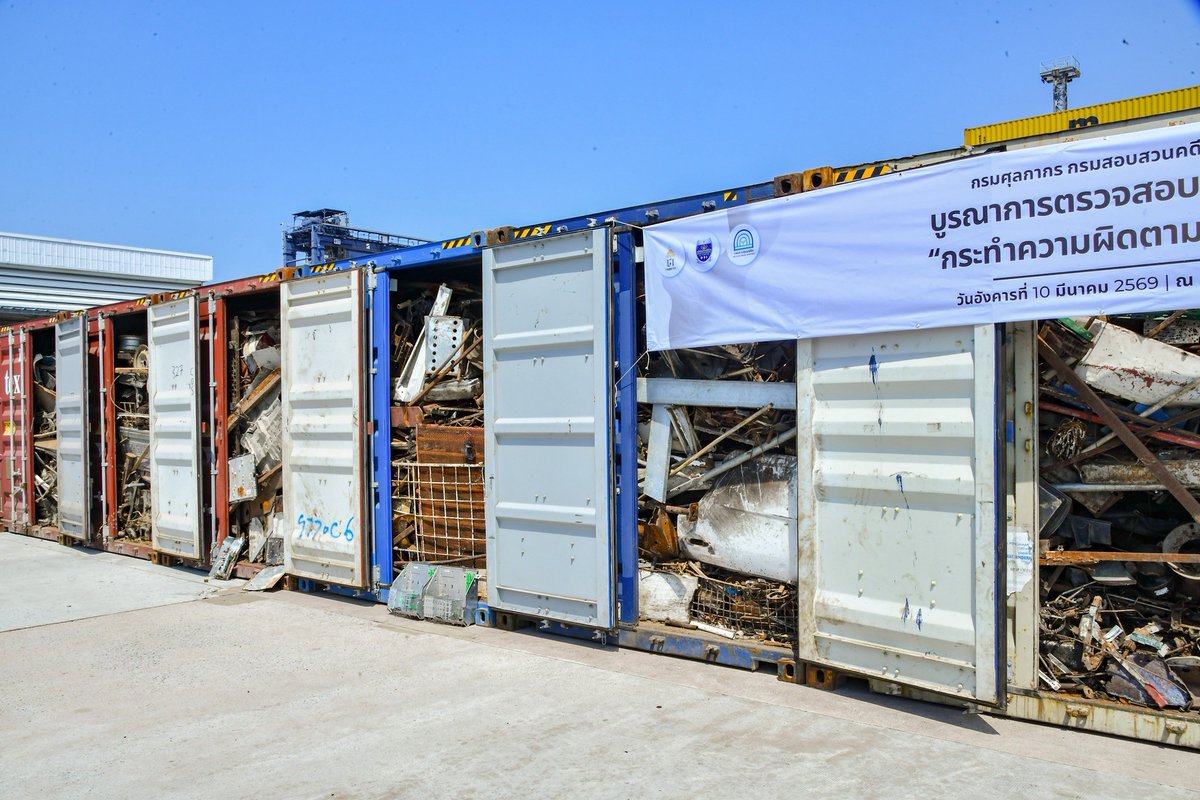
Authorities Find Over 200,000kg of Suspected E-Waste in Containers at Laem Chabang
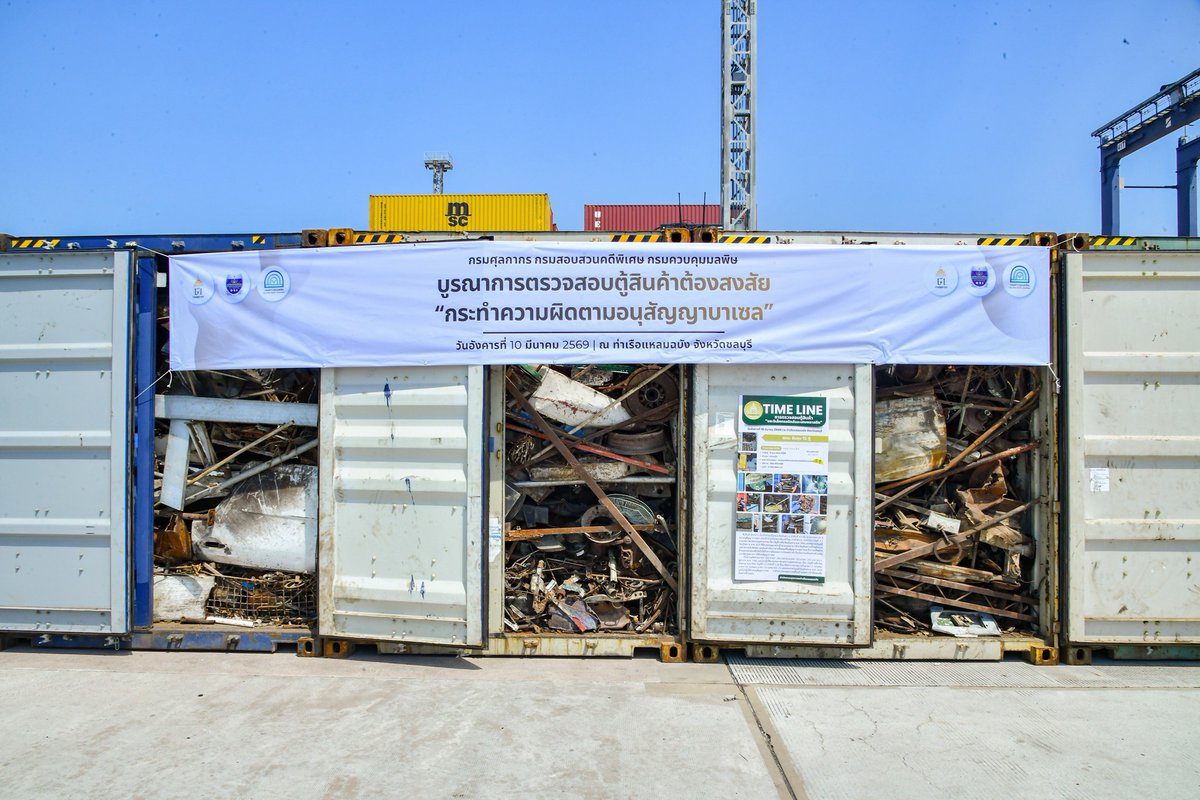
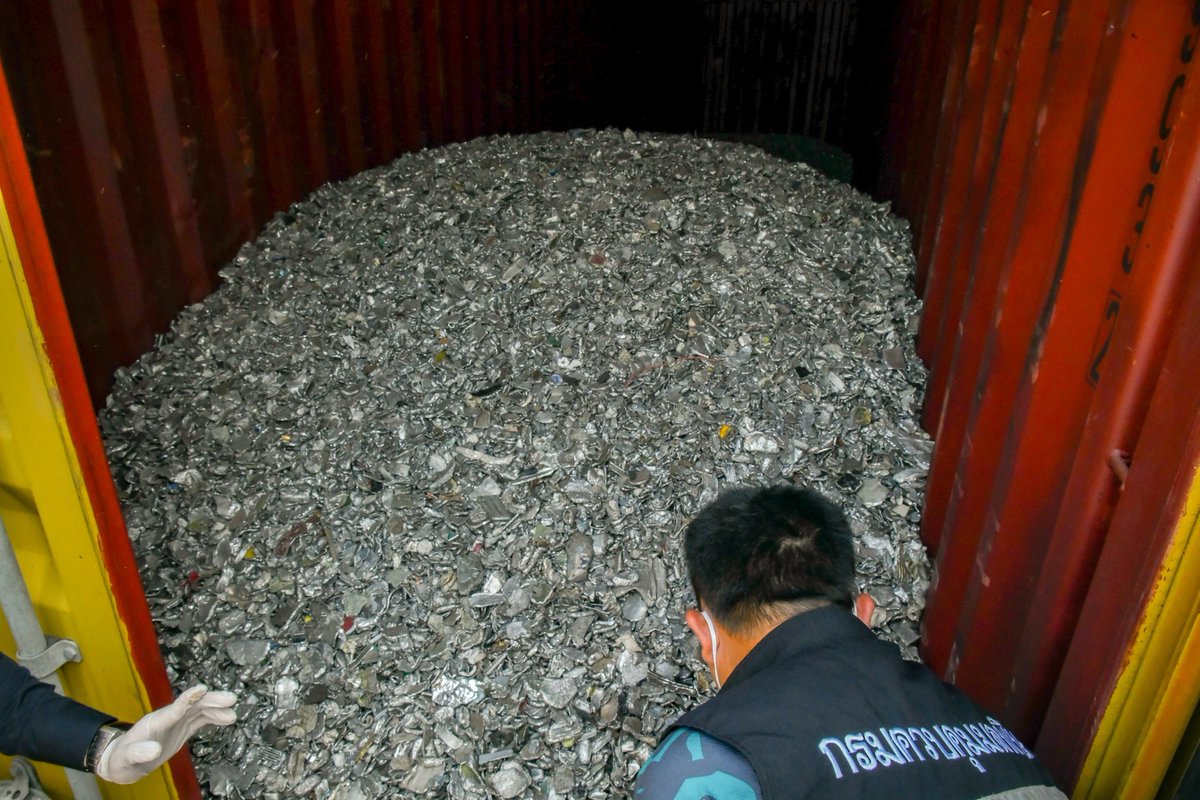
Authorities on March 10 inspected 18 suspicious shipping containers at Laem Chabang Port in Chon Buri and found more than 200,000 kilograms of suspected electronic waste, amid a crackdown on illegal imports of hazardous materials.
The inspection was carried out jointly by the Customs Department, the Department of Special Investigation (DSI) and the Pollution Control Department. Officials found that 12 containers declared as scrap metal from Haiti actually contained scrap mixed with electronic circuit boards, classifying the cargo as electronic waste. The shipment weighed about 284,919 kilograms with an estimated value of more than 2.5 million baht.
Another four containers, identified through information shared with investigators, were declared as metal scraps from the United States, with shipping destinations listed as Japan and Hong Kong. Two additional containers, declared as aluminium scrap from the United States and the Netherlands, had previously been detained after the importer was flagged by an international monitoring network.
Preliminary checks indicate some of the cargo may constitute illegally imported hazardous waste, potentially violating Thai law and the Basel Convention regulating cross-border waste shipments. Authorities said the shipments would be returned to their countries of origin and legal action would be pursued against those involved. Under the Customs Act, offenders face up to 10 years in prison, a fine of up to 500,000 baht, or both.
#Thailand #ElectronicWaste #Japan #Haiti #HongKong #Netherlands #US