“I don’t give a shit what your system is, what does it mean for the river?”
I genuinely never thought I would have to challenge the British state in order to protect the river I love, but here we are. Massive thanks to Channel 4 for spending so much time & care in detailing the incredible work done by volunteer river guardians on the River Roding: I am going to use the description of us descending on litter like a “squadron of community-minded locusts” again!
Whilst I no longer shocked at the indifference of public bodies like the EA & local councils to the desperate plight of our rivers, it has genuinely surprised me that @EnvAgency thinks it is a good use of their powers to prosecute volunteers for doing their job for them by restoring rivers, especially when there are serious illegal sewage discharges nearby that they have done nothing about. Please withdraw your prosecution threats EA & work with us instead. The Roding could genuinely be a test case in how government & river guardians can work together to protect & restore our rivers.
https://t.co/vCBY3cPxmE
We are at 6,580 signatures please click on link and sign. A share would be amazing too. We are thankful for all support. Petition: Stop megasheds being built https://t.co/4YHZ9hTGEE
My colleagues & I have taken a huge gamble to set up @thenerve_news. We’re trying to build a new independent publication from the ground up. Social media is our only distribution for now.
Sharing this article in your networks would make a huge difference. Thank you! 🙏🙏🙏
I say this with genuine concern for the wellbeing of the UK and all of us who live here. Never in my adult life have I lived under more severe freedom of speech restrictions; there is a literal list of things people can’t say and groups people can’t support. It’s not right
NEW: Palantir’s revolving door.
A new investigation by @thenerve_news has found Palantir has recruited more than 30 senior officials from UK govt, a strategy transparency experts say poses an ‘acute risk’ of corruption.
1/
Link ⬇️
WATCH - Trudi Warner arrested, handcuffed, and carried for holding a placard with the law written on it outside Woolwich Crown Court.
“There’s a High Court Ruling about this law”
Trudi ought to know, because the case was “the Secretary General vs Trudi Warner”, and Trudi won.
9 days ago #NetworkRail agreed to removing the mortar to unblock the swifts nesting sites. NOTHING HAS BEEN DONE YET meanwhile swifts are returning home earlier than normal. 📧email CEO Jeremy Westlake asking him to unblock them: [email protected]#SaveOurSwifts
#NetworkRail have ignored dedicated swifties for 10 months but they can still help the birds by unblocking their homes. Tell the CEO this: [email protected] Anger as swifts’ nesting holes in Derbyshire rail viaduct ‘blocked up’ https://t.co/S9IEmCLHhz
The Zone They Didn’t Tell You About
How a 616-acre corporate enclave was quietly built in Somerset, and why the Guardian’s coverage of the Agratas gigafactory grant tells only half the story.
On Thursday 9 April 2026, The Guardian reported that the UK government is giving £380 million to Tata’s Agratas gigafactory in Bridgwater, Somerset. Business Secretary Peter Kyle visited the construction site.
The public is being made to fund, through a £380 million direct grant, through Enterprise Zone tax reliefs, through ringfenced business rates, through planning derogations, through a 25-year governance architecture created without their knowledge or consent, the production of vehicles that the vast majority of them will never be able to afford. The green transition is real. The strategic case for domestic battery manufacturing is real. But the class structure of who bears the cost and who captures the product is not incidental to the policy. It is the policy.
The batteries being manufactured at the Agratas plant in Bridgwater will supply Jaguar Land Rover. The vehicles they will power have an average transaction price of £136,000.
They are not the cars of the construction workers building the factory, or the workers who will eventually staff it. They are luxury commodities for the global wealthy, the same class fraction that the broligarchy serves, that the attention economy extracts from, and that zone-based industrial policy has always, beneath its levelling-up language, most reliably delivered for.
Statutory Instruments (secondary legislation) used for the rollout were not debated in Parliament, there was zero consultation with the public, and zero notification of the press.
I write about the nationwide spread of deregulated free zones that are stealthily corporatising the Commons. Zone Fever was set up by the Tories and fully backed by Labour right after Brexit.
Please read, share and support my volunteer research💚
https://t.co/k4KbsfNy0J
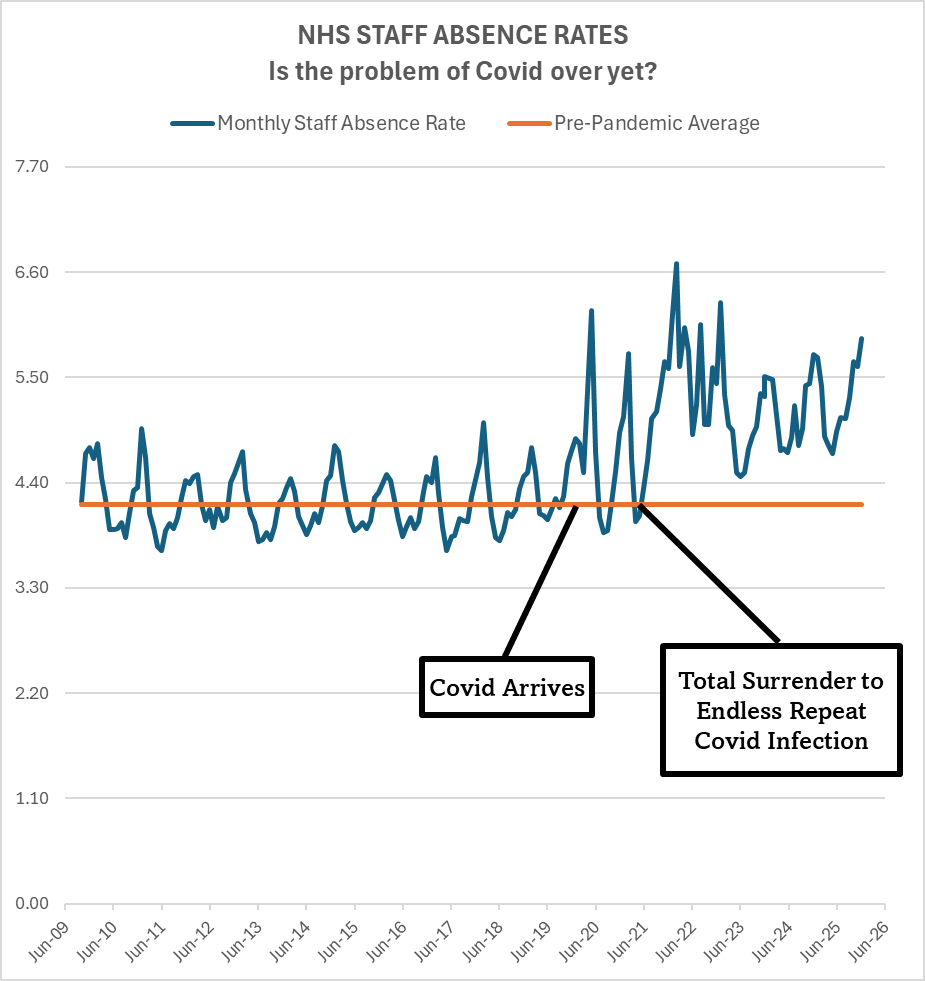
I started highlighting the increasing sickness absence rates of NHS staff years ago.
First they responded that it was going down again after the pandemic.
I responded that the pandemic wasn't over and that it was about to rise again.
They said no it wasn't.
Then it rose.
Then they said that it was mostly due to anxiety.
I said, no, that category of reason for absence isn't anxiety, it's psychiatric illness.
They said, well it's because they are treated so badly.
I said the other reasons for absence are rising faster.
They said no they're not.
So I listed them.
They said it's because staff are worn out from the pandemic and healthcare stresses.
So I showed that it's affecting the new staff who weren't even working until 2025, right from the first day they start work.
Then they said it was because of an aging workforce.
So again I showed them that it's affecting the youngest staff worst.
So they said it was because young people are lazy now.
So I showed that death rates were up to the same degree as sickness absence rates. Are people so lazy they're dying?
And they said that it's because we have more healthcare workers from other countries now.
So I showed that the groups of workers that are predominantly from the UK have the highest increases in sickness absence rates.
So now they're admitting that there are higher sickness absence rates but again blaming them on laziness and lack of dedication, and they're telling staff that people who take too much sick leave won't be give jobs.
And I said well, isn't that just going to make them sicker and affect the vulnerable patients even more?
And they haven't replied yet.
It’s that time of year - folks asking us about #bumblebees - WHY THEY’RE SEEING THEM ON THE GROUND - so here’s a thread to explain.
Please #retweet!
Every queen that survives means a new colony that gets to exist & produce queen #bees for next year!
So important to #share!
1/9
I'm in a lull on twitter without much visibility, so probably hardly anyone will see this, but here's an important thread on "why everyone's sick all the time".
No, you are not imagining it.
Sickness is increasing.
Sickness absence rates are increasing.
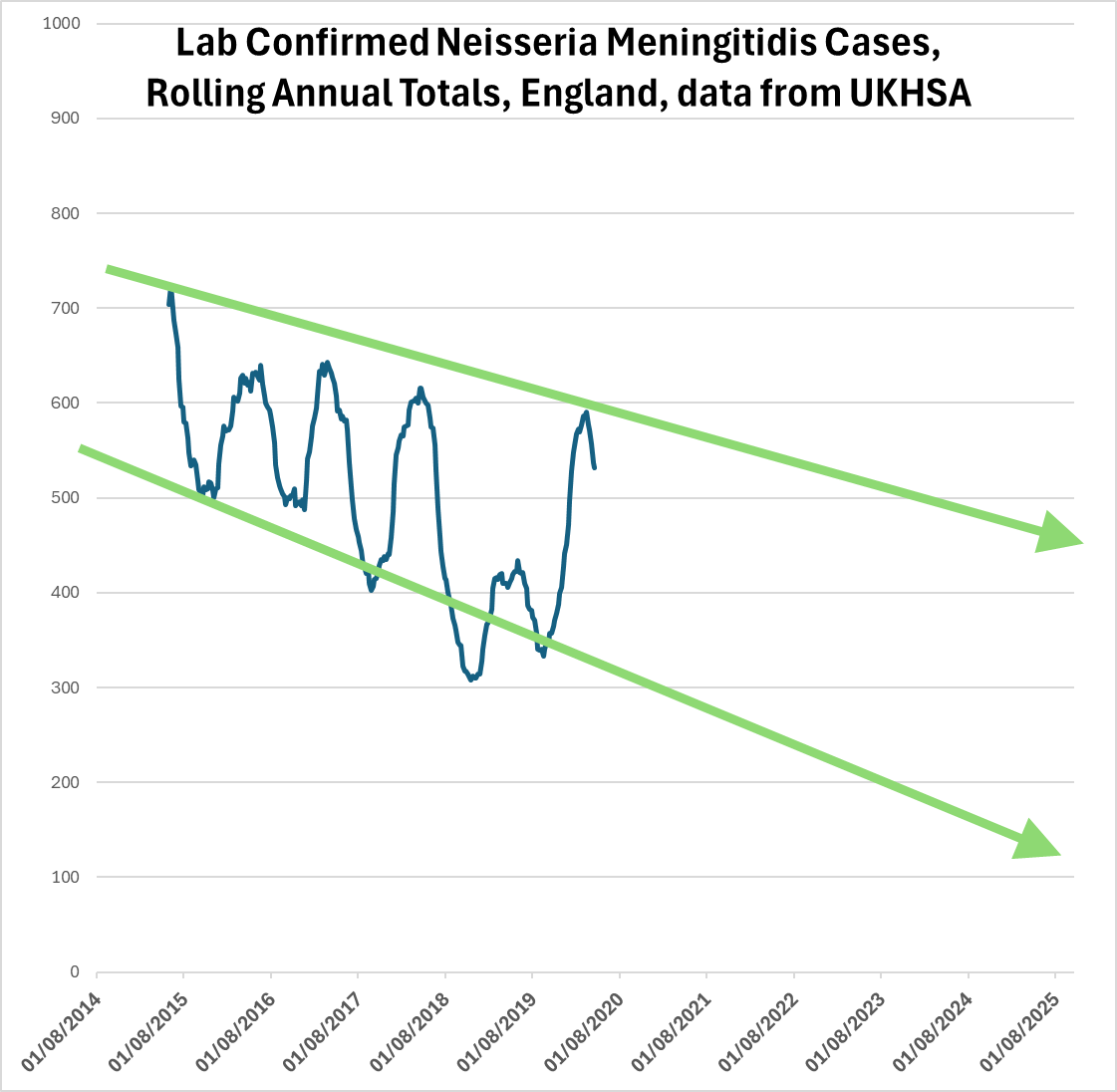
Nightclub owner at centre of meningitis outbreak says “something isn’t making sense” - as TWO staff in hospital.
“There's been a lot of talk about how hard it is to transmit…
…but actually, it was transmitted a LOT more easily, by the looks of it, than they're suggesting”
🧵
Before Covid came along, England was doing pretty well with meningococcal disease.
Which is great because it's a disease that can *kill a healthy teenager within hours*...
... or leave them alive without limbs, hearing, or memory...
But... and it's a really big but...
🧵
Distracted by the slaughter of children in Iran & Lebanon? Me too! But what better time could there be for govt to quietly relaunch its Digital ID plan?
Missed it? Me too! But look who’s celebrating…
The director of ‘govt innovation’ at the Tony Blair Institute!
1/
Just got off the phone after @Ed_Miliband called to discuss in detail the problems people are facing with domestic energy bills and heating oil. Here's what I fed through - your feedback would be useful...
1. HEATING OIL: This is the most immediate concern as many, often in rural areas or N. Ireland, are refuelling their tanks. Prices have rocketed, a few even suggest they've nearly doubled in a week. My biggest concerns are...
a) Those who can't afford the new price
b) Lack of specific regulation as heating oil isn't covered by Ofgem (though that's a longer-term issue)
c) Some have anecdotally reported existing booked-in orders being cancelled, and being asked to rebook at much higher prices. I want to firm up whether this is widespread...
I'd like to hear specific examples of how much prices are rising, especially of point c) and will pass them through to the Department for Energy.
2. CONSUMER GAS & ELECTRICITY BILLS: This is less imminent, but a potential ticking cost time-bomb. I'm focused on the Eng, Scot & Welsh system here...
- In the short term: Most bills are protected from the spike in wholesale energy prices as the Energy Price Cap is set based on a significant time-lag. In fact it is locked in to DROP 6.7% in April.
Those not on the Price Cap are mainly on existing fixes (which, due to unprecedented prior policy changes, will see most suppliers cut existing fix rates on 1 April, typically by 7% to 9%) so are also price protected for now.
One current concern is the lack of availability of cheap fixes. While that's frustrating, in the short term it means those whose existing fixes are ending, will just (hopefully temporarily) need to move on to the Price Cap.
There are also a minority of homes who are immediately affected, eg, those on time-of-use tariffs. These include Octopus Agile & Tracker, which move half-hourly or daily with wholesale rates.
These are sophisticated user tariffs, and if necessary people have the short term option to switch back to a Price Cap tariff (though do check for restrictions on how long before you can switch back).
So while none of that is great, it isn't crisis point.
- The end of May is likely crunch time: This is usually when the next Price Cap (July to Sept) is announced. It currently seems very likely it will rise, though just how much all depends on how long lived the current energy price spike is.
Yet the key is whether wholesale rates have dropped back down or not by that point. If they have, while the Price Cap rise will annoy many, it won't be critical for most for two reasons
i) The July to Sept Price Cap is usually the lowest use period. So, even if typical use rose £200/yr, in practice this'd just be, at a guess, an extra £30 to £40 paid over the period. If by then wholesale rates are down, a substantial cut would be expected for the next (Oct) Cap.
ii) The rate new fixes are set at is based on wholesale rates, so if wholesale rates have dropped by then, the big push should be to get people off the Price Cap and onto fixes which could possibly look to be 20%+ cheaper, avoiding any price hike. That should then leave only those unwilling or unable to switch paying more - the latter is an issue the govt would need to concern itself with at that point.
Yet if rates haven't dropped back down by May, and it looks like it'll stay high so the October Price Cap will rise too, and no cheap fixes are available, then things get into real problem territory. The government needs to be (and I suspect is starting to) planning now for that eventuality in case more hard-core intervention is needed.
Martin
PS I said I'd be off socials for the weekend, as normal, but thought this was worth coming back on for. I'm now resuming my weekend break from socials.
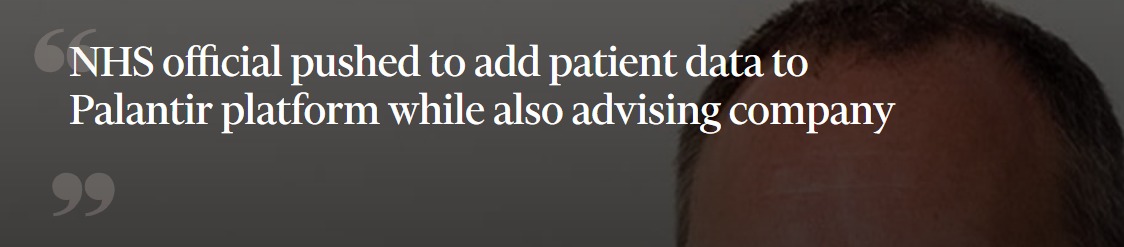
A lobbyist who worked directly for Peter Mandelson, on the Palantir board, and on the board of *four* NHS trusts.
Lobbying the NHS to hand over even more patient data to Palantir.
This absolutely stinks. Get Palantir out of the NHS. Sign my petition:
https://t.co/IY4bm5aWas
David has done so much for highlighting extremely important information on SEZs and freeports, and now he needs our help.
Please donate what you can. Thank you!