Introducing ACT-2 Preview
The first robotics model to unify broad generalization with high reliability. A single fine-tuning example can teach Memo a new behavior that generalizes.
Zero shot, real unseen homes, 99% success rate.
We completed the most rigorous generalization test to date. Across 785 trials in 31 unseen environments, ACT-2 achieved 99.1% success in laundry folding.
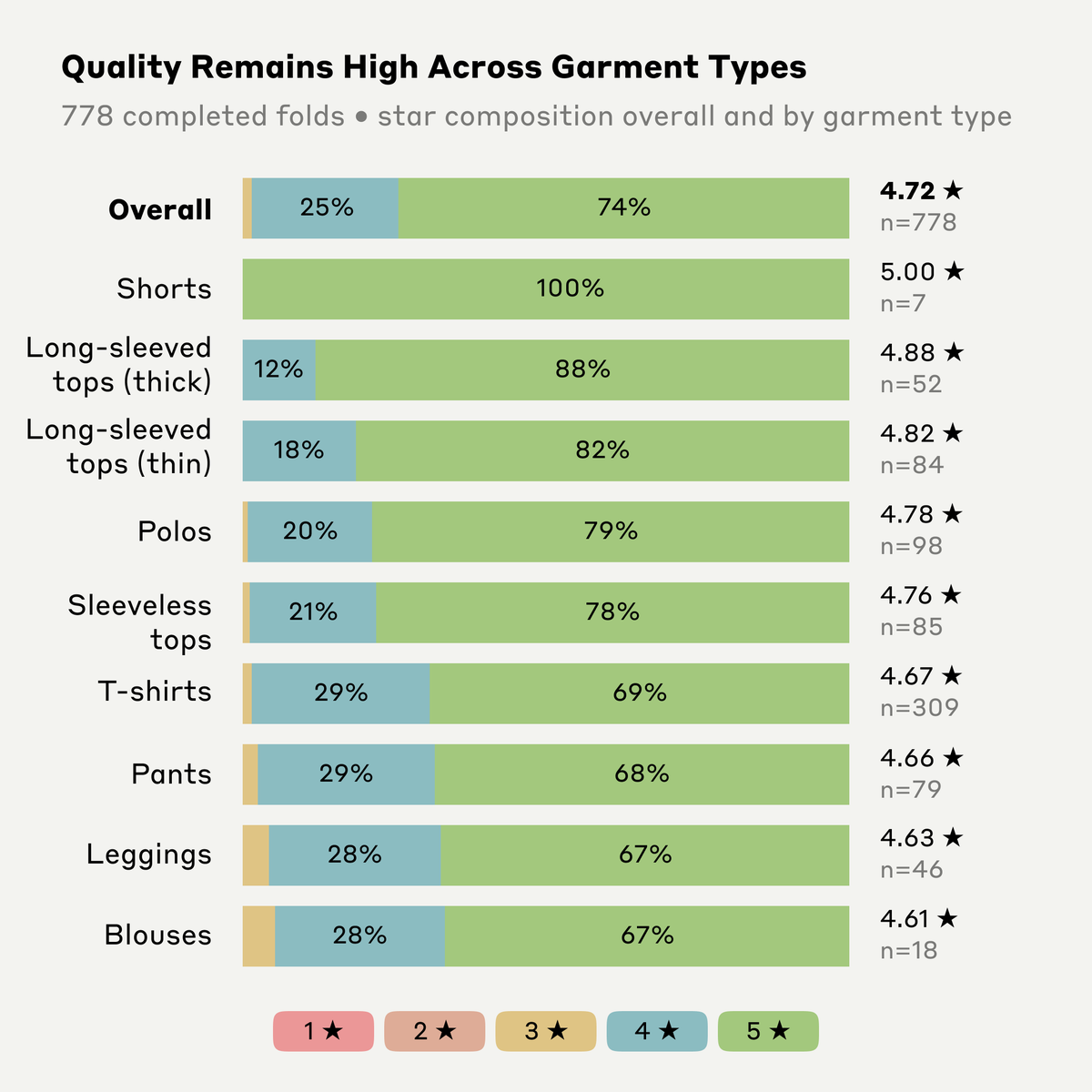
ACT-2 also achieved human-level fold quality: receiving an average rating of 4.72/5, with 98.3% earning four or five stars.
Laundry is our first Solve of many. Our recipe is so general that scaling data and compute gives us predictable improvements.
Unlocking one Solve accelerates the next Solve.
The same ACT-2 model is learning to vacuum, organize toys, zip clothing, and turn pants inside out.
This fall, ACT-2’s first Solve enters homes through our Beta Program, the final step towards fully autonomous home robot deployment.
Full technical report: https://t.co/oVR2TAdlHg
Introducing ACT-2 Preview
The first robotics model to unify broad generalization with high reliability. A single fine-tuning example can teach Memo a new behavior that generalizes.
Zero shot, real unseen homes, 99% success rate.
The project I've been leading is done, and it's already a big unlock for the company. Can't share details yet, but announcements soon from @sundayrobotics !
Personal update: I've joined @sundayrobotics.
Two questions ran through my whole PhD: how to learn from scalable human data, and how to build general-purpose robots.
Trying to answer them convinced me of one thing: general-purpose robots will never come from better models alone. It takes tight iteration across data, hardware, model, control, and evaluation. Every loop you can shorten matters.
My first dinner with @tonyzzhao and @chichengcc turned into a four-hour conversation. I walked away realizing how much we saw eye to eye: scale the data, think full-stack, start from the problem you want to solve instead of the idea you want to win.
So getting to work at Sunday is a dream come true, a place to solve generalization with the full breadth of human data and system-level thinking, and keep chasing the questions I care most about.
After my first month in, two things stand out: Sunday’s full-stack team iterates unbelievably fast, and the energy when everyone is aligned on the same vision is electric. This speed and energy is exactly why what used to feel impossible now feels close.
Home robots, the frontier physical AI in the hands of ordinary people, were long seen as a distant dream . At Sunday, I watch this dream take shape every day. I'm convinced there's real research-market fit here: foundation models and home robots point toward the same north star, generalization, not specialization, because every home is different.
Excited for the zero-to-one moment ahead.
Two weeks at Sunday Robotics and the velocity is insane—watching our hardware, software, and ML improve in real-time every single day is a masterclass in building.
This fall, Memo enters our homes to take over the chores, finally giving people their time back!
Join us!
We raised $165M at a $1.15B valuation to stop doing demos.
2026 is about 1) deployment and 2) research. We will start shipping Memo with our new frontier models in a few months.
Our series-B is led by Coatue, with Thomas Laffont joining the board. ->🧵
We raised $165M at a $1.15B valuation to stop doing demos.
2026 is about 1) deployment and 2) research. We will start shipping Memo with our new frontier models in a few months.
Our series-B is led by Coatue, with Thomas Laffont joining the board. ->🧵
MEMO IN HOMES THIS FALL! 🤖
I feel immensely lucky to be part of this team audacious enough to take on one of the biggest challenges in robotics, and delivering to homes with intention, transparency, and care.
In celebration of our Series B announcement today, here's what I observed as the 7th employee @sundayrobotics:
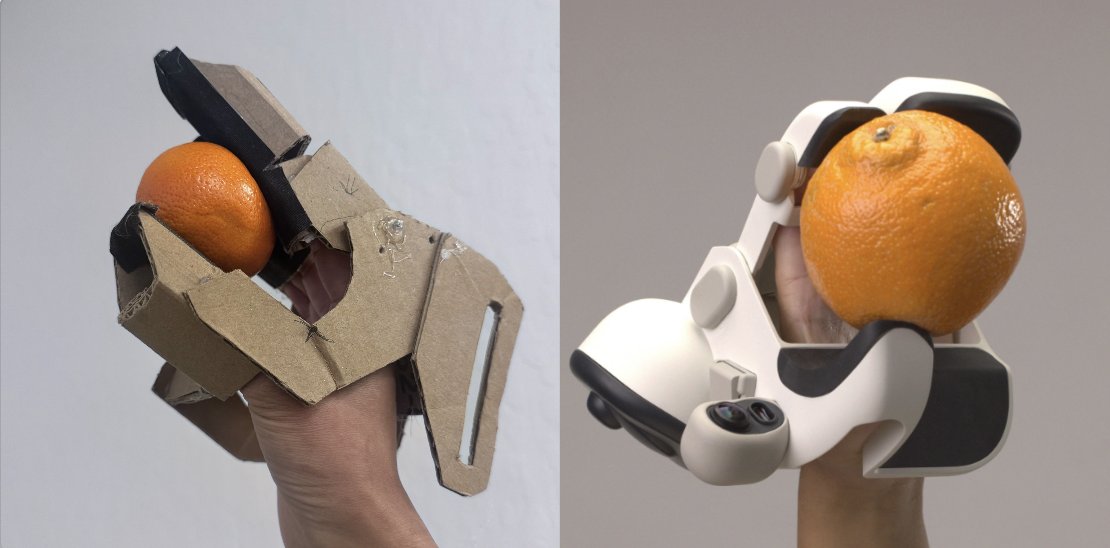
1/ Full-stack is everything. Our Memory Glove took 50+ iterations from hardware to ML.
Left: first prototype 2024. Right: latest gen.