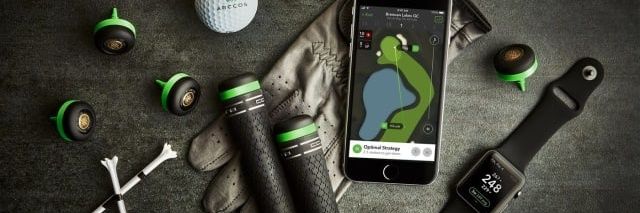
Do not compare golf GPS watches using the headline days figure.
Check the exact model's golf/GPS mode, your longest round and leave a charging buffer.
https://t.co/kr7421Ecdb
Ball data shows what the shot did. Club data can help explain how it got there. Our research-led guide cuts through the numbers before you buy a launch monitor: https://t.co/OinLMsYL0i
GPS watch, marker and laser disagree? They may be measuring to different points.
Our new research-led guide explains what to check before blaming the watch: https://t.co/Z1qJdhUDsJ
Before buying a launch monitor, measure four zones: device to ball, ball to screen or net, side clearance and headroom. That check can save a costly home-setup mismatch: https://t.co/PWZxRoK8FH
Using a rangefinder in a competition? Distance-only information can be allowed, but slope/elevation mode is not. The practical Rule 4.3 check: https://t.co/jxEBY59g3E
GPS watch in a competition? A GPS distance can be allowed, but the Rules, event terms and your watch settings all matter. Our research-led checklist: https://t.co/lDfb6x4SYf
Buying a golf GPS watch? Check what happens after any trial or included year. The price on the box is only part of the cost. Our research-led checklist: https://t.co/1BcbM3GDYX
Projector lumens are not a one-number golf simulator decision. Check room light, screen size and placement before comparing specs. Research-led guide: https://t.co/Jsro305F8e
A simulator PC is not a “buy the biggest spec” job. Start with the software, then match graphics, memory, storage and display to its official requirements.
https://t.co/HLZIBrgSZx
Launch monitor data only helps when your setup is repeatable. Our research-led checklist covers target line, ball position and the reason your own device guide comes first.
https://t.co/mlhja1gHJV
GPS watch or handheld GPS? A watch wins for quick yardages. A handheld earns its place when you want a bigger hole view before decisions. Research-led guide: https://t.co/HpA4GufuAY
Will a simulator projector fit your room? Start with image width, calculate the lens-to-screen distance, then check swing clearance.
Research-led guide: https://t.co/4uomnbO3aA
Your launch monitor is only half the decision. Before paying for simulator software, check compatibility, included features, renewal terms and PC needs.
Research-led guide: https://t.co/5PKnNQdeKa
Shot tracking tells you where strokes leak away. A launch monitor helps you practise the possible fix. Which feedback loop do you need first? https://t.co/hJjW9bcxnJ
Most golfers do not need special balls for every launch-monitor session. Use a clean standard ball for basic practice. Marked balls matter only when your monitor needs them for a specific metric. https://t.co/y0Amrf1yQD
Full mat or hitting strip? A mat suits portable home practice. A strip suits a fixed simulator bay, if you plan the base and height.
Research-led guide: https://t.co/5nE9ZrGpvF
A launch monitor measures shots. A simulator is the full setup built around that data. Start with the monitor for feedback, or build the simulator if virtual golf will make you practise more. https://t.co/eSvydlXH7m
Net or impact screen?
A net suits practical home practice and flexible rooms. An impact screen makes sense when the space is ready for projected rounds.
Guide: https://t.co/36zewHzAsW
You can use a launch monitor outdoors. But a clear range does not remove the setup work: level the unit, set a target line and give it the ball flight its manual requires.
Research-led guide: https://t.co/3Giqj33mx1
Launch-monitor accuracy is not one magic number.
Keep setup, space and ball choice consistent, then look for repeatable trends rather than one perfect reading.
Guide: https://t.co/mJjTLtvNfs