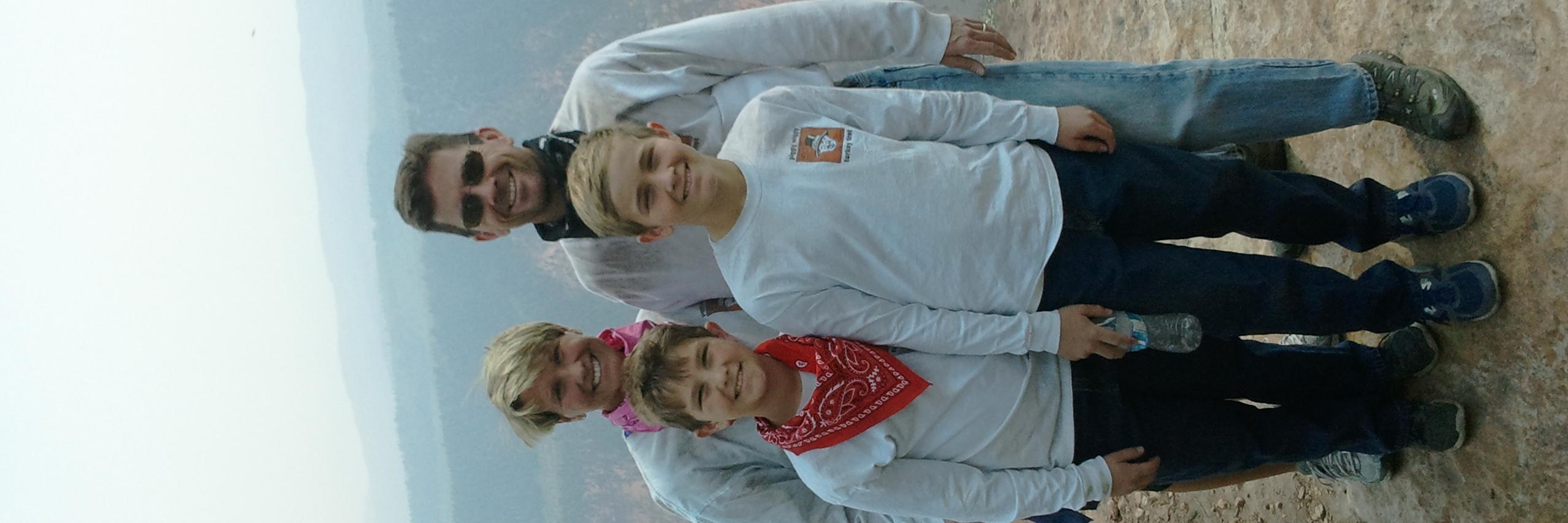
1/7 As you know, I’ve been trying to get custom drinks at McD’s for over a decade. This #McDWW26 show was out of a dream for me. We had gigantic McCafe booth dropping some wild concoctions everyday. Here’s a thread on all the diff drinks at our Worldwide Convention. Tell me which one you want to try!
The booth couldn’t keep up with the Obe Matcha - the color alone drew everyone to it.
Chicago lost the Bears this week. A team that's been in the city since 1921.
They didn't lose them to a bigger market or a better deal. The Bears decided they'd rather be a tenant in Indiana than deal with Illinois for one more year.
Think about how badly you have to run a place for that to be the smart move.
They lost them for two reasons.
The people running Illinois would rather villainize a builder than keep one. And they're bad at their jobs.
In 2021 the Bears spent $197M on the old Arlington Park racetrack.
Before they could break ground, Cook County valued the empty lot at $192M (Bears said $60M). They were salivating at the chance to extort a building that didn't even exist yet.
That fight dragged on for years.
The Bears were ready to put $2B into the stadium. All they wanted was a promise the county wouldn't reassess them into oblivion, plus $855M for infrastructure everyone uses. Roads, transit, utilities. A $3B project, two thirds of it private money pouring into Illinois.
Springfield had since 2021 to get this done. They dragged it to the final night of session, passed it through the Senate at 3:39AM, and the House went home without voting.
So now it's all gone.
The funniest part? This started because Cook County tried to grab the tax early. They knew a built stadium would pay $53M a year. Now they get under $4M on a vacant lot. No jobs, no buildout, no new anything.
Congrats on fighting for scraps and losing the whole prize.
Pritzker: they're "an $8.5B valued business" that doesn't need propping up.
But be smart for a second. Almost every NFL city throws in public money for a stadium. Not charity. The return is real. Tourism, hotels, restaurants, jobs, game days, property tax on a huge development. The math works.
Indiana did the math. While Illinois sat on it for years, Indiana passed a bill in months, put up $1B, and took the team.
And the Bears took a worse deal to get there. In Illinois they were going to own their stadium. In Indiana they rent it from the state. A team that wanted to build its own home gave up ownership just to escape Chicago.
Nobody won but Indiana. The Bears lost their stadium. Illinois lost the team, the $2B, and $53M a year in taxes.
Pritzker after they left: "I wasn't willing to give up billions of dollars of taxpayer money to give it to a billionaire-owned family or team."
There it is. "Billionaire-owned."
That's how Democrats talk about any business right before they run it out of town. Call them a billionaire, act like you're saving working families, take a victory lap while the tax base drives across the state line.
Meanwhile they're running the whole state into the ground. And you already know how this ends. You're living in it.
Pensions are $143B in the hole, worst in the country and not close. You pay $6,285 a year in property taxes, double the $2,969 national average, for a city that's $1.15B in the red. The mayor called its finances "the point of no return."
When you run things this badly, you sell what's left.
They leased the parking meters for 75 years to Morgan Stanley and a sovereign wealth fund in Abu Dhabi. Took $1.15B and burned through it in two years. The investors already made it all back, with 58 years left to collect.
Sold the Skyway. Sold the downtown garages. Every asset that made money, gone for one check.
But a fixed property tax rate for a team that's been here 106 years? That's "propping up billionaires."
Companies are leaving. Boeing for Virginia. Caterpillar for Texas. Citadel for Miami. In 2023 alone Illinois lost 56,000 people and $6B in income to other states. The ones who left earned a third more than the ones who moved in.
Indiana didn't outbid anyone. AAA credit, 16 years straight. A $676M surplus. Fourth-lowest debt per person in the country. They just weren't a disaster.
Illinois could have collected $53M a year. It chose zero. Ignore all the bad management but make sure to stick it to those evil, pesky billionaires.
Ray’s Rock - Omaha Beach
On the morning of June 6, 1944, 23 year old Staff Sergeant Arnold “Ray” Lambert came ashore with the first wave of the 1st Infantry Division on the eastern side of Omaha Beach. At this small patch of concrete he saved nearly 20 lives:
The division came under intense fire from several German bunkers surrounding the entrance to the Colville Draw (one of two exits off Omaha Beach). Ray, a medic, immediately went to work.
He was shot in the arm. Moments later he was hit by shrapnel in the leg, but Ray kept pulling men to safety. He pulled nearly 20 wounded soldiers to cover behind this 8ft wide obstacle, treating each soldier before going out in search of others.
After several hours under fire, while pulling a wounded soldier from the ocean, he was struck by a landing craft. It dropped its ramp on top of him, breaking his back. He fell face down in the water, drowning. The craft backed up and nearby soldiers pulled an unconscious Ray to safety, eventually evacuating him off the beach.
Remarkably, Ray had already earned two Silver Stars and three Purple Hearts in Sicily and North Africa, prior to landing in France. But here in Normandy his war would end.
He awoke in a hospital back in England a day later. In the next bed over was his brother, who had also been wounded at Omaha.
When asked about his work on D-Day, Ray simply said, “I did what I was called to do.”
Ray Lambert passed in 2021 at 100 years old. He exemplified the best of American grit and why remembering this day is so important.
90% of the soldiers on the first boats to hit the beach didn't live to see the end of the day. Look at those faces. Some of them never made it to 18.
Never forget that they paid the ultimate price for our freedom. We live our lives the way we do because of them.
this is just the most ridiculous AI application i've ever seen lol
a Peter Thiel-backed startup that makes AI collars for cows is now worth $2 billion
and the more I read about it the cooler it gets. here's how it works:
every cow wears a solar-powered collar that talks to a network of radio towers and an app on the farmer's phone
instead of building physical fences, the farmer draws the fence on a map in the app, and the collar keeps each cow inside that invisible line using GPS
when a cow drifts toward the edge, the collar plays a sound to steer her, and a gentle vibration tells her which way to go.
it's like how a car beeps as you back up toward a wall
the cows learn the cues in a few days
so now a rancher can move an entire herd to fresh grass by sliding the fence on a map, without driving out to open a single gate
and that same collar is reading each cow's body the whole time.
it takes five readings per second on every animal, so the AI can catch a cow that's sick, injured, ready to breed, or about to give birth before a person would ever notice walking the field
so it's basically like WHOOP for cows too lol
and they gave the AI behind it the perfect name: the Cowgorithm
it's been trained on more than 7 billion hours of real cow behavior, which is why Halter calls the data its real asset and moat.
they know what a normal cow looks like better than anyone, so they can flag the odd one out instantly
it's already on more than 1M cattle across New Zealand, Australia, and a bunch of US states.
California even used it on public land to graze cattle in patterns that clear dry brush and slow down wildfires
costs about $5 to $8 per cow per month
a job that used to mean barbed wire, gates, and driving the fields all day is now mostly 1 person on their phone
An English engineer wrote a calculus book in 1910 opening with the line "what one fool can do, another can," and proved that almost everything making math feel impossible was put there on purpose by people who wanted it to stay exclusive.
His name was Silvanus P. Thompson.
He was a physicist, an engineer, a Fellow of the Royal Society, and a professor at the City and Guilds Technical College in London.
He had spent his entire career teaching calculus to working-class engineering students who needed the math to actually do their jobs, and he had watched generation after generation of bright kids walk out of math classrooms convinced they were stupid.
He knew they were not stupid. He knew exactly what was wrong, and he was about to say it in print in a way that would get him quietly hated by every academic mathematician in Britain.
In 1910 he published Calculus Made Easy. He published it anonymously at first, listing the author only as F.R.S., which stood for Fellow of the Royal Society. He did not want his name attached to it until he saw how the establishment was going to respond. Because the prologue of the book was not a polite introduction. It was an accusation.
He wrote that calculus was not actually hard. He wrote that the people writing the standard textbooks were what he called "clever fools" who deliberately took the easiest parts of the subject and presented them in the most complicated way possible, because doing so made them look more impressive.
He wrote that they "seldom take the trouble to show you how easy the easy calculations are" and instead "seem to desire to impress you with their tremendous cleverness by going about it in the most difficult way."
Then he opened the first chapter by telling readers something nobody had been willing to admit out loud. The reason calculus felt impossible was not because calculus was impossible. It was because the symbols had been chosen to feel impossible. The notation looked like ancient ritual on purpose. The Greek letters, the formal epsilon-delta definitions, the abstract limit proofs that opened every standard textbook, were not how Newton and Leibniz had originally thought about the subject. They were a 19th century renovation of the field done by professional mathematicians who wanted calculus to feel like a closed shop.
Thompson refused to use any of it.
He went back to the way Leibniz had thought about it 250 years earlier. The letter d in front of a variable, he told his readers, just meant "a little bit of." That was the whole secret. dx meant "a little bit of x." dy meant "a little bit of y." dy/dx meant "a little bit of y divided by a little bit of x," which is just how steep the curve is going at that exact moment. Integration was the opposite. It just meant adding up all the little bits.
That is calculus. That is the entire subject. Everything else is technique, and the technique only works once you understand what you are doing.
A 12-year-old can follow that explanation. A 12-year-old cannot follow the opening chapter of a typical university calculus textbook. The gap between those two facts is the entire reason most adults walk around believing they are bad at math.
The book became one of the bestselling math books in history. Over a million copies. Still in print 115 years later. Still recommended by physicists, engineers, and self-taught learners as the only calculus book they actually finished. Martin Gardner revised it in 1998 and the foundation of the book did not need to change because Thompson had built it on Leibniz, not on the academic conventions that have come and gone since.
The deeper point Thompson was making is the part that should haunt anyone reading this in 2026.
Difficulty is often a marketing strategy. It is not always a property of the subject. When a discipline is taught in a way that feels impossible, the difficulty is doing a job for someone. It is keeping the field small. It is protecting the salaries and the status of the people already inside it. It is filtering out the kinds of people who would otherwise show up and crowd the room.
This happens in math. It happens in law. It happens in medicine. It happens in finance, in machine learning, in philosophy, in software. Every field has a layer of jargon and notation and ritual sitting on top of a core idea that is usually much simpler than the people inside the field want to admit. The jargon is not there to communicate. It is there to gatekeep.
The way you recognize a real teacher is that they keep stripping the ritual off. The way you recognize someone protecting their priesthood is that they keep piling it on.
Thompson finished his prologue with five words that are the entire spirit of his project. "What one fool can do, another can." He meant it as both a joke and a threat.
If a working-class engineering student in 1910 with no Greek and no Latin and no university privileges could learn calculus from a 200-page paperback, then so could anyone the establishment had been excluding for the previous 200 years.
Most subjects you have given up on were never as hard as the people teaching them needed you to believe. You were not stupid. The course was designed to make you feel that way.
What one fool can do, another can.
As Democrats demand the removal of the masks of ICE agents, a protester was shown yesterday yelling at an agent, "I've got your face. I'll kill your whole f**king family. You whole f**king family is dead. Your child, your wife, and all are dead. I have your face mother f**ker. You re dead."
We uncovered something far bigger than I ever expected. After seeing coordinated false attacks against the Utah data center project, we brought in an advanced data science team to trace where the content was coming from and the results were shocking. What we found led back to organized networks, political activist groups, and funding trails tied to massive international entities. We dug through IRS 990 filings, tracked IP data from around the world, and uncovered what appears to be a coordinated campaign targeting energy and data center projects across multiple regions.
I shared 90 pages of evidence with federal law enforcement and raised concerns directly with contacts at the White House. This isn’t speculation. The filings, funding records, dates, and connections are documented. There’s a coordinated PR war happening around energy infrastructure and data centers, and we’re not going to ignore it.
Friend: Bro I accidentally challenged a chef.
Me: ...please explain carefully.
tiny okonomiyaki restaurant in Hiroshima.
chef cooking directly in front of customers.
Friend watching too confidently.
dangerous energy already.
Chef: You cook?
Friend: A little.
Chef: Ah.
that "ah" carried centuries of judgment.
few minutes later chef suddenly hands him spatula.
ENTIRE RESTAURANT turns to watch.
Friend whispering: WHY WOULD HE DO THIS.
Me: Because your mouth wrote checks your skills can't cash.
Friend tries flipping okonomiyaki.
absolute disaster, thing folds in half like collapsed government.
one businessman physically turns away.
Chef grabs spatula dramatically.
repairs damage with speed and precision of trauma surgeon.
then quietly says: Ingredient spirit became confused.
I almost blacked out laughing.
Friend apologized like he'd dishonored family bloodline.
Chef eventually gave him free drink out of pity and educational concern.
Me: Bro I think this ramen shop is illegal.
Friend: What.
tiny alleyway in Tokyo.
NO sign outside, just one red lantern and suspicious confidence.
inside: five seats, one chef, one jazz song playing on loop like psychological experiment.
Chef points silently.
we sit, no menu.
Me whispering: I think we entered food mafia.
Chef: Regular or dangerous.
Friend: ...what does dangerous mean.
Chef: You cry a little.
Me instantly: Two dangerous.
Friend: I hate that man.
ramen arrives looking innocent.
first bite.
immediate spiritual collapse.
I could hear colors.
chef watching calmly while I fought for citizenship.
random businessman beside me nodding respectfully: Good suffering.
Me crying but refusing to quit: I PAID FOR THIS PAIN.
then chef suddenly places extra chili paste in front of us.
Friend: Brother why.
Chef: You still speaking clearly.
THIS MAN WAS TRYING TO LEVEL THE ENCOUNTER.
by the end I looked like I'd seen war.
chef finally smiled slightly and said: Not bad.
most terrifying compliment I've ever received.