So what happens now for Class of 2022 players hoping to play a fifth year?
With the Colorado ruling now paused, there is no longer one blanket court ruling protecting Class of 2022 athletes across the country. That means players who were relying solely on the Colorado decision may need to seek legal protection in their own state to remain eligible for the 2026-27 season.
Importantly, this does not erase the separate state court rulings already in place. Players protected by those individual rulings may still be eligible.
The biggest factor now is time. Players without separate protection may need to move quickly to seek a temporary restraining order or other court relief with the season approaching.
The Colorado case itself is also not over. The plaintiffs can ask the court to reconsider the stay, while the larger appeal continues.
For now, what briefly looked like a broad fifth-year opportunity for the Class of 2022 has shifted back to a state-by-state and case-by-case fight for eligibility.
Another major development has shifted the Class of 2022 fifth-year eligibility landscape.
The U.S. Court of Appeals for the Tenth Circuit has granted the NCAA’s request to stay the preliminary injunction in Wisne v. NCAA, temporarily pausing the Colorado ruling that had provided fifth-year eligibility protection to qualifying Class of 2022 athletes.
For now, Class of 2022 athletes who exhausted four seasons of eligibility are considered ineligible for the 2026-27 season unless they are protected by a separate temporary restraining order or injunction.
This is not a final ruling on the case. The Colorado injunction has been put on hold while the NCAA’s appeal moves forward on an expedited timeline.
Meanwhile, separate eligibility lawsuits continue across the country, meaning some athletes protected by other court orders may remain eligible while the broader Class of 2022 awaits the next decision.
The fifth-year eligibility battle is far from over, but for now, the class-wide protection that opened the door for thousands of Class of 2022 athletes has been paused.
The Class of 2022 fifth-year eligibility movement continues to reshape college basketball.
With another year of eligibility now in play, a growing list of Class of 2022 players have found new homes for the 2026-27 season, giving programs across the country an opportunity to add experienced talent to their rosters.
Which fifth-year addition do you think will make the BIGGEST impact this season? 🤔⬇️
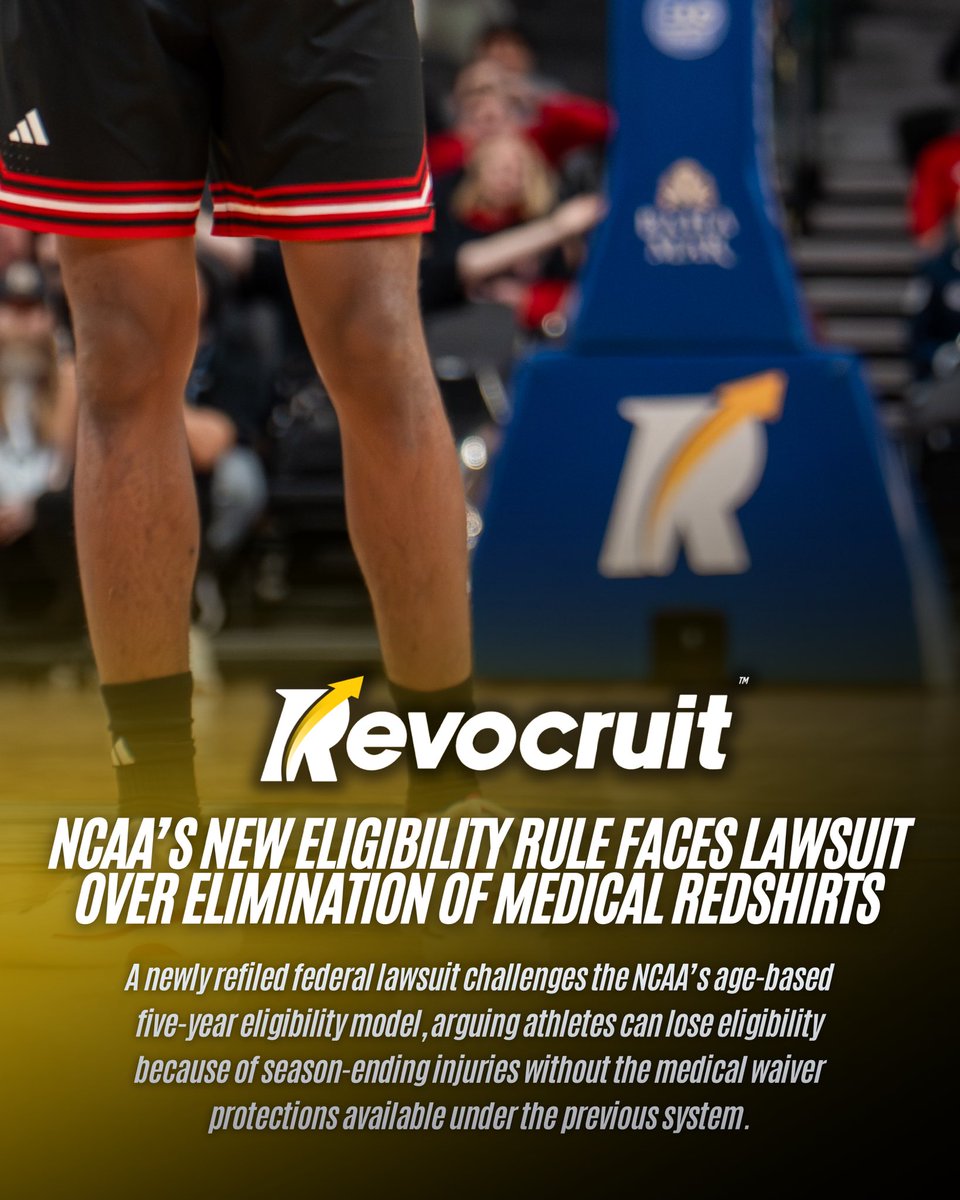
The NCAA’s new age-based eligibility model is facing another legal challenge — this time with medical redshirts directly in the spotlight.
Campbell and other plaintiffs have refiled their lawsuit in Colorado federal court challenging the NCAA’s new five-year eligibility model and its elimination of traditional hardship and medical waivers.
Under the new system, an athlete’s five-year eligibility clock generally continues to run even if a season-ending injury prevents them from competing. The NCAA maintained limited exceptions for circumstances including pregnancy, military service and official religious missions, but the previous medical-redshirt system is largely eliminated.
The plaintiffs argue the rule can prevent athletes from receiving a full five years of competitive eligibility because of circumstances outside their control, including serious injuries.
This is a lawsuit challenging the rule — not a ruling against the NCAA. But it puts another piece of the NCAA’s new eligibility model directly in front of a federal court as legal challenges to college sports eligibility continue to grow.
The NCAA has been denied in its attempt to pause the Class of 2022 eligibility ruling.
Judge Charlotte Sweeney denied the NCAA’s Emergency Motion for Administrative Stay and Motion to Stay Preliminary Injunction Pending Appeal in the Wisne case.
The NCAA had asked Sweeney to pause her preliminary injunction while its appeal moves forward, arguing that the ruling was creating major disruption ahead of the 2026-27 college sports season.
Sweeney declined, writing that the plaintiffs met their burden for injunctive relief while the NCAA did not meet its burden for a stay.
What does that mean? The preliminary injunction remains in effect, keeping fifth-year eligibility protections in place for qualifying Class of 2022 Division I athletes while the legal battle continues. The NCAA’s appeal itself is still ongoing.
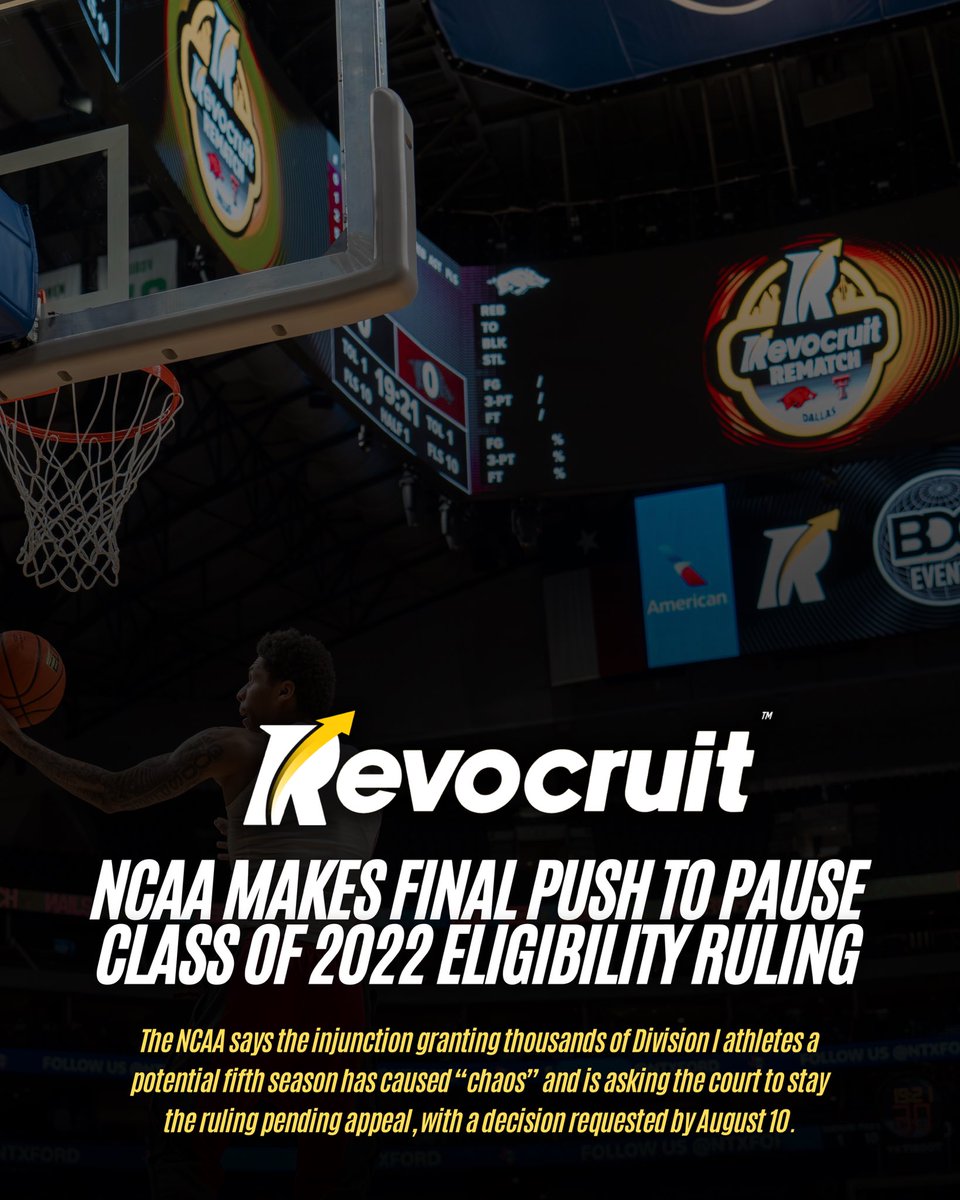
Latest: The NCAA is making its final push to pause the Class of 2022 eligibility ruling.
In its latest filing in the Wisne case, the NCAA is asking the court to stay the preliminary injunction that opened the door for qualifying Division I Class of 2022 athletes to compete for a fifth season in 2026-27 while the NCAA appeals the ruling.
The NCAA argues the injunction has already disrupted the administration of the upcoming season, saying “it is hard to take seriously” the argument that it has not caused chaos and that the 2026-27 college sports season should not be “turned upside down.”
The matter is now fully briefed and before the court, with the NCAA requesting a ruling by noon on August 10.
For now, the injunction remains in place. The court’s next decision will determine whether it stays in effect while the NCAA’s appeal moves forward.
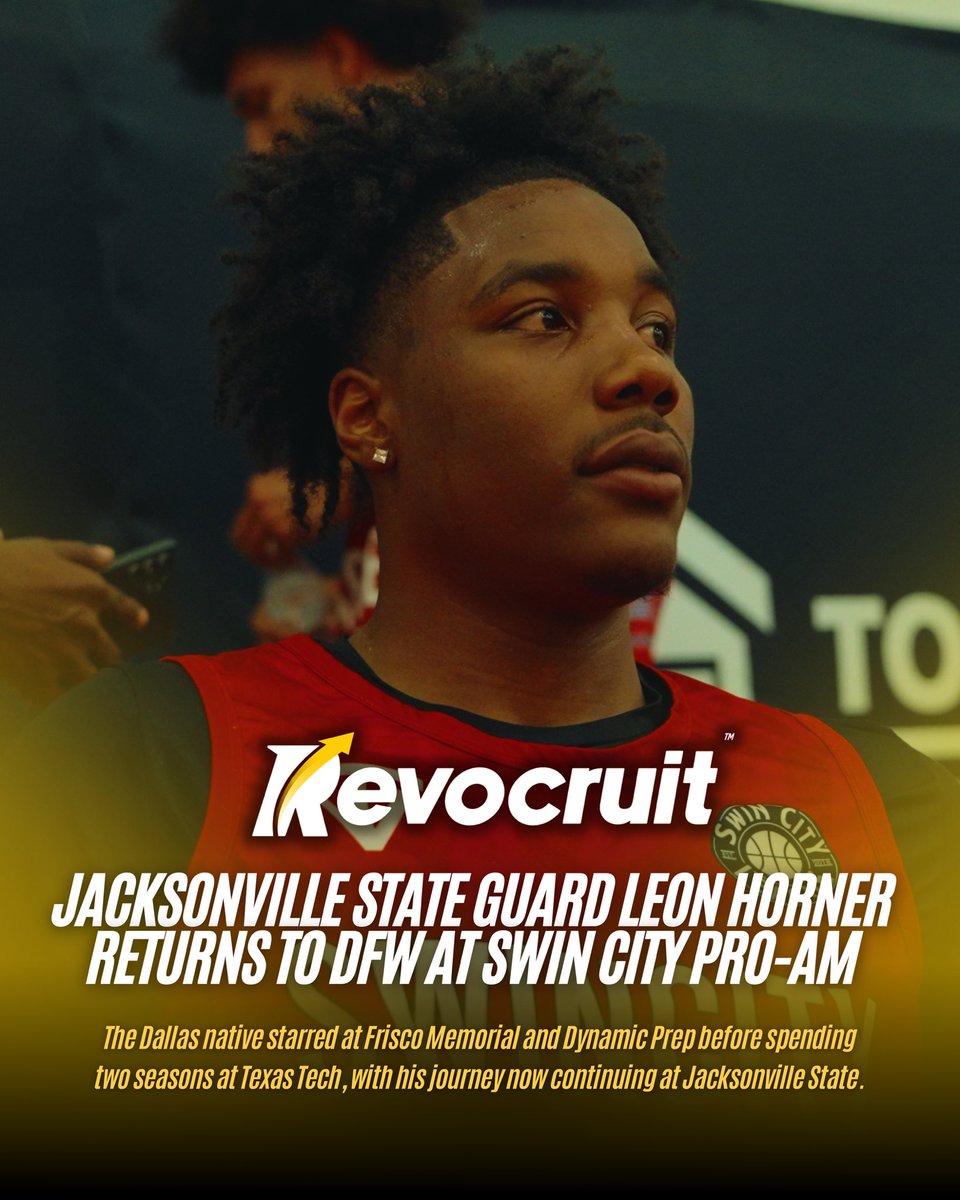
Another DFW product continuing his journey at the Division I level.
Leon Horner spent three seasons at Frisco Memorial, earning All-District honors three times before transferring to Dynamic Prep for his senior year. There, the 6-foot-5 guard averaged 14.5 points, 6.0 rebounds, and 3.0 assists per game while earning a nomination for the 2024 McDonald’s All-American Game.
Horner stayed in-state to begin his college career at Texas Tech, spending two seasons with the Red Raiders before making the move to Jacksonville State for the next chapter of his career.
Back home in DFW, Horner brought his game to Swin City Pro-Am and showed what’s ahead as he prepares for a new opportunity at Jacksonville State.
🎥 Leon Horner at Swin City Pro-Am.
Another court has ruled against the NCAA in the ongoing battle over eligibility.
A federal judge in Georgia issued a preliminary injunction preventing the NCAA from enforcing several eligibility rules against the plaintiffs in the case while the lawsuit moves toward trial.
The order:
• Grants a fifth season of eligibility.
• Allows qualifying players to compete despite missing the Transfer Portal deadline.
• Protects certain players who signed professional contracts during their period of ineligibility if they meet the court’s conditions.
• Prevents the NCAA from enforcing the “ghost transfer” rule, Rule of Restitution, or penalizing schools and coaches for allowing those athletes to compete.
This ruling is not class-wide like the recent Colorado decision, meaning it applies only to the plaintiffs covered by this lawsuit. However, it marks another legal setback for the NCAA as courts continue scrutinizing the rollout of the new 5-for-5 eligibility model.
Before he was putting up points for the Detroit Pistons, Daniss Jenkins was making a name for himself at Dallas Hillcrest. His path to the NBA wasn’t conventional.
After averaging double figures at Pacific, Jenkins transferred to Odessa College, where he averaged 15.0 points per game and reestablished himself as one of the top JUCO guards in the country. That led to an opportunity to play for Rick Pitino at Iona, followed by St. John’s, before ultimately earning his shot with the Detroit Pistons.
Now, after averaging 9.3 points per game in the NBA, Jenkins returned home and reminded everyone why he belongs.
Every stop along the way helped shape his journey. Proof that the road to the NBA doesn’t have to be linear—it just has to keep moving forward.
🎥 Daniss Jenkins putting on a show at Swin City Pro-Am in Dallas.
The Colorado eligibility ruling has been clarified.
Judge Charlotte Sweeney’s injunction only grants eligible Class of 2022 Division I athletes an additional season of eligibility for 2026-27. It does not suspend the NCAA’s transfer portal rules, roster limits, revenue-sharing caps, or any provisions of the House settlement.
That means athletes covered by the Colorado injunction are eligible to compete for a fifth season, but the ruling does not automatically allow them to enter the Transfer Portal or transfer to another school. Existing transfer rules and portal windows remain in effect.
This clarification also confirms the injunction does not block the NCAA’s new age-based eligibility rule beyond the specific class covered in the lawsuit. Athletes who fall outside that certified class—including those affected only by the age-based portion of the rule—are not covered by this injunction.
Separate lawsuits have produced different outcomes. For example, a federal court in Ohio granted a preliminary injunction for the named plaintiffs in that case, which has different implications than the broader Colorado class action.
The NCAA has already indicated it intends to appeal the Colorado injunction on an expedited basis, meaning the legal landscape surrounding eligibility remains fluid.
The latest court ruling goes beyond restoring eligibility.
Under the current preliminary injunction, the NCAA is temporarily prohibited from enforcing roster limits or the House settlement compensation caps against eligible Class of 2022 Division I athletes for the 2026-27 season.
As a result, schools are currently able to add eligible athletes covered by the ruling even if doing so would exceed NCAA roster limits. The injunction also prevents the NCAA from enforcing compensation caps established under the House settlement against those athletes.
The NCAA is expected to appeal, and the legal process is ongoing. However, this is the current state of the injunction and how it applies while the order remains in effect.
The NCAA’s additional year of eligibility has left a lot of people asking the same question: Who actually qualifies?
The answer isn’t every senior or every player from the Class of 2022. This ruling applies to a specific group of Division I student-athletes who graduated high school in 2022, entered college as true freshmen in 2022-23, exhausted four seasons of eligibility through the 2025-26 season, and meet the NCAA’s eligibility criteria under the ruling.
Those athletes are now eligible to return for the 2026-27 season.
If you’re still unsure, the graphic above lays out the timeline and eligibility requirements in a simple, easy-to-understand format.
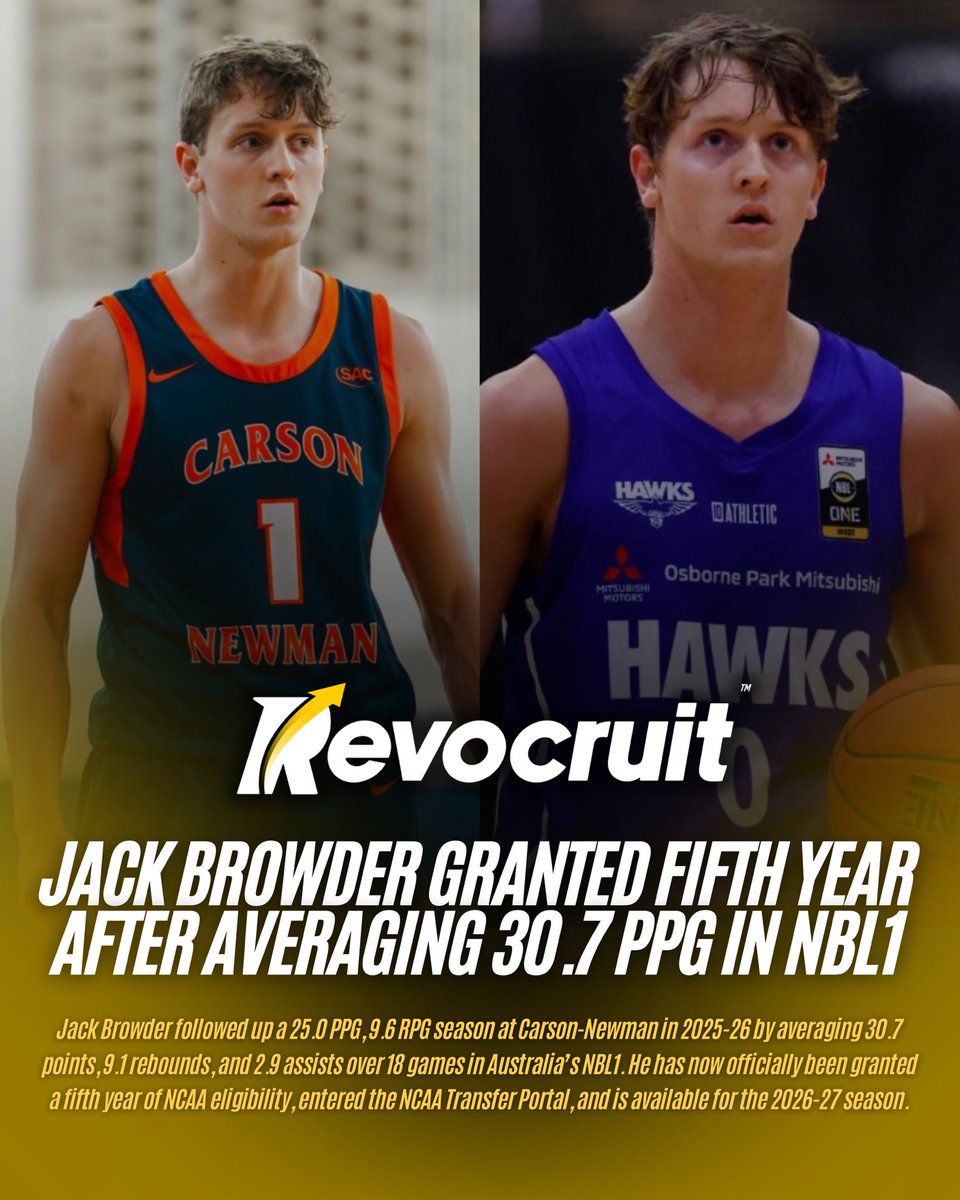
TP Latest: Jack Browder is officially available after receiving another year of NCAA eligibility and entering the NCAA Transfer Portal.
Browder averaged 25.0 PPG and 9.6 RPG during the 2025-26 season at D2 Carson-Newman before taking his game overseas, where he averaged 30.7 PPG, 9.1 RPG, and 2.9 APG over 18 games with the Perry Lakes Hawks in Australia’s NBL1.
Now available for the 2026-27 season, Browder has proven he can produce at both the collegiate and professional levels. With his combination of size, experience, and elite scoring production, he projects as one of the top late additions available in the Transfer Portal and is a player college coaches should have firmly on their radar.
Breaking News: The Transfer Portal is reopening.
Following today’s landmark eligibility ruling, the NCAA has been ordered to open a special Transfer Portal window for eligible Class of 2022 Division I athletes who exhausted their eligibility following the 2025–26 season.
The portal will be open August 3 (12:00 PM ET) through August 10 (8:00 AM ET), giving eligible players one final opportunity to find a new program before the start of the 2026–27 season.
🚨 BREAKING NEWS: A federal judge has ordered the NCAA to declare eligible for the 2026–27 season all Division I High School Class of 2022 athletes who exhausted four seasons of eligibility during the 2025–26 season.
The class-wide preliminary injunction applies across all Division I sports, creating one of the biggest eligibility rulings in NCAA history.
TP Latest: UT Arlington guard Bahsil Laster has officially entered the NCAA Transfer Portal after his sophomore season with the Mavericks. Laster appeared in 31 games during the 2025-26 campaign, averaging:
7.3 PPG
2.8 RPG
1.2 APG
19.0 MPG
Before arriving at UT Arlington, Laster starred at Harcum College, where he averaged 14.7 points, 6.4 rebounds, and 4.1 assists per game, earning recognition as one of the top JUCO freshmen in the country.
The intensity never let up.
Day 2 of the P32 JUCO Showcase brought another day of high-level competition, standout performances, and players making the most of every possession in front of college coaches.
Here are some of the top performers from Day 2 in Memphis.
College coaches: Every featured player is available to track inside the Revocruit software.
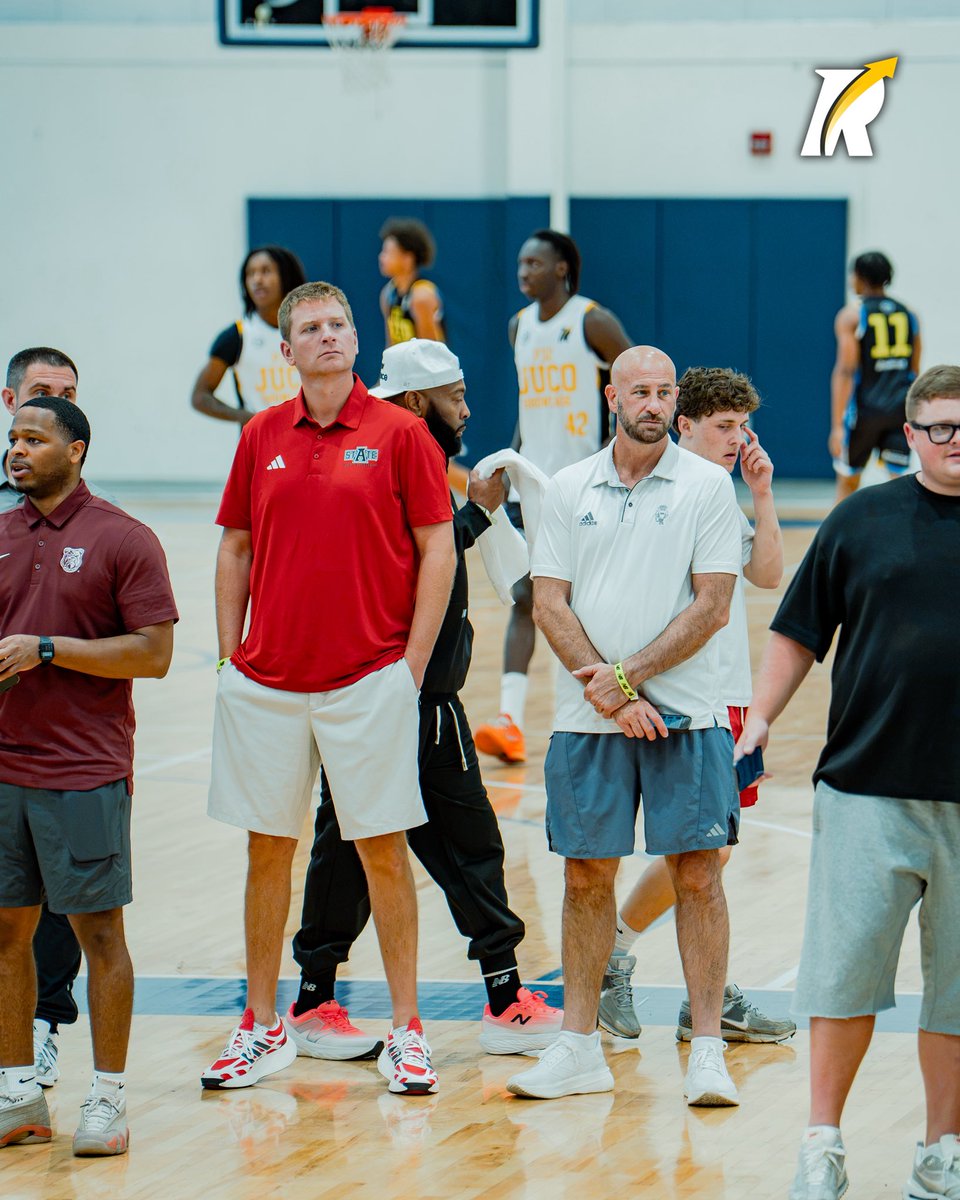
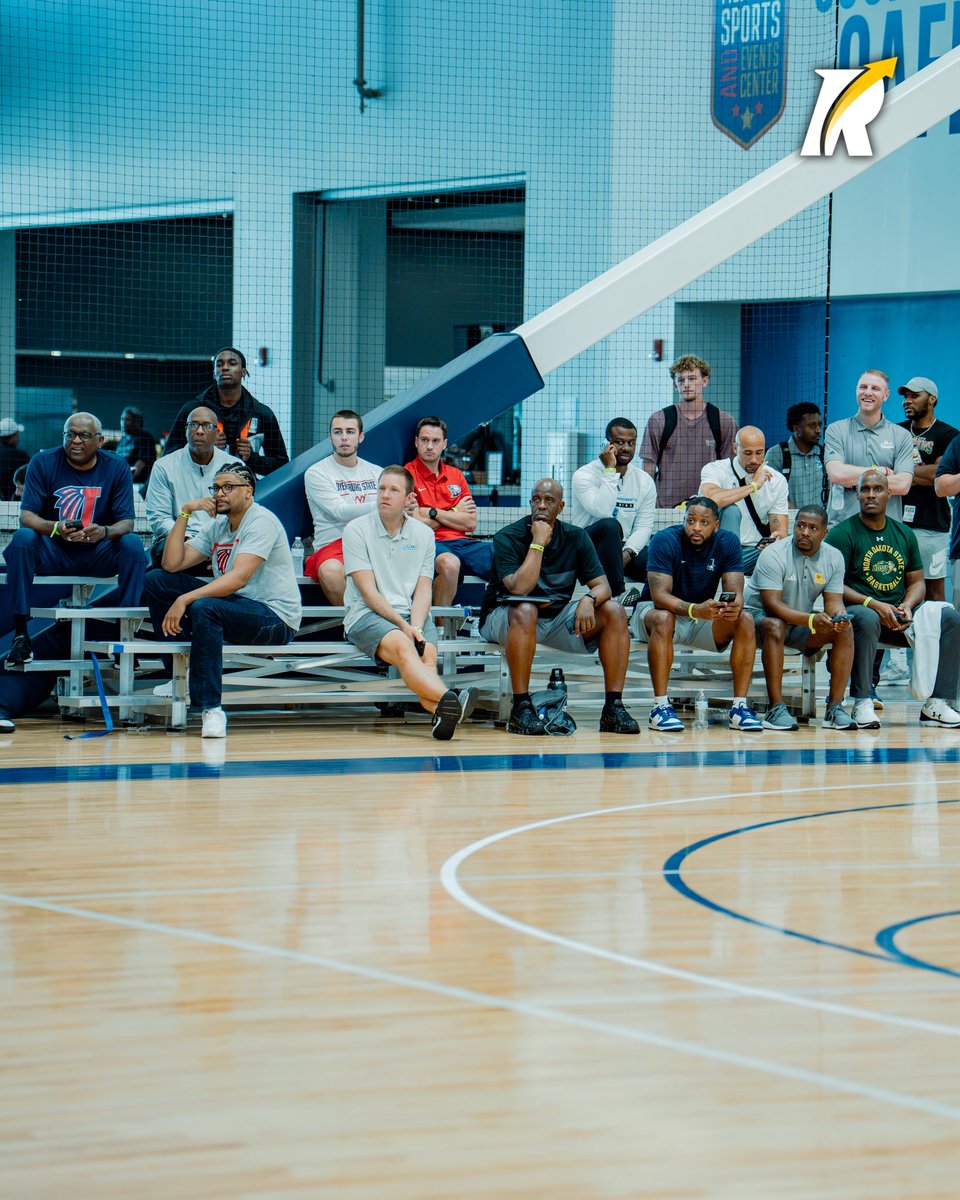
The coaches were out in full force at the P32 JUCO Showcase, Powered by Revocruit.
College programs from across the country were in the building evaluating some of the top JUCO talent, while using the Revocruit platform to track players, follow performances, and stay connected throughout the event.
A look behind the scenes at the coaches who made Day 1 one to remember.
Independence CC Pene Vaisagote put together a standout performance, pouring in 23 points at the P32 JUCO Showcase in Memphis.
With college coaches from across the country lining the sidelines, Vaisagote rose to the occasion and showcased his ability to score at all three levels. Delivering when the lights were brightest, he proved he’s a name recruiters need to keep on their radar.
Powered by Revocruit.
College coaches can track Pene Vaisagote on the Revocruit software.