The Transatlantic Policy Network (TPN) promotes the closest possible partnership between the Governments & the peoples of the European Union & the United States
A message from C4IP Executive Director Frank Cullen: This week I had the honor of participating in @TPNOnline's "Transatlantic Vision 2030" program, where leaders from both sides of the Atlantic discussed the future of U.S.-EU competitiveness.
I hope you'll click below to learn more about the event ⬇️
https://t.co/Y0t3s3PURl
Tomorrow, July 22, at Transatlantic Week 2026, C4IP Executive Director Frank Cullen will participate in a panel on U.S. and E.U. Competitiveness.
⏰ 12:30 p.m. – 2 p.m. ET
📍 Whittall Pavilion, Thomas Jefferson Building (Washington, D.C.)
More details:
https://t.co/ueShx6mluJ
Now underway at Transatlantic Week 2026 - Session 11:
US and EU Competitiveness — Next Steps?
The US and the EU have common competitiveness challenges: increasing productivity, broadening the training of their future workforce, creating secure supply chains, gaining access to critical minerals, and bolstering domestic production of core industries ranging from defense technology to semiconductors and pharmaceuticals. They are more likely to succeed if they work together.
But how should such cooperation proceed and what role can governments play in furthering that goal?
Session chaired by Lisa Schroeter (Global Director of Trade & Investment Policy, The Dow Chemical Company), and features speakers Ruth Bajada (Deputy Chief of Mission,Delegation of the EU to the USA),
Lina Gálvez Muñoz MEP (First Vice-Chair of the European Parliament's Panel for the Future of Science and Technology (STOA)), and Frank Cullen (Executive Director, Council for Innovation Promotion (C4IP)).
Now underway at Transatlantic Week 2026 - Session 10:
Defense: NATO and EU Defence Cooperation — How to Make It Effective?
All welcomed the positive outcome to the recent NATO Summit in Ankara. Europe is stepping up its defense game, with a goal of devoting 5% of national GDP to military preparedness. In an unprecedented move, the EU will help support the military buildout. This will require a dramatic increase in the production and acquisition of military technology. Expenditure on weaponry in the Ukraine war and the Iran conflict will further strain the transatlantic military industrial base, underscoring the need for unprecedented intra-European and transatlantic technological and production cooperation.
What is the role for NATO and the private sector in maximizing this allied effort? And, to further that goal, how should NATO-EU relations be enhanced in the years ahead?
Session chaired by Rishi Iyengar (Foreign Policy) and features speakers Alexandra de Hoop Scheffer (Director External Affairs Europe, Philip Morris International (PMI)), Kira Rudik (MP for Holos and Vice President, ALDE, Ukraine), Dan Caprio, Senior Policy Advisor, DLA Piper, and Geoff Browning (Director, Global Government Affairs and Public Policy, ServiceNow).
Now underway at Transatlantic Week 2026 - Session 9:
Where Can the EU and US Improve Economic and Trade Cooperation?
With the EU-US Turnberry trade agreement approved by the European Parliament but pending national government agreement and with looming new U.S. tariffs, the future of US-EU trade cooperation remains an unrealized ambition. But the importance of such cooperation for the transatlantic business community is indisputable. A common approach on access to critical minerals would benefit both economies. Closer alignment on how to deal with China would produce far more favourable outcomes for both the EU and the US.
Can Brussels and Washington develop a common response to structural overcapacity and unfair labor competition? Can they bolster transatlantic investment? As an international trading system based on predictability and accountability benefits both business communities, can Brussels and Washington cooperate on much-needed WTO reform?
Session chaired by Penny Naas (Senior Vice President, German Marshall Fund) and features speakers Mario Mueller ( Director External Affairs Europe, Philip Morris International (PMI)), Kathleen Van Brempt MEP, (Vice-President of the S&D group, European Parliament), and Bernd Lange MEP (Chairman, Trade Committee, European Parliament).
Day 2 in Washington, DC
Now underway at Transatlantic Week 2026 - Session 8:
Economy and Trade: Developing the Transatlantic Business Network
For many years the transatlantic business community has been a driving force behind efforts to deepen and broaden the transatlantic relationship. Their renewed engagement in that endeavour at a time of economic turbulence and expanding technological and geo-economic challenges has rarely been so needed as it is now. It is incumbent on American and European businesses to take a leadership role in managing the transition to a mutually beneficial future. To that end, it is timely that the TPN Transatlantic Business Network should agree on a statement of principles for operation involving key common priorities for joint actions.
Session chaired by Thomas Spiller (Vice President, Global Public Policy, Europe, Middle East & Africa of The Walt Disney Company) and features speakers Rep. Jim Costa (D-CA), Pilar del Castillo MEP (EPP Spain), Alberto Zilio (Head of European Government Affairs at Ericsson), Lisa Schroeter (Global Director of Trade and Investment Policy at The Dow Chemical Company), and Bernd Lange MEP (Chairman, Trade Committee, European Parliament).
Now underway at Transatlantic Week 2026 - Session 7:
Reception: Outlook for the Midterm Elections
Reception hosted by Allison O'Brien (Managing Director, Government Affairs at Oracle) and Matis Pellerin (Vice President, Global Government Affairs at Oracle).
Now underway at Transatlantic Week 2026 - Session 6:
What Kind of Transatlantic Partnership Lies Ahead? — Lunch Discussion
Lunch session chaired by Alberto Zilio (Head of European Government Affairs at Ericsson), James Fontanella-Khan (US Finance Editor at the Financial Times), Julia Marsh (Executive Editor, Politico, Washington), and Bernd Lange MEP (S&D Germany).
Now underway at Transatlantic Week 2026 - Session 5:
Strengthening Parliamentary Oversight in Transatlantic Governance
The US Congress and the EU Parliament are guarantors of their respective democracies and free-market economies. They face common challenges — technological change, competing security demands, and rising populism.
What can each learn from the other in exercising oversight and investigative responsibilities, including the US experience with subpoenas, hearings, and enforcement?
Session chaired by Bruce Stokes (visiting Senior Fellow at GMF and former Executive Director of GMF’s Transatlantic Task Force), Brando Benifei MEP (S&D Italy), Sandro Gozi MEP (Renew Europe), and Rep. Jim Himes (D-CT).
Now underway at Transatlantic Week 2026 - Session 4:
Digital Transformation: Current Priorities for Transatlantic Action — AI, Cybersecurity and Networks
The US and the EU have extensive common interests in the technological field, e.g., in networks, cybersecurity and semiconductors. The creation of the Trusted Tech Alliance is evidence of the urgent need to develop greater trust across the Atlantic in emerging technologies and cooperative regulation of the tech stack.
What are the most important steps that the US and EU should take together to strengthen trust and resilience in critical digital infrastructure and networks? How can business leaders, legislators on both sides of the Atlantic, citizen groups and the EU and US administrations work together to protect national security, economic resilience and personal freedoms in this new technological age?
Session chaired by Amb. Steve Lang (Senior Advisor at Crest Hill Advisors LLC and non-resident senior associate with CSIS), and features speakers Pilar del Castillo MEP (EPP Spain), Ari Schwartz (Managing Director of Cybersecurity Services at Venable, LLP), Karen Massin (Head of Government Affairs at Google), and Lina Gálvez Muñoz MEP (S&D Spain).
Now underway at Transatlantic Week 2026 - Session 3:
Digital Transformation: Risks and Rewards of Artificial Intelligence — The Skills/Jobs Agenda
Artificial intelligence is being introduced at an accelerating pace into almost all phases of modern life, promising profound benefits and significant challenges. AI is boosting productivity and innovation but also threatens profound worker displacement, with potentially disruptive political ramifications.
Can Washington and Brussels work together to develop templates for worker retraining and job creation to minimize the human and economic cost of inevitable job losses and the inevitable populist political backlash when that occurs? Should the EU and US launch an ongoing dialogue and work program to better manage the AI transition, something they failed to do with globalization?
Session chaired by Fran Burwell (Managing Director at McLarty Associates) and features speakers Matis Pellerin (Vice President, Global Government Affairs at Oracle) and Christel Schaldemose MEP (head of delegation for the Danish Social Democrats in the European Parliament).
Now underway at Transatlantic Week 2026 - Session2:
Geostrategy: Geostrategic Threats — How Should the West Act?
The geostrategic threats challenging the EU and the US are multiplying, metastasizing crises: Iran, Gaza, Lebanon, Ukraine, Taiwan. The Iran War, in particular, with its lack of pre-conflict transatlantic consultation and coordination and its disruption of the global and transatlantic economies, underscores the need for greater EU-US dialogue on the Middle East. Russia shows no signs of wanting to make peace with Ukraine while the US has cut off aid to Kyiv.
What can America and Europe do to end the Ukraine war and curtail Russian revanchist ambitions? China's intention to become the world's largest economic and military power continues, threatening American and European interests in Asia. How do the EU and US cooperate to ensure that China's rise is peaceful? How can Washington and Brussels work together to stabilize the Middle East?
Session chaired by Bernard Hagège (founder of SAS Atemation) and featuring speakers Mark Kennedy (Founding Director, Wahba Initiative for Strategic Competition - NYU
NYU Development Research Institute (DRI)), and Mark Titterington (Director-General of spiritsEUROPE).
Launching this evening with an Opening Reception, Transatlantic Week is the Transatlantic Policy Network’s signature event, bringing together legislators, senior officials, business leaders, and representatives of civil society to consider the strategic issues that shape the transatlantic partnership. This year's edition takes place at a time of considerable geopolitical, economic, and technological change. These developments underscore the importance of sustained dialogue and coordinated action between the transatlantic partners.
Transatlantic Week 2026 provides the opportunity for policymakers, the business community, and civil society to examine key challenges and contribute to the development of a stronger, more coherent transatlantic framework.
The most current documents can be accessed by scanning this QR code or by going to https://t.co/SpBtKMzWeN
The U.S.-EU relationship remains the world's most important economic and strategic partnership—when we cut red tape together, the whole world prospers. 'One Table, One Conversation' is a fitting approach for a roundtable dialogue and symbolic of the transatlantic relationship. Thank you to @TPNOnline, moderator @Nicolasdlparte, @greenbergerj, and friends for a thoughtful discussion.
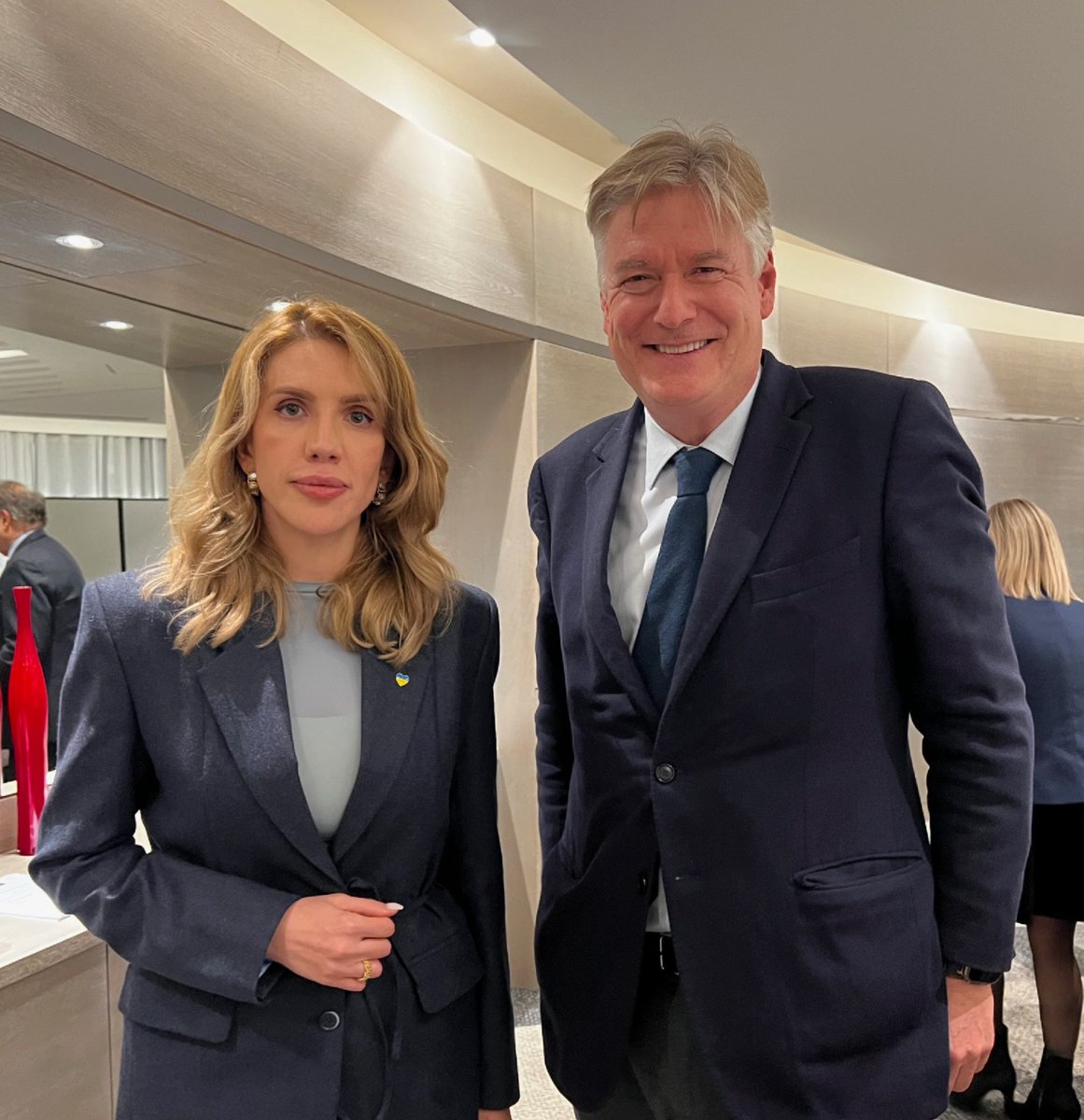
Last night, TPN was honoured to have Kira Rudik, Ukrainian MP, speak at our roundtable in Brussels. Ms. Rudik underscored the power of transatlantic partnership and made a compelling call for shared resolve and collective action.
Antonio López-Istúriz White MEP moderated the event. Thanks go to both for an engaging and informative evening!
#Ukraine #TPN #TransatlanticPartnership