FINISH THIS SEASON STRONG
Twice each week, I get the opportunity to speak at our facility's reentry workshops.
I work alongside a reentry navigator helping men prepare to return home after years -- sometimes decades -- inside prison.
And every time I stand in front of those men, I think about how strange life can be.
Because if you had met me at nineteen years old, you probably would not have imagined I would one day be speaking about leadership, discipline, healing, or reentry.
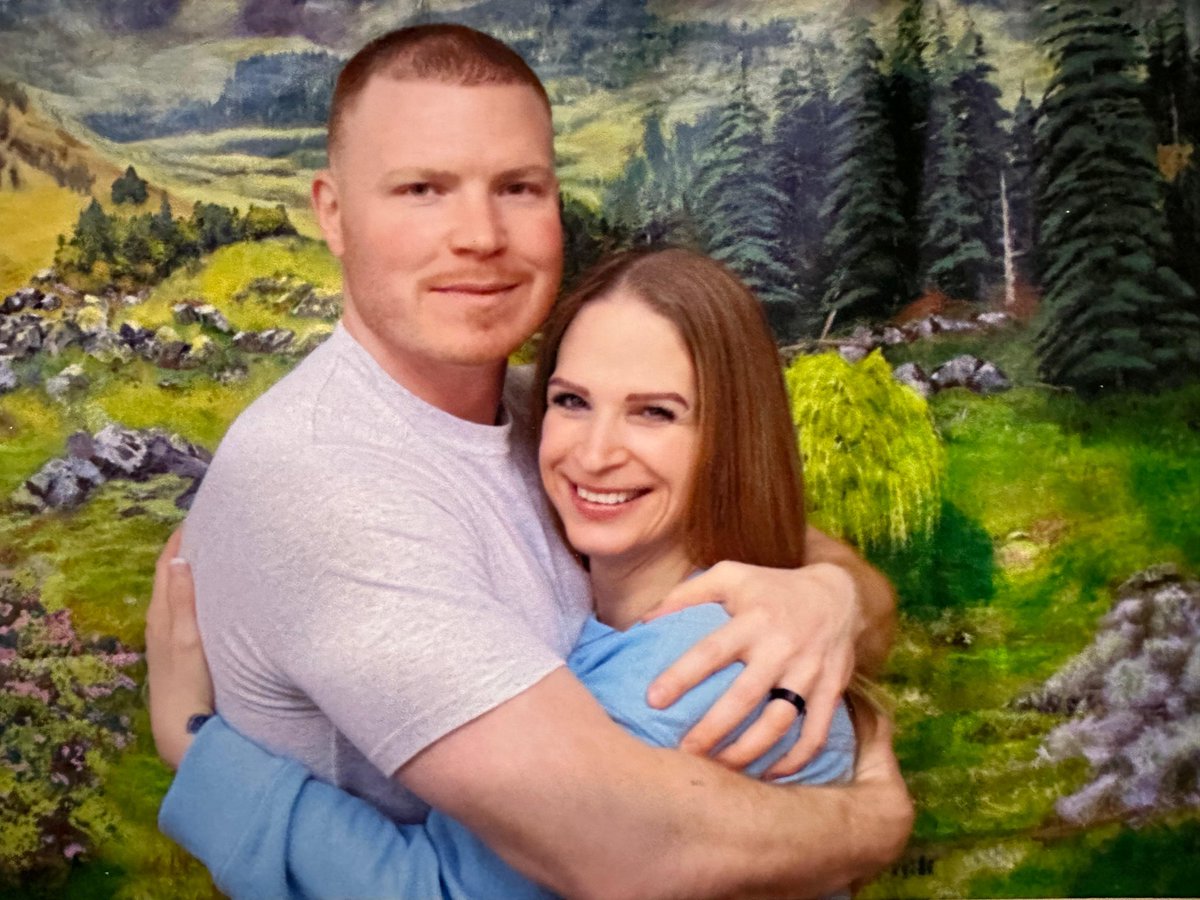
My name is Aaron Edward Olson
I’ve been incarcerated for twenty years.
I was sentenced to life for crimes I committed at 18 and 19
I turn 40 this year
Before prison, my life was chaos.
I was using drugs by age twelve.
I grew up outside Salishan in Tacoma -- a refugee housing project shaped by poverty, violence, instability, and survival.
My father was absent.
My mother was a single parent who struggled with mental health
I spent a lot of time on the streets, and some of that was homeless
When I entered the system, I could barely read.
Then I sat in county jail for four years fighting two cases.
Honestly, it was probably the darkest season of my life.
But from chaos to darkness, something started changing in me.
Not all at once.
Slowly.
The catalyst was surrendering my will and embracing God's plan for my life.
I started realizing I didn't want to be permanently defined by the worst decisions of my life.
I wanted to become something different.
Something better.
I started thinking about legacy.
And eventually I made a decision that changed everything:
If this is going to be my life
then I’m going to finish this season and every season afterward strong.
Not bitter.
Not reckless.
Not consumed by anger.
Strong, consistent, principled, accountable, with integrity.
That decision transformed the direction of my life.
When I finally reached prison, I started rebuilding myself piece by piece.
I earned every certificate and took every course
I earned a degree.
I started writing.
I published articles.
Built a podcast.
Launched a business from inside prison.
Worked with engineers and professionals
Filed a provisional patent with the USPTO.
Built relationships and projects I never could have imagined as a broken nineteen-year-old kid.
And I did all of it while navigating prison politics, lockdowns, mail delays, grief, disappointment, and the daily reality of incarceration.
And let me be honest with you:
None of this has been easy.
I’ve lost every appeal.
I spent years in solitary confinement.
I went through a divorce that nearly broke me emotionally and spiritually
I have failed more times than I can count.
But here is what I’ve learned:
Every obstacle carries the potential to become an opportunity.
Not automatically.
But if you choose to respond differently.
When my appeals failed, I could have collapsed into bitterness.
Instead, I redirected my energy.
I wrote.
I studied.
I created.
I started asking:
What can I build from this pain? Out of my unique experience?
And over time, I began realizing something deeper:
Transformation is real.
Not superficial change.
Not performative growth.
Real transformation.
The kind that changes the way you think
the way you speak
the way you carry yourself
the way you respond to suffering.
And personally, I believe God was present in that transformation even when I could not fully see it or understand it.
I believe there is something bigger than us moving through this world, willing to guide us, love us and walk with us.
Grace.
Purpose.
Calling.
Alignment.
Whatever language people choose to use, I believe human beings can tap into something greater through:
discipline
prayer
reflection
honesty
service
and intentional living.
That changed me.
Jesus changed me!
So here is what I want to leave you with today:
It does not matter how many years you have wasted.
It does not matter if you've been to prison once or ten times.
It does not matter how broken your past may feel.
What matters is what you choose to do next.
Finish THIS season strong.
Build discipline.
Develop structure.
Watch your words.
Protect your mind.
Learn emotional control.
Become dependable.
Become trustworthy.
Become someone your family can believe in again.
Because your life still matters.
Your family still matters.
Your community still needs healed people, and people willing to heal and help others heal.
And whether you fully realize it yet or not
people are counting on who you become next.
https://t.co/MYEyJLDDv9
Aaron Edward Olson's @AaronOlson1986 investigation about discrimination against incarcerated immigrants in Washington state prisons won first place for Best News at the Stillwater Awards. https://t.co/j7M2BNpvjz
Prison: Day 7,064
I've been busy from my 6x8 prison cell. Since I don't have a mortgage, car payment, normal bills or societal responsibilities, I'm going to share what your tax dollars are paying for, at least with this prisoner.
Each day I:
1. Mentor other prisoners and volunteer as a speaker in reentry workshops
2. Work on college courses (finishing my AA and already enrolled in a BA program, all thanks to a local foundation that is sponsoring my education)
3. Work on my next article (currently an investigative narrative about solitary confinement)
4. Work on my podcast, The Abolition Christian
5. Work late into the night on my start-up company (more to share on this in the coming weeks)
6. Exercise religiously
7. Pray and study the Bible with my wife
8. Harass my best friend Herman in South Africa. (Calls are relatively affordable
9. Attend numerous groups (CLO), appointments and institutional obligations and work programs.
In spite of the horrible design, some of us have managed to turn prison into a citizens university.
Prison: Day 6,998
My heart breaks for the Guthrie family. Like millions across the nation and around the world, my community of life and long-term prisoners are horrified and heartbroken for the Guthrie family. We are praying for you, praying for Nancy, and believing Romans 8:28. God is able! Blessings! Peace! Love!
I made terrible choices as a teenager, and I was sentenced, alongside my co-defendant, to life with a minimum term of 51.5 years. I was a homeless addict with a childhood filled with trauma. No denial or do-overs! Only accountability. I have spent the past twenty years in prison making amends for my wrongs, living a transformed life, mentoring special needs prisoners, ministering, growing as a human being, and most recently trying to raise public awareness through publishing and podcasting.
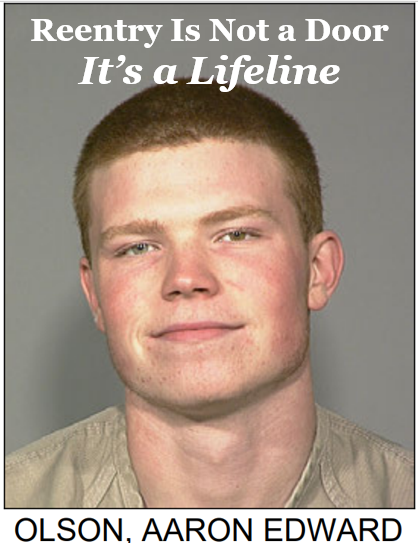
Reentry Is Not a Door - It’s a Lifeline
Host: Aaron Edward Olson
In this powerful episode, host Aaron Edward Olson shares his lived experience of nineteen years of incarcerationand the generational forces that shaped his journey. Sentenced to 51.5 years to life, Aaron offers a vulnerable, deeply human perspective on reentry - not as a bureaucratic process or a moment in time, but as a lifeline, a culture, and a collective moral responsibility.
This episode explores what reentry is NOT, what it must become, and the cost of getting it wrong. Aaron weaves together testimony, theology, social analysis, and hope, calling listeners - from legislators to faith communities to everyday civilians - into a shared vision of healing, accountability, and transformation.
This is not just a reentry conversation. This is a reimagining of public safety, human dignity, and the redemptive possibilities of community.
Episode Breakdown
Welcome and Introduction
Aaron reflects on 19 years of incarceration, his sentence structure, and why reentry remains a moving target - and a sacred calling.
Part I: Who I Am and Why Reentry Matters
A personal narrative from childhood to incarceration, accountability, healing, purpose, and the relationships that transformed Aaron’s life.
Part II: What Reentry Is Not
A redefinition:
Reentry is not paperwork, not a bus ticket, not good luck and try harder.
Reentry is not a slogan - its a culture.
Part III: What Reentry Actually Is
A blueprint for real reentry: identity reconstruction, digital literacy, trauma healing, opportunity, housing, healthy relationships, and hope.
Part IV: The Cost of Getting Reentry Wrong
What happens when we fail as a society: relapse, recidivism, family fracture, death, and lost human potential.
Part V: Living with a Life Sentence
Aaron shares the paradox of preparing for a future he may never reach and why his purpose remains anchored in creating pathways for others.
Part VI: What Reentry Should Be
A vision for humane, effective, trauma-informed, tech-supported reentry. Including the role of platforms like MyReentry in building long-term continuity of care.
Part VII: A Call to Action
A direct message to policymakers, nonprofits, faith communities, citizens, and the incarcerated: Reentry is a shared responsibility and a chance to build something better than what exists today.
Closing Reflections
Aaron shares his faith, his purpose, and his commitment to fighting for reentry even if he never gets to experience it himself.
Key Themes and Takeaways
Reentry is public safety, not charity.
Accountability and transformation require support, opportunity, and healing, not punishment.
Human beings change when they are seen, believed in, and invested in.
Recidivism is not failure of the individual - it is failure of systems and conditions.
Reentry must begin on day one of incarceration and extend beyond release.
Technology and human compassion must work together to build the future of reentry.
A life sentence does not eliminate purpose - it can deepen it.
Abolition is not destruction: it is building better systems rooted in human dignity.
Who This Episode Is For
Families of incarcerated loved ones
Formerly incarcerated people
Faith communities seeking to live out restorative values
Legislators and policymakers
Reentry organizations and case managers
Teachers, social workers, and community organizers
Anyone who believes in human dignity, redemption, or justice reform
Mentioned in This Episode
MyReentry a tech-driven, human-centered reentry platform built by system-impacted people, providing personalized digital tools, mentorship pathways, equity-driven algorithms, and long-term post-release support.
Call to Action
If this episode moved you:
1.Share this episode with someone who needs to hear it.
https://t.co/byunJsgyp7 reentry organizations in your community.
3.Write to your legislators about fully funding and modernizing reentry systems.
4.Engage with incarcerated people through your faith community, a nonprofit, or a local advocacy group.
5.Subscribe to The Abolition Christian Podcast for upcoming episodes.
Together, we can build a world where no one returns to prison
because everyone has the support to return to life.
Connect With Us
Podcast: The Abolition Christian
Host: Aaron Edward Olson
Email: [email protected]
Follow for updates: (Insert podcast or social links)
Closing Note
Thank you for listening, caring, and believing in a future more humane than the one we inherited.
https://t.co/6DqFcxMZP3
Reentry Begins at Reception: 02 with Jason Burdett
Co-Host: Jason Aaron Burdett — 30-years into a LIFE sentence and co/host of The Abolition Christian Podcast
In this episode, Jason challenges the way reentry is practiced — in Idaho as well as in private prisons. Throughout this series, rather than viewing reentry as a brief checklist at the end of incarceration, Aaron and Jason will be arguing that true reentry begins the moment a person enters the system.
Through bold analysis and lived experience, Aaron exposes the failures of historically shallow reentry strategies and paints a compelling alternative: one rooted in preparation, connection, dignity, and opportunity from Day 1 of incarceration. When reentry is designed to prepare instead of release, individuals, families, and communities all win.
Key Themes
• Reentry is not an end-of-sentence program — it’s a beginning-of-sentence responsibility.
• Systems often blame individuals for “failure” while failing to prepare them to succeed.
• True reentry must be:
o Technology-equipped
o Trauma-informed
o Employment-driven
o Housing-focused
o Family-centered
o Future-oriented
• Investing in people creates safer communities, stronger families, and economic benefit for the entire state.
• Rehabilitation is not theoretical — it’s lived.
Memorable Quotes
1. “Reentry doesn’t start 30 days before release — reentry begins at reception, Day 1.”
2. “When a person succeeds, a family succeeds. When a family succeeds, a community succeeds. When a community succeeds, the entire state succeeds.”
3. “We are not here to beg for second chances. We are here to build them.”
4. “The goal isn’t just to keep people from coming back — it’s to prepare them to love their communities, recognize opportunities, and be the best they can be.”
A Message to Listeners
To those who have been through the system:
You are not broken. You are not less than. You are not disqualified from building a life you’re proud of.
To those supporting someone inside:
You are seen. You matter. Your support might be the reason their story has a different ending.
https://t.co/6DqFcxMZP3
Reentry Begins at Reception
Host: Aaron Edward Olson — award-winning writer and journalist, and creator/host of The Abolition Christian Podcast
In this powerful and deeply personal episode, Aaron challenges the way society — and Washington State in particular — defines reentry. Rather than viewing reentry as a brief checklist at the end of incarceration, he argues that true reentry begins the moment a person enters the system.
Through bold analysis and lived experience, Aaron exposes the failures of historically shallow reentry strategies and paints a compelling alternative: one rooted in preparation, connection, dignity, and opportunity from Day 1 of incarceration. When reentry is designed to prepare instead of release, individuals, families, and communities all win.
Aaron speaks not as an observer but as someone living inside the system — a writer, journalist, leader, and husband who built his voice and his advocacy in the one place designed to silence both. This episode stands as both indictment and inspiration, empowering listeners to reimagine what public safety and rehabilitation can look like when lived experience is centered.
Key Themes
• Reentry is not an end-of-sentence program — it’s a beginning-of-sentence responsibility.
• Systems often blame individuals for “failure” while failing to prepare them to succeed.
• True reentry must be:
o Technology-equipped
o Trauma-informed
o Employment-driven
o Housing-focused
o Family-centered
o Future-oriented
• Investing in people creates safer communities, stronger families, and economic benefit for the entire state.
• Rehabilitation is not theoretical — it’s lived.
Memorable Quotes
1. “Reentry doesn’t start 30 days before release — reentry begins at reception, Day 1.”
2. “When a person succeeds, a family succeeds. When a family succeeds, a community succeeds. When a community succeeds, the entire state succeeds.”
3. “We are not here to beg for second chances. We are here to build them.”
4. “The goal isn’t just to keep people from coming back — it’s to prepare them to love their communities, recognize opportunities, and be the best they can be.”
A Message to Listeners
To those who have been through the system:
You are not broken. You are not less than. You are not disqualified from building a life you’re proud of.
To those supporting someone inside:
You are seen. You matter. Your support might be the reason their story has a different ending.
About the Host
Aaron Edward Olson is an award-winning writer and journalist and the creator/host of The Abolition Christian Podcast. His work examines incarceration, redemption, faith, healing, and the future of reentry through lived experience and social insight.
https://t.co/mJgc6UlsIj
Jason and HermanJ have a video visit where we chat about PRISON VISITS. Jason only gets three (or is it four) hour long visits. Whereas our very good friend Aaron, incarcerated in Washington state has way longer visits, as well as Extended Family Visits (EFV's) that are two DAYS long and are unsupervised in a house on the grounds of the prison.
You have to be thankful for the time that is allowed in the company of your loved ones.
https://t.co/9mLcNcei95
‘One prisoner has earned a six-figure salary as Maine is one of the few states to let incarcerated people work remote jobs for outside companies. NBC News’ Valerie Castro reports that other states are watching Maine as a possible model.” @JonMartinEsq@IleanaGarciaUSA
People with immigration detainers want to build a better life, but state policies make it difficult or impossible.
@AaronOlson1986 reports in partnership with @thenation: https://t.co/MxQq5N7fao
Hi there all - well, this is going to be fun.
My (HermanJ here) communication platform has moved on from purely telephonic calls to the all-new VIDEO VISITS. What follows is the very first video call, where I take Jason on a tour of my tiny home and introduce him (kinda) to my dogs, Shadow and Mowgli and run him through the rest of the apartment.
There are the typical prison background interruptions, video cut-outs, weird messages, blurred background and two friends who don't mind all of the challenges and are all too happy to be able to see each other when we call.
https://t.co/f7zMQCBVHH
Aaron 20251005 CHOW HALL BLUES
OK, next question, but I'm going to add another one that I have in my memory bank. Do prisoners really only have 15 minutes to eat when they're in the chow hall? And what happens to inmates who don't defend themselves when somebody else tries and takes their food?
There’s so much there. So, almost every institution, both in jail and prison, OK so, not almost, every single instance, for me, you have a time limit for when you eat. And it's either 15 or 20 minutes. I've never been to a place where it's more. And it's not always from when you get your tray. Sometimes you're in a line for half of that time, right? It's you being in a place where you eat, like a cafeteria or a chow hall, or in jail, maybe it's your day room, maybe it's your cell, right? Depending on what security level you're at or what type of lockdown situation the prison's in.
https://t.co/50cWj6SiUG
Why do prisoners usually comply with guards even when they don't have guns or tasers on them?
Because if you don't, you can still get in trouble. Not every interaction is a physical confrontation. If I'm working the cell block you are housed on, and I approach you and tell you to do something, that's considered a ‘direct order’. Do it or there will be consequences.
If you don't agree with the order, you have 2 basic options. The first is to do it, then complain, by filing a grievance report, with a supervisor and grievance committee. If they determine you were right, the result may be an order to the officer to not make you do that again, or possibly some minor recompense. The second option is to ignore the order, which will be given again. If you refuse to follow it again, consequences may be loss of privileges, formal write up, moved to a less desirable housing unit, or any number of other punishments. The is a third option, and that is to attempt to physically deny the officer. The one without the gun or taser. But standard operating procedure, at least in New York, pepper spray and baton. And an alarm system that will bring many other suitably armed officers quick.
Choose you battles wisely. Is refusing to mop a floor worth getting a trip to the hospital?
https://t.co/tvxTF0xiJL
Heaven & Hell Conversation Summary
An AI summary:
The conversation starts with the Aaron and Herman discussing issues with this phone call. The talk between these two friends then shifts to dealing with difficult people, particularly Christians, and the importance of surrendering to a higher power.
The Aaron shares his perspective on near-death experiences and the concept of souls, highlighting the idea that people who claim to be good may not necessarily end up in a benevolent afterlife. Herman gets silly and suggest he may only repent on his deathbed, to which Aaron warns of the potential risks of dying suddenly and not being prepared for the afterlife.
The discussion continues with Aaron and Herman sharing their thoughts on the Bible and its descriptions of heavenly creatures and future creations. The idea of dogs and cats having souls is also explored, with Aaron suggesting that they may return to the earth rather than going to heaven.
The conversation concludes with Aaron and Herman reflecting on their own experiences with Christianity and Herman’s scepticism towards religion. However, they both acknowledge the importance of living a life of conviction and being open to persuasion. Aaron encourages Herman to approach God with humility and an open mind, seeking convincing evidence of their existence. The conversation ends with a light-hearted exchange and an expression of affection between these two buddies.
https://t.co/RphDUb6lUN
Written and read by Jason Burdett
Gilfillan (3)
I remember our Ojibwe mother. An elder woman who worked our cottage. She made delicious fry bread and wore her long, grey hair in a bun. Mother taught me how to chicken dance, dressed me up in colorful beads and feathers, and took me to powwows where hundreds of Ojibwe and Sioux celebrated their heritage. She insisted that I show respect. I'll never forget the powerful look in her eyes when I tried to be defiant. She put me in timeout more than any other staff member. I remember disliking her, but loving her too.
I remember seeing Emma at the pool in her bathing suit. I felt awkward, scrawny, and strange. I tried to have fun, but remember Emma being too distracting.
I remember the British Knight sneakers that Putt let me pick out. Everyone eyed them jealously as I strutted around the cottage with a huge grin on my face. Putt was reprimanded for exceeding the spending limit and we were forced to return the shoes. For a day I was cool.
I remember being nervous about attending half days at Bemidji Middle School. I had three different teachers, went to three different classrooms, and had to memorize the combination to my locker in the hallway. It was at the school where googly eyed girls flirted with the boy from Gilfillan, passing tightly folded notes with hearts drawn on the outside.
I remember when my mother broke up with Chuck and moved to Idaho to be close to my aunt Heather. They wanted me to fly out for a visit and see her house. Putt told me it would be fun to fly then turned my escort card over to a flight attendant. Children under the age of 13 are not allowed to fly unaccompanied so I was passed from flight attendant to flight attendant from Bemidji to Minneapolis to Seattle to Boise. The in flight movie was, Back To The Future 3. I watched without sound because I didn't have any money for headphone rental. I remember staying with my mother, but thinking about everyone back in Minnesota.
I remember Wrestle Mania. We went to a Pay Per View event at one of the staff's houses. I ate pizza and drank Pepsi till I was sick. Hulk Hogan defended his title against the Ultimate Warrior. I yelled myself hoarse believing that wrestling was real.
I remember the New Years dance of 1990. Gilfillan rented a club. Emma asked me to dance, she put her head on my shoulder. The blonde girl from cottage two was there smiling and winking at me so I asked her to dance. She was fun and she was pretty, but she wasn't Emma.
I remember when I returned from school one day Putt handed me a certificate then said, "we're sending you home." I sat in group clutching the flimsy glass frame that claimed Jason A. Burdett had graduated the program. Red was laying by the wood stove in the corner. I stared at the dog because I couldn't look at anybody.
I remember going back to a mother that would criticize me and claim something was wrong with me. There would be more police with handcuffs, psychologists with tests, and more medications.
I remember the experts being convinced that I suffered from the trauma of violence, sexual abuse, and the premature death of my father. I remember the "if only's" Somehow with all their knowledge and degrees they missed the fact that I was a young, developing child. "If only" I had had a few less "delinquent" labels slapped on me and a few more Jeff Putnams, adventurous brothers like Travis, a dog like Red, and a sweet, kind native sister like Emma Jean. Things might have been different. I might have been different and felt like I belonged.
https://t.co/P6XshtzTpU
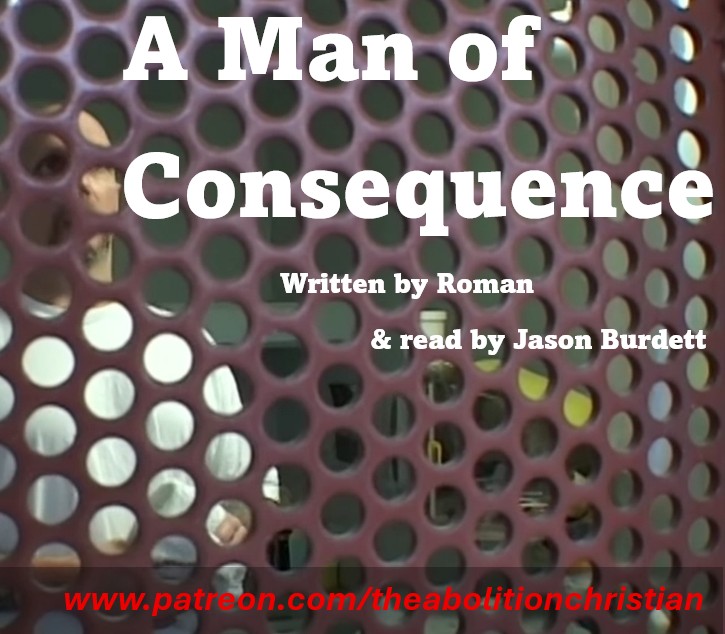
A Man Of Consequence
Dropping tomorrow morning - don't miss it....
Written by Roman and read by Jason Burdett
Making his way around the prison, starting with the 8:00 a.m. mass move, between his music room, VOC 2, outcount, the chapel, and the yard, Old Uncle at last stopped in his cell sitting under a top bunk as time worn as he, but still strong. While he sat on his bunk with jazz music flowing from his radio, he pulled out some paper and pen and began to write. A Native brother passing by on his way to sacred ground was off to the eternal performance of giving and receiving, it was his blessing of honor. He was a grounds keeper of sacred ground where purification ceremonies are held. He had stopped by to give his respects to Old Uncle and listen to him talk. As Nephew was about to leave, he said, "when I come back, I shall bring you some sweet grass."
Old Uncle laughed with blessedness as to how the hair of the mother would find its way to him. With a pensive glow, that thought stirred Old Uncle to reflect on Frank Kafka's maxim about the power of silence. His soliloquy:
Prison: Day 6,714
There is a scripture in the Bible that says, in the last days, the love of many will grow cold. There is visible evidence of this all around us. At the same time, I'm encouraged to see a remnant of justice crusaders and love laborers pouring into the lives of those impacted by trauma, poverty and incarceration. Eryn Anatavi and Sapphire Partners are examples that the best of humanity still visits the darkest places to help those in the greatest need.