Lover of QI. Living on the Isle of Man. On secondment to the CABO transformation team. Any views shared are my own. Retweets because they may be of interest.
The building blocks to quality improvement that form the roots of most projects.
While the tools and techniques on top of them may vary depending on the context, these foundational elements are essential to successful and sustainable improvement:
Have you heard the term 'normalisation of deviance'?
It's where people within an organization become so insensitive to deviant practice that it no longer feels wrong. It becomes the norm as happened with NASA & Challenger
It can also have serious consequences for patient care
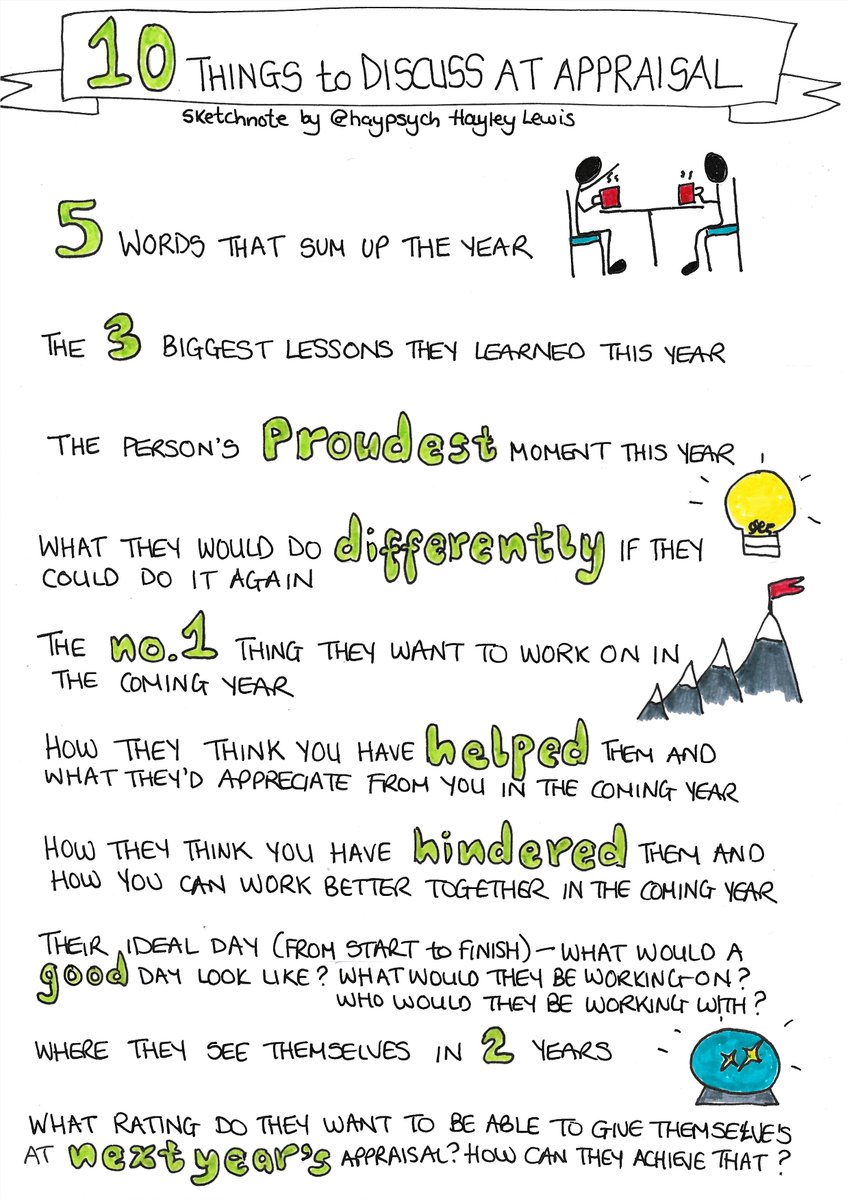
This is your annual reminder that appraisals needn't be boring and tick-box. Here are my ideas for 10 things to discuss at #appraisal You can ask the appraisee to think about as many of these in advance as they'd like #management#sketchnote
Are you interested in co-production or patient involvement in QI?
Join tomorrow's QI Spotlight @ 1pm with @SHFT_transforms & hear from Nathan Gifford, Expert by Experience Lead & QI Coach about the role of service users & carers in QI
#QItwitter@FabNHSStuff@theQCommunity
Create ideas with strangers, refine them with friends/peers. New research via @AOMinsights shows for new, breakthrough ideas, collaborate with a wide, diverse group (weak ties). The best people to refine our ideas are those we are closest to (strong ties): https://t.co/hfXwbQywGe
Good listening isn't just about giving our full attention. It's also about adapting how we listen to help the person speaking meet their needs/goals. @nancyduarte suggests 4 responses of a good listener: to 1) immerse, 2) discern, 3) advance or 4) support: https://t.co/aHwOfYjFcn
If new learning isn't applied, we forget 75% of it in 6 days. Instead of "traditional" learning: 1) identify the minimum learnable unit (MLU) based on 80/20 thinking 2) apply it to the real world 3) use peer learning 4) offer micro-courses: https://t.co/yxJpEcFsbs Via @LisaBodell
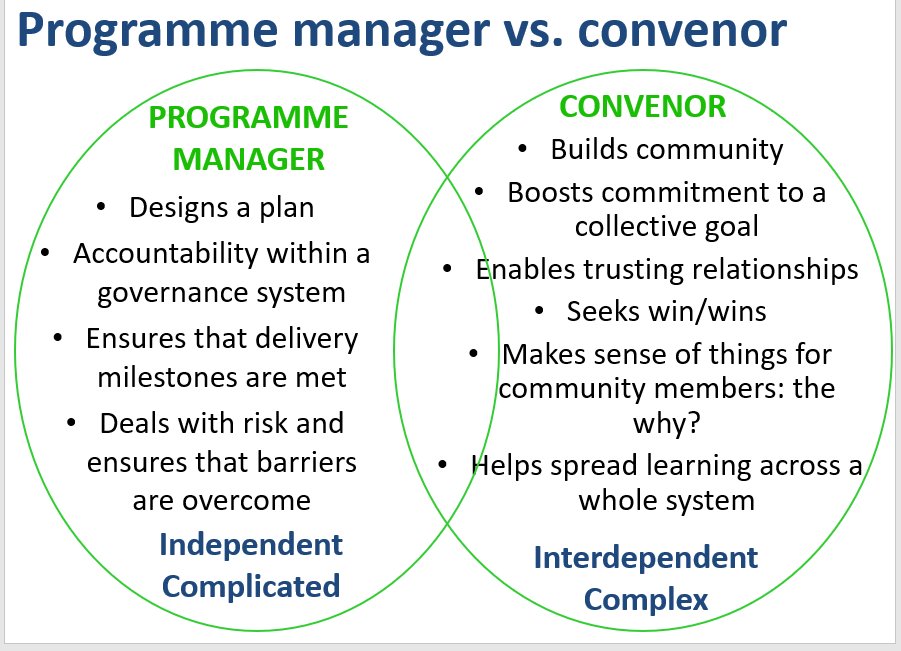
What's the difference between "classic" programme management & the kind of "convening" approaches that we're increasingly using when leading change across systems? They are distinct approaches & often in tension with each other but we typically need thenm both #ICSSystemlearning