The core CPI is running at the grand total of a +1.6% annual rate over the three months to July. The comparable this time last year was +2.7%. Inflation did show up last month in computers (thanks Apple!), airfares, toys, appliances, and used cars. But it didn’t show up anywhere else. The inflation-phobes will have to change their story at some point, and the three Fed dissenters will be pivoting before long.
FOX GUEST: “If Mamdani put price controls on pharmaceuticals, bailed out farms, took stakes in companies, said energy companies make too much money — you’d all go apoplectic… You could argue TRUMP is the most powerful socialist in America.”
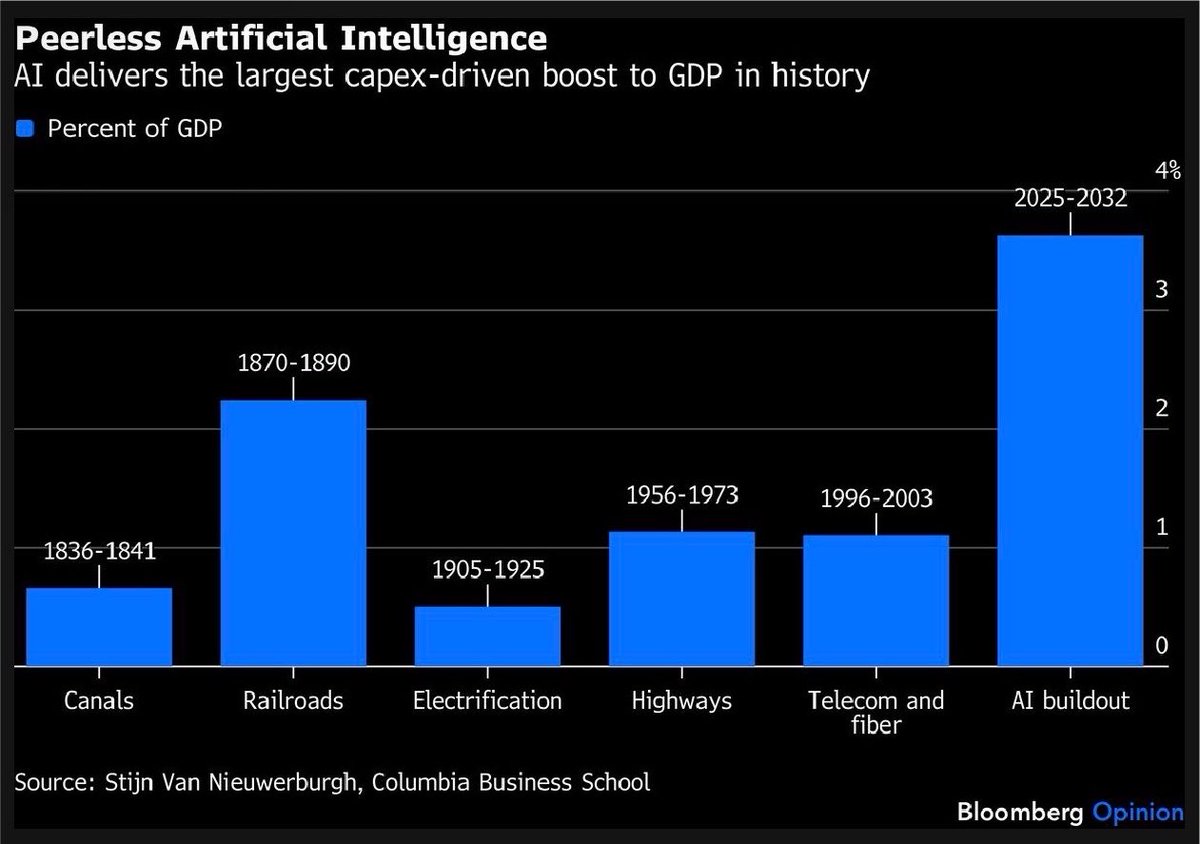
“Virtually nothing matters more to markets at present than the AI buildout. It’s such a sudden and massive stimulus for the US that it has shifted macroeconomic data. Columbia Business School’s Stijn Van Nieuwerburgh argues that without it, the US would be in recession. He estimates AI infrastructure investment at roughly 2.8% of GDP — larger than the railroad boom — and it’s projected to keep rising”
https://t.co/SpVRxYLYo7
US defense giants Lockheed and Raytheon are reportedly resistant to licensing Patriot missile production to Ukraine because they fear that Ukrainian manufacturers will be able to “improve the Patriot and then produce them at scale faster and for much less money.” -The Atlantic
The first Northeast housing market is starting to crack...
And it's Boston.
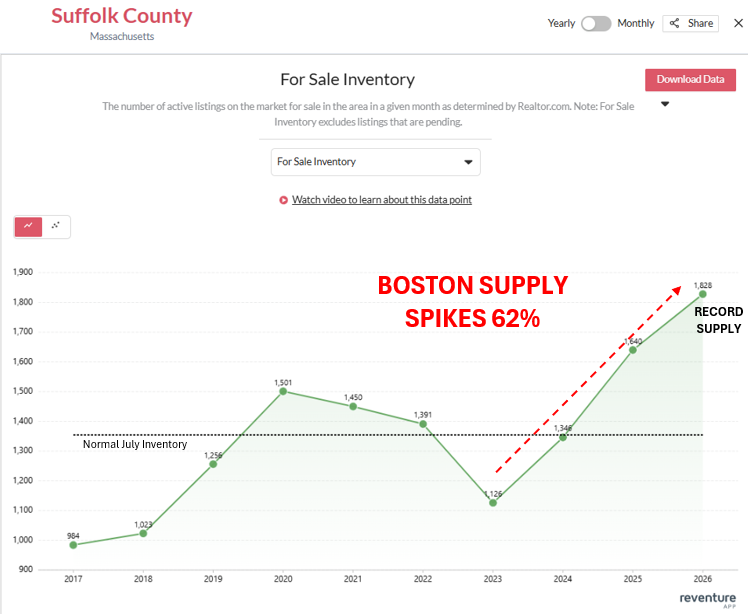
Inventory is spiking, hitting 1,800+ listings in Suffolk County.
That's a 62% supply increase since 2023.
Meanwhile, Boston sales are running about 17% below the long-term norm.
The problem is affordability. The typical Boston home is now worth nearly $760k, pricing buyers out of the market.
And now the correction is spreading.
Home values are falling across most ZIP codes in Suffolk County, with Reventure forecasting further declines into 2027.
That's significant because the Northeast has been one of the strongest housing regions in America throughout this downturn.
Boston could be the first crack. Will other Northeast markets follow?
See Reventure's housing forecasts by ZIP code:
https://t.co/9iDZkqlhE0
@m3_melody Melody has been spot on FOR YEARS. The rest of you are liars and fools. Just like in 2007 when Cramer, et al, said Bear Stearns will never go under.
I have a family of 5 and I spend between $450 and $500 a week on groceries. In 2019 my weekly bill was between $275 and $300. I don’t care about your burrito anecdotes. Everyone knows food prices are out of control.
Breaking: GOP Congressman Andy Ogles, who has said gay people have “no place in America” and “Muslims don't belong in American society,” just lost his primary in Tennessee.
He will no longer serve in Congress.
UWM’s 49% Collapse Is a Warning From the Mortgage System
United Wholesale Mortgage did not simply miss earnings. Its common equity was repriced after a failed acquisition hedge destroyed a large part of its capital cushion and forced an expensive recapitalization.
The Damage
UWM still originated roughly $39.7 billion of mortgages and generated about $888 million of revenue, so the operating business did not disappear. The problem was the balance sheet.
Management built a much larger interest rate derivatives position in anticipation of acquiring Two Harbors and its large mortgage servicing portfolio. When the deal failed, the expected MSR assets never arrived, leaving UWM exposed to a hedge constructed for assets it ultimately did not own.
The result was roughly $603 million in derivative losses and a $452 million quarterly net loss.
• Equity fell from about $1.60 billion to $985 million
• Non funding debt rose from roughly $5.1 billion to $6.0 billion
• Debt to equity jumped from 3.18x to 6.13x
• The common dividend was suspended
UWM was not insolvent, but its margin for error collapsed.
The Rescue
Oaktree committed $1.5 billion and the Ishbia family vehicle another $150 million in perpetual preferred equity, with a $400 million rights offering also planned.
The preferred carries a 10% cash dividend or 13% payment in kind rate if UWM preserves cash. Oaktree also received warrants, board representation and significant governance protections.
Almost the entire initial injection is being used to repay debt. That is what you call balance sheet repair.
The recapitalization improves UWM’s survival odds while weakening the economics of the common stock. Preferred capital now sits ahead of common shareholders, the dividend is gone and substantial dilution risk remains.
The Bigger Signal
The 49% collapse was the market repricing the disappearance of the dividend, thin equity protection, expensive new senior capital and enormous potential dilution all at once.
What makes this more important is the environment surrounding it.
Housing affordability remains historically poor. Mortgage volumes are depressed. Consumer delinquencies are rising. Private sector labor demand is weakening. Financial conditions are becoming less forgiving.
This is how late cycle stress migrates.
Housing activity weakens. Transactions fall. Margins compress. Financial intermediaries lean harder on servicing assets, leverage and funding markets. Eventually something that would have been absorbed earlier in the cycle becomes a capital event.
UWM’s immediate problem was not mortgage defaults. It was duration risk, leverage and poor contingency management around a failed acquisition. But the economy does not need another 2008 style subprime collapse for financial stress to spread. It only needs weaker cash flows, thin capital cushions and creditors becoming less willing to tolerate mistakes.
What Comes Next
UWM probably survives because the $1.65 billion immediate preferred injection is large relative to the damage. But survival likely means years of balance sheet repair and worse economics for common shareholders.
Watch next for MSR sales, tighter warehouse lending, higher collateral requirements, dividend cuts, mergers and additional distressed capital raises across nonbank lenders and regional financial institutions.
Oaktree arrived when UWM urgently needed capital and negotiated exactly what distressed investors normally demand, seniority, double digit returns, warrants, governance rights and upside if the company recovers.
UWM’s 49% collapse suggests the cycle is moving beyond weak economic activity and into balance sheet accidents. Earlier in the expansion, mistakes were absorbed. Now they trigger dividend elimination, emergency capital and transfers of economics from common shareholders to senior capital.
That is how financial stress becomes visible. https://t.co/VTfYDLTmbJ
@lisamurkowski Don’t be fooled Senator. He will march into Alaska and ensure Trumps family gets the resources that belong to not only Alaskans, but us all….
Biden admin tricks are back:
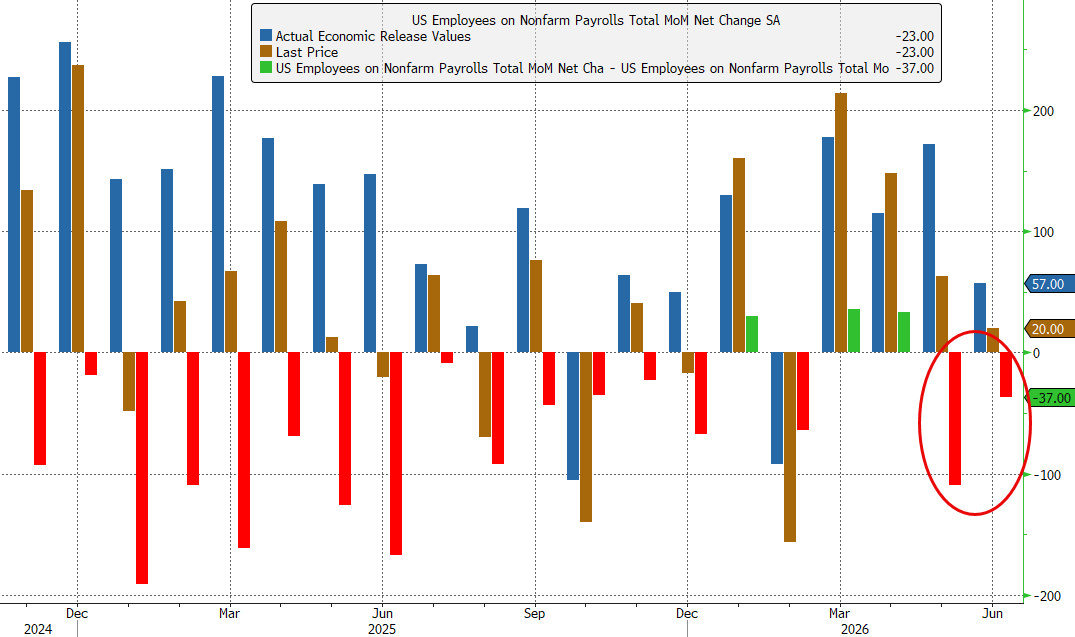
May revised down by 66,000, from +129,000 to +63,000
June revised down by 37,000, from +57,000 to +20,000
-> employment in May and June combined was 103,000 lower than previously reported