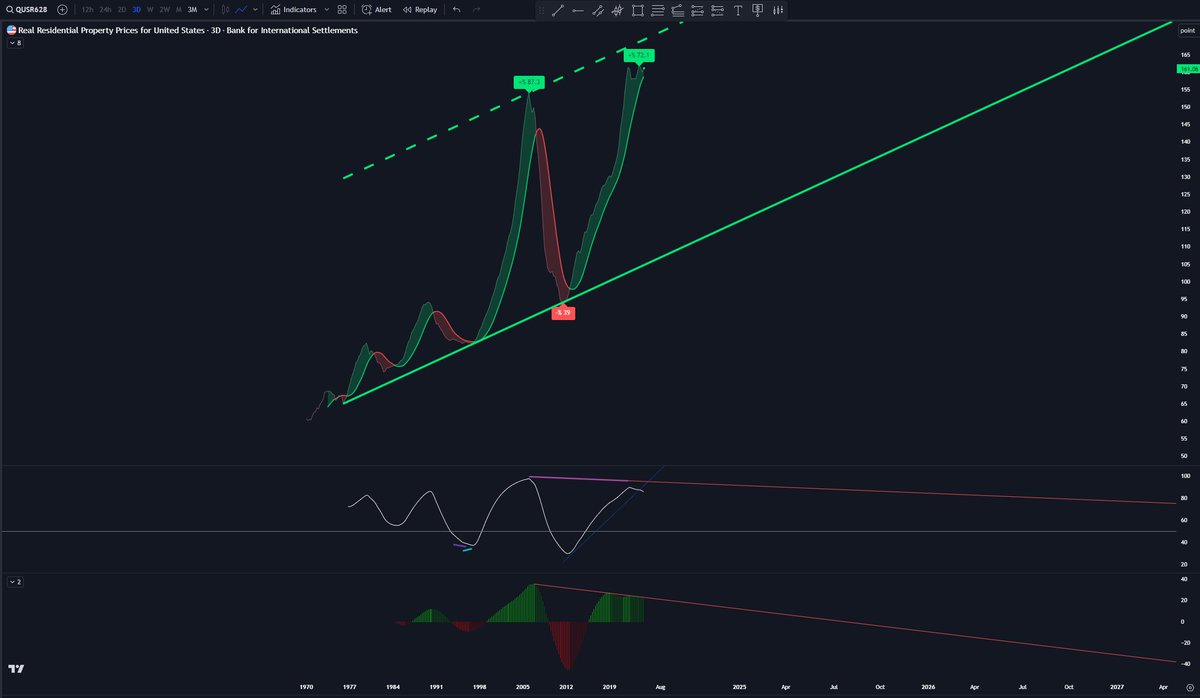
My favorite time of year is back, and I’m giving away four annual TradingView subscriptions.
Eligibility:
1️⃣Follow @CarpeNoctom
2️⃣RT this tweet
Winners will be selected on Wed night EST (11/26) and notified via DM
Good luck!
#ad#blackfriday
Trading Addiction
You're addicted. People don't like the term (more about that later) but unfortunately it's true. This thread isn't to make you feel bad, or to shame you, it's to hopefully try to assist with eliminating the negatives.
Sometimes that's good, sometimes that's bad. You'll go through various methods for justification but you also need to accept some of the truth to make better financial decisions.
A topic I've written about so many times but we're due for an update and a deeper dive into the new mechanics at play, along with the education for the new market participants.
Let's start with the classic addiction symptoms, firstly the real-life interrupters:
- Compulsively checking your phone for charts
- Unable to complete normal, everyday tasks without checking your phone in between
- Checking your phone in the middle of meals
- Doing one task on your phone and getting distracted half way through to look at charts
- Muscle memory loading up charts on autopilot when you unlock your phone
- Needing to keep your phone on charts when in the shower or somewhere else and finding creative ways to enable you to do that
- Telling your friends/family it's "work" or "important" and that you need to be on your phone
- Getting angry that you have to do something that breaks your time from access to a phone/charts
- Not listening to conversations or being distracted just staring at candles
And now the trading symptoms:
- Entering and re-entering the same position multiple times based on no change in setup
- Throwing money into coins based on small impulses on the LTF
- Throwing money into coins based on a green candle appearing to be moving fast
- Looking to utilise leverage whenever possible to hit bigger wins
- Never wanting to close or sell a position because "what if it goes higher"
- Starting to do the mental calculation for how much profit you'll have if your coin reaches a certain price
- Rotating between multiple coins all the time in the hopes of catching a big move but capturing none of them
- Always feeling "late" to coins and to moves in the market
- Feeling overly emotional about your positions and necessity to have access to an exchange
There's more examples but hopefully that's captured enough of them for you.
Let's break this down, remember the idea was not to shame you, it's to try and help.
Firstly, not all addiction is bad addition when it comes to trading. The majority of us are addicted, whether that's through the close ties to gambling or because of a genuine love and affinity for the world of crypto.
You have to learn to harness the good addiction, you have to have power over your actions and understand the differences between the good and the bad.
Spending time searching for opportunity = good
Blankly staring at a 5m chart entering and re-entering a position on max leverage = bad
You can see the common split here so I can leave you to come to your own conclusions about a positive use of time in this space and not something that's simply based on addictive gambling qualities.
Typically positive or good addiction doesn't actually involve money at all, it involves time. The longer you spend researching before actioning typically leads to better decision making, you're slower, more patient and have more information when it comes to putting money on the line. And you need to have that. You need to put the time in. Success doesn't come without earnings your stripes.
Addiction and impulsiveness are closely tied so our bad addiction qualities usually come from the decisions we make because we believe there will be a quick and very positive response from them.
FOMO into coins
Buying because someone tweeted
Attempting to use high leverage and getting chopped up
Impulsiveness is linked to time. Many people are in a rush to "make it" - they operate at 100mph constantly in the hopes of hitting it big. Giving themselves incredibly small time horizons for success.
We have a combination of addiction, impulsiveness and unrealistic time horizons.
Now the thing that really seals it for a lot of people is justification.
The justification side is very important to understand for addiction purposes. If you've found yourself justifying your actions because you believe they offer huge opportunity, like SOL presales, it's often just the minds way to allow you to complete the dumb action. People add justification to try and avoid the gambling or addiction label.
We often justify our actions as a way of deceiving ourselves that the stupidity can be accepted.
"use max lev because this could be the breakout"
"this presale really will moon"
"all my buddies think this is a good idea too"
"a lot of people are talking about this coin now!"
Our minds typically always look for the positive outcome first, especially those rooted in this space. We are often optimists because of our risk tolerance and so we allow that optimism to encourage us (or at least tip the scales) to make decisions we really shouldn't. Again, look back to examples of leverage usage and how we can convince ourselves very quickly that "now might be the opportunity to get in!"
But of course, reasoned, well balanced justification is important which is why we're brought full circle to the good vs bad addiction.
Addiction is tough, it is very hard to break, but you can be addicted in a positive way. Slow down the speed at which you chuck money away by actioning on your impulses and instead divert that passion and love you have for the space (and the potential for opportunity) into researching, educating yourself and coming up with smarter more informed ways to use your capital.
The gambling capital spiral to zero is real. It haunts many people and unless you make changes to your actions, your dreams will remain unfulfilled.
Slow down.
Treat leverage sensibly.
Use your time wisely to make informed decisions.
Accept that success is built over many months/years.
Learn to change and adapt your negative behaviours.
Question your actions.
(And probably utilise spot and chill a lot more)
A few common mistakes in these conditions:
1. Excessive leverage. Specifically, introducing liquidation risk in assets that are regularly moving 10%-20%+ in a day. Let the volatility do the heavy lifting, not the leverage (or specifically, massively inflated position sizes facilitated by leverage that force you to use very tight stops or liquidate you on small moves against you).
2. Excessively tight stops. Same consideration. If you're targeting larger rotations in a higher volatility asset, being overly tight with stop placement can work against you. You don't want to create a loop where your idea is broadly correct, you get wicked out because you were LARPing as some 50R tick sniper, and then the market moves straight to your target without you.
3. Excessive rotation. If you're trying to make the most of a multi-week and multi-month trending period, you shouldn't be overly concerned with any specific 24H window of returns. It is a form of overtrading. It is also a form of FOMO. This also introduces the risk of creating a loop whereby you sell your bags to chase the strong stuff --> strong stuff consolidates --> the bags you sold moon --> repeat ad infinitum. Find some setups or ideas that you like and give them some room to breathe.
4. Mistaking consolidation for weakness. This is another version of time-based FOMO. Participants will infer that just because their bags haven't turbo mooned in a short period of time, the market is weak or they've allocated poorly. Instead, your rebuttable presumption should be that consolidations are a form of pullback and present an opportunity to buy stuff that eluded you when it was breaking out. Boredom and impatience do not necessarily signal weakness.
5. Excessive trade management. The degree to which you intervene in your trade ideas should somewhat mirror the time frames of those ideas. For example, if your trade is predicated on a breakout from a multi-week range, your targets and trade management time frames should be derived from (or resemble) the weekly time frame. That makes more sense than, for example, buying a large weekly breakout and setting a target at 15M resistance that's 5% higher and panicking over every red 5M candle.
6. Overtrading your core holdings. There are countless stories of traders getting very good swing and/or HTF positional entries but gradually fumbling them through trying to time every single dip and rotation that takes place on the way to their target. An unfortunately common version of this is selling 100% of exposure at some level in order to 'buy back lower'. This is particularly a strange choice when a trader's target is materially higher than the pullback they're hoping to rebuy. For example, if your ultimate target is 50% higher, is it worth selling all of your exposure in an attempt to time a 5%-10% dip? This can result in the market not offering the pullback that was hoped for, and now the trader is sidelined - this usually comes with a mental block, as buying back higher than you sold can be psychologically tricky/feels like you're chasing. In short, this is a form of overoptimisation. If you're bored and feel like gambling in between, use a sub account or @breakoutprop (disclaimer: I have a financial interest in its success) so you can scratch the trading itch without sabotaging yourself. Or go to the casino, get a hobby, whatever.
7. Excessive number of open positions. With every added position, your capacity to effectively manage any single position decreases. The altcoin market is still pretty tightly positively correlated, so you're more likely just spreading yourself thin rather than 'diversifying'. Focusing on a smaller number of higher conviction trade ideas and managing them patiently and judiciously is probably better than trying to catch everything at once and drowning in noise. If you want to spread yourself thin, go buy some Solana shitter lottery tickets i.e. X amount of $ across [large number] of memecoins/new coins that will either go to 0 or appear on your feed when you're up multiples. At least that doesn't take up your trade management RAM.
8. Allowing social media to materially impact your perception. It's PnL + leaderboard season. It may feel like absolutely everyone is winning massively all the time. Granted, the market has been very good unless you've been stubbornly short, but social media is still a highlight reel boosted by selection bias and survivorship bias. You don't see the fumbled entries, the break evens, the times traders got stopped at the bottom, undersizing great ideas and oversizing bad ideas, not pulling the trigger, and so on. As long as you're trading well and improving, don't try to speed run some arbitrary returns or net worth goal.
TL;DR
I ain't reading all that. I'm happy for u tho. Or sorry that happened.
stop writing essays nerd give me a ticker
@sparkcsays@blknoiz06 It costs them little to create a token too. I'm starting to wonder if these projects are being influenced by VCs to give less airdrops so it doesn't dilute their holdings. But they don't realize the airdrops are low cost marketing and isn't worth the reputation hit to be greedy.
Your edge is comprised of several elements:
- Strike rate (Percentage of time you win)
- Payoff (Avg win/Avg loss)
- Frequency (How often you trade)
- Execution (The ability to execute the edge flawlessly)
Your efficiency at the last one, is often affected by the first three.
Most of the problems traders have with executing come down to the fact one of these (strike rate, payoff, frequency) are skewed to the downside.
For example, while it's perfectly possible to make money with a low strike rate, having one means you'll experience greater loss streaks and thus are more susceptible to feeling fear and second guessing yourself.
One of the most common issues I see is with trade frequency. Traders inherently want to trade, so if your strategy gives you a low number of opportunities to capitalise, not only do you require a greater degree of patience to wait for your edge but you also need more discipline to cope with the fact that a stop out or losing streak might take you a while to recover from. It's far easier to find that discipline if you know the next trade will likely be along later in the current session and far harder if you know it probably won't occur for another few days.
So, if you're not making money or you're not performing as well as you'd like to be, I'd start with examining each of those areas and working out where you might be able to improve.
If you have an edge but it only gives you two opportunities each week and you have the time available to trade, consider dropping timeframes, trading more sessions, or learning/creating another strategy to complement your existing one.
If your payoff is poor, go back through your trades and examine your MAE (Maximum Adverse Excursion) and MFE (Maximum Favourable Excursion) on trades to try and increase it.
If your strike rate is consistently low, try to work out if there are commonalities between winners/losers so you can do more of what works or less/the opposite of what doesn't.
In prop, we were also taught early in our journey to experiment with different markets. I have come across numerous professionals that perform well in one market and not in another. Sometimes it comes down to something as simple as the fact that another market might move slower and give you more time to think.
Always remember that curiosity is the basis for improvement.
Oh, and if you're not working on your edge, someone else is and the chances are they'll take your money.
Cheers.
Building positions in an uptrend GUIDE. 🧵
1. If a market has you frozen out. It's unrelenting in it's uptrend. You simply cannot find a spot to be a buyer.
Just buy it.
Natural law states that once you finally buy, the market will top and a correction will begin.
That last sentence will feel familiar, but there's truth hidden within the meme.
Very often it's our constant checking of price and way it infiltrates every waking thought that perpetuates this desire to make sure we own whatever the coin is.
So you have to buy some.
I'm not advocating that you go in with 100% of your size, it has to be very small.
What buying does is it usually relaxes you a little. It gives you skin in the game and it usually provides some breathing room because at least if price continues higher now you have a slice of that action.
What it will then do is establish the base of your position, which is important for the discussions we're about to have.
2. Being a small buyer of a market during consolidations and corrections will give you control over your positioning.
We still think about these positions as having a point of invalidation, but we're now talking very small slices of the market when it provides us with an opportunity to do so.
When markets are ranging/consolidating/chopping it's often the best opportunity to employ this tactic.
3. Smaller sizes to build a longer term position is always going to be advantageous. It will keep us in "attack mode" - it will ensure that we remain hungry for dips and we action dips in the right way (by buying them.)
When our position sizes are too large we instead get defensive and begin to close out or add shit like a trailing stop to our positions.
Small size on regular intervals when the conditions allow to build your position up piece by piece over time.
4. There will be times it feels as though the market is getting away from you. EG. You only filled for 50% and now we're rallying higher. That's fine. You have 50%. If you now begin to action on FOMO and size up dramatically you're going to offset your average entry greatly and get yourself back into defensive mode if the market turns around again.
5. TA kind of goes out of the window. We know that bullish markets can produce -30% moves to the downside. When we get situations like this it's a very good opportunity to look at being a buyer.
This can come in one blast of volatility, or this can be a market correcting over a number of days.
Regardless, they are usually opportunities, and if we think about our scaling we can be more aggressive at this points as they should offer us extreme value and be closer to any invalidation points that we may have.
6. Don't sit with your thumb up your ass if price trades 1% away from your limit buys before turning around. You have to wake up and take action.
Are you going to sit there when you're looking at a +30% upside trade and be like "it didn't fill my bids by $1 OMG!!!!!!111!1"
Look at what you're trying to achieve with your trade and if your perfect little horizontal line wasn't touched, who gives a shit, start being proactive and doing something to get exposure to your trade.
Summary:
Small position sizing
Be comfortable not being "fully sized"
Stay in attack mode
Don't make panicked decisions that will offset days of hardwork crafting a position, stop and think
-30% sell offs usually provide amazing opportunities to size up or start a position
Be active and adapt to the market
Be aware of what the targets and plans are for your position
@sparkcsays Almost reminds me of a marketing flywheel. Connections gets partnerships/influencers to get new people onboard (new users). Community manager/cult leader retains users. Then the narrative wizard amplifies the message so everyone saying the same message.
*RSI Mythbusting 🧵*
There's so much misinformation and general poor understanding about RSI. I'm going to go through some of the main misunderstandings to try and put you in the right frame of mind when looking at it.
(As a momentum trader)
@Trader_XO That is a solid watch to get since it has the OLED screen compared to the Fenix which doesn't have it. Battery life is amazing compared to most watches. They have the MARQ series too which has extra stuff but it depends if you need it or not.