Capital’s New War.
Big Tech is no longer the quiet saver of global capital markets. For years, its swelling free cash flow recycled into buybacks, deposits and securities, helping keep capital cheap. AI has reversed that flow.
The largest technology companies are now absorbing cash at industrial scale to build chips, data centres, power systems, cooling, networking and land. What was once an asset-light sector is becoming capital-intensive and infrastructure-heavy. Investors increasingly assume this capex will be wasteful. That is too crude. Capex is not inherently bad. But in today’s instant gratification world, all CapEx is assumed to be wasteful.
Higher real rates suggest markets are doing their job. Money is no longer artificially abundant. Companies and governments alike must compete for scarce capital and justify their claims on it. That discipline is healthy.
Higher real rates are not a statement about inflation concerns!!
The real question is whether AI will generate enough revenue and free cash flow to finance the next phase of its own buildout. If it does, today’s spending will look less like excess and more like the unavoidable price of constructing a new productive platform. If it does not, the ghosts of the 1990s internet bubble will look justified.
At the same time, Washington is borrowing heavily to fund entitlements, defence, industrial policy and rising interest costs. Tech is therefore no longer supporting the bond market; it is competing with it. In effect, one pillar of the old global savings glut is beginning to erode.
That leaves real rates as the auction price between the sovereign financing inherited promises and the AI complex financing future capacity.
Markets remain sceptical on both fronts.
They doubt AI revenues will arrive quickly enough, and they doubt Washington can cut waste or deliver fiscal discipline fast enough. What is needed is growth, real supply-side growth and fewer costly side shows, including the Iran conflict, that drain capital and political attention.
In an age of instant gratification, markets want proof at once. But large technological shifts and policy resets do not pay off overnight. The result, higher real rates.
What the Keynesians don’t get is that left to its own devices markets work. And yes, the capital markets are working.
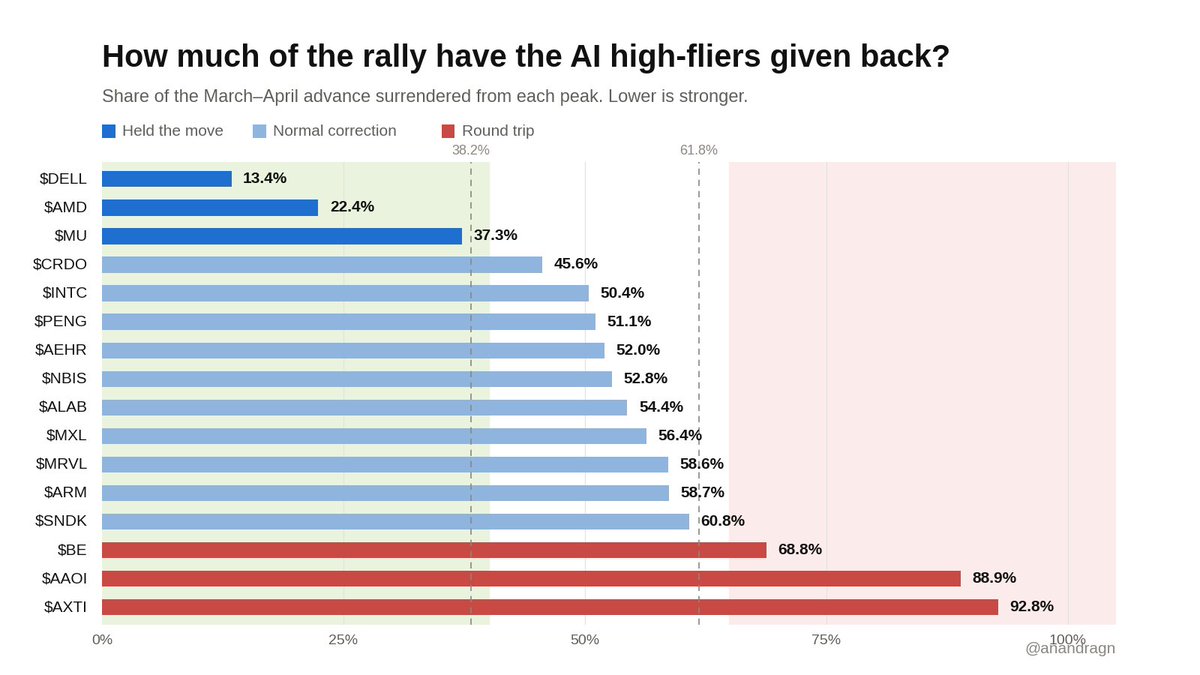
How much of the rally off the March-April lows have the AI high-fliers given back?
Ranked from best at the top to worst at the bottom.
$DELL, $AMD, and $MU have held on to most of their upside.
Meanwhile, $AAOI and $AXTI have pretty much round-tripped the entire rally.
🚨ALERTAS #EsAlert | EVACUACIÓN (1/2)
Debido a los incendios en la C. de Madrid:
📍Fresnedillas de la Oliva: evacuar en dirección a Valdemorillo. Puntos de acogida: Brunete, V. Cañada, Villaviciosa y Las Rozas.
📍Robledo de Chavela: evacuar dir. El Escorial. Acogida: Las Rozas.
📢 Este viernes 24 de julio, de 18:00 a 24:00 h., se activan las medidas recogidas en el protocolo de parques por riesgo bajo de afección al arbolado, según previsiones de @AEMET_Esp
👉 https://t.co/ZL0ySG8rUh
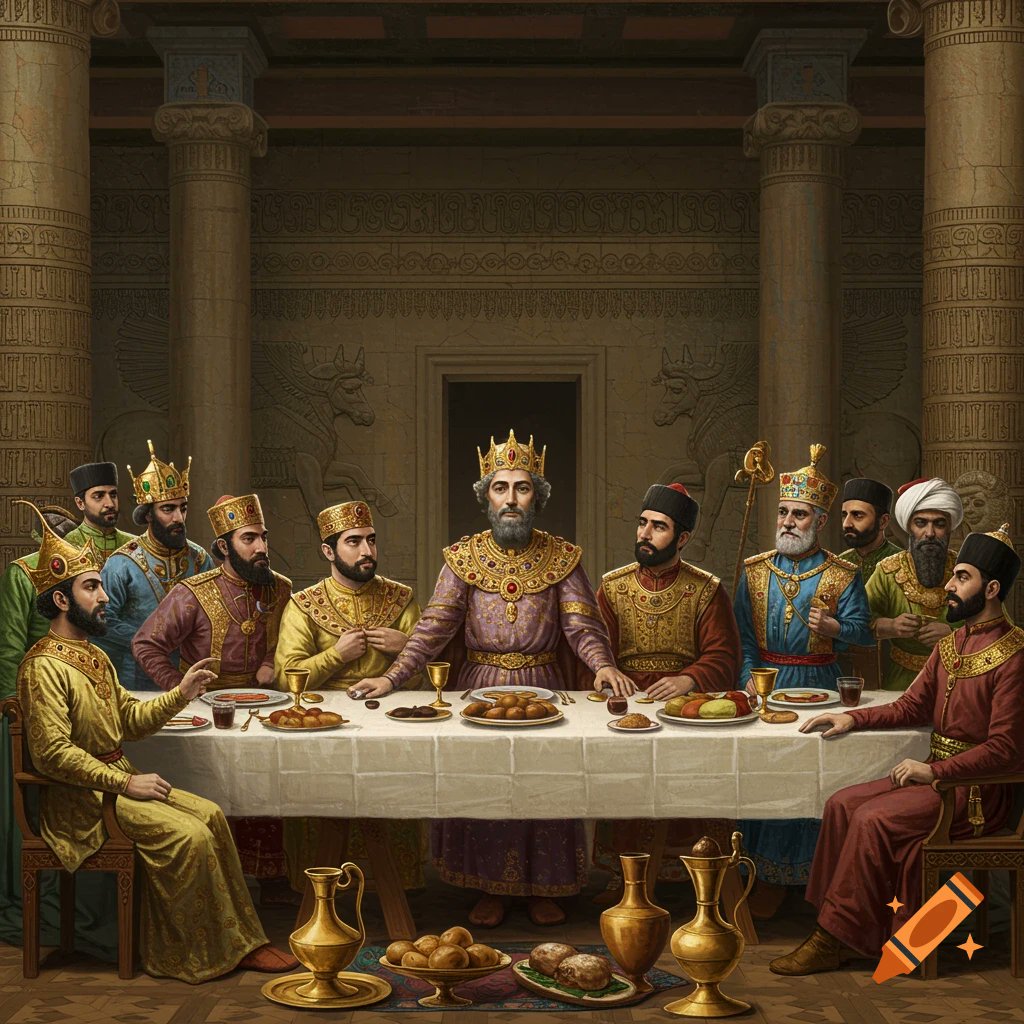
The ancient Persians had a rule: every major decision had to be made twice. Once drunk. Once sober. 🍷
According to the Greek historian Herodotus, writing in Book 1 of his Histories around 430 BC, the Persians would deliberate on serious matters after drinking wine. The next morning, sober, they'd revisit whatever they'd decided. If it still held up, they acted on it. If not, they dropped it.
The reverse applied too. Decisions made sober had to survive a second session drunk before they were adopted.
Herodotus is the only ancient source for this, and historians have debated its accuracy ever since. But the logic buried inside it is genuinely interesting. The drunk session removed the social pressure to agree with the room. The sober session removed the social pressure to seem bold. Neither state alone was trusted. Only the overlap was.
They'd accidentally built a system to catch two completely different types of bad thinking at once, 2,500 years before anyone had words for either of them.
I know I posted this the other day, but let me make it a little bit more precise.
$VIX seasonality this year so far has been quite accurate wouldn't you say?
Let's see if it continues the trend in 2H. If so, the VIX should spike up soon...
The market is under no obligation to be clean, structural, or cooperative for your strategy.
Elite short-term execution requires accepting absolute randomness. If you spend your career waiting for the flawless setup where all conditions align, you are trading a fantasy. Professional frameworks are built to find opportunity within the messy reality of shifting distributions, abrupt stop runs, and sudden structural changes.
Stop demanding certainty from an uncertain environment. Learn to adapt and navigate the market exactly as it is presenting itself today.
https://t.co/5T8JkkFXu3
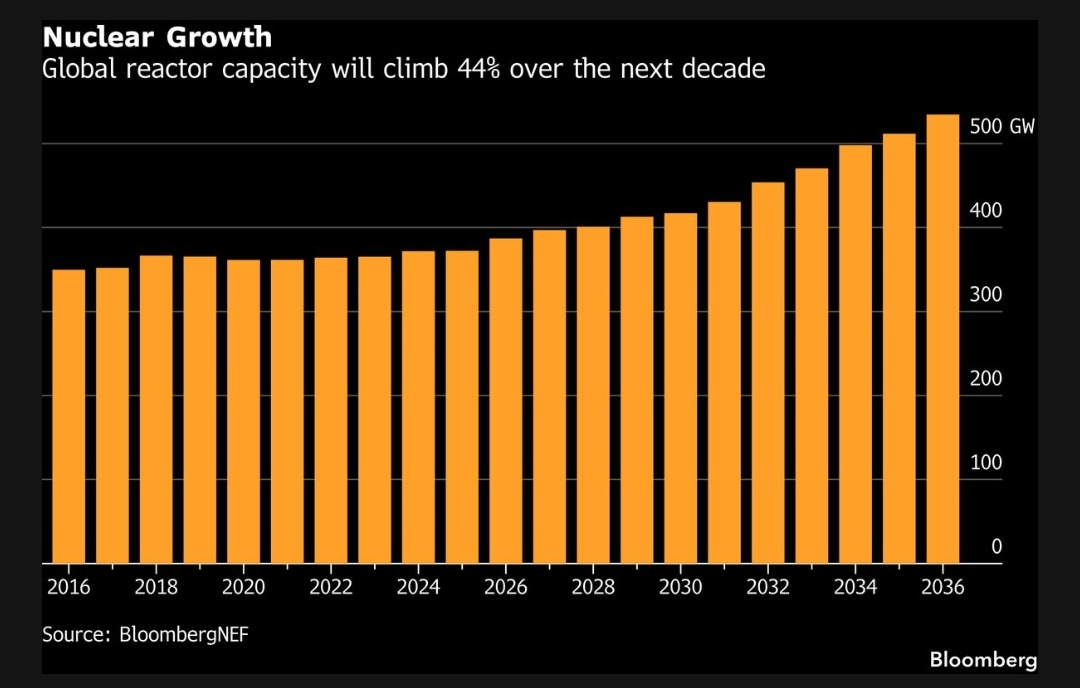
⚛️Global nuclear capacity is set to climb 44% over the next decade after years of tepid growth, spurred by growing demand for electricity and aggressive efforts to build reactors in China and India.
Returns After New Fed Chairs
"Since Volcker, the 10-year yield has been lower at the end of every Fed Chair’s term vs. where it started (besides J Pow)."
https://t.co/h37lSO73Xl
by @mattcerminaro
Shipowners will not resume transit through the Strait of Hormuz for weeks until they are confident that the US-Iran deal is “material”, the head of the world’s biggest tanker operator has warned.
Jotaro Tamura, chief executive of Mitsui OSK Lines, told the FT that many operators would wait before restarting crossings despite the US-Iran deal to reopen the strait.
#oott