TradingView Automated Trading can free you of emotions 💹
Set up a TradingView bot in 30 seconds ⏱️ by using TradersPost webhook URLs and custom strategy settings! 🛠️
Trade stocks, options, and futures 📈
#tradingview#automatedtrading#tradingbot#pinescript#algotrading
That's three pieces of the framework. The full hour gets into mean reversion, fat tails, and Paulson's trial balloon.
If you've ever been interested in understanding the effect options have on markets, you owe it to yourself to watch the whole thing. @tastyliveshow@jam_croissant
https://t.co/tLx1l4hjnK
Most retail traders bounce off the options market. The vocabulary alone is a wall, the positioning math feels rigged.
Cem Karsan @jam_croissant is obscenely deep in the mechanics and rare for being clear about them.
Tastylive @tastyliveshow sat down with him on his Summer of George thesis. 🧵
3/ The market IS the economy now.
The recent 20% rally created $50T of fresh collateral. More than all of COVID stimulus combined.
The administration has every incentive to keep it spinning. So should your regime filters.
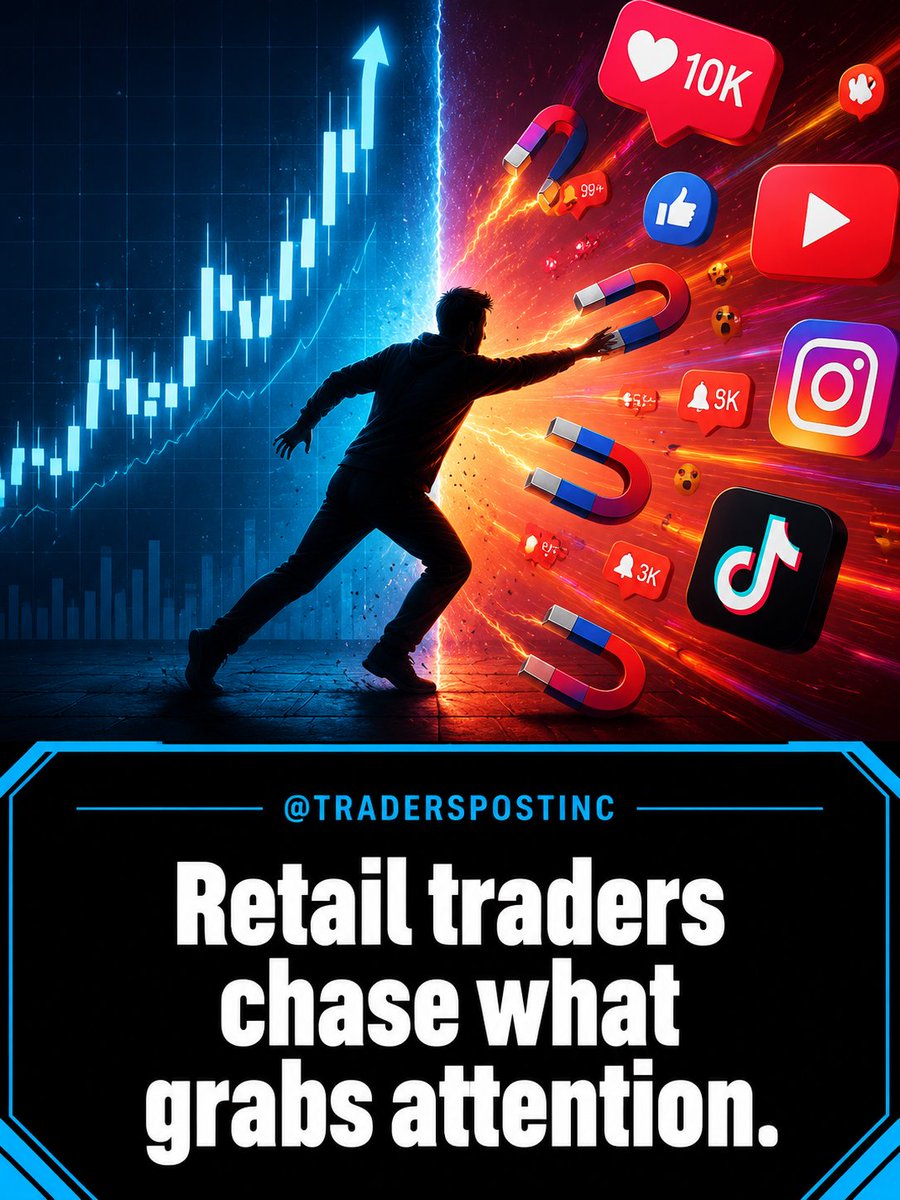
Retail tends to buy what's loud.
Earnings pops, viral tickers, trending names — the order flow follows the attention.
The hardest part of trading isn't analysis. It's not chasing.
Automation keeps you on your plan.
#TradingPsychology#AlgoTrading
https://t.co/6Emm0sQdpL
TradersPost gives your bot 4 ways to size:
• Fixed Quantity: set the share count
• Amount per position: set the dollar amount
• Risk per position: max $ you'd lose at stop
• Percent of equity: % of your live equity
Set once. Runs every order.
https://t.co/9EiwB6Jw0a
The strategy doesn't decide whether you blow up. The size does.
Paul Tudor Jones, up 300% by age 25, lost 65% on a single cotton trade. He almost quit.
That was the moment his career changed 🧵
https://t.co/hWdu6lw8Gq
Van Tharp coined the term "position sizing." His core point:
A perfect strategy can blow up from bad sizing. A weak one can succeed with great sizing.
The rule across serious trading literature: risk no more than 0.5–2% per trade. Same on a $5 stock or a $500 one.