ATA Certified Chinese Translator/Medical and Legal Interpreter/Owner of Translation Boulevard/London School of Economics Graduate/Providing Translation Services
How Images, Videos, SEO Articles and Google Reviews Catapult Small Businesses / Clay Clark’s Proven Method of Business Marketing
By Sean Junjie Song
ATA Certified Chinese Translator & CEO of Translation Boulevard
Have you heard that organic articles, including images, videos, and Google Reviews help small businesses rank higher in Google Searches, thus giving them more leads? Organic articles are unpaid, high-quality, valuable content that attract or build relationships with its readers through natural means, like when found through a search engine. Have you tried producing this kind of material? Maybe you have and it doesn’t seem to be working out for you. Have you also tried Google Ads, and it still feels like you cannot get an edge up on the giant competitors in your industry? Have you run into some poor SEO (Search Engine Optimization) experts and then you stopped doing them?
I have experienced all of these. I tried creating blog posts to increase my SEO search rankings. I posted them on my Google Business Profile thinking it would increase my visibility, but it didn’t produce any positive results. Google simply suggested adding Google Ads to make my content more visible to potential readers. So, I tried Google Ads, but this also did not bring me the leads I desired. This is when I talked to an SEO expert. He suggested I reserve a budget of $5.000 dollars for SEO content every month; otherwise it may not produce any worthy results. To my dismay, I overheard the owner of another translation agency complaining about spending a few thousand dollars in Google Ads and still not having the best results. It’s no wonder, I suppose. After all, we are bidding with the largest competitors in our industry. They likely pay the highest bids on Google Ads and you will never beat them. Google Ads works, but you have to be the highest bidder.
I heard from another SEO expert who suggested that I should really narrow down my target areas and audiences with such a limited budget. Otherwise, my money acts just like a bucket of water dripping into an ocean. Years ago, I hired an Indian guy to help me with producing SEO content. He took the money and did not do a good job. Needless to say, that made me steer away from SEO work for quite a while. Has this been the case for you? I think many small business owners have similar experiences like mine.
The reality is that we still have to do SEO and grow in organic search results. Out of curiosity to learn what to do to grow my translation business, I started searching online to glean insight from others. I received an email from Clay Clark and his ThriveTime Show team. They informed me of an upcoming business conference in Anaheim, California. Clay Clark is famous for organizing the ReAwaken America Tour with General Michael Flynn, which is a Christian Nationalist Movement. Before this, Clark was very successful in starting businesses including a DJ company, a bridal company, a barber business and some others. He built and managed many successful businesses starting from his youth. So, I went to this conference to hear what advice he had to offer. What I heard at this conference blew my mind!
Clay pointed out that while small businesses cannot beat the giant competitors in their industry on Google, there is way to crack the door open to rank higher on Google and get more leads. That is the basis for this blog post. Clark summarized his model using the letters I V S M. (Please refer to Clay Clark’s teaching for accurate quotes.)
“V” stands for video, “I” stands for images, “S” stands for SEO articles, and “M” stands for more Google reviews. His suggestion is to reach a total of 1,700 images, videos, SEO articles and (more) Google Reviews respectively. Now, 1700 sounds very big, but this is the number that he discovered will propel some businesses to a great level. What’s helpful is that Google and AI both compile things from images, videos, articles and reviews to determine their algorithms. In other words, you don't have to reach this number exactly but the more the better. What’s important is reaching certain thresholds of these contents, and this will change things, according to Clark.
Besides many images, videos and SEO articles to drive organic search results, more Google reviews will help potential clients to trust you. Most people choose the websites and/or products that have the most reviews. I was certainly doing that when I shopped on Amazon. People usually buy from websites or businesses that appear on the top of Google searches, or the ones with the most stars/comments. And for those who really read the reviews, they will be even more moved by the genuine experience of other customers.
It is against Google policy to offer discounts or money to gain reviews, but many business owners share a practice of incentivizing their employees to follow up with their customers for Google Reviews. Many times, the customers may want to leave a review but were too busy to do so or forgot about it. Having an employee follow through with requesting or reminding them usually results in gaining more Google reviews. Learning this, I reached out to those who worked with or for me, whether clients or translators, and I asked them to write an honest review! Most of them were open to giving a genuine review. Sometimes it just takes asking for help.
Reviews from someone who knows you or works with you will greatly build trust in an online space where trust is scarce. As a translation company owner and a Christian, I always treat my translators as members of my congregation or ministry, not just contracted employees. When I point out errors or need to bring correction to something, I do it in love to help them grow. It was great reading the review one translator gave me:
He said, “As a long-time collaborating translator, I feel incredibly fortunate to have had the opportunity to showcase my talents through this translation agency. I've grown significantly here and gained firsthand experience of the evolving translation industry. What has remained constant is Sean's rigorous quality control and his mentorship and support for translators. Working with Sean has always been a pleasure; I've not only received above-average compensation but also been exposed to many interesting projects. Sean acts like a teacher, helping translators grow. I wish Sean's company continued success and that he continues to provide assistance and services to even more clients.”
It is my heart to treat our translators well. Of course, we will treat all our clients and employees well also. Treating these three groups well is instrumental for any business to be successful. I mentioned in the title that the I V S M method is the proven method of Clay Clark. Let this blog serve as a reminder to myself and as news to anyone who reads it. Now it’s time to put these into practice in my own business. I hope you will too! Stay tuned for updates.
More about Translation Boulevard
https://t.co/MdB1EPDbNA
The Life of a Chinese Immigration Interpreter in Washington DC, Virgina and Maryland
I became a naturalized American citizen in Baltimore after my wife was sworn into her U.S. citizenship. My mother-in-law got her green card through the sponsorship of my wife. During my mother-in-law’s interview, we were required to hire an independent interpreter to represent her since she could not speak English. My wife complained to me about why they needed to hire a professional translator since I am an interpreter myself. Unfortunately, neither one’s relatives nor lawyers are allowed to be someone’s interpreter. The interpreters must be an independent party to avoid bias or partiality. Even though my wife can speak English and I work as a professional interpreter, we still needed to pay several hundreds of dollars for another independent interpreter.
Considering all things, the money you would pay to hire an interpreter is not the kind of fee you want to skip over or avoid doing because it actually matters a great deal to get the most important things settled as an immigrant of any country. Getting a professional translator who can translate accurately between you and the immigration officer is a very important task. Accurately translating helps ensure the desires of the client are communicated to the immigration officer.
Now, many people get excited or nervous when it comes time for this interview because it’s an important date of their life. A lot of emotions can exist. Once they pass the interview, that person(s) may receive their green card soon after. The anticipation of this can make a person excited and eager. Other candidates are extremely nervous because their future hinges on whether they will be accepted or rejected. Good translators know how to communicate effectively despite the emotions in the room. A good translator doesn’t turn off their humanity and act cold; instead, they act professionally and exhibit boundaries. A good translator will talk with their candidates beforehand to prepare for the interview and offer their best efforts at communicating the message effectively. I have found in my own business that when we do this, the clients are often very appreciative in the end. Though Chinese people do not grow up in a culture with a habit of tipping, our Chinese clients usually tip generously after our interpreting services. This shows they are truly appreciative of my/our work, and how important it was to them. Let me give you a recap of a day in the life of a Chinese translator and interpreter at USCIS (U.S. Citizenship and Immigration Services).
I arrive at USCIS Baltimore Field Office at 3701 Koppers St, Baltimore, MD 21227, fifteen minutes earlier than each appointment. This location is a popular place for USCIS immigration interviews. They open at 6:45am in the morning and close at 4:30pm. Most of the time, the client that hired you will reach out to you proactively to make sure you are there on time. But other times, the client may be running late, so you have to wait for them by the entrance. The interpreter is not allowed to enter the waiting area unless the client(s) is present, and you must present the appointment letter to enter the building. Then you must go through a security check. Afterward, the client(s) must go to a window to get an appointment number to register you in the system. The interpreter will then be given a form to sign in front of the immigration officer, and the client(s) will have to sign the interpreter form as well. Then you wait a while for the immigration officer to call your name or number.
This is the interesting part. You are waiting there and chatting with the client(s). You want to respect them by not peppering them with too many questions, but us translators want to get as prepared as possible for the work to come. I usually pay attention to the affect of the clients. This is when I notice whether they are excited or worried. For example, one person didn’t know how to react when I asked what his name was—he was just too excited! Another person seeking asylum was naturally very nervous. I kept chatting with him and praying silently, hoping he would arrive at a place of peace. In the end, I did my best to interpret for him, and everything went smoothly. In this particular case, the lawyer tried to chime in during the interview to interpret something, but the immigrant officer stopped him immediately. Only the professional translator is allowed to translate on behalf of the applicant(s). The lawyer is allowed to be present and listen attentively, which this lawyer did, but they cannot translate. After the interview, the lawyer told the applicant that I did a very good job in interpreting. The lawyer said he likes to point out the mistakes of some interpreters from time to time, but he was very happy with my service. As a professional interpreter, we cannot help or decide the outcome of the interview, but we can do a good job to make the communication smooth, so everyone is happy.
Funny or lucky things can happen to the interpreter as well. One time, I was ready to interpret for a couple when the immigration officer called their names. The immigration officer confirmed the language as Mandarin. Then he said he can speak Mandarin so he would just interview them in Mandarin himself. He told me I wasn’t needed, and that I could go. I asked him if I should stay in the lobby or literally leave, and he said, “You can leave now.” I was surprised and so was the couple, but they were happy since the immigration officer seemed nice and friendly. We had to listen to him and I had to leave, but this was a lucky day for me because I still got paid. With these interpreting assignments, there is usually a 24-hour cancellation policy (it may vary for different interpreters or agencies). This means the client can cancel for free before this period but are obligated to pay after this deadline. It’s fair since the interpreters have to make their time available for you and cannot book other jobs on that day.
So, what is the rate of compensation for this kind of job? You may be interested as a client or as an interpreter. For professional interpreters or translators certified by the American Translators Association (ATA), the average rate is around $100 per hour with a 2 or 3-hour minimum time frame. The time slots vary, and more experienced translators may say no to a 2-hour minimum. There is also usually compensation for traveling time. The average is $50 per hour. Let’s look at an example. It takes me one hour to travel there and back to the place for my interpreting job, so I would charge $50 dollars for that hour on top of the translating service charge. For another popular location in Fairfax, Virginia, it may take me 3 hours back and forth. In this case, I would not charge the full hour rate x3 since I am not interpreting for the whole three hours, but it’s important to note that you aren’t able to do other work during this time. Translators need to consider what to charge to make up for this.
Lastly, there is a charge for mileage. The average fee is $0.70 USD per mile, and this covers the interpreter’s cost of gas and car maintenance. Now, if the interpreter needs to stay beyond the time frame they were contracted for, they may receive compensation according to 15-minute increments. For example, you will get paid 15 minutes if it’s overtime up to 15 minutes. If you spend 20 minutes overtime, you will get paid for 30 minutes extra. Of course, if you hire through an agency, they will add their margins on top of this. There is always room for negotiating though because there are always people who are willing to lower rates if the interpreters are just starting out. In the end, it’s always better to hire a trained and certified interpreter. You may run into trouble hiring someone without professional certification and this is the last thing you want on such a big day!
About Sean Song and Translation Boulevard
Sean Song is a Chinese translator certified by the American Translators Association. He can help you with your Chinese interpreting needs in the Washington DC, Maryland and Virginia areas. Sean’s agency, Translation Boulevard, has a network of interpreters who speak and serve other languages such as Korean, Vietnamese, and Spanish. We can help you get connected with any interpreter for any language you need. Searching for and finding the right qualified interpreter takes time, energy, knowledge and connection, and time is money. Don’t hesitate to reach out to us at (443) 820-8282 or [email protected].
We look forward to serving you!
Keywords: USCIS, Immigration, Chinese Translator, Chinese interpreter, Washington DC, Maryland, Virginia, Baltimore, Fairfax
Check out my latest article: How Images, Videos, SEO Articles and Google Reviews Catapult Small Businesses / Clay Clark’s Proven Method of Business Marketing https://t.co/rPUfy7clTo via @LinkedIn
At Translation Boulevard, Sean Song has built a team of great Chinese translators to serve your various needs in the Chinese language https://t.co/vlKMWz0f6j
Sean Song - ATA Certified Chinese Translator
ATA Certification
Sean Song, a seasoned Chinese translator originally from China who lives in the DC metro area recently passed the certification exam for the language pair from English into Chinese offered by the American Translators Association (ATA). According to the ATA website, The ATA was founded in 1959 and is the largest professional association of translators and interpreters in the U.S. with over 10,000 members in more than 100 countries.
Sean Song has been a subtitle translator for over 15 years and he has translated thousands of movies and TV dramas from English to Chinese and vice versa. His translation projects include programs from major Hollywood studios and some of the top streaming services in the US. He has also translated over 15 million words for a leading hotel booking website.
Sean became a member of the ATA last year and quickly realized it was very beneficial to be certified by the ATA. He passed the exam and was certified by the ATA in August 2018. According to The ATA Chronicle, the official ATA newsletter, “For 2004-2014, the overall pass rate was 15.45%. And for 2004-2014, the pass rate for English to Chinese is 13.41%.” Based on these statistics being certified by the ATA is not an easy accomplishment seeing as close to 85% of people who took the exam did not pass.
It is also important to understand that there are many qualified translators who may not be ATA certified. As the ATA website says, “Are translators without ATA certification “bad”? Not at all! In some cases, there is no certification exam available in the individual’s language combination. And often the translator is well-established and does not need the additional confirmation of skills.”
Sean has been a great translator in subtitle translation and other areas as well. While it was not imperative for him to become certified he felt it would increase his credibility with potential clients. Often clients have a difficult time finding qualified Chinese translators and have a hard time trusting them even if they are good translators. By taking this step and becoming certified, Sean believes that new clients will have an easier time establishing this trust.
We live in a world where it is difficult to establish to trust in a short amount of time. Therefore, Sean greatly values the reviews and recommendations from his current and longtime clients. He enjoys building trusting relationships with clients and networks with like-minded translators. To see what clients are saying about his work please visit his website https://t.co/cEfViPQpdK.
Sean also has built a great team of English to Chinese translators that can handle all major Chinese dialects, including both simplified and traditional Mandarin and Cantonese (Taiwan or Hong Kong). In addition, he has also had a team of Chinese to English translators who are native English speakers. He has also led strong medical translation teams (English<>Chinese) comprised of both seasoned translators and medical professionals to deliver the high-quality translation to clients from the medical industry. Other subject areas the team has translated include media, marketing, law, finance, business, general documents and many more.
#translation #localization #Chinese #languages #LanguageLearning #subtitling #VIDEO #translator #lawfirm #Certifiedtranslation #uscis #realtor
Sean Song’s article about https://t.co/nHgOt0xQrQ, published by Multilingual Magazine (Full Article)
Sean Song is the founder of Translation Boulevard, a company that provides both translation and subtitling services. Previously, he worked as a journalist. He holds a master’s degree from Annenberg School for Communication and Journalism of the University of Southern California, and the London School of Economics.
He loves authoring articles about the translation industry and sharing his insight. In this interview with Emmanuelle Dumas, Language Solutions Manager at https://t.co/nHgOt0xQrQ, Sean talks about the many great things https://t.co/nHgOt0xQrQ has done to localize their content. Sean has translated over 10 million words for https://t.co/nHgOt0xQrQ and he also has experience in translating and managing translation for the tourism industry. He shares firsthand experiences and the lessons he learned while translating for the tourism industry.
This article was originally published in one of the most prominent magazines in the translation industry, Multilingual, on Jan/Feb 2020.
https://t.co/nHgOt0xQrQ: Experiences and lessons learned in 22 years of localization
I started my career as a journalist, but subsequently became a translator. More recently I started my own translation company as well. In order to learn how to grow my new business, in 2018 I attended translation industry gatherings such as GALA’s annual convention and LocWorld’s conference on localization. In one of the conversations there, I heard that the translation industry usually is under-reported on by the media at large. One of reasons, I heard, is that the overall scale of that industry simply is not big enough to attract the media’s attention.
I agree with that view only to an extent. As a journalist by trade, I know that good stories are everywhere. You just need to dig them out. A journalist cares most about finding a good story, regardless of which industry or sector of life it comes from. Many times I have found good stories by talking with people sitting next to me or by visiting their homes after a news conference. In other words, digging deeper will turn up good stories.
From where I live in Howard County, Maryland, I often travel Route 40 West from my home to the old house where I used to live in Catonsville. At the intersection of Route 40 and I-695, the Baltimore Beltway, there long has stood a travel agency. Even though I don’t remember of the name of that agency, I couldn’t help but notice the other day that it was finally closing down. Feeling pity for the loss of that small business owner, I thought to myself, “what if he or she had adopted an online model earlier?” Of course, I’ll never know the full story behind the closing of that business.
People may say that small local businesses go broke because of globalization, but that is not all that is going on. Some big-name companies also have gone out of business because they failed to adjust to the digital age.
On the other hand, while localizing texts for the hotel industry since 2010, I have found that many small business owners, whether owners of small hotels or travel agencies, have achieved success by expanding their presence online.
This article is intended for readers who are interested in localization in the tourism industry or localization in general. Learning from successful localization efforts in the tourism industry could be beneficial, for both global companies and Mom and Pop stores as well.
Good stories are everywhere. However, as a journalist, I have had to spend hours finding those stories online or though interpersonal communication. Bridging that gap between a good story and the reader is the role of the journalist.
Following up on contacts I had made at LocWorld, I offered to dig out some of those stories to share with our readers. I long had known of https://t.co/nHgOt0xQrQ as one of the pioneers in localization and thought that they were doing pretty well. I speak from my own personal experience, as I have watched how my friends and colleagues in China used the Chinese version of https://t.co/nHgOt0xQrQ to search for local hotels. Later, they saved themselves even more hassles when planning international trips, whether to London or Iceland. So I reached out to https://t.co/nHgOt0xQrQ to see whether they would be willing to share their experiences with localization. They generously agreed and arranged for me to talk with their Localization Head, Emmanuelle Dumas.
I asked Emmanuelle to share the history of their localization effort, their achievements, and any lessons they had learned. She highlighted their “mixed model,” which combines in-house teams, freelance translators and writers, and translation companies. I hope this will be helpful to other global companies that already are working on localization, as well as to others that are just contemplating starting down that path. Small business owners also may benefit from this, as big companies like https://t.co/nHgOt0xQrQ also started small. I hope you might agree that this effort, even in the oft-ignored translation industry, has turned up a good story.
To retain its authenticity, I have kept the following interview in its original Q&A format, although it has been edited for brevity and clarity.
Introducing Emmanuelle Dumas
Sean Song: Could you just introduce a little bit about yourself for our readers?
Emmanuelle Dumas: Sure. My name is Emmanuelle Dumas. I’m a French native speaker and by training a linguist and translator. I have a master’s degree in Applied Linguistics and have worked all my career in the language and translation industry. I started working on game localization and then moved on to work for some LSPs [language-service providers].
In September 2017 I joined Booking to manage the language services within Booking’s Content Agency. The role is really about defining the language strategy and how best to support the business with innovative language solutions.
Localization at https://t.co/nHgOt0xQrQ
Sean Song: Please tell us a bit about https://t.co/nHgOt0xQrQ and your localization history. How did you start and come to excel as a global company?
Emmanuelle Dumas: To give you a bit of history, Booking was one of the first online travel platforms. It was founded here in the Netherlands in 1996. This certainly helped shape its future, because the Netherlands is a small country, and the Dutch people love to travel! So the need to become international was there from the very early days. It’s in our genes.
Our first office outside of the Netherlands was opened in Barcelona in 2002. In 2005, https://t.co/nHgOt0xQrQ was acquired by Priceline, an American platform also in the hotel space. Priceline’s acquisition of https://t.co/nHgOt0xQrQ gave it a foothold in Europe and, for Booking, provided us financial opportunities to expand further internationally. From its beginning, Booking was very data-driven. As we looked at adding languages, we always did it according to consumer needs, so languages were added based on consumer demand, at the beginning primarily to translate hotel descriptions. And for a long time our approach to content was really transactional like that. When it worked well, we continued, and we added languages on the basis of demand.
In 2010 we started adding language specialists to work alongside our UX [user-experience] copywriters, and supporting our cycle of A/B testing. From then, it really became clear that the language specialists were supporting the user experience in multiple languages, so we have continued to scale up in that way. Today we have 44 languages. I believe that the last languages that we added were Icelandic and Argentinian Spanish. Last year we added Georgian for our partners’ tools, but not yet for our customer content.
Now of course we constantly look at what markets we need to develop next and for me, in my role looking midterm, I consider what key markets the company is focusing on: are there languages that we need to add, how do we need to upscale our internal teams, or what content will we be sending to our internal language specialists or external teams in the future?
So from the very beginning translation and localization have been at the core of what we do because Booking has been international from very early on. Translation and localization boost our business because they allow us to be locally relevant. With physical presence now in 70 countries and more than 200 offices, we are able to evaluate our local relevance every day through those local offices.
This global reach means that our local teams are constantly talking to our partners and also our guests, of course, and we have constant feedback on how locally relevant we are, what we could do better in-market. Thus I would say that localization and translation are at the core of our business.
https://t.co/nHgOt0xQrQ: Lessons Learned
Sean Song: Would you have any experiences or lessons from your localization efforts from which others could learn? I mean common pitfalls, or experiences to share with other global companies.
Emmanuelle Dumas: We are very lucky to have a unique mixed model with internal language specialists being so involved in experimentation with localized copy, so we are able to tell very early on what works in certain markets and what doesn’t. The local teams, working closely with our UX copywriters, are able to give feedback on copy that does not work well and provide an alternative better suited for use in their market, this can happen very fast. Having worked in LSPs in the past, I would say that, if we relied exclusively on external resources, the feedback loop would be much slower.
When you can have internal localization experts and specialists constantly working with UX copy then it enables faster and higher-level localization and better adaptation to market. My experience is that we are on target for each market faster because of our close coordination, and ensuring first time right voice of Booking.
Sean Song: The CEO of a company, SmartLink, also made that same point, in a webinar on GALA I heard recently. The buyer wants a direct relationship with the translator, not necessarily replacing the LSP but communicating better what they are trying to do. Yours is a great suggestion, because you have direct relationships with the content writers, creators, translators, and your consumers. A lot of companies give everything to the LSP, probably because they just want to have a good night’s sleep, but then they wake up to headaches because of mis-communication. If you have only indirect communication with the content creators, they will not know the immediate response from the market.
Emmanuelle Dumas: That’s exactly right. I think probably you can achieve it with an LSP, but they probably need longer agreements, more in-depth communication, longer feedback loops to achieve the results that we achieve when our product teams and language specialist teams are basically part of one team within Booking. The other advantage is of course that our internal language specialists are so passionate about the product, about our company, about the brand, and about what they are translating. There is a level of involvement and engagement that you get from internal language teams that you cannot get from an external provider.
Sean Song: Is the cost higher to hire an LSP or to maintain an internal team?
Emmanuelle Dumas: Well, I think this is very difficult to compare and evaluate because it depends very much on what you include in the costs of localisation. In my experience most companies using LSPs need to involve teams in Product and Marketing to support with guidelines, terminology validation, review, feedback, final content approval… These are a lot of hidden costs, and for us, a model that would simply not be efficient or scalable enough.
We prefer to look at the value that having our internal teams generate, the edge it gives us to enable multilingual and multi-market copy experimentation so fast, and similarly, to ensure high-quality locally-relevant branded messaging for our marketing campaigns.
Sean Song: I agree. A lot of buyers just want the certainty of saving money. You point out that it is not only hard to compare whether they are saving money but the quality of the work differs, too.
Speed, Quality, Feedback
Emmanuelle Dumas: Nowadays, it seems that time to market is key. We are working with internal stakeholders and also sister companies who are most concerned with both a short time to market and high quality.
In general, our model provides the best basis for fast turn-around and faster change. If we need to take a different approach, we can do it in less time and more flexibility with an internal team.
Sean Song: What feedback do you get, from either hotel clients or other consumers? Please cite one or two examples.
Emmanuelle Dumas: We collect user feedback in a number of ways to have different touch-points on quality. Of course we have stakeholder surveys, for satisfaction and quality. Also, after every major launch or major project with our internal stakeholders, we use feedback loops to find out how our general stakeholders evaluate our quality. Then internal Booking employees form another layer of feedback, since all of us are also https://t.co/nHgOt0xQrQ users and we have a culture of feedback! We have a system in place internally whereby everybody can give feedback on the quality.
I’m French, so when I use https://t.co/nHgOt0xQrQ in my language, if I see something that I find a little bit strange, I can directly provide my comments through our feedback system.
Finally, we also conduct end-user surveys for customers and partners, to find out what the users think of the language on https://t.co/nHgOt0xQrQ: what they think of the forms of address or our communication in general. We try to measure quality from all of the possible angles.
LSPs vs Freelancers
Sean Song: Other companies hoping to globalize as https://t.co/nHgOt0xQrQ has done may be just starting their localization process now, so they want to hear what’s best for them: to hire an LSP such as you worked for, or to manage an internal linguist team. What’s your view as to what’s the best for a global company?
Emmanuelle Dumas: There are advantages to every model. Probably the answer is somewhere in the mixed approach. For us at Booking, I have to say that, even though I came from a background of having worked with many LSPs, when I joined Booking and its internal Content Agency team, I was amazed by all the advantages that it brings, and how quickly and efficiently we can support the business. Essentially, our platform is really our formula for localizing content and constantly optimizing. We run a lot of A/B experiments to determine best content solution.
Sean Song: Excuse me, what are “AB experiments”?
Emmanuelle Dumas: ���A/B experimentation” means basically that we are testing different variants of different elements on a page, for example how a call to action is worded or how certain information is displayed, to see which performs better with our users. With this model, it’s very useful for us to have internal language specialists working so closely with our product teams and our copywriters. It enables us to get content ready and localized fast.
Sean Song: This is probably one of the gold nuggets https://t.co/nHgOt0xQrQ has found, because a lot of people are considering whether they should have an internal team or just hire an LSP.
Emmanuelle Dumas: Our model is mixed, of course. Our internal teams work on a lot of our most critical, branded, content, and they are at the core of our localization process, but, like other large companies, we also use freelancers and LSPs for specialized or very scaled content.
Machine Translation, Languages, Quality
Sean Song: I see. But what about machine translation?
Emmanuelle Dumas: I knew that you would ask about MT. We now have live machine translation in 12 languages, for property descriptions, for example. When our MT team was built, roughly two years ago, they started working on neural machine translation. Because at Booking we had so much data on property description that we had been translating for years with freelancers, we were able very quickly to build neural machine models to very, very high quality. Today, after just two years Machine Translation team have put 12 languages in production.
Sean Song: How many languages are you currently translating into?
Emmanuelle Dumas: Currently we are translating in 44 languages.
Sean Song: Wow, 44 languages! I’m very impressed. How do you control the quality of managing those 44 languages?
Emmanuelle Dumas: As I mentioned earlier, ours is a mixed model with internal and external teams and translating very different content types. So we have a created a quality framework that actually supports all of our needs, including content and services. The quality framework looks at quality, from a purely linguistic point of view but also from our stakeholders’ feedback, as to the level of quality that they need for the product. In addition, we also look at the end-users’ perception of the quality of language on https://t.co/nHgOt0xQrQ. For example, we run surveys to find what our users think about the language, the tone, and how we address the users, their experience when they use https://t.co/nHgOt0xQrQ in terms of pure language.
We also can do some very targeted quality research, for example, we can pretest on a specific challenge we have with a language or product.
Strategy for the future
Sean Song: As my last question, do you have a vision for the future or a strategy for the next five years and beyond? I wonder especially about machine translation, which you mentioned: a lot of things are going on there in the world of localization.
Emmanuelle Dumas: Well, our machine translation team certainly does and I think they basically are looking at training their model for more languages. That is one of the things they are working on, and also more use cases for machine translation. Now we are using MT only for our property descriptions and user reviews, but not in many languages. Obviously, we are trying to deploy MT on more use cases, and more languages.
On my side, I’m also concerned midterm with what should be the next languages that we need to focus on, the markets our business is focussing on, whether we will need to add new languages, and how are we going to go about it.
Now that https://t.co/nHgOt0xQrQ has grown to be a platform where people come to book much more than just their accommodation, we have many products and a lot of different types of content. Our language teams strength is to be very integrated with the business and to be part of the Global Content Agency within https://t.co/nHgOt0xQrQ. We are looking at basically collaborating with the business on more of their content, what the next leads will be, and how we can support them. For instance, last year we localized the Booking Assistant chat product into several priority languages to support our customer service, providing faster solutions to https://t.co/nHgOt0xQrQ users.
Sean Song: This has been so helpful. Thank you very much.
#translation #localization #Chinese #languages #LanguageLearning #subtitling #VIDEO #translator #lawfirm #Certifiedtranslation #uscis #realtor
A translator’s perspective of the subtitling industry over the past 15 years
It would be an overwhelming topic to discuss what the subtitling industry looks like now compared to 15 years ago. However, reading a story about a subtitler who has been working in the industry for over 15 years may not be as daunting of a task. Think of it as a journey where much like translating subtitles for a movie, you may experience a wide range of emotions. You could go from laughing one moment to crying the next. Of course, I cannot give you a full picture of what has been going in the subtitling industry, but I hope to give you a glimpse. Hopefully, it will provide some useful information to those translators and translation companies who want to jump into this industry.
In this article, I will briefly share my personal journey with subtitling and talk about the changes I witnessed over the years and what you should know if you want to come into this industry.
My personal journey with subtitling
I went to Annenberg School of Communication at the University of Southern California (USC) from 2002-2003. Around that time, a post-production company from Hollywood sent an email to the USC career office to recruit translators. I contacted them to take the test, and It turned out the project manager was Chinese and majored in English literature. She really liked my translation and commented that it stood out because I did not just translate word for word like she saw in many other test translations. I always tried to convey the meaning of the phrase within proper Chinese context and in a way that was natural to our language. This is a crucial skill in subtitle translation as a sentence, or several related sentences are often broken down into many different subtitles. Plus, the structure of an English sentence is often backward compared to Chinese. This project manager ended up leaving this company and joining another post-production company in Hollywood. She introduced me to many people and companies who worked in the Hollywood post-production circle. I was able to work on many TV and film projects from 2004-2006 because of these connections. Some of these projects were high profile, such as Fearless directed by Ronny Yu, starring Jet Li. I created all the subtitles for this movie. This story will connect one of my observations in the development of subtitle technology and the emergence of a cloud-based subtitle platform.
Copyright and confidentiality leads to the cloud-based platform
The movie Fearless was released in 2006, and I was working on it back and forth, making many revisions and edits for several months. It was common for me to work after hours, and one day the director of Fearless, Ronny Yu, wanted to meet with me to take a look at the subtitles before he released the final version. He had a tight schedule in the US, and the production company I worked for did not have any other employees available aside from me. When we met, I showed him all the subtitles I made. He was very happy with them but told me he would be in big trouble if I leaked the footage. What he said was true, I had reels of footage in DVD format. Whenever the post-production company made any edits, they would send me an updated copy. Of course, I kept everything confidential as a professional translator should. But you can see this type of transfer is very different from how we would do it now because it’s mainly cloud-based. Many streaming companies are transferring their footage and movies on cloud-based platforms, which has enhanced the confidentiality of their high profile footage and videos. However, cloud-based subtitling platforms will never replace the original way of doing things, partly because not every client can afford to build their own cloud-based subtitling platform. In many subtitling projects, the files are transferred via online sharing tools, such as Google Drive, Dropbox, and other third party transferring sites or software. The recent advances in technology have made it easier to keep confidentiality in some ways. However, it is still up to the individual translator to abide by the laws and follow the ethical codes to ensure the client’s material is kept safe.
The evolution of technology
The software I used for working on films such as Fearless and other movies costs about ten thousand dollars for one translator’s license. It was costly. I remember the first time a Chinese woman introduced me to this software. She told me that this software was used widely among post-production companies in Hollywood and many TV stations in the US. She said if I could master the program, I would be able to get many jobs. It was certainly true. Having connections to many post-production companies, along with access to this software, allowed me to get many jobs. I did many HBO shows such as Everybody Loves Raymond and many other famous shows through a long term client.
In 2006, I decided to move to the East coast and leave Los Angeles. I went to say goodbye to my long time client, and the project manager told me if I could get this translator’s version of the software, I could still work for them remotely. But it was a hard decision for me as it cost more than ten-thousand dollars. I eventually got the software, and it paid for itself in the first year.
I was not aware of other free subtitling software available at that time, but it did become more available later on. A lot of free software has the same functions as this software, and the cloud technology that came down the road dealt the final blow to this software company. Eventually, the company that owned this software went bankrupt, and another company purchased the software. It is still used in the industry, but it does not hold the special status that it once did.
I jokingly call this “the democratization of subtitling technology.” This process of democratization forced some companies out of the market. It brought a new combination of free subtitling software, subscription-based subtitling software, and cloud-based subtitling platforms which are often free for translators who work for companies that have an online subtitling platform.
Technology can change, and subtitling software and companies can go out of business. But experienced subtitlers are still in demand. Experiencing the changes in the industry, as well as software, are still great assets for subtitlers or their companies.
The golden age before the 2008 economic crash and the rebound of subtitle industry
I would say the period before the economic crash in 2008 was one of the golden ages for subtitlers and the subtitling industry. I remember I was working on creating a phonetic version of Chinese scripts for a high profile Chinese movie, and the company paid several thousand dollars for it. It was well above my expectation, but they were very generous. But in 2008, there was a crash in this industry when the economic crash occurred. Even one of my long term clients, a famous subtitling and post-production company, went bankrupt. Many friends lost their jobs, and it was heartbreaking to see old friends suffer during that crisis. As a translator and subtitler, it was much easier to adjust and survive. This crash lasted for quite a while, and the rebound of the subtitling industry only happened when the top streaming companies such as Netflix and Amazon, as well as many others, jumped in and started to localize their movies and shows on their cloud-based subtitling platforms. I was fortunate enough to participate in some of these when they first began doing it. My experience in subtitling paid off well.
While many big subtitling companies tried to pay their translators fairly, in general, the price did not increase over the years, and it became even lower when compared to the prices for subtitling in the entertainment industry before 2008. It is true, especially for the entertainment sector of business.
Business subtitling vs. movie subtitling
Subtitling for the entertainment industry is one huge part of the business, but it includes other areas. Another essential area is business subtitling. When the per-minute price for subtitling in the entertainment industry is not high, many businesses are willing to pay much higher rates for their marketing videos. Because of this, there is an excellent market for business subtitling. If you want to come into the subtitling industry, you can never underestimate this aspect. I have worked on many business subtitling videos as well as projects for the entertainment sector.
Conclusion
What should you know if you want to come into this industry? Whether a subtitling company (competitive, technology, and business) or an individual subtitler, you need good software knowledge, you need to be or have good translators, and the experiences in subtitling or/ and management of its process will also be helpful.
Because of my extensive experience with subtitling, I have transferred this knowledge to my company Translation Boulevard to serve many clients with their subtitling needs. Please follow our blogs on Translation Boulevard’s website. We will be sharing more experience about subtitling and software and the different processes of this service. I hope this helps anyone interested in working in the subtitling industry.
Check out our website: https://t.co/PYj8AWAFSi or contact us at [email protected]
#translation #localization #Chinese #languages #LanguageLearning #subtitling #VIDEO #translator #lawfirm #Certifiedtranslation #uscis #realtor
How to find a qualified translator using the ATA website
You have been working hard trying to get your company up and running in China. All your merchandise is ready to ship, your marketing is on point. Only one small detail is missing: a good Chinese translator who will help you make a great impression with your target audience.
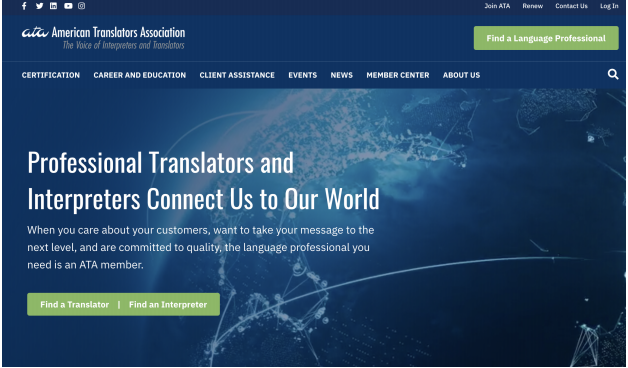
If you want to find a qualified translator, one of the best places to look for them is the American Translators Association’s website, https://t.co/XbAa1Rrcfg
The ATA is a professional association that helps promote the recognition of professional translators and interpreters. With this goal in mind, the ATA offers a certification exam that has become the gold standard for translators who want to work in the field. When you hire a translator who is ATA-certified, you can be sure that they are in possession of one of the industry’s most respected credentials. It also tells you that the translator has professional competence in a specific language pair, since they have to pass a certification exam with less than a 20% pass rate, and file continuing education credits every 3 years.
The process of finding a translator who is a good match for your company is fairly simple, especially if you know exactly what you are looking for. And even if you don’t, the ATA website gives you plenty of information that can make the task seem a little less daunting.
Let’s start by showing you where to go, once you get to the homepage of the ATA website. On the upper right-hand corner of the screen, you will see a text box in green: Find a Language Professional.
Clicking on it will take you to the language services directory, a database where translators post their professional profiles, and potential customers can find them.
There, you will be given the option between searching for individuals or companies.
Click on “Find an Individual” to find a freelance translator, or on “Find a company”, if you wish to work with a larger translation agency. There are benefits and drawbacks to both, but usually, if you have a very large project, an agency might be better equipped to handle it. They usually work with many freelance translators who are on the ready to get onboard for a specific project. We’ll show you how to find a freelance translator today. After clicking on “Find an Individual”, you are given the following options:
Choose a country to find a translator who lives or works in a specific time zone, for example. When searching by Work, you may choose an interpreter, who works with the spoken word, a translator, who works with the written word, or both.
Another popular option, when looking for a translator, is to Search by Language. Choosing your source language in the “From” field and your target language in the “Into” field, will allow you to narrow down your selection even further.
There are many more options to customize the list of translators ATA will provide you, such as the following:
After you’ve selected the most important criteria you need in your translator, just press search, by scrolling down to the end of the page. Make sure you check “I agree to the Terms of Use for Online Directories” and “I’m not a robot”.
If, on the other hand, you already know the translator you are looking for, you may find them by entering their name in the appropriate box:
The results page gives you three translators with the same last name. It is very clear which translators are ATA-certified and which ones aren’t. This comes in handy if your assignment requires a certified translator, or if you just want to take another degree of caution to ensure the highest possible quality.
Once you’ve found the translator you were looking for, just click on their name, and you will be directed to that person’s professional profile, showing basic contact information, in addition to a directory profile that gives you all the information regarding the type of services that person provides, such as interpreting, translating, dubbing/subtitling, localization, proofreading, etc. It also tells you whether the translator has any additional credentials, ATA-certification, etc.
And that’s it! You’ve found a qualified, Chinese translator, who is ATA-certified and can provide several other services in addition to translating. Now, you may find others to compare and contact for an interview or a very short translation test (no more than a couple paragraphs, in my opinion). Your company is one step closer to commercial success, partly thanks to the work of a bilingual individual who will be able to communicate your ideas fluently and effectively in the target language.
https://t.co/SrweBoxZPI
#translation #localization #Chinese #languages #LanguageLearning #subtitling #VIDEO #translator #lawfirm #Certifiedtranslation #uscis #realtor #ATA
How to Become an ATA Certified Translator
The most significant and renowned association of professional interpreters and translators in the United States is the American Translators Association or ATA.
The ATA is open to anyone who wants to use their skills as a translator or interpreter. If you wish to showcase your skills and work professionally as a translator, having a certification from the American Translators Association is a must.
Why Do You Need to Be Certified by the ATA?
I am an ATA-certified translator, and my clients prefer translators who are certified. I offer translations into and from the Chinese language, and my certification adds to my credibility and proficiency. Being a certified translator sets my potential clients at ease.
Additionally, having a certificate means that you can potentially get more clients compared to translators who do not have a certification.
Being in the translation and interpretation industry is no easy task. There are so many people out there who have excellent communication and translation skills. Furthermore, the prerequisites for working as a translator can easily be accomplished by anyone skilled in another language.
Acquiring a certification from the American Translators Association is vital for you to boost your career as a professional translator and gain an edge over your competitors. As a translator, being certified by the ATA has opened several new opportunities for me.
The American Translators Association is known by many as a prestigious association of professional translators. Their qualifying exam is extremely difficult, and the passing rate is incredibly low. This means that only skilled and proficient translators can pass their tests.
Because of the rigor of the ATA’s requirements, clients feel reassured if a translator is certified by this organization. A certification with the ATA is a true testament to the translator’s skills.
Other Benefits of Getting a Certification from the ATA
Apart from a boost in credentials and a surefire way to reassure your clients of your skills as a translator, getting certified by the ATA also has other benefits.
First, because of the reputation of the ATA and its strict standards for certification, being certified by the ATA opens many doors of opportunity and increases your chance for job offers.
The ATA has a directory of translators and interpreters where your certification will be listed. Having your name and certification on that listing means you will stand out from other translators and interpreters.
Furthermore, a certification will give you higher chances of acquiring clients since your name will be placed high on the listings.
Additionally, once you get certified by the ATA, you can choose to render your services and offer your suggestions to the ATA regarding its procedures, policies, and governance. Your voice will be heard since your certification will serve as proof of the credibility of your opinion.
Certified interpreters and translators of the ATA have an excellent opportunity to increase their reputations and become widely known as some of the best in the translation industry.
How to Get Certified by the American Translators Association
Apart from being an ATA-certified Chinese-language translator, I am also the head of Translation Boulevard. Our translation services include all the major languages.
Being certified by the ATA and having experience and credentials in this industry, I am confident in my abilities as a translator. Should you need any translation services, feel free to contact me.
Getting a certificate is no easy task. According to the statistics of the association, the passing rate for their exam is only 20%. This means that only the cream of the crop can pass and get certified.
It is essential to note that the ATA only supports specific languages. Before you continue to the next step, you must verify that the ATA supports your language. The list of languages they support is listed on their website, so go ahead and check it out first.
If your language is supported, the next step is to become a member. You will need to be a member of their organization for at least four weeks before the examination can be scheduled.
Aside from this, you also need to take the pledge of ethics. Once these prerequisites are accomplished, you are now qualified to take the test.
To be a certified member of this reputable association, you must follow a few simple steps. Here are the steps to get your certification from the ATA.
Application. If you are not yet a member of the association, pay attention to this step. If you are already a member, you may skip this step and proceed to the next one.
Simply go to the official website of the American Translators Association. You will be required to fill out some application forms. The application fee can be paid using your credit card.
Once all of this is accomplished, your certificate of membership should arrive by mail in about two weeks. This is the easy part since there are no prerequisite requirements. All you need to do is to pay the application fee.
Registration. The next step is registering for the certification exam. Remember that you need to be a member of the organization for at least a month before you are qualified to take the test.
The registration form must be filled out at least two weeks before the certification exam. The registration fee is 300 dollars.
Studying for the test. The certification exam is complex, as can be seen by the low passing rate. Therefore, it is highly recommended that you take the practice test. However, the test is optional, so if you feel confident enough, you may skip this step.
However, if you are nervous and want to be more prepared for the test, taking the practice test will help you gain confidence.
It will also prepare you for the kind of questions you may encounter during the actual certification exam.
Taking the Test. Taking the test is the last step. The test is difficult, and it will last for three hours. You will be facing several questions testing comprehension and language skills.
Apart from that, you will also be tasked with translating several texts. These texts may include legal, technical, non-fiction, business topics, medical, and so on. Their standard is very high, and multiple graders will evaluate your performance.
Final Thoughts
Getting certified by the American Translators Association is very difficult, but it is definitely worth it.
Its benefits include boosting your career as a translator, paving the way for greater opportunity in the translation industry, and reassuring your clients of your abilities as a translator.
Note: Some information was taken from the ATA website. Please check the ATA website for the latest information. The website address is https://t.co/b5p5sW1GYn.
#translation #localization #Chinese #languages #LanguageLearning #subtitling #VIDEO #translator #lawfirm #Certifiedtranslation #uscis #realtor
How Translation Can Help Your Realtor Business Grow?
The importance of translation in the success of a realtor business cannot be overestimated. In recent years, the real estate industry has seen an increasing demand from foreign companies and individuals desiring to manage and invest in real estate properties.
Because of the uptick in foreign interest, translation becomes a vital means of communication. It facilitates exchange of information with prospective customers, dispensing data in a language that customers can understand. Effective translation also utilizes SEO tools, ensuring that the advertised property can be easily located through online searches.
The real estate industry in the United States is quite competitive and dynamic. As a realtor, it’s your job to ensure your target customers are on the same page with you, from the initial consultation to the end of the transaction.
Sometimes, it’s difficult to communicate with clients who don’t speak English fluently. Interfacing with the large immigrant population in the United States can sometimes complicate real estate transactions. Luckily, translation bridges this gap, making it an important consideration for your business.
How Translation Can Help Grow Your Realtor Business
As internet usage increases and the world becomes more and more interconnected, tapping into the global market becomes a no-brainer for your business. However, this initiative also comes with its own set of challenges.
Once challenge is making a dent in the global market despite the increased demand for property. Communicating with people from different continents has also become an uphill task.
Nonetheless, these challenges can be easily solved by seeking professional translation services. With translation, you can help your business gain more non-English-speaking clients, both at home and abroad. Here are some benefits of employing translation in your business.
1. Easily Reach Your Customers
In 2018, over 1 million immigrants arrived in the United States. The majority of them were from China, India, Mexico, and the Philippines. These potential customers find it difficult to get in touch with realtors due to the language barrier.
Investing in translation can fill this gap. Customers tend to feel more comfortable and respected when they can browse a site in their own native language. Also, customers tend to perform searches using keywords from their own languages.
Without translation, it will be hard for them to find your site. You can use translation to turn this hurdle into an opportunity.
2. More Control
We can’t deny that the internet has given equal opportunity to everyone. Any person around the world can access your business anytime, anywhere. If you don’t translate your business information to accommodate speakers of other languages, someone else will.
This competition could cause you to lose a huge number of potential customers.
3. Generation of Goodwill
Like any other business, a real estate agency spends a considerable amount on marketing their property and services. After investing in public relations, advertisement, and charitable events to gain visibility, investing in goodwill can be a thoughtful addition.
Goodwill is essential for any business seeking recognition. When target customers notice that you have gone the extra mile to translate your business information for their convenience, they will become loyal clients.
Translation is a sign of goodwill which will eventually translate into increased sales.
4. Better Customer Support
New customers will always need additional support or consultation when seeking to learn more about your services. Website tools such as manuals and FAQs can help solve their problems, but what happens if these tools are not written in their languages?
Most FAQ sections are written in English, but not everybody understands English.
An interested customer could abandon your site because they can’t understand the site or get the answers they need. Thus, translating your webpage allows your business to offer customer support for everyone in a language they can understand.
There are numerous ways that translation services can help your realtor business soar high in the market. To leverage the use of translation, you need a professional translator. A certified professional translator such as Sean Song from Translation Boulevard can give you that much-needed translation support.
Aspects of Your Realtor Business That Might Need Translation
Suppose you’ve never considered hiring a professional translator for your realtor business. In that case, you are probably wondering which aspects of your business require translation.
Here are some aspects you might want to consider translating:
1. Property Descriptions
Keep in mind that no customer will buy what they don’t fully understand. Your property description section must be translated into a language that communicates clearly to your audience.
While most companies resort to machine translation for this section, it can unfortunately result in mistakes and confusion.
https://t.co/0FPlMnk0B6 Releases
Conducting press releases is an important way for your business to communicate with prospective customers about property launches and corporate events. A press release is an important part of your public relations strategy for audiences in different countries.
A press release aims to reach a wider audience and raise the number of potential customers. However, it won’t achieve this aim if there are no translation services to help your global customers understand what the release is all about.
3. Website Content
Your website is designed to offer highly informative and promotional content for your audience. However, it will be much easier to convert your visitors into loyal customers if your website is multilingual.
This will allow your website to serve more customers, and you can leverage this advantage as a marketing tool as well.
4. Legal Documents
Due to the sensitive nature of the real estate industry, every legal document needs to be translated. Professional translation ensures that you get the right translation for your documents. This helps promote trust and ensure that each part of the transaction remains secure.
5. Promotional Content
What’s the use of promotion if it can’t reach every interested party? With translation, you can communicate a message across your entire target market in a language that each viewer understands.
These are just a few of the pages and documents that require translation. Remember, when translating, the confidentiality and meaning of the original document should be maintained. For this reason, it’s important to choose a professional translation agency.
Here at Translation Boulevard, we have a team of professional and certified translators. Before commencing any translation project, our translators will first sign confidentiality agreements so that your information remains secure and private.
Consider Translation Services Now!
To ensure your success as a realtor, your business can effectively achieve the highest possible level of popularity. The world has now become a global market where everyone can access your site. To overcome the cumbersome language barrier, it’s best to enlist the services of a professional translation company for your website and services.
Translation Boulevard stands ready to help you with any translation needs. Please visit https://t.co/9GXAVS0MI2 or contact us via [email protected] for more information.
#translation #localization #Chinese #languages #LanguageLearning #subtitling #VIDEO #translator #lawfirm #Certifiedtranslation #uscis #realtor
How Can Law Firms Benefit from Translation Services?
When handling legal cases, every detail matters. Law firms understand the crucial importance of giving meticulous attention to the particulars. However, witnesses and clients from different language and cultural backgrounds introduce a barrier that makes accuracy more challenging.
Language differences can create obstacles that complicate the process of obtaining truth or establishing a claim. Language barriers limit a law firm’s ability to articulate and comprehend necessary information.
Human translators can be helpful. But the larger the firm’s scope of operations, the more impractical it will be to hire in-person translators. This is where translation services come into the picture.
When Are Translation Services Needed?
In order to avail itself of translation services, a law firm must recognize the situations in which translation services are most needed. Consider the following translation examples:
Oral and written testimony
Negotiations and interviews
Court hearings and legal trials
Attorney-Client meetings
Changes and updates in the legal world
Documentation
When a non-English speaking client confides in his/her lawyer, it is crucial that not even one detail is lost in translation.
As much as possible, it is important to preserve both the essence of the information and the actual words used by the witness, to the greatest degree possible across cultures and contexts. The more reliable the translation services, the more consistent the oral and written statements will be.
During a court hearing, real-time conversations are dynamic and weighty. Each nonverbal cue, gesture, and inflected tone of voice can alter the meaning of what is being communicated. During these weighty and important situations, the speed and accuracy of the translation services are pushed to their limits.
Each verbal cue and conviction must be carried over to the translated statements. Any mishap can lead to a disadvantage in the proceedings.
Law firms not only deal with cases but also with processing legal documents. These files are essential for the client’s future endeavors. Here are the standard legal documents which utilize translation services:
Legal immigration documents
Patent, copyright, and trademark
Contracts for overseas business transactions
Corporate documents such as warranties
Financial records from foreign banks
Expanding businesses’ regulatory translations
Claims of international fraud
Considerations When Hiring Translation Services for Legal Activities
Let’s assume that your law firm is not limited to a certain locale, but covers an entire region. Not only will you be dealing with local and regional laws, but you will also be dealing with regulations on a national and international level.
The introduction of other languages presents multiple challenges. When multiple languages are involved, the statements or documents will be at the mercy of the translation services. This is why it is crucial to make a good choice when selecting a translation service.
Before choosing a translation service, the following factors should be considered.
Availability
Since law firms frequently encounter cases involving non-English languages, it is advantageous if the firm has its own exclusive translation service.
When this is not possible, outsourcing may be the best possible route. A law firm must select a translation service provider that is readily available when needed.
Security and Privacy
Confidentiality of legal documents is of utmost importance. Entrusting a translation service with private documents can put confidentiality at risk.
It is imperative to use a translation service that translates lawfully with no leakages of confidential information.
Speed
We all know how frustrating it is when legal proceedings are slowed down unnecessarily. It’s important that translation services do not hinder the speed of the judicial process.
Law firms need to be flexible and spontaneous, and the last thing lawyers want is to be delayed due to translation.
Service Contract
Full-service contracts are beneficial when handling translation jobs of any scope. As mentioned, translation services are needed in a variety of legal capacities.
At certain times and in certain situations, translation tasks will suddenly be in very highly demand. When hiring a translation service, consider the service contract it provides.
Reputation
The more reputable the company is, the better translation jobs you can expect. Finding a translation service by trial-and-error methods can cost law firm money and time. Instead, connect with companies that are already well known for their excellent service.
Price
As a law firm identifies documents and tasks that require translation, it is important to be mindful of the budget as well as the quality of service.
Most translation services offer a package deal that includes all translation services and capabilities. If your law firm encounters many diverse translation demands, choosing the package deal will provide the most economical option.
Compliance
Certifications are important. After all, these translation service companies will be dealing with law firms. If a translation service company cannot meet legal requirements, the translated documents lose their relevance and integrity.
How Can Translation Technologies Help Law Firms?
If you have a high need for translation, you can consider starting your own translation department. In that case, it is imperative to understand some modern translation technologies and some basic terms in the translation industry.
Computer-Aided Translation, or CAT
This is a software-based translation tool operated by a human translator.
Machine Translation, or MT
This is a device or process wherein translation is done automatically through computer programming. There is no need for human intervention at all.
Translation Memory, or TM
This refers to a database containing literary pieces that are previously translated, similar to the functioning of a template. TM works with other translation technologies, such as CAT, to make the translation process faster.
Translation Management System, or TMS
This software deals with aspects of translation that are repetitive yet non-essential. This service is analogous to the auto-suggest feature on your smartphone.
Remote Simultaneous Interpreting, or RSI, Technology
As the name implies, this technology is both ‘remote’ and ‘simultaneous.’ It relies heavily on wireless technologies such as cloud-based platforms.
Qualified translation services are equipped with these technologies. The technologies mentioned above can handle the law firm’s demands more efficiently and accurately than human translators.
Conclusion
A translation service can be beneficial to a law firm that regularly deals with many non-English statements and documents.
The more reputable the translation service company is, the more assurance the firm can have in obtaining accurate results.
Unless you have a large translation need, there is no need to start your own translation department. Hiring a professional translation service provider such as Translation Boulevard will save you a lot of time and effort.
Check out our website: https://t.co/MdB1EPDJD8 or contact us at [email protected]
#translation #localization #Chinese #languages #LanguageLearning #subtitling #VIDEO
Global is local. With our professional translation services, you can reach more local markets in their native languages. Our services are fast, reliable and professional. https://t.co/H3IU3kbZCV
The most significant and renowned association of professional interpreters and translators in the United States is the American Translators Association or ATA. https://t.co/4yqcQtTzAu
Here at Translation Boulevard, we always provide professional quality translations in subjects such as media, marketing, law, medicine, finance and general documents.
For your translation needs, call us at 4438208282 or email [email protected]#chinesetranslator
Translation Boulevard wishes your year to be filled with joy and happiness. Your motivation and support this year have been greatly appreciated. Cheers to a prosperous 2023 🎉🎆🎊
.
.
.
.
.
.
#happynewyear2023#newyearsbestwishes





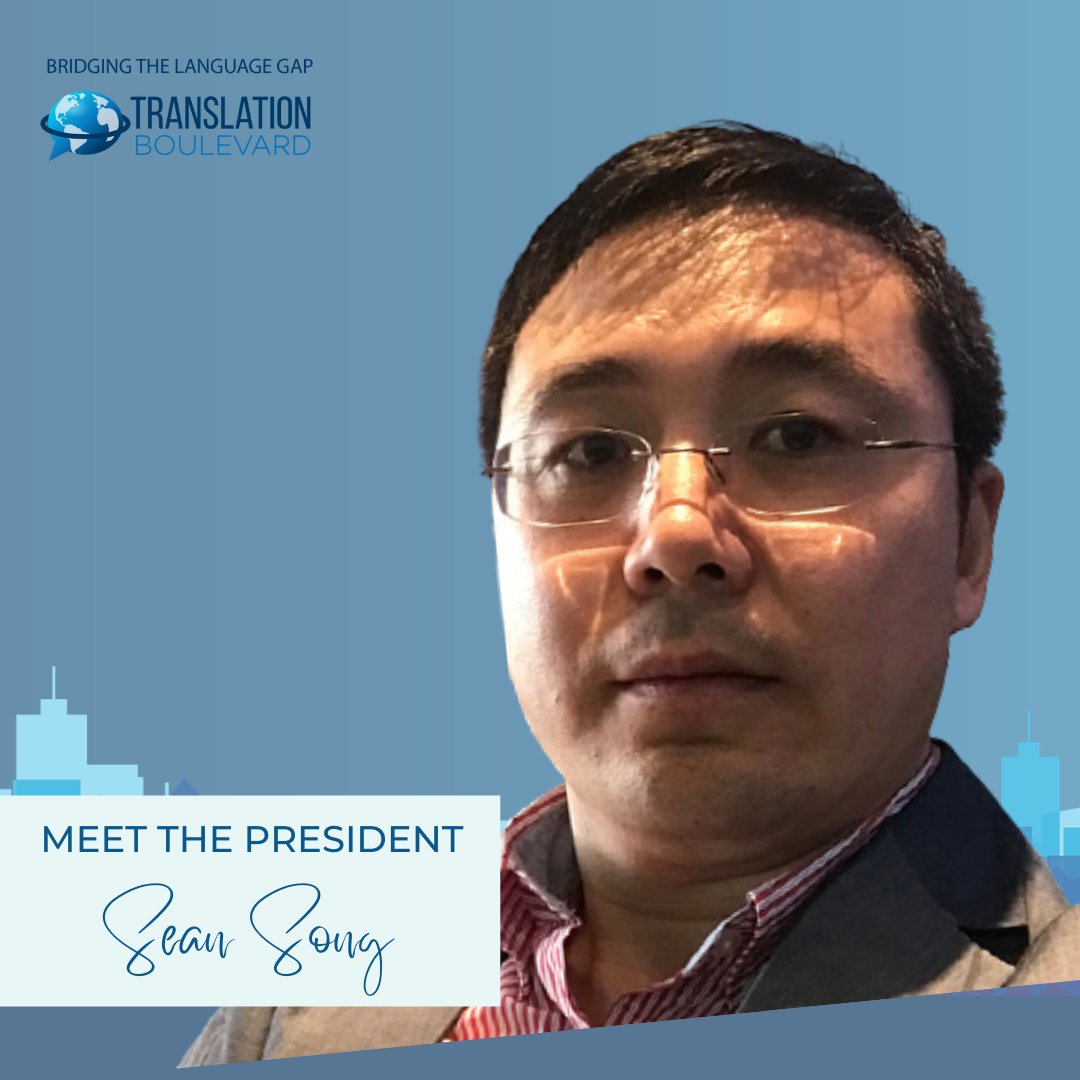
![Translationblvd's tweet photo. Sean Song’s article about https://t.co/nHgOt0xQrQ, published by Multilingual Magazine (Full Article)
Sean Song is the founder of Translation Boulevard, a company that provides both translation and subtitling services. Previously, he worked as a journalist. He holds a master’s degree from Annenberg School for Communication and Journalism of the University of Southern California, and the London School of Economics.
He loves authoring articles about the translation industry and sharing his insight. In this interview with Emmanuelle Dumas, Language Solutions Manager at https://t.co/nHgOt0xQrQ, Sean talks about the many great things https://t.co/nHgOt0xQrQ has done to localize their content. Sean has translated over 10 million words for https://t.co/nHgOt0xQrQ and he also has experience in translating and managing translation for the tourism industry. He shares firsthand experiences and the lessons he learned while translating for the tourism industry.
This article was originally published in one of the most prominent magazines in the translation industry, Multilingual, on Jan/Feb 2020.
https://t.co/nHgOt0xQrQ: Experiences and lessons learned in 22 years of localization
I started my career as a journalist, but subsequently became a translator. More recently I started my own translation company as well. In order to learn how to grow my new business, in 2018 I attended translation industry gatherings such as GALA’s annual convention and LocWorld’s conference on localization. In one of the conversations there, I heard that the translation industry usually is under-reported on by the media at large. One of reasons, I heard, is that the overall scale of that industry simply is not big enough to attract the media’s attention.
I agree with that view only to an extent. As a journalist by trade, I know that good stories are everywhere. You just need to dig them out. A journalist cares most about finding a good story, regardless of which industry or sector of life it comes from. Many times I have found good stories by talking with people sitting next to me or by visiting their homes after a news conference. In other words, digging deeper will turn up good stories.
From where I live in Howard County, Maryland, I often travel Route 40 West from my home to the old house where I used to live in Catonsville. At the intersection of Route 40 and I-695, the Baltimore Beltway, there long has stood a travel agency. Even though I don’t remember of the name of that agency, I couldn’t help but notice the other day that it was finally closing down. Feeling pity for the loss of that small business owner, I thought to myself, “what if he or she had adopted an online model earlier?” Of course, I’ll never know the full story behind the closing of that business.
People may say that small local businesses go broke because of globalization, but that is not all that is going on. Some big-name companies also have gone out of business because they failed to adjust to the digital age.
On the other hand, while localizing texts for the hotel industry since 2010, I have found that many small business owners, whether owners of small hotels or travel agencies, have achieved success by expanding their presence online.
This article is intended for readers who are interested in localization in the tourism industry or localization in general. Learning from successful localization efforts in the tourism industry could be beneficial, for both global companies and Mom and Pop stores as well.
Good stories are everywhere. However, as a journalist, I have had to spend hours finding those stories online or though interpersonal communication. Bridging that gap between a good story and the reader is the role of the journalist.
Following up on contacts I had made at LocWorld, I offered to dig out some of those stories to share with our readers. I long had known of https://t.co/nHgOt0xQrQ as one of the pioneers in localization and thought that they were doing pretty well. I speak from my own personal experience, as I have watched how my friends and colleagues in China used the Chinese version of https://t.co/nHgOt0xQrQ to search for local hotels. Later, they saved themselves even more hassles when planning international trips, whether to London or Iceland. So I reached out to https://t.co/nHgOt0xQrQ to see whether they would be willing to share their experiences with localization. They generously agreed and arranged for me to talk with their Localization Head, Emmanuelle Dumas.
I asked Emmanuelle to share the history of their localization effort, their achievements, and any lessons they had learned. She highlighted their “mixed model,” which combines in-house teams, freelance translators and writers, and translation companies. I hope this will be helpful to other global companies that already are working on localization, as well as to others that are just contemplating starting down that path. Small business owners also may benefit from this, as big companies like https://t.co/nHgOt0xQrQ also started small. I hope you might agree that this effort, even in the oft-ignored translation industry, has turned up a good story.
To retain its authenticity, I have kept the following interview in its original Q&A format, although it has been edited for brevity and clarity.
Introducing Emmanuelle Dumas
Sean Song: Could you just introduce a little bit about yourself for our readers?
Emmanuelle Dumas: Sure. My name is Emmanuelle Dumas. I’m a French native speaker and by training a linguist and translator. I have a master’s degree in Applied Linguistics and have worked all my career in the language and translation industry. I started working on game localization and then moved on to work for some LSPs [language-service providers].
In September 2017 I joined Booking to manage the language services within Booking’s Content Agency. The role is really about defining the language strategy and how best to support the business with innovative language solutions.
Localization at https://t.co/nHgOt0xQrQ
Sean Song: Please tell us a bit about https://t.co/nHgOt0xQrQ and your localization history. How did you start and come to excel as a global company?
Emmanuelle Dumas: To give you a bit of history, Booking was one of the first online travel platforms. It was founded here in the Netherlands in 1996. This certainly helped shape its future, because the Netherlands is a small country, and the Dutch people love to travel! So the need to become international was there from the very early days. It’s in our genes.
Our first office outside of the Netherlands was opened in Barcelona in 2002. In 2005, https://t.co/nHgOt0xQrQ was acquired by Priceline, an American platform also in the hotel space. Priceline’s acquisition of https://t.co/nHgOt0xQrQ gave it a foothold in Europe and, for Booking, provided us financial opportunities to expand further internationally. From its beginning, Booking was very data-driven. As we looked at adding languages, we always did it according to consumer needs, so languages were added based on consumer demand, at the beginning primarily to translate hotel descriptions. And for a long time our approach to content was really transactional like that. When it worked well, we continued, and we added languages on the basis of demand.
In 2010 we started adding language specialists to work alongside our UX [user-experience] copywriters, and supporting our cycle of A/B testing. From then, it really became clear that the language specialists were supporting the user experience in multiple languages, so we have continued to scale up in that way. Today we have 44 languages. I believe that the last languages that we added were Icelandic and Argentinian Spanish. Last year we added Georgian for our partners’ tools, but not yet for our customer content.
Now of course we constantly look at what markets we need to develop next and for me, in my role looking midterm, I consider what key markets the company is focusing on: are there languages that we need to add, how do we need to upscale our internal teams, or what content will we be sending to our internal language specialists or external teams in the future?
So from the very beginning translation and localization have been at the core of what we do because Booking has been international from very early on. Translation and localization boost our business because they allow us to be locally relevant. With physical presence now in 70 countries and more than 200 offices, we are able to evaluate our local relevance every day through those local offices.
This global reach means that our local teams are constantly talking to our partners and also our guests, of course, and we have constant feedback on how locally relevant we are, what we could do better in-market. Thus I would say that localization and translation are at the core of our business.
https://t.co/nHgOt0xQrQ: Lessons Learned
Sean Song: Would you have any experiences or lessons from your localization efforts from which others could learn? I mean common pitfalls, or experiences to share with other global companies.
Emmanuelle Dumas: We are very lucky to have a unique mixed model with internal language specialists being so involved in experimentation with localized copy, so we are able to tell very early on what works in certain markets and what doesn’t. The local teams, working closely with our UX copywriters, are able to give feedback on copy that does not work well and provide an alternative better suited for use in their market, this can happen very fast. Having worked in LSPs in the past, I would say that, if we relied exclusively on external resources, the feedback loop would be much slower.
When you can have internal localization experts and specialists constantly working with UX copy then it enables faster and higher-level localization and better adaptation to market. My experience is that we are on target for each market faster because of our close coordination, and ensuring first time right voice of Booking.
Sean Song: The CEO of a company, SmartLink, also made that same point, in a webinar on GALA I heard recently. The buyer wants a direct relationship with the translator, not necessarily replacing the LSP but communicating better what they are trying to do. Yours is a great suggestion, because you have direct relationships with the content writers, creators, translators, and your consumers. A lot of companies give everything to the LSP, probably because they just want to have a good night’s sleep, but then they wake up to headaches because of mis-communication. If you have only indirect communication with the content creators, they will not know the immediate response from the market.
Emmanuelle Dumas: That’s exactly right. I think probably you can achieve it with an LSP, but they probably need longer agreements, more in-depth communication, longer feedback loops to achieve the results that we achieve when our product teams and language specialist teams are basically part of one team within Booking. The other advantage is of course that our internal language specialists are so passionate about the product, about our company, about the brand, and about what they are translating. There is a level of involvement and engagement that you get from internal language teams that you cannot get from an external provider.
Sean Song: Is the cost higher to hire an LSP or to maintain an internal team?
Emmanuelle Dumas: Well, I think this is very difficult to compare and evaluate because it depends very much on what you include in the costs of localisation. In my experience most companies using LSPs need to involve teams in Product and Marketing to support with guidelines, terminology validation, review, feedback, final content approval… These are a lot of hidden costs, and for us, a model that would simply not be efficient or scalable enough.
We prefer to look at the value that having our internal teams generate, the edge it gives us to enable multilingual and multi-market copy experimentation so fast, and similarly, to ensure high-quality locally-relevant branded messaging for our marketing campaigns.
Sean Song: I agree. A lot of buyers just want the certainty of saving money. You point out that it is not only hard to compare whether they are saving money but the quality of the work differs, too.
Speed, Quality, Feedback
Emmanuelle Dumas: Nowadays, it seems that time to market is key. We are working with internal stakeholders and also sister companies who are most concerned with both a short time to market and high quality.
In general, our model provides the best basis for fast turn-around and faster change. If we need to take a different approach, we can do it in less time and more flexibility with an internal team.
Sean Song: What feedback do you get, from either hotel clients or other consumers? Please cite one or two examples.
Emmanuelle Dumas: We collect user feedback in a number of ways to have different touch-points on quality. Of course we have stakeholder surveys, for satisfaction and quality. Also, after every major launch or major project with our internal stakeholders, we use feedback loops to find out how our general stakeholders evaluate our quality. Then internal Booking employees form another layer of feedback, since all of us are also https://t.co/nHgOt0xQrQ users and we have a culture of feedback! We have a system in place internally whereby everybody can give feedback on the quality.
I’m French, so when I use https://t.co/nHgOt0xQrQ in my language, if I see something that I find a little bit strange, I can directly provide my comments through our feedback system.
Finally, we also conduct end-user surveys for customers and partners, to find out what the users think of the language on https://t.co/nHgOt0xQrQ: what they think of the forms of address or our communication in general. We try to measure quality from all of the possible angles.
LSPs vs Freelancers
Sean Song: Other companies hoping to globalize as https://t.co/nHgOt0xQrQ has done may be just starting their localization process now, so they want to hear what’s best for them: to hire an LSP such as you worked for, or to manage an internal linguist team. What’s your view as to what’s the best for a global company?
Emmanuelle Dumas: There are advantages to every model. Probably the answer is somewhere in the mixed approach. For us at Booking, I have to say that, even though I came from a background of having worked with many LSPs, when I joined Booking and its internal Content Agency team, I was amazed by all the advantages that it brings, and how quickly and efficiently we can support the business. Essentially, our platform is really our formula for localizing content and constantly optimizing. We run a lot of A/B experiments to determine best content solution.
Sean Song: Excuse me, what are “AB experiments”?
Emmanuelle Dumas: ���A/B experimentation” means basically that we are testing different variants of different elements on a page, for example how a call to action is worded or how certain information is displayed, to see which performs better with our users. With this model, it’s very useful for us to have internal language specialists working so closely with our product teams and our copywriters. It enables us to get content ready and localized fast.
Sean Song: This is probably one of the gold nuggets https://t.co/nHgOt0xQrQ has found, because a lot of people are considering whether they should have an internal team or just hire an LSP.
Emmanuelle Dumas: Our model is mixed, of course. Our internal teams work on a lot of our most critical, branded, content, and they are at the core of our localization process, but, like other large companies, we also use freelancers and LSPs for specialized or very scaled content.
Machine Translation, Languages, Quality
Sean Song: I see. But what about machine translation?
Emmanuelle Dumas: I knew that you would ask about MT. We now have live machine translation in 12 languages, for property descriptions, for example. When our MT team was built, roughly two years ago, they started working on neural machine translation. Because at Booking we had so much data on property description that we had been translating for years with freelancers, we were able very quickly to build neural machine models to very, very high quality. Today, after just two years Machine Translation team have put 12 languages in production.
Sean Song: How many languages are you currently translating into?
Emmanuelle Dumas: Currently we are translating in 44 languages.
Sean Song: Wow, 44 languages! I’m very impressed. How do you control the quality of managing those 44 languages?
Emmanuelle Dumas: As I mentioned earlier, ours is a mixed model with internal and external teams and translating very different content types. So we have a created a quality framework that actually supports all of our needs, including content and services. The quality framework looks at quality, from a purely linguistic point of view but also from our stakeholders’ feedback, as to the level of quality that they need for the product. In addition, we also look at the end-users’ perception of the quality of language on https://t.co/nHgOt0xQrQ. For example, we run surveys to find what our users think about the language, the tone, and how we address the users, their experience when they use https://t.co/nHgOt0xQrQ in terms of pure language.
We also can do some very targeted quality research, for example, we can pretest on a specific challenge we have with a language or product.
Strategy for the future
Sean Song: As my last question, do you have a vision for the future or a strategy for the next five years and beyond? I wonder especially about machine translation, which you mentioned: a lot of things are going on there in the world of localization.
Emmanuelle Dumas: Well, our machine translation team certainly does and I think they basically are looking at training their model for more languages. That is one of the things they are working on, and also more use cases for machine translation. Now we are using MT only for our property descriptions and user reviews, but not in many languages. Obviously, we are trying to deploy MT on more use cases, and more languages.
On my side, I’m also concerned midterm with what should be the next languages that we need to focus on, the markets our business is focussing on, whether we will need to add new languages, and how are we going to go about it.
Now that https://t.co/nHgOt0xQrQ has grown to be a platform where people come to book much more than just their accommodation, we have many products and a lot of different types of content. Our language teams strength is to be very integrated with the business and to be part of the Global Content Agency within https://t.co/nHgOt0xQrQ. We are looking at basically collaborating with the business on more of their content, what the next leads will be, and how we can support them. For instance, last year we localized the Booking Assistant chat product into several priority languages to support our customer service, providing faster solutions to https://t.co/nHgOt0xQrQ users.
Sean Song: This has been so helpful. Thank you very much.
#translation #localization #Chinese #languages #LanguageLearning #subtitling #VIDEO #translator #lawfirm #Certifiedtranslation #uscis #realtor](https://pbs.twimg.com/media/GHrgNpIWEAA203B.jpg)