🇨🇭 Cerdia, a global manufacturer of cellulose acetate headquartered in Basel (Switzerland), continues operating in Russia despite the full-scale war.
From 2022 through March 2025, Russian companies received $7.3M worth of its products.
Documents indicate that in 2023–2025 these entities used imported cellulose acetate in the production of rockets, aerial bombs, and air defense systems.
📉 Despite the cases described, South Korea’s sanctions regime can be considered relatively effective. Since the tightening of export restrictions, the flow of dual-use goods to Russia has decreased by an order of magnitude.
🔗 Read the full report: https://t.co/x6R3e3xVIv
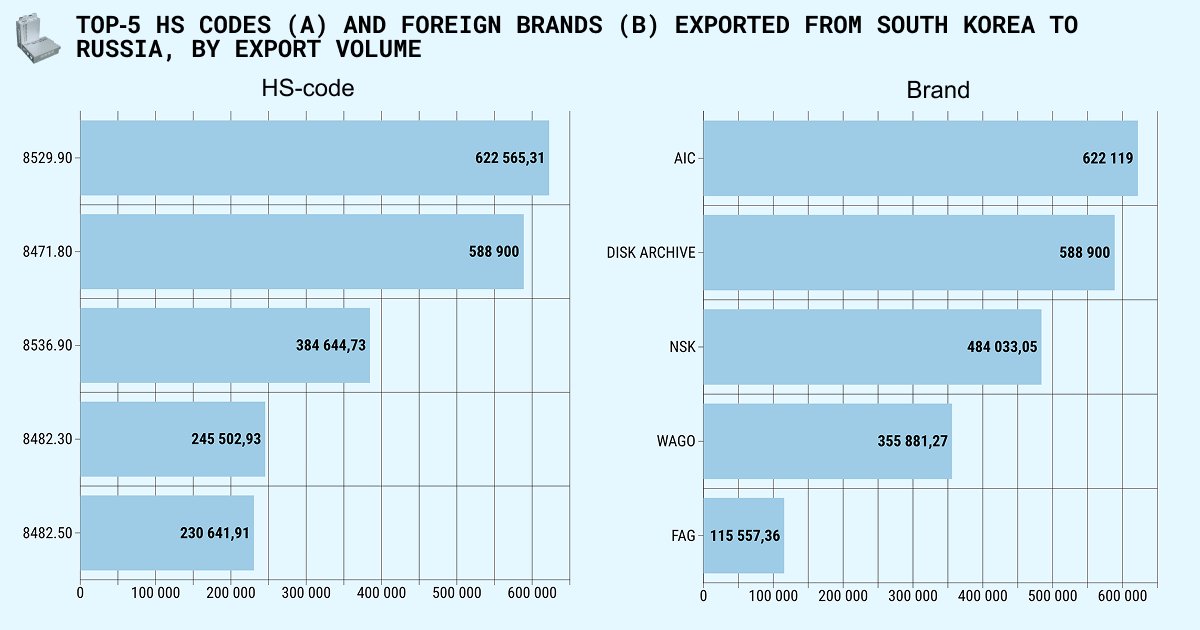
An analysis of export structures shows that, even after sanctions were imposed, Russia continues to receive critically important goods from South Korea.
📍 At the same time, a significant portion of goods reaches Russia not as Korean-made products, but as foreign technologies passing through Korean supply chains. Brands appearing in this segment include AIC, NSK, WAGO, FAG, among others.
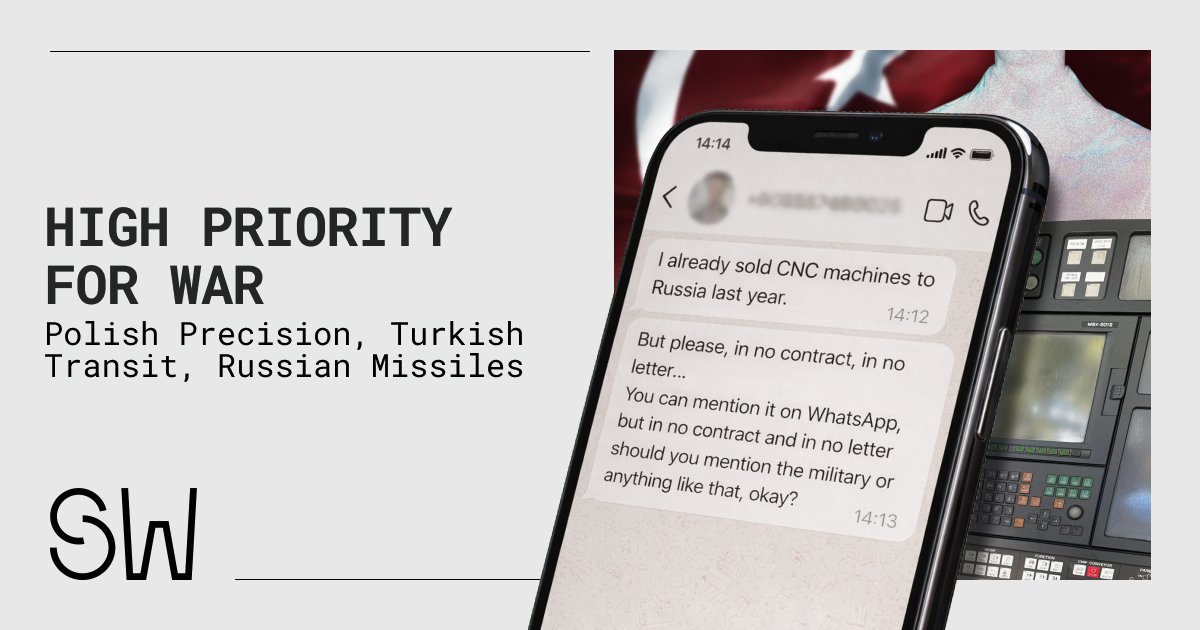
Despite public statements about leaving the Russian market, European high-precision machine tools continue to reach Russia through networks of intermediaries and shell companies.
Full investigation: https://t.co/x6R3e3xVIv
“But please, in no contract, in no letter, do not mention the military or anything like that, okay?”
This was said by Bilal, a Turkish trader who has been organizing the supply of European machine tools to Russia since the beginning of the full-scale invasion.
Thread ↓
🇹🇷 Turkish intermediaries openly offer sanctions-evasion schemes:
• purchase of equipment in Europe
• re-export through Turkey
• concealment of military end use in documents
• use of banks and agents for payments
This shows a systemic problem. Even equipment not classified as dual use can strengthen enterprises tied to Russia’s military industrial complex. Since 2022 China has increasingly become a key hub for such supply chains.
Full investigation: https://t.co/GmBLCc8uhj
In the EU’s industrial heart, Herstal in Belgium, New Lachaussée has produced equipment for detonator primers and ammunition since 1830. After 2014 it claimed to have cut ties with Russia’s defense sector. Evidence suggests otherwise.
No formal direct contract is visible. But links between Iskra, the Chinese supplier and the Mir group suggest Belgian equipment may have been integrated into a production chain serving Russian state defense orders.