Trax powers global supply chain optimization through AI-driven spend and compliance management, delivering enterprise-wide efficiency, visibility and control.
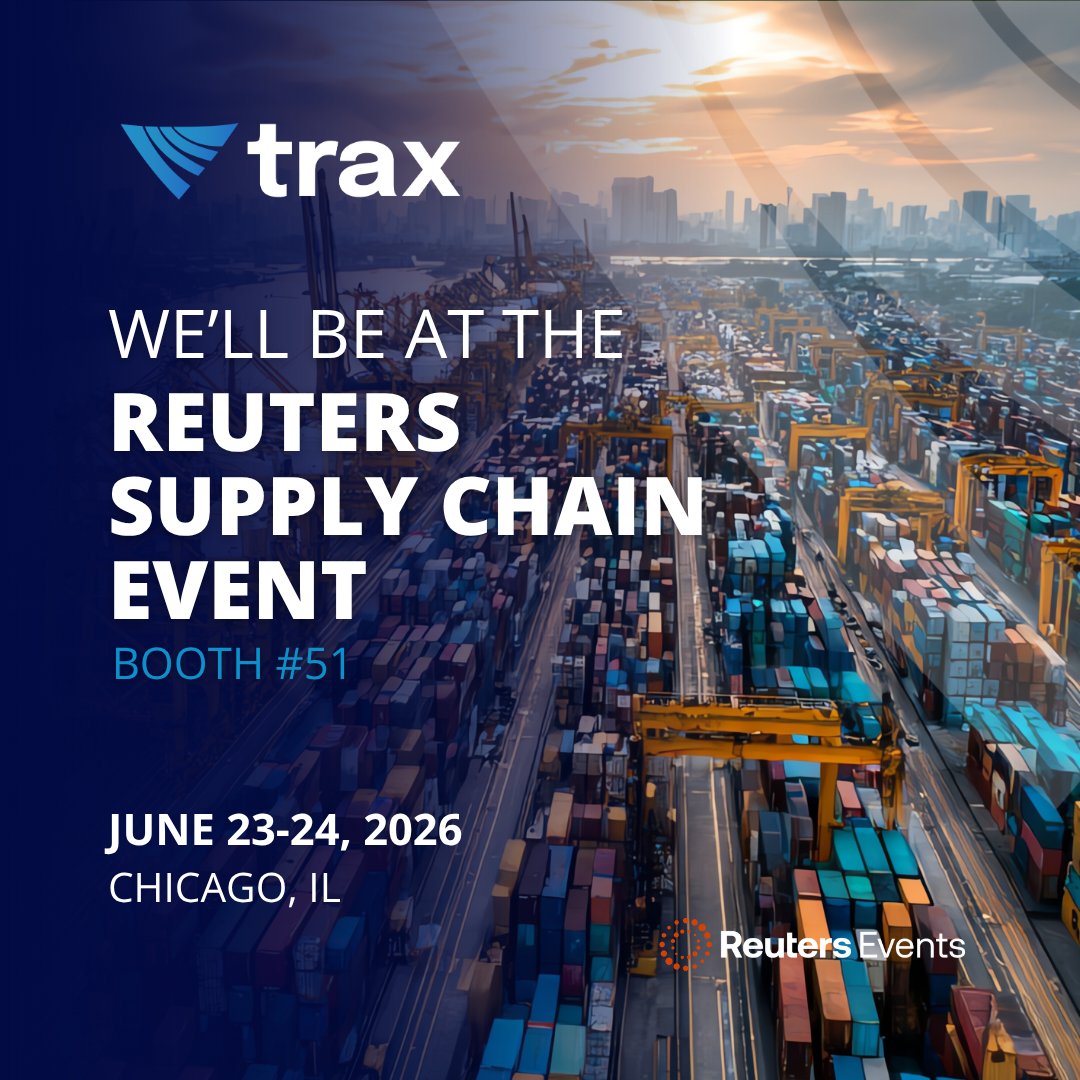
Trax is a proud sponsor of Reuters Supply Chain 2026 in Chicago, June 23-24. If you're attending, come find us at booth 51!
We're looking forward to the conversations happening on the floor this year!
#SupplyChain#SCUSA#FreightAudit
A Fortune 500 manufacturer had $65M in past due payments, 500+ carriers starting to shut off service, and a first pass yield of 20%. That's 4 in 5 invoices requiring manual review before payment.
Transportation costs average 8-10% of total corporate spend.
The COO's Handbook covers the metrics, benchmarks and operational decisions that close it. → https://t.co/SXyrXQ88CJ
Only 21% of companies have full visibility into their supply chain spend. The other 79% are budgeting, forecasting and negotiating on incomplete data, and most of them know it.
Most transportation teams aren't struggling with a lack of information. They're struggling to turn information into a clear, shared view of spend.
The first step isn't adding another report. It's understanding where visibility breaks down.
5 signs your transportation spend data is working against you. Most supply chain leaders know their total freight cost. Very few can see it by carrier, lane, business unit or charge code.
5. Your carrier payment cycle is measured in weeks, not days.
Late payments aren't just an AP problem. They erode the carrier relationships your supply chain depends on, especially when capacity gets tight.
4. Finance, logistics and procurement each run off different data exports.
A single freight invoice means something different to each team because there's no shared source of truth. That misalignment costs time, money and negotiating leverage.
3. 80% or more of your invoices require manual review before payment.
That's not an exception management process. That's a broken audit process creating payment delays that damage carrier relationships.
2. Your procurement team negotiates carrier contracts without normalized benchmark data.
Without accurate historical lane data, every RFP starts with a disadvantage.
1. You can see total freight cost but not cost by carrier, lane or business unit.
If you can't drill below the invoice level, you're budgeting on averages, not actuals.
Technology implementation is only the beginning.
Our Procurement Technology Playbook explores how leading organizations improve spend visibility, data quality, stakeholder alignment, and ROI from procurement technology investments.
Get the playbook: https://t.co/jLwBc1gwpY
Most procurement teams aren't struggling with technology.
They're struggling with visibility.
If you can only see a fraction of your spend, how confident are you in the decisions you're making?
Many operational challenges stem from fragmented data, not lack of effort.
Our COO's Handbook covers transportation cost control, operational resilience, AI-powered visibility, and better cross-functional execution.
Get the guide: https://t.co/SXyrXQ88CJ
COOs are being asked to cut costs, improve resilience, increase speed, and create visibility across the business all at the same time.
The question isn't whether your operation has enough data.
It's whether your teams can turn that data into better decisions.
Stay ahead with curated insights, trends, and real-world use cases in the AI in the Supply Chain newsletter.
Subscribe on LinkedIn: https://t.co/UVvyqJhgG7
AI is reshaping supply chains faster than most companies are prepared for.
From demand forecasting and procurement to warehouse automation and logistics optimization, the companies adopting AI now are building a major competitive advantage.
The companies adopting AI now are building a major competitive advantage.
Stay ahead of the shift with Trax's AI in the Supply Chain newsletter covering:
• AI trends impacting supply chains
• Real-world use cases
• Automation & analytics insights
+ More