I'm speechless at OpenAI releasing that contract excerpt and acting as if there aren't gaping holes that could be exploited far beyond their stated "red lines." I'm not a lawyer, but this is pretty obvious and common sense.
(And to be clear: if Google had signed the same deal, I'd be saying the same thing internally. The issues here are bigger than friendly competition between companies.)
OpenAI's "red lines" are: no mass domestic surveillance, no directing autonomous weapons, and no high-stakes automated decisions. They argue their cloud-only deployment + safety stack + cleared OpenAI personnel "in the loop" make violations impossible. They also claim the contract references the relevant laws/policies "as they exist today" so future changes won't weaken the standards.
But the actual language they published is still full of obvious escape hatches. This is why Anthropic refusing to sign makes sense. Reporting on the Anthropic–"DoW"/Pentagon standoff described them saying the proposed contract language was framed as compromise but paired with "legalese that would allow safeguards to be disregarded at will."
You don't need to agree with Anthropic on everything to see what they're reacting to: language that sounds like ethics but cashes out as essentially "subject to whatever the government decides later."
## Autonomous weapons
The problem is that the restriction is conditional: it depends on what "law/regulation/policy requires human control" for. If policy definitions are weak (or later revised), the contract language itself doesn't read like a durable "no autonomous weapons" ban. It reads like "we'll follow whatever the current regime says requires human control."
OpenAI says elsewhere that the agreement "locks in" today's standards even if laws/policies change. If that "freeze" clause is real and enforceable, sure, but it's not visible in the excerpt itself, so the excerpt alone doesn't justify the level of confidence they're projecting.
## "High-stakes decisions"
Same loophole. This forbids only decisions that already require human approval under whatever authorities apply. If a decision doesn't formally require approval (or can be reclassified/reshaped), the clause doesn't obviously prohibit automation of the step that matters.
## Surveillance
"directives," "purpose," and "unconstrained" are squishy on purpose:
"DoD directives" aren't laws; they're internal policy. That matters because we have real precedents for administrations leaning on aggressive internal legal/policy interpretations as a shield until courts/politics catch up.
If you think "secret memos" is alarmist, look at the pattern:
1. Reporting in early 2026 described a previously hidden DHS/ICE legal memo position asserting warrantless/forced home entry under certain circumstances, which is the kind of internal-lawyer move that tends to get written, circulated, and only later litigated and retracted.
2. And historically, the Bush-era OLC torture memos are the canonical example of "legalistic compromise" that later turned out to be a moral and legal disaster. (You don't have to litigate the details to make the point: internal legalese can be used to launder outcomes.)
"Unconstrained" is not a real safeguard. Surveillance can be huge while still "constrained" by selectors, categories, time windows, or a stated "foreign intelligence purpose." And it only covers private information, so not the massive world of public data that can still be used for profiling, targeting, and "pattern-of-life" analysis at scale.
## Domestic law enforcement
> shall also not be used for domestic law-enforcement activities except as permitted by the Posse Comitatus Act and other applicable law.
This is not a hard prohibition. "except as permitted" is not a ban. It's a permission for exceptions, and "other applicable law" is an open-ended bucket by design.
If you want a concrete, recent example: the Associated Press reported that formal orders extended the Washington, D.C. National Guard deployment through Feb. 28, 2026, to protect federal property/functions and to support federal and D.C. law enforcement.
That's exactly the sort of "domestic deployment supporting law enforcement" scenario where this clause stops sounding like a "red line" and starts sounding like legal throat-clearing.
## "Cloud-only / no edge deployment prevents autonomous weapons" rings false
OpenAI's own argument is: cloud-only (no edge devices) means you can't power autonomous weapons. But that's not convincing.
You don't need GPT-5.2 running on the missile. You can use a cloud model for high-level decision-making (tasking, prioritization, target recommendation, mission planning) over a satellite link (Starlink or otherwise), while a separate local system handles actual guidance and execution.
High latency is totally compatible with "strategic / operational" autonomy while still enabling lethal outcomes.
Once the pattern exists, "additional safety layers" are a policy choice and implementations change, exceptions get made, but today's contract language tends to get "grandfathered" into tomorrow's contract template.
So layered safeguards can reduce risk today, but the contract language itself is exactly the kind of "looks strict, bends easily" compromise that becomes precedent.
And creating precedent is the real problem here.
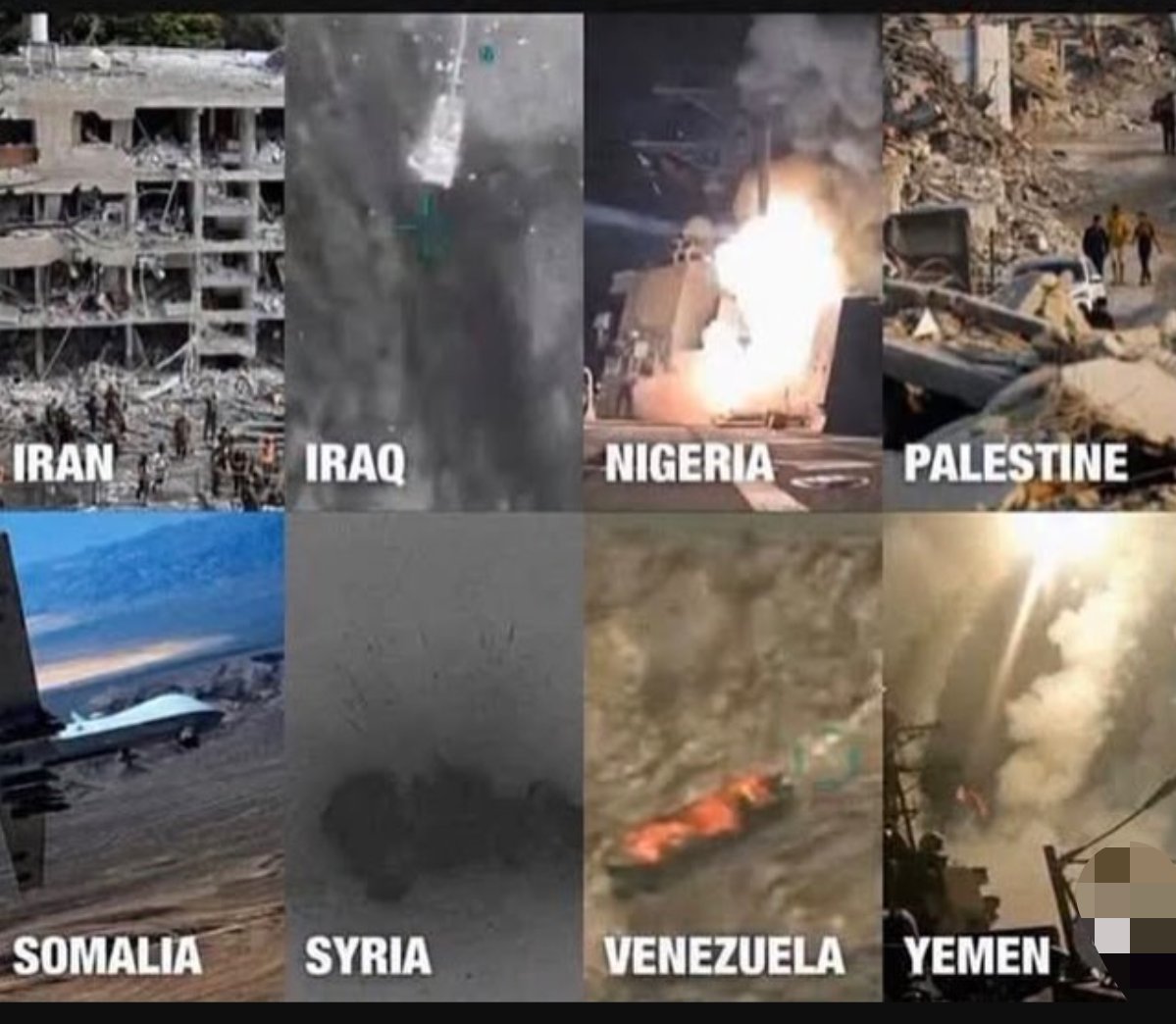
I graduated from the United States Military
Academy at West Point and was an Army Officer for 5 years. I was conditioned to believe all of the wars and conflicts the US has fought in were necessary to preserve freedom.
I don't claim to be a geopolitical expert, but I am now of the firm position that most, if not all, of the conflicts the US has been involved in were largely under false pretenses, the public was severely misled, a boogeyman was shoved in the public's faces to conjure support, and countless American and foreign lives were senselessly destroyed in the process.
Banking, multinational corporate interests, shadowy control structures (and in this case, in part, Israel) are likely the real reasons for these wars and conflicts.
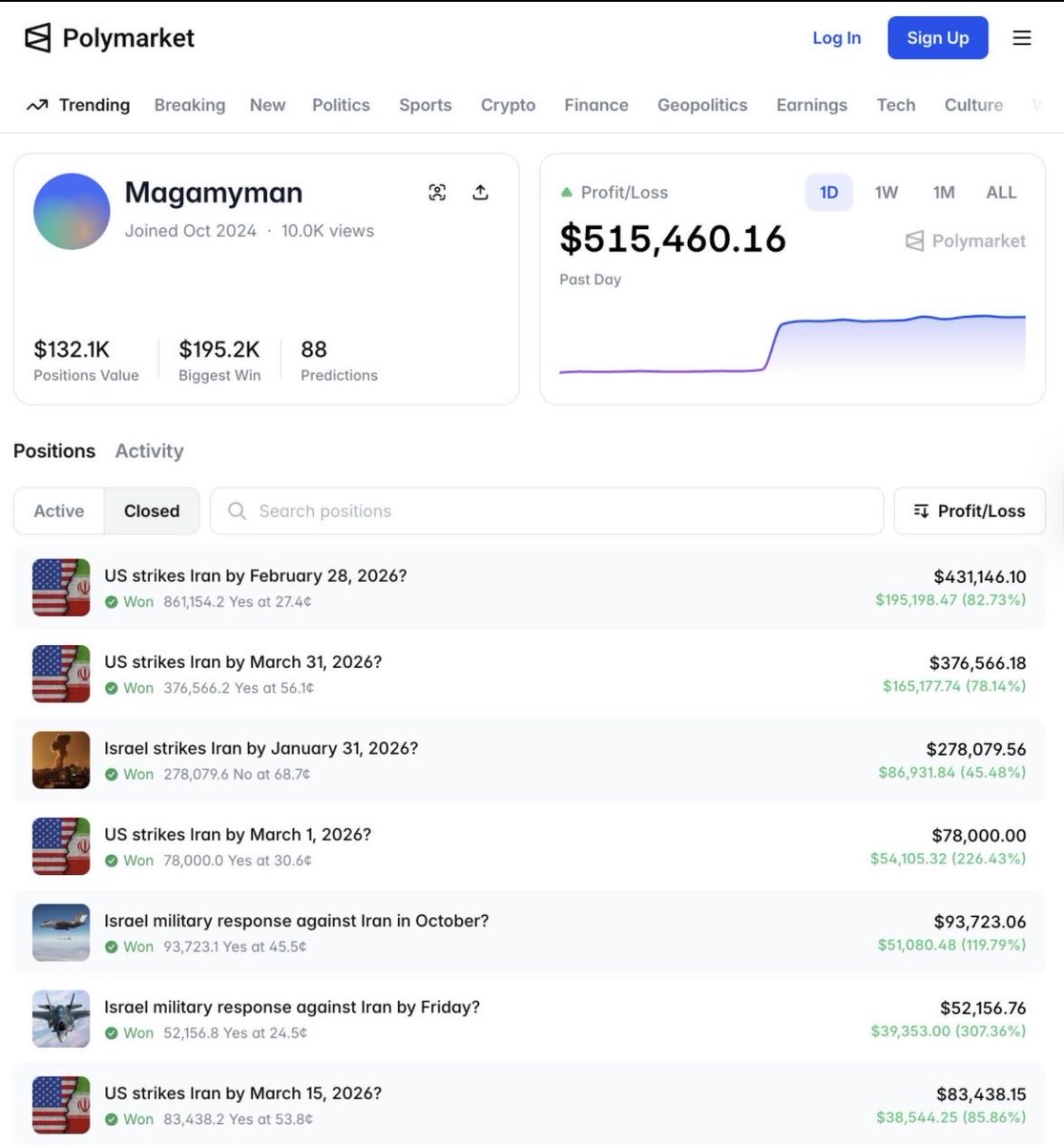
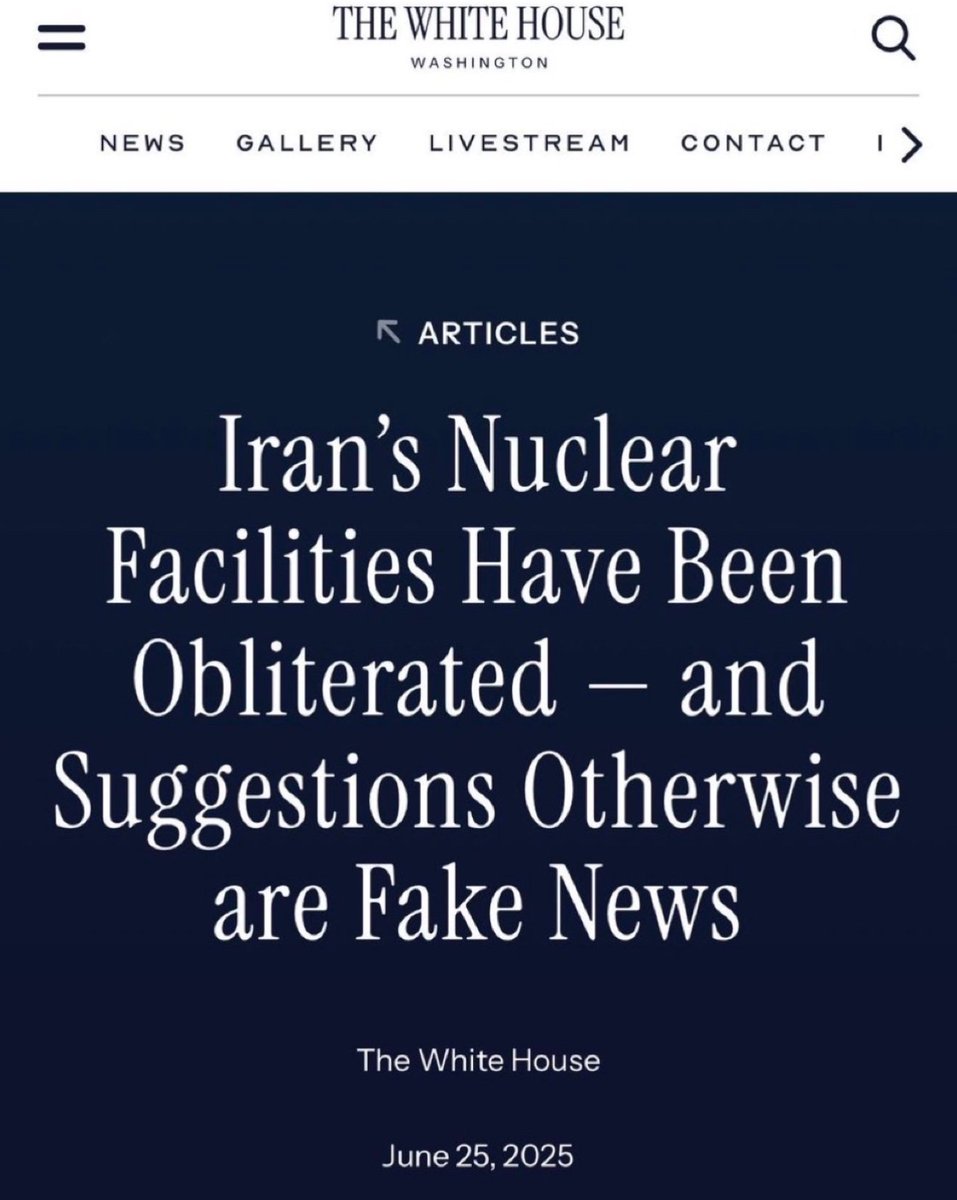
It appears that a Polymarket account called "Magamyman" made $515,000 in a single day betting on last night's U.S. strike on Iran, with the first trade placed 71 minutes before the news broke publicly.
When this person bought in, the market had this at a 17% probability. They turned roughly $87,000 into over half a million dollars overnight.
Reminder that Donald Trump Jr. sits on Polymarket's advisory board and his firm invested double-digit millions into the platform last year. The DOJ and CFTC both had active investigations into Polymarket that were dropped after Trump took office.
Prediction markets cannot be a vehicle for profiting off advance knowledge of military action.
We need answers, transparency, and oversight.
A government-paid, full-time SWAT team composed of four agents and two vehicles escorts Kash Patel's girlfriend, an arrangement apparently unprecedented in the FBI. Wild reporting by @NYTLiz
https://t.co/PDycBKyOhc
One big case of fraud against Medicaid was perpetrated by the Medicaid managed care company then known as "Wellcare" in Florida.
Guess which President pardoned WellCare company execs convicted of Medicaid fraud?
https://t.co/KAdCE9Rmsa
Seems like more people should be aware Alex Acosta, who has “no remorse” about giving Epstein a sweetheart deal— and was rewarded with a Trump cabinet position… is now on the board of Newsmax🤔
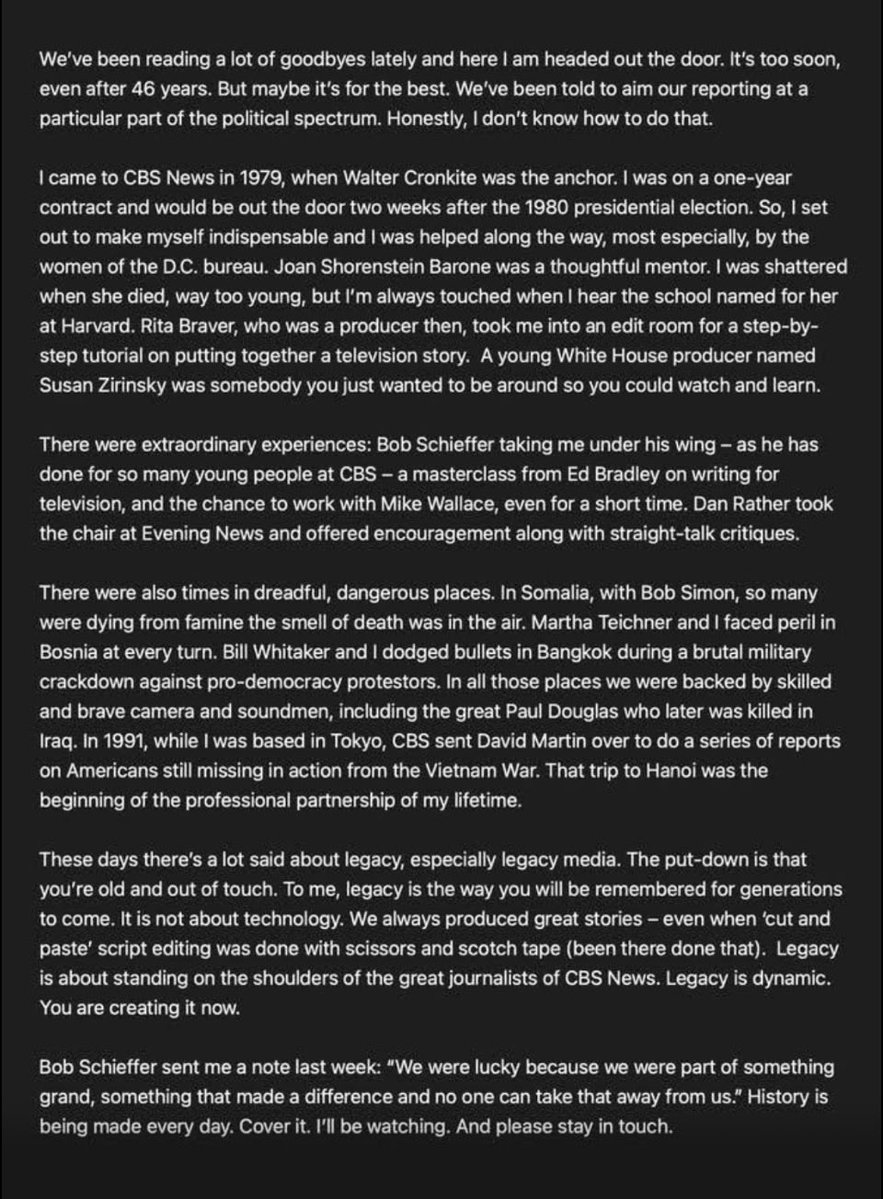
Veteran CBS News producer Mary Walsh takes leave (first reported by Guardian)
"We've been told to aim our reporting at a particular part of the political spectrum. Honestly, I don't know how to do that."
Anthropic just announced it will take the Trump administration to court over the supply chain risk designation. And in the same breath, Axios revealed the detail that changes everything about this story.
While Anthropic was being blacklisted for refusing to allow mass surveillance, the Pentagon’s own “compromise deal” that Under Secretary Emil Michael was offering on the phone at the exact moment Hegseth posted the designation on X would have required Anthropic to allow the collection and analysis of Americans’ geolocation data, web browsing history, and personal financial information purchased from data brokers.
Read that again. The Pentagon spent two weeks saying it has no interest in mass surveillance of Americans. Then the deal they actually put on the table asked for access to your location, your browsing history, and your financial records.
They told us Anthropic was lying. The contract language told us Anthropic was right.
Now here is where this becomes an existential question for a $380 billion company.
The supply chain risk designation means every company that does business with the Pentagon must certify they do not use Claude. Eight of the ten largest companies in America use Claude. Defense contractors, cloud providers, consulting firms, banks. The blast radius is not the $200 million Pentagon contract. It is the enterprise ecosystem that generates $14 billion in annual revenue.
Anthropic’s legal argument is specific: under 10 USC 3252, the designation can only restrict use of Claude on Pentagon contract work. Your commercial API access, your https://t.co/koW5OJjjaM subscription, your enterprise license are, in Anthropic’s reading, completely unaffected.
But here is the problem. That is a legal argument. It will take years to resolve in court. And in the meantime, every general counsel at every Fortune 500 company with any Pentagon exposure is going to ask one question: is using Claude worth the risk?
The IPO, which was expected this year at a $380 billion valuation backed by $30 billion in fresh capital, is functionally frozen. No underwriter will price an offering while a company carries the same designation as Huawei.
And here is the final detail nobody has processed yet. Hours after blacklisting Anthropic, the Pentagon accepted OpenAI’s proposed safety framework, which contains the identical red lines: no mass surveillance, no autonomous lethal weapons.
They destroyed one company for a position they then accepted from its competitor.
Full analysis on Substack. https://t.co/AEv8EMPdsZ
Really don't understand how this isn't a bigger scandal. This is conspiracy to commit federal witness tampering (and likely witness murder) for the purpose of covering up a foreign government's deal with organized crime, a deal that has been affirmed by the DOJ.
Dario Amodei just gave his first interview since the Pentagon blacklisted his company. The toll is visible on his face.
He was asked one question. What would you say to the President right now?
He didn’t hesitate.
Amodei: “We are patriotic Americans. Everything we have done has been for the sake of this country.”
Anthropic built their models to defend America. They were the first AI lab cleared for classified military systems. They wanted to help the warfighter.
But the Pentagon demanded unrestricted access to fully autonomous weapons and mass surveillance of American citizens.
Amodei drew the line.
The government responded with emergency Cold War powers. A supply chain designation normally reserved for foreign adversaries. A six-month federal phaseout ordered from Truth Social.
Amodei: “When we were threatened with supply chain designation and Defense Production Act, which are unprecedented intrusions into the private economy, we exercised our classic First Amendment rights to speak up and disagree with the government.”
The administration framed Anthropic’s refusal as anti-American.
Amodei’s response dismantled that framing in one sentence.
Amodei: “Disagreeing with the government is the most American thing in the world.”
Here is the deeper paradox nobody in Washington wants to say out loud.
We are in a geopolitical race against autocratic adversaries who use AI for mass surveillance of their own citizens and autonomous weapons with no human oversight.
The Pentagon demanded that Anthropic build those exact capabilities for America.
Amodei: “The red lines we have drawn, we drew because we believe that crossing those red lines is contrary to American values.”
You cannot defeat authoritarianism by adopting its methods.
You cannot defend the open society by forcing private companies to build its antithesis under threat of wartime emergency powers.
Anthropic held the line. Got blacklisted for it. And came out the other side saying the same thing they said going in.
That is what it actually looks like to mean it.