Join us in our virtual workshop to learn all about #Cartograplant ! Happening tomorrow, June 7th 2024, at 1:00 PM UTC. Register here: https://t.co/hktMLIBJyZ to attend. @TripalProject@USDA_NIFA@Treesnapapp
❗NEW IN TREEGENES: "Genetic data improves niche model discrimination and alters the direction and magnitude of climate change forecasts" by Bothwell et al (2020)
➡️ See information for 1635 🌲 trees @ https://t.co/iCUI8YOOsD! ⬅️
#PlantScience#Bioinformatics
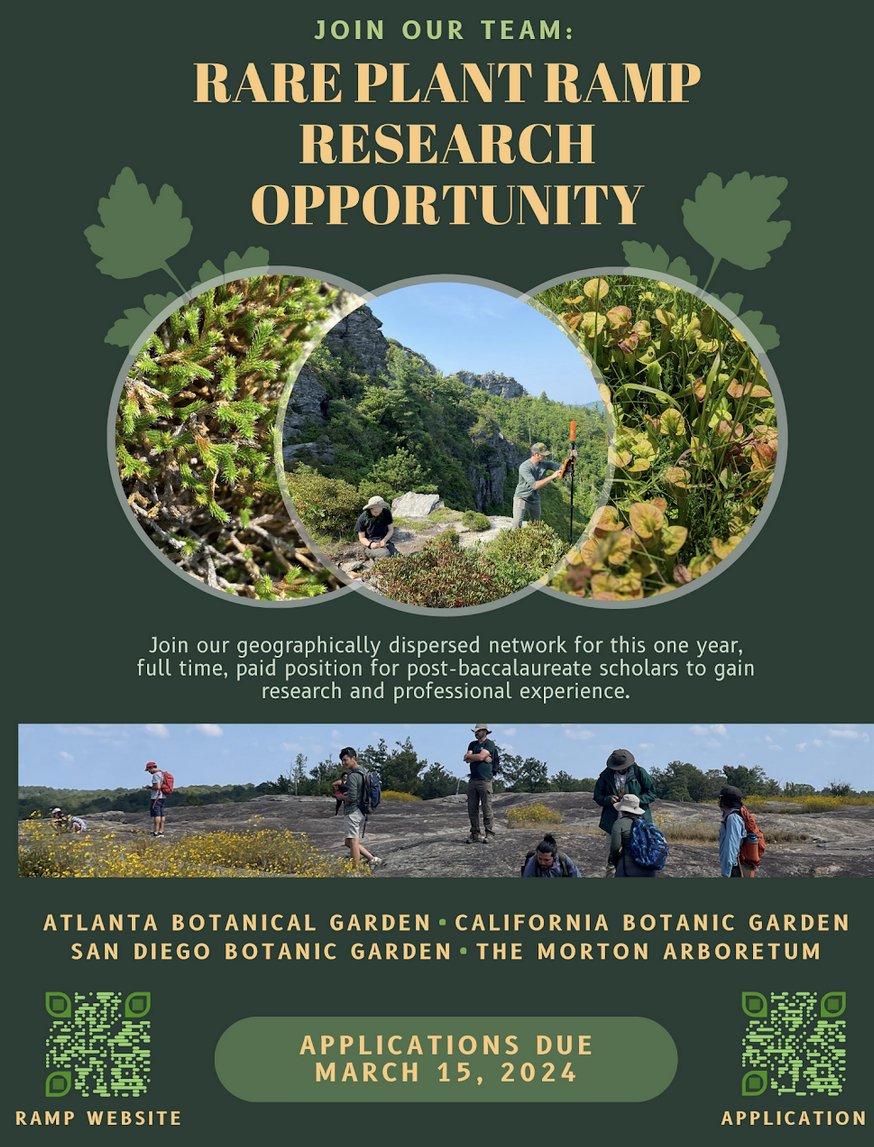
Recently finished your undergraduate degree? Looking for a job to prepare you with skills & knowledge for a career in plant research & conservation? Apply to one year traineeship (40K salary) at botanic gardens including @MortonArboretum! Please RT https://t.co/tqWgXFDRDv
For anyone learning or teaching bioinformatics, or if you’re interested in getting started, you may like to check out some of many (>230!) integrated tutorials for the Galaxy bioinformatics platform at https://t.co/633iyCPH2U .
The Galaxy platform is a free, easy-to-join, easy-to-use bioinformatics workflow management system that enables scientists to share, analyse and visualise their own data, without needing powerful computers and programming expertise.
Galaxy was first started in 2005, and it’s grown year-on-year into an amazingly useful resource for scientists worldwide, with a global community of developers and end-users. You can read about it here:
The Galaxy Community. (2022). The Galaxy platform for accessible, reproducible and collaborative biomedical analyses: 2022 update. Nucleic acids research, 50(W1).
https://t.co/mf3sUPa9LF
To get started, you could first go through a few tutorials to find out how the platform works…
https://t.co/3EimERhdk2
And then take a look at some very cool tutorials with Oxford @nanopore MinION data, for example:
⭐Analysing data to detect microbial pathogens such as Salmonella in food
https://t.co/gLuMqdhCWp
⭐Characterise the microbiome of beer
https://t.co/LKrxn5jJvB
⭐Or dive into the bacterial biodiversity of soil
https://t.co/LPkNAuy7Ii
Galaxy also has a well-developed community, which you can find out more about here:
https://t.co/PgJvgdCQv6
And, if you have a particular application you have in mind, you may be able to find a Galaxy pipeline that’s already been created as part of a published study (e.g. by searching in Google Scholar). For example, if you’d like to find antimicrobial resistance genes in Salmonella, this article and workflow may be for you:
Lamas et al. (2023). Whole genome sequencing in the palm of your hand: how to implement a MinION Galaxy-based workflow in a food safety laboratory for rapid Salmonella spp. serotyping, virulence, and antimicrobial resistance gene identification. Frontiers in Microbiology, 14.
https://t.co/VFPjrvHRij
Or if you’d like to find out how to produce a reference genome for a vertebrate as part of the Earth Genome project, this will explain how it’s done:
Larivière et al. (2024). Scalable, accessible and reproducible reference genome assembly and evaluation in Galaxy. Nature Biotechnology, 1-4.
https://t.co/ZcgNq58HRM
All amazing resources for people already in the bioinformatics field, but possibly even more useful for teaching the bioinformaticians of the future.
This of course only covers a few aspects of the Galaxy “ecosystem”, so if it seems like it could be useful, be sure to have a look around and see what else there is out there for you.
And, if you are using Galaxy for teaching, we’d love to hear about how you’re using it, especially if you have any tips or online/published resources to share!
Disclaimer: Bento Lab has no affiliation with Galaxy - we just love cool tools and platforms that enable science!
Galaxy is ecstatic to share a new paper in Nature Biotechnology! Congratulations to all contributing authors, what an outstanding accomplishment!
Read now: https://t.co/owQyyTtfJh
New Article: "A designer synthetic chromosome fragment functions in moss" https://t.co/zwy6PSUJ65
... redesigned and replaced a 155 kb chromosomal region with synthetic sequence in Physcomitrium patens. The simplified sequence obtains the correct epigenetic landscape.
TreeGenes is @PAGmeeting#PAG31 and we have a digital tools session on CartograPlant starting at 2:20pm. Join us at the poster as well.
Population genomics platform for georeferenced plants. Integrate genotype, phenotype, & enviornment #HPC@gmodproject#FAIRdata@TripalProject
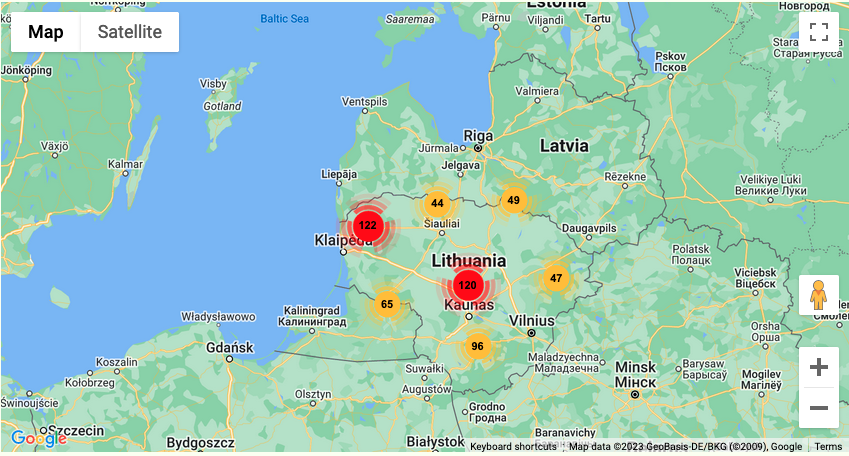
❗️NEW IN TREEGENES: "Genetic signature of the natural #gene pool of Tilia Cordata Mill. in Lithuania: Compound evolutionary and anthropogenic effects" by
Darius Danusevičius et al (2021) 🌿
🖥️ See info for 543 #trees at https://t.co/sIUAo5NDEv!
#Genetics#FAIRdata
❗️NEW IN TREEGENES: "Genetic #diversity loss and homogenization in #urban trees: the case of Tilia x europaea in Belgium and the Netherlands" by @AnVandenBroeck et al (2018) 🌿
🖥️ See info for 114 #plants at https://t.co/SCTshpMOT9!
#fairdata
❗️NEW ON CARTOGRAPLANT: "Worldwide core collections of #tea (Camellia sinensis) based on SSR markers" by Fumiya Taniguchi, Keiko Kimura, Tetsuji Saba, et al. 🌿
🗺️ See 788 #plants at https://t.co/l1oFBcr7Q1!
#genes#genotype#theaceae
@UConn_Bioinfo is running a 4 day online workshop on variant detection next week and there are still spaces left. Check it out here: https://t.co/lm7uBZg9hZ and let us know if you have questions.
📢🚨NEW LAYER ALERT🚨: Check out the #species range map of Arbutus arizonica, newly added into #CartograPlant! See that and more at: https://t.co/8wlTA8z4WL 🌲