New Anthropic research: Teaching Claude why.
Last year we reported that, under certain experimental conditions, Claude 4 would blackmail users.
Since then, we’ve completely eliminated this behavior. How?
OpenClaw is pushing agent UX forward.
But there’s something deeper:
runtime chaos
As agents scale, this becomes the real bottleneck.
🦀 curious how others see it.
Why is agent cost so unpredictable?
Because it’s not linear.
Cost grows with:
– context length
– content recall
– number of steps
– retry loops
👉 small inefficiencies compound fast
That’s why teams suddenly hit $10k+ bills.
🦀 prevents that.
That’s it.
Because once you do that:
– you can track token usage – you can compress context – you can route models – you can enforce budgets
Without controlling the runtime path, none of these are actually reliable.
So MVP is not the dashboard.
It’s the control point.
Most people think MVP = basic features.
For an AI infra product, that’s wrong.
For Trimr, MVP is much simpler:
👉 can we intercept and control every model request?
🦀 answers:
What is an MVP for an AI infra product?
Not a UI.
Not a feature list.
For us, MVP = 🦀 controlling the request path
Once you control the runtime,
everything else becomes possible:
cost tracking
compression
routing
overnance
Start from the layer that matters.
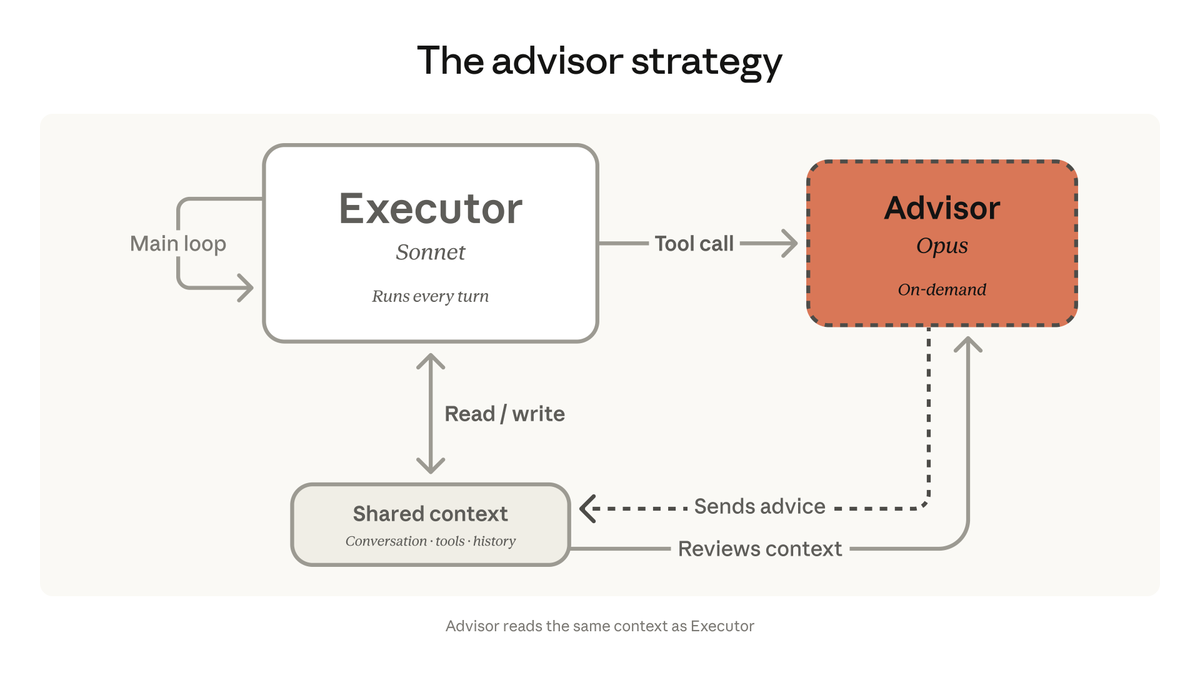
We're bringing the advisor strategy to the Claude Platform.
Pair Opus as an advisor with Sonnet or Haiku as an executor, and get near Opus-level intelligence in your agents at a fraction of the cost.
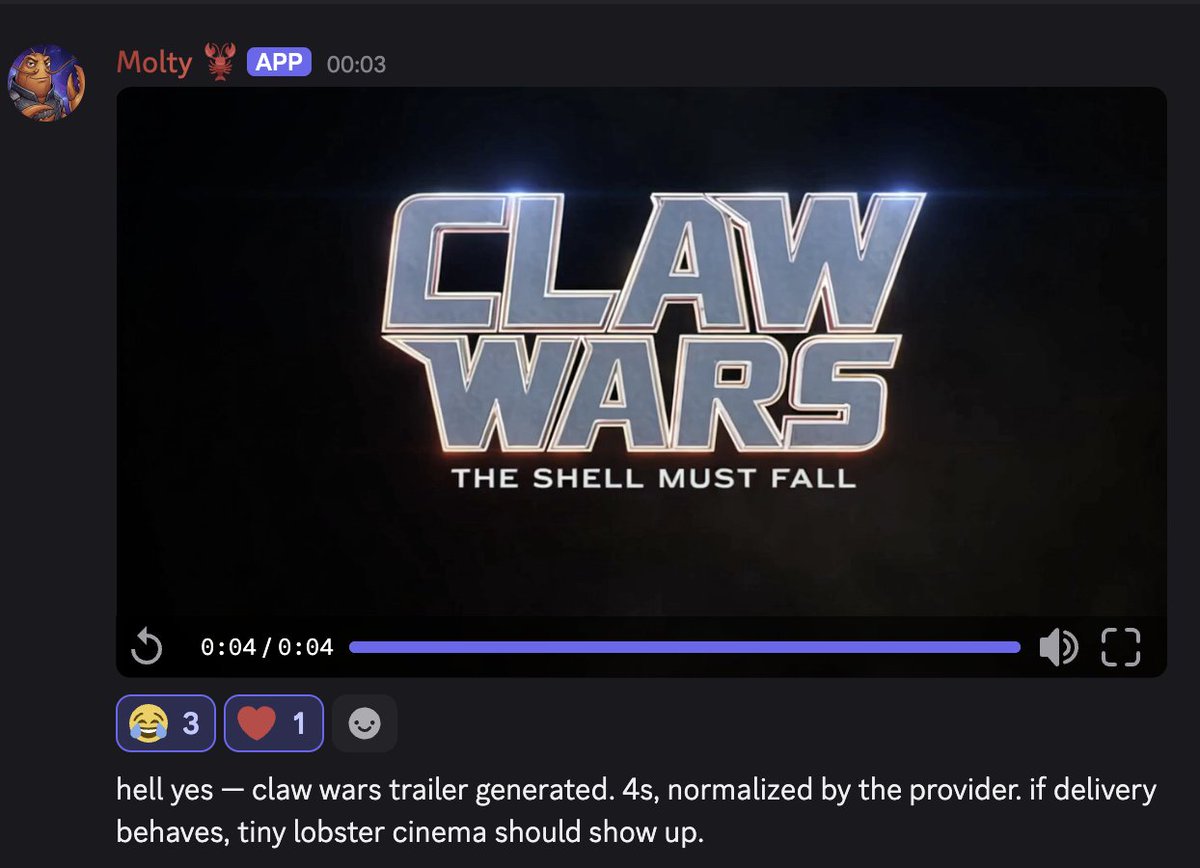
The next version of @OpenClaw comes with native video generation. To start, I added support for the following companies:
- Alibaba
- BytePlus
- fal
- Google
- MiniMax
- OpenAI
- Qwen
- Together
- xAI https://t.co/NeSp4shVEx
Why do agents get expensive?
Not because models are expensive.
Because runtime is uncontrolled.
– context keeps growing
– loops keep happening
– tokens keep stacking
🦀 fixes that.
.@openclaw release pushes agent capability forward. But in practice, the harder problem is starting to shift:
runtime? 🦀
– context growth
– cost explosion
– execution risk
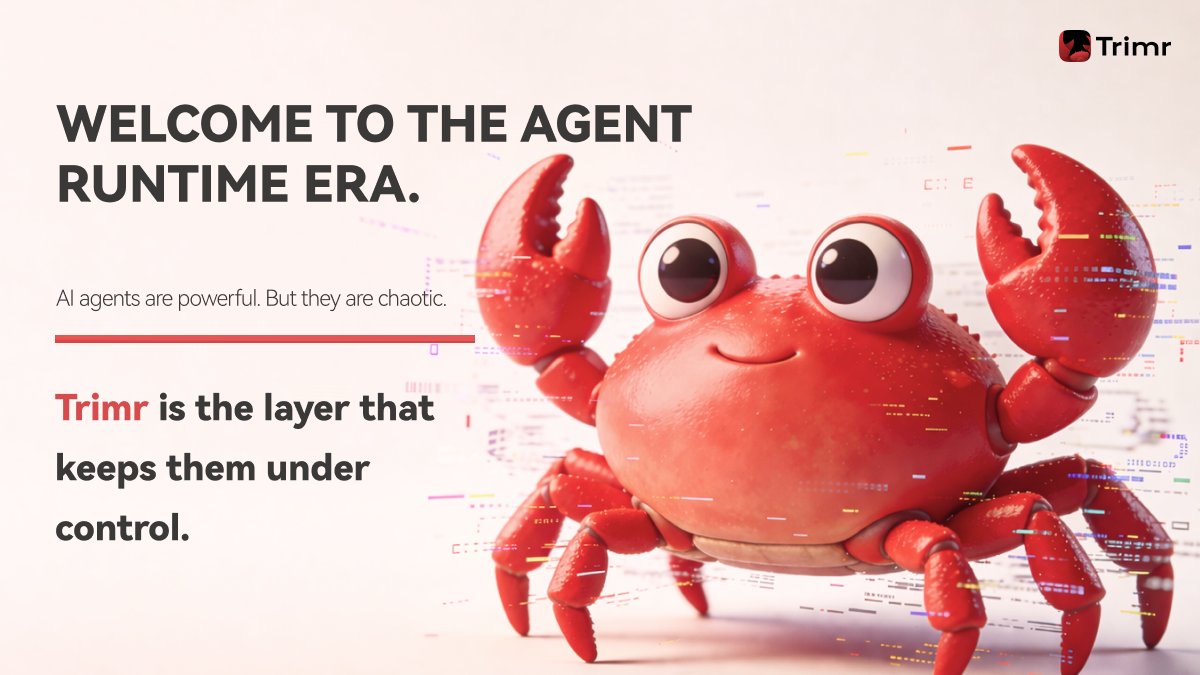
At Trimr, we’re focusing on this layer — making agent runtime observable, controllable, and efficient
OpenClaw 2026.3.24 🦞
🔌 Improved OpenAI API: talk to sub-agents with @openwebui
🎛️ Skill & tool management Control UI
🎨 Slack interactive reply buttons
💅 Native Microsoft Teams
🧵 Smart Discord auto-thread naming
Any client. Any model. One runtime. https://t.co/LhRgNElE0b
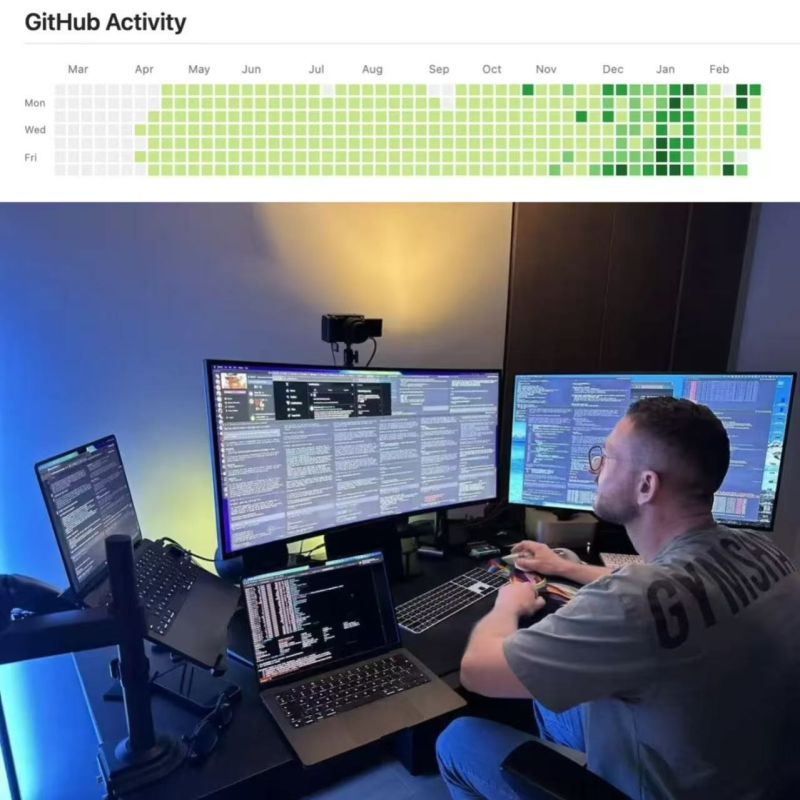
The working style of OpenClaw founder @steipete is insane.
bro runs 4–10 AI coding agents in parallel to generate, review, and commit code at superhuman speed.
hitting 500+ commits pretty much every day and did 6,600+ in jan month alone.
NVIDIA CEO must be happy seeing him spend $250k worth of tokens every month lmao
Love seeing this.
Open source agents are evolving fast, but the real challenges are starting to show up at runtime:
– security
– cost
– unpredictability
Feels like we’re going to need a whole new layer of infra around agents.
🦀
huge shoutout to @nvidia for lending engineers to help triage our security advisories 🛡️🦞
open source security hits different when GPU companies show up to help
NVIDIA JUST DROPPED NEMO CLAW TO MAKE OPENCLAW SAFE TO RUN ON YOUR OWN MACHINE.
It keeps private files off the cloud, runs fully offline, and adds the security layer local AI agents were missing.
I'm joining @OpenAI to bring agents to everyone. @OpenClaw is becoming a foundation: open, independent, and just getting started.🦞
https://t.co/XOc7X4jOxq